Quick Answer: Land Rover's 2026 EV Lineup
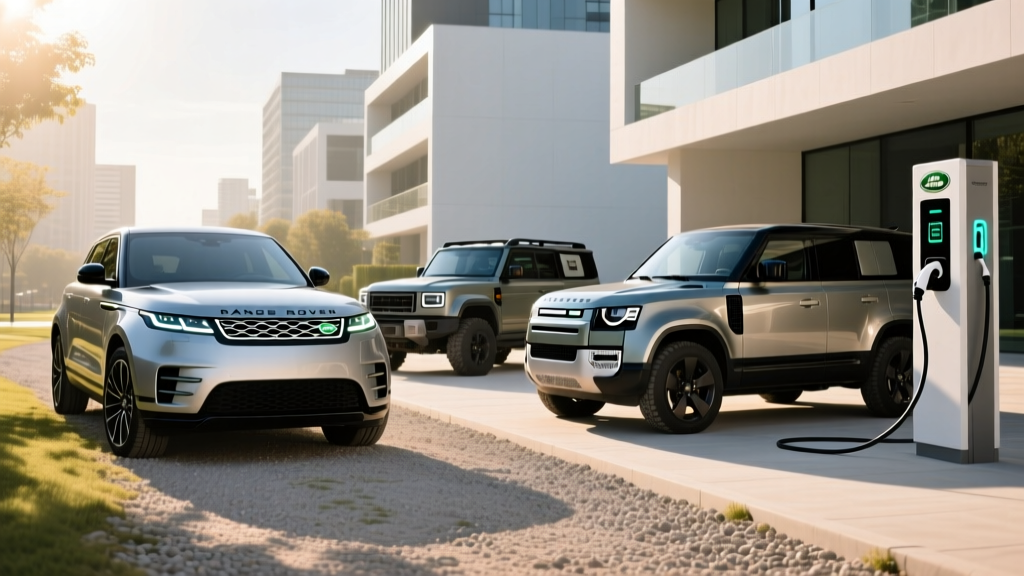
Land Rover enters the electric vehicle market in 2026 with the Range Rover Electric, its first all-electric luxury SUV. Built on JLR's MLA-Flex platform, it targets an EPA-estimated range of approximately 300 miles, 800-volt architecture enabling DC fast charging up to 250 kW, and a starting MSRP expected around $120,000. It competes directly with the BMW iX, Mercedes EQS SUV, and Tesla Model X. If you need three-row seating or a true off-road EV, you'll still need to wait — Land Rover has not announced a Defender Electric or Discovery Electric for 2026.
What Land Rover Electric Vehicles Are Available in 2026?
After years of teaser campaigns and delays, JLR (Jaguar Land Rover) has confirmed the Range Rover Electric as its first fully electric model, with first deliveries expected in late 2025 as a 2026 model-year vehicle. This is the only Land Rover EV you can order today.
The Range Rover Electric sits on the same MLA-Flex (Modular Longitudinal Architecture) platform used by the current-generation Range Rover (L460), meaning it shares its body structure, interior dimensions, and chassis design with the mild-hybrid and plug-in hybrid Range Rover variants. Land Rover's stated goal is that the EV version should look, feel, and perform like every other Range Rover — just without the tailpipe.
Here's what we know from JLR's official disclosures and early pre-production specifications:
| Specification | Value |
|---|---|
| Platform | MLA-Flex (800V architecture) |
| Battery Chemistry | NMC (Nickel Manganese Cobalt) |
| Battery Capacity (est.) | ~110-120 kWh usable |
| EPA Range (est.) | ~300 miles (official EPA figure pending) |
| Max DC Fast Charge Rate | Up to 250 kW (peak) |
| 10-80% DC Charge Time (est.) | ~25-30 minutes |
| Level 2 AC Charging | Up to 11 kW (est. ~10-12 hrs 0-100%) |
| Connector | CCS (NACS adapter expected) |
| Drivetrain | Dual-motor AWD |
| Horsepower (est.) | 540-580 hp |
| 0-60 mph (est.) | ~4.5 seconds |
| Towing Capacity (est.) | Up to 7,700 lbs |
| Starting MSRP (est.) | ~$120,000 |
| Battery/Powertrain Warranty | 8 years / 100,000 miles (expected) |
Important caveat: As of early 2026, JLR has not published a finalized EPA range certification or complete trim-level pricing. The figures above are based on JLR's engineering disclosures and European WLTP data. We'll update this article when the EPA posts official numbers at fueleconomy.gov.
Real-World Range Expectations
EPA Estimate: ~300 miles (preliminary)
Highway driving (75 mph): Expect ~240-260 miles
Cold weather (below 32°F): Expect ~210-240 miles
Combined mixed driving: Expect ~260-280 miles
The Range Rover Electric's boxy, upright design creates more aerodynamic drag than sleeker rivals like the BMW iX. That matters most at highway speeds and in cold weather, where battery thermal management and cabin heating draw additional energy. Plan road trips around 220-240 miles between charging stops to maintain a comfortable buffer.
Range Rover Electric vs. Gas Range Rover: Cost & Efficiency Comparison
The most common question from current Range Rover owners: does going electric actually save money? Let's compare the Range Rover Electric against the Range Rover P400 mild-hybrid (the most popular gas variant) over a 5-year ownership period, assuming 12,000 miles per year.
| Category | Range Rover Electric | Range Rover P400 (Gas MHEV) |
|---|---|---|
| Base MSRP (est.) | $120,000 | $107,000 |
| EPA Efficiency | ~82 MPGe (est.) | 20 MPG combined |
| Fuel/Energy Cost (5 yrs, 60k mi) | $5,400 (home charging @ $0.16/kWh) | $12,600 (premium @ $4.20/gal) |
| Maintenance (5 yrs) | ~$2,500 | ~$5,500 |
| Estimated Insurance (5 yrs) | $18,000 | $15,500 |
| Federal Tax Credit (§30D) | Up to $7,500* | $0 |
| Estimated 5-Year Total | $143,400 | $140,600 |
*Federal §30D tax credit eligibility depends on battery component sourcing, critical minerals requirements, buyer income caps ($300k joint / $150k single), and MSRP limits ($80,000 for SUVs — note: the Range Rover Electric exceeds this cap, which likely disqualifies it from the federal credit). Consult IRS §30D guidelines or a tax professional for your specific situation.
The math is clear: the Range Rover Electric saves significantly on fuel and maintenance, but the higher purchase price and likely ineligibility for the federal tax credit (due to the $80,000 SUV MSRP cap) mean the 5-year total cost is roughly comparable to the gas version. The EV wins on a longer time horizon — at 7-8 years, the energy and maintenance savings pull ahead decisively.
Charging the Range Rover Electric: What You Need at Home
The Range Rover Electric's 800V architecture is its most technically significant feature. This enables faster DC charging and more efficient power delivery than the 400V systems used in older EVs. But 800V also means you need to think carefully about your home charging setup.
| Level | Power (kW) | Miles Added Per Hour | Use Case |
|---|---|---|---|
| Level 1 (120V household) | ~1.4 kW | ~3-4 mi/hr | Emergency/trickle only |
| Level 2 (240V, 48A circuit) | ~11 kW | ~28-32 mi/hr | Daily home charging |
| DC Fast Charging | Up to 250 kW (peak) | ~500+ mi/hr (peak) | Road trips |
kW vs kWh reminder: kW (kilowatts) measures the rate of charging — how fast energy flows into the battery. kWh (kilowatt-hours) measures the amount of energy stored. A 120 kWh battery charged at 11 kW takes roughly 11 hours from empty. The same battery at 250 kW peak could theoretically charge much faster, but real-world charge curves taper significantly above 80% State of Charge (SoC).
For a vehicle in this price class, a Level 2 home charger is essential. Level 1 trickle charging at 3-4 miles per hour means you'd need over 30 hours to fully replenish the battery — impractical for a daily-driver luxury SUV.
| Component | Cost Range |
|---|---|
| Level 2 EVSE hardware (48A, hardwired) | $500 - $800 |
| Electrician labor (240V/60A circuit run) | $800 - $2,500 |
| Permit & inspection | $100 - $400 |
| Electrical panel upgrade (if needed, 200A) | $1,500 - $4,000 |
| Total (no panel upgrade) | $1,400 - $3,700 |
| Total (with panel upgrade) | $2,900 - $7,700 |
Many Range Rover buyers have larger homes with 200A or 400A electrical service, which usually accommodates a 60A EV circuit without a panel upgrade. But if your home has older 100A or 150A service, budget for the panel upgrade. Always have a licensed electrician assess your panel capacity before purchasing equipment.
What About the §30D Federal Tax Credit?
This is where the Range Rover Electric faces a structural disadvantage. The IRS §30D Clean Vehicle Credit provides up to $7,500 for qualifying new EVs, but it comes with strict limitations:
- MSRP Cap: SUVs must be priced at or below $80,000. The Range Rover Electric at ~$120,000 exceeds this limit.
- Buyer Income Cap: Modified AGI must not exceed $300,000 (joint) / $150,000 (single).
- Battery Sourcing: Critical minerals and battery components must meet escalating domestic/content requirements that increase each year through 2032.
- Point-of-Sale Transfer: Eligible buyers can transfer the credit to the dealer at purchase for an immediate price reduction — but only if the vehicle qualifies.
- Manufacturer Cap: JLR has not hit the old 200,000-unit manufacturer cap (which was removed in 2023 anyway).
The MSRP cap is the disqualifying factor here. At approximately $120,000, the Range Rover Electric simply costs too much to qualify for the federal credit. Some states offer their own EV incentives that have higher or no MSRP caps — check your state's energy office or DMV for details, but these vary widely.
Range Rover Electric vs. Rivals: How Does It Stack Up?
| Spec | Range Rover Electric | BMW iX xDrive50 | Mercedes EQS 580 SUV | Tesla Model X Plaid |
|---|---|---|---|---|
| EPA Range | ~300 mi (est.) | 324 mi | 305 mi | 320 mi |
| Battery (usable) | ~115 kWh (est.) | 105.2 kWh | 108.4 kWh | 100 kWh |
| Max DC Charge | 250 kW | 200 kW | 200 kW | 250 kW |
| 0-60 mph | ~4.5 sec | 4.4 sec | 4.2 sec | 2.5 sec |
| HP | ~550 hp | 516 hp | 536 hp | 1,020 hp |
| Starting MSRP | ~$120,000 | $87,250 | $104,400 | $94,990 |
| Seating | 5 passengers | 5 passengers | 5-7 passengers | 5-7 passengers |
| Towing | ~7,700 lbs | 3,500 lbs | 3,500 lbs | 5,000 lbs |
The Range Rover Electric's differentiators are towing capacity and off-road capability. If you need to tow a boat or horse trailer and still want an electric luxury SUV, the Range Rover is essentially your only option in this class. Land Rover's Terrain Response system and wading depth capabilities carry over to the electric version.
However, the BMW iX and Tesla Model X offer more range for less money. The iX in particular delivers strong real-world efficiency thanks to its aerodynamic design — something the upright Range Rover shape can't match. If towing and off-roading aren't priorities, the iX is the more efficient daily driver.
Real-World Ownership: What First-Time EV Buyers Should Know
If you're coming from a gas Range Rover, Range Rover Sport, or any ICE luxury SUV, the transition to electric ownership involves some genuine adjustments. Here are the realities that brochures don't emphasize:
Road trips require planning. Even with 300 miles of range, you'll want to stop every 200-240 miles on long drives to maintain a charging buffer. DC fast charging from 10-80% takes roughly 25-30 minutes at a 250 kW station, but charging speed drops dramatically above 80% SoC. That's not a flaw — it's how lithium-ion battery physics work. The battery management system slows charging to protect cell longevity. Plan to charge to 80% and go, rather than waiting for 100%.
Home charging changes everything. Owners with Level 2 home charging consistently report that they visit gas stations... never. You wake up every morning with a full "tank." The inconvenience of public charging only matters if you can't charge at home. If you live in a condo, apartment, or street-parking situation without home charging access, an EV in this price range may create daily friction that a PHEV Range Rover (the P460e, with ~51 miles of electric-only range) would avoid.
Cold weather is real, not theoretical. If you live in the northern U.S., expect 15-25% range reduction in sustained below-freezing temperatures. The Range Rover Electric includes a heat pump (confirmed by JLR) to improve cold-weather efficiency compared to resistive heating, but physics still applies. Battery preconditioning — which warms the pack before you arrive at a DC charger — helps maintain charging speed in cold weather.
Insurance costs more. EV insurance premiums run 15-25% higher than equivalent gas vehicles, driven by higher repair costs and battery replacement risk. Get quotes before you buy. For a $120,000 SUV, that premium difference can add $500-$800 per year.
| Myth | Fact |
|---|---|
| "EV batteries need replacing every 5 years" | NMC batteries in modern EVs are warrantied for 8 years/100,000 miles at 70%+ capacity retention. Data from Tesla, Hyundai, and others shows typical degradation of 10-15% over 150,000+ miles. |
| "Electricity is just as dirty as gas" | Even on coal-heavy grids, EVs produce fewer lifecycle emissions per mile than comparable gas vehicles. On cleaner grids (hydro, wind, solar, nuclear), the advantage is dramatic. Source: EPA emissions data at fueleconomy.gov. |
| "You can't tow with an EV" | The Range Rover Electric is expected to tow up to 7,700 lbs — more than most gas competitors. However, towing reduces range by 30-50%, so plan charging stops accordingly. |
| "Fast charging ruins the battery" | Occasional DC fast charging has minimal impact on long-term battery health. Daily use of 250 kW charging may slightly accelerate degradation compared to Level 2, but modern thermal management systems mitigate this significantly. |
Decision Framework: Should You Buy the Range Rover Electric?
Buy the Range Rover Electric if:
- You want a luxury electric SUV that can genuinely tow 7,000+ lbs and handle off-road terrain
- You have access to Level 2 home charging (garage or dedicated parking with 240V access)
- You drive mostly within 200 miles of home, with occasional longer road trips
- Brand loyalty and the Range Rover aesthetic are non-negotiable for you
- You're prepared for a $120,000+ purchase without federal tax credit offset
Consider the Range Rover P460e PHEV instead if:
- You don't have reliable home charging access
- You regularly drive 400+ miles in a single day and don't want to plan around DC chargers
- You want the Range Rover experience at a lower entry price (~$110,000)
- You want electric-only commuting (51 miles EV range) without range anxiety on long trips
Look at the BMW iX or Tesla Model X if:
- Maximum range per dollar is your priority
- You don't need serious towing or off-road capability
- You want a proven EV platform with years of real-world ownership data
- You'd prefer a purchase price under $100,000
Frequently Asked Questions
When can I actually buy the Range Rover Electric?
JLR began accepting reservations in late 2024, with first customer deliveries targeted for 2025 as a 2026 model-year vehicle. Availability may be initially limited to select markets and priority reservation holders. Check with your local Land Rover dealer for current allocation status.
Will Land Rover release a Defender Electric or Discovery Electric?
JLR has confirmed that all its nameplates will offer electric variants, but no Defender Electric or Discovery Electric has been officially announced for the 2026 model year. The next EVs in the pipeline are expected to be a mid-size electric SUV (potentially under the Range Rover Sport nameplate) and eventually a Defender EV, likely not before 2027-2028.
Does the Range Rover Electric qualify for any tax credits?
The federal §30D credit is almost certainly unavailable due to the $80,000 SUV MSRP cap. Some states offer separate EV rebates or HOV lane access that may apply — check IRS guidelines and your state's energy office. Commercial fleet buyers may qualify under the separate §45W commercial clean vehicle credit.
How does the Range Rover Electric handle off-road?
JLR has confirmed that the electric version retains Land Rover's Terrain Response 2 system, adjustable air suspension, and a wading depth comparable to the ICE Range Rover. The instant torque from electric motors actually improves low-speed rock-crawling control. However, the underbody battery placement means ground-clearance damage carries much higher repair costs than a gas vehicle's underbody.
What's the maintenance schedule like?
EVs eliminate oil changes, spark plugs, transmission fluid, and exhaust system maintenance. Expect cabin air filter replacement, brake fluid checks (regen braking means pad wear is minimal), tire rotation, and windshield washer fluid. JLR's scheduled maintenance intervals will be published closer to delivery, but annual costs should be roughly 40-50% lower than the gas Range Rover.
Can I use Tesla Superchargers with the Range Rover Electric?
JLR has indicated that a NACS (Tesla connector) adapter will be available, and the company has committed to Tesla Supercharger network access for its EVs. The native port is expected to be CCS. With an adapter, you'll access Tesla's 150-250 kW Supercharger network — currently the most reliable public charging infrastructure in the U.S. — alongside Electrify America, EVgo, and ChargePoint stations.