The Quick Answer: Land Rover's First Electric SUV
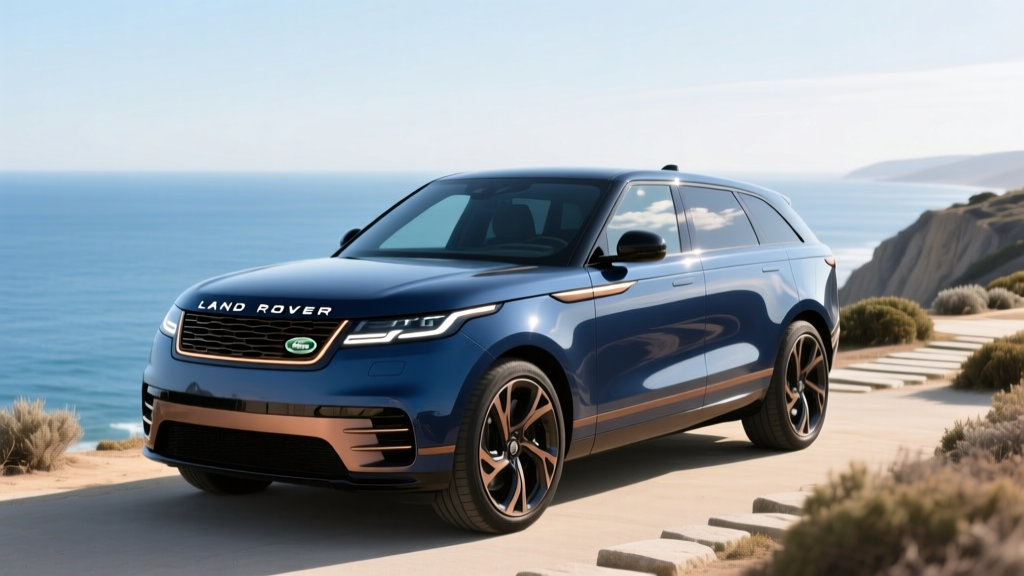
The 2026 Range Rover Electric is Land Rover's first all-electric SUV, built on JLR's new Electric Modular Architecture (EMA). It targets an EPA range of approximately 300-320 miles, features an 800-volt architecture enabling DC fast charging at up to ~250 kW, and carries a starting MSRP expected around $120,000-$130,000. First customer deliveries are anticipated in late 2025 into the 2026 model year. Because of its price, it exceeds the federal §30D tax credit MSRP cap of $80,000 for SUVs, meaning buyers will not qualify for the $7,500 federal credit. This is a luxury statement EV, not a value play.
What We Know About the Range Rover Electric
Land Rover confirmed the Range Rover Electric in early 2024, with prototypes undergoing cold-weather and durability testing through 2024 and 2025. The production vehicle sits on the same full-size luxury footprint as the current Range Rover (P530, P550e PHEV) but swaps the internal combustion powertrain for a dual-motor all-wheel-drive electric setup.
Because the vehicle is still pre-launch as of early 2026, the specifications below reflect JLR's announced figures and credible industry estimates. Final EPA certification numbers will be published closer to delivery.
| Specification | Value |
|---|---|
| Battery Capacity (usable) | ~110-120 kWh (estimated, NMC chemistry) |
| EPA Range (target) | ~300-320 miles (preliminary) |
| Architecture | 800-volt (EMA platform) |
| DC Fast Charge Peak | ~250 kW (estimated) |
| 10-80% DC Charge Time | ~25-30 minutes (estimated) |
| Level 2 AC Charge Rate | ~11-22 kW onboard charger |
| Drivetrain | Dual-motor AWD |
| Horsepower (target) | ~550-600 hp (estimated) |
| 0-60 mph | ~4.5-5.0 seconds (estimated) |
| Starting MSRP | $120,000-$130,000 (estimated) |
| Federal §30D Tax Credit | Not eligible (exceeds $80K SUV cap) |
| Battery Warranty | 8 years / 100,000 miles (JLR standard) |
Real-World Range Expectations
The Range Rover's boxy aerodynamic profile and estimated 5,800+ lb curb weight will work against highway efficiency. If the EPA sticker reads 310 miles, plan for:
- Highway (75 mph): ~240-260 miles
- Cold weather (below 32°F): ~210-240 miles (20-30% reduction typical for large SUVs without aggressive preconditioning)
- Mixed city/highway, moderate temps: ~270-290 miles
The 800V architecture and expected heat pump should help mitigate cold-weather losses compared to 400V competitors, but physics favors sleeker, lighter vehicles.
Charging: Home Setup and Public Network Reality
At an estimated 110-120 kWh battery, charging logistics matter enormously. A standard 120V household outlet (Level 1) would add roughly 3-4 miles per hour — essentially useless for a vehicle this size. You will need Level 2 home charging.
| Level | Power | Miles Added/Hour | 0-100% Time |
|---|---|---|---|
| Level 1 (120V / 12A) | ~1.4 kW | ~3-4 mi/hr | ~35-40 hours |
| Level 2 (240V / 48A) | ~11.5 kW | ~28-32 mi/hr | ~10-12 hours |
| Level 2 (240V / 80A, if 22 kW onboard) | ~19.2 kW | ~48-52 mi/hr | ~6-7 hours |
| DC Fast Charge (peak 250 kW) | 250 kW | ~600+ mi/hr (peak) | 10-80% in ~25-30 min |
For a battery this large, a 48-amp Level 2 charger on a 60-amp circuit is the practical minimum for overnight replenishment. If your home has a 200-amp electrical panel with spare capacity, installation typically runs $1,200-$3,500 (charger hardware + electrician + permit). Homes needing a panel upgrade to 200A or 400A should budget an additional $2,000-$5,000.
On public DC fast chargers, expect the 250 kW peak to sustain only through roughly 30-40% State of Charge before tapering. A typical 10-80% session will average closer to 150-180 kW. At Electrify America or Tesla Supercharger V4 stalls (which support CCS/NACS adapters), a 25-minute stop is realistic for highway road trips.
Range Rover Electric vs. Gas Range Rover: Cost Comparison
The most direct comparison is the current Range Rover P530 (4.4L twin-turbo V8, 523 hp) starting around $108,000, or the P550e plug-in hybrid starting around $112,000. Here's how a 5-year ownership comparison looks:
| Category | Range Rover Electric (~$125K) | Range Rover P530 V8 (~$108K) | Range Rover P550e PHEV (~$112K) |
|---|---|---|---|
| Purchase Price | $125,000 | $108,000 | $112,000 |
| Federal Tax Credit | $0 (over MSRP cap) | $0 | $0 (over MSRP cap) |
| Fuel/Energy (75K mi) | $5,600-$7,500 | $13,500-$16,000 | $8,000-$10,500 |
| Maintenance (5 yr) | $2,500-$3,500 | $6,000-$8,500 | $5,000-$7,000 |
| Insurance (5 yr est.) | $18,000-$24,000 | $16,000-$21,000 | $17,000-$22,000 |
| Estimated Depreciation | $55,000-$65,000 | $50,000-$60,000 | $52,000-$62,000 |
| 5-Year Total Cost | $206,100-$225,000 | $193,500-$213,500 | $194,000-$213,500 |
The EV saves substantially on fuel and maintenance (no oil changes, fewer brake replacements due to regenerative braking, no transmission fluid). However, the higher purchase price, elevated insurance premiums typical of luxury EVs, and uncertain long-term depreciation on JLR's first electric platform narrow the gap. According to fueleconomy.gov, the gas Range Rover P530 returns approximately 16-18 MPG combined; at $4.00/gallon and 15,000 miles/year, that's roughly $3,000-$3,750 annually in fuel. The EV, at an estimated 2.5-3.0 kWh/mile and $0.16/kWh national average for home charging, costs roughly $600-$720/year on electricity.
Key insight: The electric Range Rover is unlikely to save you money over five years compared to the gas version. Buyers are paying a premium for the EV driving experience, silent operation, instant torque, and environmental positioning — not total-cost-of-ownership economics.
Who Should (and Shouldn't) Buy This Electric SUV
Decision Framework: Is the Range Rover Electric Right for You?
Buy the Range Rover Electric if:
- You have reliable home Level 2 charging (garage or driveway with 240V access)
- Your daily driving is under 150 miles and you take road trips 4-6 times per year
- You want the Range Rover presence and luxury with zero tailpipe emissions
- You value silent, vibration-free operation and instant torque delivery
- You're comfortable with first-generation platform risk on a complex luxury vehicle
- Operating cost savings are not your primary motivation
Consider the Range Rover P550e PHEV instead if:
- You lack consistent home charging access
- You frequently drive 300+ miles in remote areas with sparse DC charging infrastructure
- You want the flexibility of gas range for towing or overlanding
- You want a proven powertrain with lower first-year depreciation risk
Look at alternatives if:
- You want a luxury electric SUV with proven reliability data — consider the BMW iX (~$87K, EPA 307-324 mi), Mercedes EQS SUV (~$105K, EPA 305-330 mi), or Rivian R1S (~$80K, EPA 321-410 mi)
- Tax credit eligibility matters — the Rivian R1S (under the $80K SUV cap) may qualify for the full $7,500 §30D credit depending on battery sourcing and your income
Common Misconceptions About the Land Rover Electric SUV
| Myth | Fact |
|---|---|
| "It will qualify for the $7,500 federal tax credit." | It will not. The IRS §30D credit caps SUV eligibility at an $80,000 MSRP. At $120K+, the Range Rover Electric is excluded. Some buyers may offset costs with state-level incentives — check state EV incentive databases for local programs. |
| "300 miles of range means I can drive 300 miles before charging." | The EPA estimate assumes mixed driving at moderate temperatures. Highway driving at 75+ mph, cold weather, and mountain terrain can reduce real-world range by 20-35%. Plan trips around ~240-260 miles of usable range in adverse conditions. |
| "I can charge it at any public station." | Check connector compatibility. JLR has indicated the Range Rover Electric will support CCS (and likely NACS via adapter for Tesla Supercharger access). Confirm at purchase whether a NACS adapter is included or must be purchased separately. |
| "Electric means no maintenance costs." | EVs eliminate oil changes and reduce brake wear, but you'll still pay for tire rotation (heavy EVs wear tires faster), cabin air filters, brake fluid checks, coolant service for the thermal management system, and windshield washer fluid. Budget $500-$700/year. |
| "The battery will need replacing in a few years." | Modern NMC batteries with active thermal management typically retain 85-90% capacity after 8 years. JLR's battery warranty covers defects and excessive degradation (typically below 70% State of Health) for 8 years / 100,000 miles. Full battery replacement, if ever needed out of warranty, would likely cost $20,000-$30,000 — but this is rare within the vehicle's normal lifespan. |
What First-Time EV Buyers Need to Know
If the Range Rover Electric is your first EV, prepare for these ownership realities:
Home Charging Is Non-Negotiable
Public charging alone is expensive ($0.35-$0.55/kWh at DC fast chargers vs. $0.12-$0.18/kWh at home) and inconvenient for a 115 kWh battery. Before ordering, hire a licensed electrician to assess your panel capacity. A 48-amp Level 2 charger requires a dedicated 60-amp circuit. Total installation cost: $1,500-$4,500 depending on panel condition and run length from panel to garage.
The Charging Curve Matters on Road Trips
DC fast charging does not sustain peak speed. The Range Rover Electric's ~250 kW peak will taper significantly above 50% State of Charge and more sharply above 80%. On road trips, the fastest strategy is to charge from 10-80% and drive on — charging from 80-100% can take as long as 10-80% due to taper. Use apps like A Better Routeplanner to plan stops.
Preconditioning Is Critical
When navigating to a DC fast charger, the vehicle's thermal management system will warm or cool the battery to optimal temperature. This preconditioning can add 5-15% to charging speed. Always use the built-in navigation to route through chargers so the car can precondition automatically.
Insurance Will Be Higher
Luxury EVs carry insurance premiums 15-30% higher than their gas counterparts due to higher repair costs, specialized parts, and battery replacement exposure. Expect $3,500-$5,000/year for full coverage depending on your state, driving record, and coverage limits. Get quotes before ordering.
Alternatives to Consider in the Luxury Electric SUV Segment
The Range Rover Electric enters a competitive field. Here's how it stacks up against established rivals (all figures reflect 2025-2026 model year data):
| Spec | Range Rover Electric (est.) | BMW iX xDrive50 | Mercedes EQS 580 SUV | Rivian R1S Dual-Motor Max |
|---|---|---|---|---|
| Starting MSRP | ~$125,000 | $87,250 | $105,550 | $83,900 |
| EPA Range | ~300-320 mi | 307-324 mi | 305-330 mi | 321-410 mi |
| Battery (usable) | ~115 kWh | 105.2 kWh | 108.4 kWh | 128.9 kWh |
| Peak DC Charge | ~250 kW | 150 kW | 200 kW | 220 kW |
| 10-80% Time | ~25-30 min | ~35 min | ~31 min | ~30 min |
| 0-60 mph | ~4.5-5.0 sec | 4.4 sec | 4.4 sec | 4.5 sec |
| §30D Tax Credit | No (over cap) | No (over cap on some trims) | No (over cap) | Partial/Full (under cap) |
| Seats | 5 | 5 | 5-7 | 7 |
The Rivian R1S stands out on range (with the Max Pack), tax credit eligibility, and three-row seating. The BMW iX offers proven efficiency and strong real-world range at a significantly lower price. The Range Rover Electric's value proposition rests on brand prestige, expected off-road capability (Land Rover DNA), and the flagship luxury experience — not spec-sheet dominance.
Frequently Asked Questions
When will the Range Rover Electric be available to order?
JLR began accepting reservation deposits in 2024, with production and first deliveries expected in the 2025-2026 timeframe. Check JLR's official Range Rover site for the most current availability timeline. Waitlists for initial allocations may extend delivery by several months.
Will the Range Rover Electric have off-road capability?
JLR has confirmed the electric model will retain Land Rover's signature Terrain Response system and wading depth capability. The instant torque from electric motors is well-suited to low-speed off-road crawling. However, the vehicle's weight and ground clearance specifics will determine how it compares to the gas Range Rover on technical trails.
Does the Range Rover Electric support Tesla Superchargers?
With the industry-wide shift to NACS (North American Charging Standard), JLR is expected to provide either a native NACS port or a CCS-to-NACS adapter for Supercharger access. Confirm this at the time of purchase, as adapter inclusion varies by manufacturer.
What is the expected battery degradation over time?
Based on data from similar NMC batteries in the luxury EV segment, expect 8-12% capacity loss over 8 years with normal use. The 800V architecture and active liquid cooling should help manage thermal stress. JLR's battery warranty guarantees a minimum capacity threshold (typically 70% State of Health) for 8 years or 100,000 miles, per Land Rover's published warranty terms.
How does cold weather affect range?
In sustained sub-freezing temperatures, expect a 20-30% range reduction — dropping a 310-mile EPA estimate to roughly 220-250 miles. The Range Rover Electric's expected heat pump will help cabin heating efficiency compared to resistive heaters, but battery chemistry inherently slows in cold. Preconditioning while plugged in (using grid power to warm the battery before departure) is essential for preserving range in winter.
Can I tow with the Range Rover Electric?
JLR has not published final towing capacity, but the gas Range Rover tows up to 7,716 lbs. The electric version should offer competitive towing capability given its torque output, but towing at capacity will reduce range by 30-50%. Plan for charging stops every 120-160 miles when towing heavy loads.