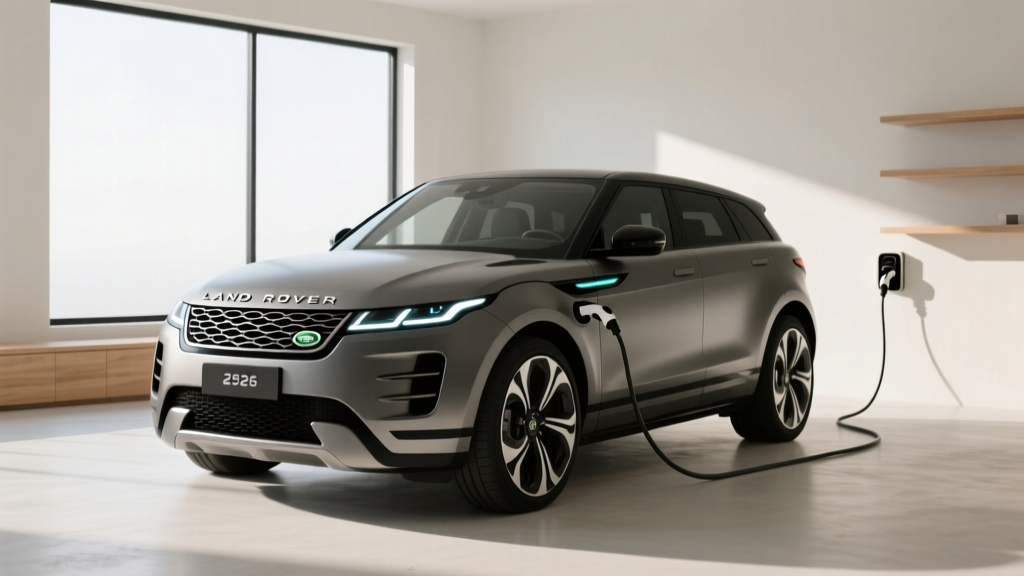
Quick Answer: The Land Rover Electric — officially the Range Rover Electric — is Jaguar Land Rover's first all-electric flagship SUV, built on the MLA-Flex architecture. For the 2026 model year, JLR targets an EPA-estimated range of approximately 300–320 miles from a ~117 kWh (usable) NMC lithium-ion battery, DC fast charging at up to ~200+ kW, and a starting MSRP in the neighborhood of $120,000–$130,000. It is not expected to qualify for the federal §30D tax credit due to MSRP caps ($80,000 for SUVs) and battery-sourcing requirements. Deliveries are anticipated in late 2025 or early 2026; final EPA certification and pricing remain subject to change.
What the Land Rover Electric Actually Is
The Range Rover Electric is not a converted gas SUV — it's a ground-up battery-electric vehicle sharing the Modular Longitudinal Architecture (MLA-Flex) with the current-generation Range Rover (P530, P550e PHEV, and inline-six mild-hybrid variants). JLR has confirmed the electric variant will match the full-size Range Rover's dimensions, wheelbase options (standard and long), and luxury positioning, but with a flat battery pack integrated into the floor structure.
This matters for buyers because MLA-Flex was designed from the outset to accommodate batteries, meaning the EV variant should retain the Range Rover's cabin space, ground clearance, and wading depth — a critical differentiator against competitors like the Mercedes-Benz EQS SUV and BMW iX, neither of which offers serious off-road capability.
Range, Battery, and Charging: The Numbers That Matter
JLR has been measured in its claims, avoiding the inflated WLTP figures that often mislead US buyers. Here's what we know and what we can reasonably project based on the platform and comparable luxury EVs:
| Specification | Range Rover Electric (Projected / Confirmed) |
|---|---|
| Battery Chemistry | NMC (Nickel Manganese Cobalt) |
| Battery Capacity (Usable) | ~117 kWh |
| EPA Range (Est.) | 300–320 miles |
| Real-World Highway Range | ~240–270 miles (70 mph, moderate climate) |
| Cold-Weather Range (20°F) | ~210–240 miles (est. 25–30% loss) |
| Peak DC Fast Charge Rate | ~200–220 kW |
| 10–80% DC Charge Time | ~28–35 minutes (est.) |
| Level 2 Charging (240V) | ~11 kW onboard charger; ~10–11 hours 0–100% |
| Connector | CCS1 (NACS adapter TBD) |
| Drivetrain | Dual-motor AWD |
| Horsepower (Est.) | ~550 hp |
| 0–60 mph (Est.) | ~4.5 seconds |
| Towing Capacity (Est.) | ~5,500–7,500 lbs |
Real-World Range Reality: The EPA sticker will likely read 300–320 miles, but expect 240–270 miles at sustained highway speeds (70–75 mph) in mild weather. In winter conditions (below freezing), plan for 210–240 miles due to cabin heating demands and battery resistance. JLR has confirmed an 800-volt electrical architecture, which should help sustain higher charge rates longer in the charging curve — but peak kW is never sustained across the full 10–80% window. Budget for a taper above 60% SoC.
Charging at Home and on the Road
With a ~117 kWh battery, home charging logistics are non-negotiable. Here's the math:
| Charging Level | Power (kW) | Miles Added per Hour | 0–100% Time (Approx.) |
|---|---|---|---|
| Level 1 (120V, 12A) | ~1.4 kW | ~3–4 mi/hr | 80+ hours (impractical) |
| Level 2 (240V, 48A) | ~11.5 kW | ~28–32 mi/hr | ~10–11 hours |
| DC Fast Charge | Up to ~220 kW | ~500+ mi/hr (peak) | 10–80% in ~28–35 min |
Home installation reality: A 48-amp Level 2 charger (like the ChargePoint Home Flex or Tesla Wall Connector) requires a dedicated 60-amp circuit. Expect $800–$2,500 for the charger hardware and $1,500–$4,000+ for electrician labor, depending on panel proximity and whether your home's electrical panel needs a 200-amp service upgrade (common in older homes). Total home charging setup: $2,300–$6,500.
On the road, the Range Rover Electric's CCS1 connector gives access to Electrify America, EVgo, and Ionity (abroad). If JLR adopts a NACS adapter — as Ford, GM, Rivian, and others have — Tesla Supercharger access would open up 15,000+ additional stalls. JLR has not confirmed NACS adoption as of early 2026, so plan your road-trip charging around the existing CCS network.
Cost of Ownership: Land Rover Electric vs. Range Rover Gas
At $120,000+, this isn't a purchase driven by economics — but the numbers still matter for total cost of ownership (TCO). Let's compare the Range Rover Electric against the gasoline Range Rover P530 (4.4L twin-turbo V8, ~$107,000 MSRP) over 5 years and 60,000 miles:
| Cost Factor | Range Rover Electric (~$125K) | Range Rover P530 V8 (~$107K) |
|---|---|---|
| Purchase Price | $125,000 | $107,000 |
| Federal Tax Credit (§30D) | $0 (exceeds $80K SUV MSRP cap) | $0 |
| Fuel/Energy (60K mi) | $3,600–$5,400 (home + public mix) | $9,000–$11,500 (premium gas, 18 MPG combined) |
| Maintenance (5 yr) | $1,500–$2,500 (no oil, fewer fluids) | $4,500–$7,000 (oil, filters, brakes) |
| Insurance (5 yr est.) | $14,000–$18,000 | $11,000–$15,000 |
| Depreciation (5 yr est.) | $55,000–$65,000 (EV luxury depreciation risk) | $50,000–$60,000 |
| Estimated 5-Year TCO | $190,000–$216,000 | $181,000–$200,000 |
Key takeaways:
- Energy savings are real but modest at this price point. You'll save roughly $5,000–$7,000 on fuel over five years, but the higher purchase price and potentially steeper EV depreciation offset most of that.
- Maintenance is genuinely lower — no oil changes, fewer brake replacements (regen braking extends pad life), and no transmission fluid service.
- Insurance costs 15–25% more for luxury EVs, driven by higher repair costs and battery replacement risk. Get a quote before committing.
- The §30D federal tax credit does not apply. The IRS caps the credit at SUVs with MSRP ≤ $80,000 (source: IRS §30D). The Range Rover Electric is well above this threshold.
How It Compares: Range Rover Electric vs. Rivals
The luxury electric SUV segment is crowded. Here's how the Range Rover Electric stacks up against the competition buyers are actually cross-shopping:
| Vehicle | EPA Range | Battery (kWh) | Peak DC kW | 10–80% Charge | 0–60 mph | Starting MSRP |
|---|---|---|---|---|---|---|
| Range Rover Electric (2026 est.) | ~310 mi | ~117 | ~210 kW | ~30 min | ~4.5s | ~$125,000 |
| Mercedes EQS 580 SUV | 305 mi | 108.4 | 200 kW | ~31 min | 4.3s | $105,550 |
| BMW iX M60 | 288 mi | 105.2 | 195 kW | ~35 min | 3.6s | $111,500 |
| Cadillac Escalade IQ | ~460 mi (est.) | ~200 | ~350 kW | ~20 min | ~3.5s | ~$130,000 |
| Rivian R1S (Tri Motor) | ~350 mi (est.) | ~149 | ~220 kW | ~28 min | ~2.9s | ~$105,000 |
Where the Range Rover Electric wins: Off-road capability (JLR's Terrain Response system is class-leading), wading depth, interior material quality, and brand cachet. No rival matches the Range Rover's combination of luxury and genuine all-terrain ability.
Where it loses: The Cadillac Escalade IQ's Ultium platform offers a substantially larger battery and faster charging. The Rivian R1S delivers superior performance and range at a lower price. The Mercedes EQS SUV undercuts on price while matching range.
Common Misconceptions About the Land Rover Electric
| Myth | Fact |
|---|---|
| "It'll get the full $7,500 federal tax credit." | No. The §30D credit caps SUV eligibility at $80,000 MSRP. The Range Rover Electric starts well above that. (IRS source) |
| "Electric Range Rovers can't go off-road." | JLR has confirmed the EV retains Terrain Response, adjustable air suspension, and a wading depth competitive with ICE Range Rovers. Electric motors offer instant torque control, which actually benefits low-speed rock crawling. |
| "The battery will need replacing in 5 years." | JLR is expected to offer an 8-year/100,000-mile battery warranty (standard for the industry). NMC batteries typically retain 85–90% capacity after 100K miles based on fueleconomy.gov data from comparable EVs. |
| "I can charge it on a regular outlet overnight." | Level 1 (120V) adds only ~3–4 miles per hour. With a ~117 kWh battery, a full charge would take 80+ hours. A Level 2 home charger is effectively mandatory. |
| "It's self-driving." | JLR's driver-assist system will be SAE Level 2 — hands-on or eyes-on supervision required. No production vehicle sold to consumers is Level 4 autonomous. |
Decision Framework: Should You Buy the Range Rover Electric?
Buy the Range Rover Electric if:
- You want a full-size luxury SUV that can genuinely go off-road and tow 5,500+ lbs — and you want it electric.
- You have reliable home Level 2 charging (or can install it) and drive fewer than 250 miles per day.
- Brand prestige, interior craftsmanship, and design matter more to you than outright performance or maximum range.
- You accept that TCO will be higher than a gas Range Rover over 5 years, and you're paying a premium for the EV experience (quiet, instant torque, no gas station visits).
Consider an alternative if:
- You regularly drive 300+ miles in a single day — the Escalade IQ or Rivian R1S offer more range headroom.
- You live in an apartment or lack home charging access. Public CCS infrastructure is improving but still unreliable in many regions.
- You want the tax credit. Look at the BMW iX xDrive50 (starts ~$87K, still over the cap) or the Rivian R1S Dual Motor Standard (starts ~$79,900, potentially credit-eligible depending on battery sourcing).
- You prioritize performance above all — the Rivian R1S Tri Motor or Tesla Model X Plaid deliver supercar acceleration at lower prices.
What First-Time EV Buyers Should Know Before Ordering
If this is your first electric vehicle, the Range Rover Electric is a deep-end entry. Here's what no brochure will tell you:
- Your electrical panel may need an upgrade. A 117 kWh battery charging at 11 kW draws ~48 amps continuously. If your home has a 100-amp panel (common in pre-2000 homes), you'll likely need a 200-amp service upgrade — adding $2,000–$5,000 to your installation cost.
- Public charging is not like pumping gas. Even at 220 kW, you're adding ~200 miles in 20–25 minutes, not 5 minutes. Plan road trips around charging stops using apps like PlugShare or A Better Routeplanner. Preconditioning the battery (navigating to a charger in the vehicle's nav system) is essential for achieving peak charge rates.
- Cold weather is the real range killer. Below 32°F, expect 25–30% range loss due to battery chemistry and cabin heating. A heat pump (which JLR has confirmed for the MLA-Flex platform) mitigates this but doesn't eliminate it.
- Insurance quotes vary wildly for luxury EVs. Get quotes from at least three carriers before ordering. Some insurers surcharge EVs 20–30% due to battery repair costs.
- Depreciation risk is higher for luxury EVs. The luxury EV segment has seen steeper depreciation than gas equivalents, partly due to rapid tech advancement and price cuts from Tesla. Plan your ownership horizon accordingly.
Frequently Asked Questions
When will the Land Rover Electric (Range Rover Electric) be available to buy?
JLR has confirmed production beginning in late 2025 at the Solihull plant in the UK, with first deliveries expected in early-to-mid 2026 for the US market. Reservation holders will receive priority. Final EPA certification and MSRP will be published closer to launch.
Will the Range Rover Electric qualify for any tax credits?
Not the federal §30D credit — the SUV MSRP cap of $80,000 disqualifies it (IRS §30D rules). Some states offer additional incentives that have higher or no MSRP caps (e.g., Colorado, California's CVRP for lower-income buyers). Check your state's EV incentive program directly, as these change frequently.
Can the Range Rover Electric tow?
Yes. JLR has confirmed towing capability, projected at 5,500–7,500 lbs. Note that towing reduces range significantly — expect a 30–50% range reduction when pulling a heavy trailer, consistent with all EVs. The gas Range Rover P530 is rated at 7,716 lbs for comparison.
What's the battery warranty?
JLR is expected to offer the industry-standard 8-year/100,000-mile battery warranty, guaranteeing a minimum capacity retention (typically 70% of original capacity). Official terms will be confirmed at launch.
Is the Range Rover Electric good in snow and off-road?
This is the Range Rover Electric's strongest competitive advantage. JLR's Terrain Response system, standard air suspension with adjustable ride height, and all-wheel drive with torque vectoring should make it the most capable off-road electric SUV on the market. Electric motors provide precise, instant torque delivery that benefits technical off-road driving.
Does it use CCS or NACS (Tesla) charging?
The Range Rover Electric launches with a CCS1 charge port. JLR has not confirmed NACS adoption or a Tesla Supercharger adapter. If you rely on the Tesla Supercharger network, this is a consideration — though third-party CCS-to-NACS adapters (like the Lectron or A2Z) exist, they are not officially supported by JLR.