The Quick Answer: Is the Land Rover Electric Defender Worth Waiting For?
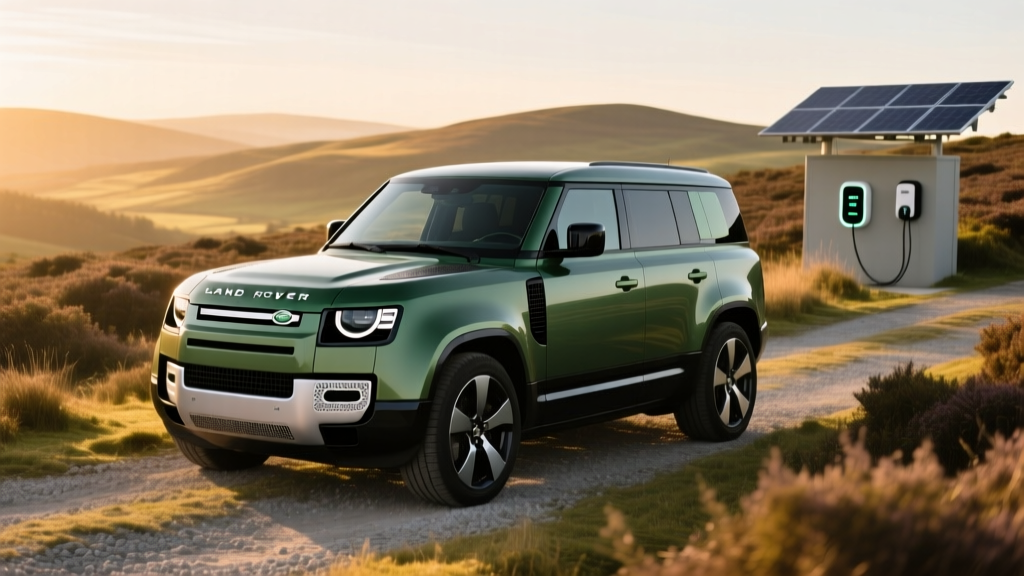
The Land Rover Electric Defender is not yet on sale in the United States as of early 2026. Jaguar Land Rover has confirmed an all-electric Defender is in development alongside the electric Range Rover, built on the modular MLA-Flex (Modular Longitudinal Architecture) platform. Based on JLR's published electric Range Rover specs and industry estimates, the Electric Defender is expected to carry a ~100–117 kWh battery (NMC chemistry), target an EPA range of roughly 280–320 miles, support DC fast charging up to ~200–250 kW, and start at an estimated $90,000–$110,000 MSRP. If you need a luxury electric off-roader today, the closest alternatives are the Rivian R1S, Mercedes G 580 with EQ Technology, or the upcoming electric Mercedes G-Class variants. If you're specifically loyal to the Defender nameplate, you're looking at a likely late-2026 or 2027 model-year reveal.
What We Know: Estimated Specs for the Electric Defender
JLR has been guarded with final specifications for the Electric Defender, but the MLA-Flex architecture — which also underpins the electric Range Rover — gives us reliable baseline figures. The platform supports 800V electrical architecture, enabling faster DC charging than the older 400V systems found in the Jaguar I-PACE. Here is our best estimate based on JLR disclosures, supplier data, and platform sharing:
| Specification | Estimated (Electric Defender) | Electric Range Rover (Confirmed) |
|---|---|---|
| Battery Capacity (usable) | ~100–117 kWh (NMC) | 117 kWh (NMC) |
| EPA Range (est.) | 280–320 miles | ~300–320 miles |
| DC Fast Charge Peak | ~200–250 kW | ~250 kW (800V) |
| 10–80% DC Charge Time | ~25–35 minutes | ~28 minutes (est.) |
| Level 2 AC Charging | ~11–19 kW | 19 kW |
| 0–60 mph | ~4.5–5.5 sec (est.) | ~4.6 sec |
| Horsepower | ~500–650 hp (dual-motor AWD) | ~550 hp |
| Drivetrain | Dual/Tri-motor AWD | Dual-motor AWD |
| Towing Capacity | ~7,500–8,200 lbs (est.) | ~7,700 lbs |
| Off-Road Capability | Terrain Response, air suspension, wading | Yes — full Terrain Response |
| Estimated Base MSRP | $90,000–$110,000 | $135,000+ |
| Battery Warranty | 8 yr / 100,000 mi (est.) | 8 yr / 100,000 mi |
Real-World Range Expectations
EPA estimate: ~280–320 miles (preliminary). In real-world driving, expect:
- Highway cruising (70–75 mph): ~230–270 miles — the Defender's boxy aerodynamics will penalize efficiency at speed compared to sleeker SUVs.
- Cold weather (below 32°F): ~200–250 miles — NMC batteries lose 15–30% capacity in freezing temperatures without preconditioning.
- Off-road / low-speed trail use: Range may actually exceed EPA estimates due to low speeds and heavy regen, but sustained climbs will drain the pack faster.
- Towing: Expect range to drop to ~150–190 miles when towing near max capacity — a universal EV reality.
Electric Defender vs. Gas Defender 110: The Cost Breakdown
The current gas-powered Land Rover Defender 110 (P400 mild-hybrid inline-six) starts around $67,000 and returns an EPA-estimated 19 MPG combined. Let's compare a realistic 5-year ownership scenario assuming 15,000 miles driven annually:
| Cost Category (5 Years / 75,000 mi) | Gas Defender 110 P400 | Electric Defender (Est.) |
|---|---|---|
| Purchase Price (base MSRP) | $67,000 | $100,000 (est.) |
| Federal Tax Credit (§30D) | $0 | Up to $7,500 (see eligibility below) |
| Fuel / Electricity | $11,842 (19 MPG, $3.00/gal) | $3,750 (home L2 at $0.15/kWh, 2.5 mi/kWh) |
| Maintenance | $4,500 (oil, filters, brakes, fluids) | $1,500 (cabin filter, wipers, tire rotation, brake fluid) |
| Insurance (avg.) | $12,500 ($2,500/yr) | $15,000 ($3,000/yr — EVs cost ~15–20% more to insure) |
| Depreciation (est. 5-yr) | $33,500 (50%) | $55,000 (55% — luxury EVs depreciate faster) |
| Total 5-Year Cost | ~$129,342 | ~$167,750 |
The verdict: The Electric Defender will likely cost $38,000+ more over 5 years than the gas Defender 110, driven almost entirely by the higher purchase price and steeper depreciation. Fuel and maintenance savings of roughly $11,000 offset only a fraction of that gap. This is a purchase driven by preference — silent off-roading, instant torque, no tailpipe emissions, and future-proofing — not by total-cost-of-ownership savings versus the gas Defender.
How It Stacks Up Against Rivals
If you're shopping for a luxury electric SUV with genuine off-road capability, the Electric Defender enters a small but growing field. Here's how it compares to confirmed alternatives available or coming soon:
| Vehicle | EPA Range | Battery (kWh) | DC Fast Charge | 0–60 mph | Starting MSRP |
|---|---|---|---|---|---|
| Land Rover Electric Defender (est.) | 280–320 mi | ~100–117 (NMC) | ~250 kW | ~4.5–5.5s | $90,000–$110,000 |
| Rivian R1S (Dual-Motor Max Pack) | 410 mi | 149 (NMC) | ~220 kW | 4.5s | $99,900 |
| Mercedes G 580 EQ (electric G-Wagen) | ~240 mi (WLTP; EPA TBD) | 116 (NMC) | ~200 kW | 4.7s | ~$160,000 |
| Cadillac Escalade IQ | ~450 mi (est.) | ~200 (NMC) | ~350 kW | ~3.5s | ~$130,000 |
| Land Rover Defender 110 P400 (Gas) | ~380 mi (19 MPG × 20 gal) | N/A | N/A | 5.7s | $67,000 |
The Rivian R1S currently offers the best combination of range, off-road chops, and price in this segment. The Mercedes G 580 EQ is the closest spiritual competitor to an Electric Defender — boxy, iconic, off-road focused — but at a significantly higher price point. The Electric Defender's advantage will be brand cachet, Land Rover's Terrain Response system, and potentially a lower starting price than the electric G-Wagen.
Federal Tax Credit: What You Need to Know
The IRS §30D Clean Vehicle Credit offers up to $7,500 for qualifying new EVs, but eligibility is complex and subject to change. As of 2026, the Electric Defender's credit eligibility is uncertain and will depend on several factors:
§30D Tax Credit Requirements (2026 Rules)
- MSRP cap: SUVs must be priced at or below $80,000. If the Electric Defender starts above this, no credit — though lower trims may qualify.
- Buyer income cap: Modified AGI must not exceed $300,000 (married filing jointly), $225,000 (head of household), or $150,000 (single).
- Battery sourcing: At least 50% of critical minerals must be sourced from the US or FTA partners, and 100% of battery components must be manufactured or assembled in North America (phasing in through 2029). JLR's supply chain may or may not meet these thresholds.
- Point-of-sale transfer: You can transfer the credit to the dealer at purchase for an immediate price reduction — no need to wait until tax filing.
- Final assembly: Must occur in North America. JLR's Spartanburg, SC, plant currently builds some models, but Defender assembly is in Slovakia — a potential disqualifier unless production shifts.
Bottom line: Do not count on the $7,500 credit for the Electric Defender. The MSRP cap and final-assembly requirement are the biggest hurdles. Check the official IRS Clean Vehicle Credit page and fueleconomy.gov tax credit lookup once the vehicle is officially released.
Real-World Ownership: What First-Time EV Buyers Should Know
If the Electric Defender is your first EV, here are the practical realities that spec sheets don't highlight:
Home Charging Is Essential
A Level 2 home charger (11–19 kW) is nearly mandatory for a battery this size. On a standard 120V outlet (Level 1), a 117 kWh battery would take over 100 hours to fully charge — essentially unusable. Budget $800–$2,500 for a Level 2 charger and professional installation (assuming your electrical panel has capacity). If you need a panel upgrade from 100A to 200A, add $1,500–$3,500.
Charging Curve Reality
Peak DC fast-charge rates of 250 kW are not sustained across the entire session. Expect the Defender to peak near 250 kW from roughly 10–40% State of Charge (SoC), then taper to ~100–150 kW through 60%, and drop below 50 kW past 80%. A realistic 10–80% stop will take 25–35 minutes, not the "15-minute charge" marketing sometimes implies.
Off-Road Considerations
The Defender's legendary off-road capability should translate well to electric. Electric motors provide instant torque at zero RPM (ideal for rock crawling), and the low-mounted battery pack gives an extremely low center of gravity. However: approach/departure angles may be slightly affected by underbody battery protection skid plates, and wading depth will depend on how JLR seals the high-voltage system. The electric Range Rover quotes ~850mm wading — expect similar.
Cold Climate Impact
If you live in the Mountain West, Midwest, or Northeast, plan for 20–30% range loss in sustained sub-freezing temperatures. Preconditioning the battery while plugged in (a standard feature) mitigates this somewhat, but the boxy Defender's larger frontal area also means higher energy consumption at highway speeds in cold, dense air.
Common Misconceptions About the Electric Defender
| Myth | Fact |
|---|---|
| "It will tow just like the gas Defender." | Towing capacity should be similar (~7,500+ lbs), but towing range will be roughly halved. Plan for charging stops every 150–190 miles when towing near max capacity. |
| "The $7,500 tax credit applies automatically." | The §30D credit requires meeting MSRP caps, income limits, battery-sourcing rules, and North American final assembly. The Defender's Slovak assembly history makes this uncertain. |
| "It'll be cheaper to own than the gas version." | Lower fuel and maintenance costs are real, but the $30,000+ price premium and higher depreciation mean total 5-year cost will be significantly higher. |
| "Electric means it can't do real off-roading." | Electric motors actually excel off-road: instant torque, precise throttle modulation, and a low center of gravity. The Rivian R1S and Mercedes G 580 EQ have already proven this. |
| "I can charge it on a regular outlet overnight." | Level 1 (120V) adds roughly 3–5 miles of range per hour. With a ~300-mile battery, a full charge would take 60–100 hours. Level 2 home installation is essential. |
| "It's available to order now." | As of early 2026, the Electric Defender is announced but not yet on sale. JLR has confirmed it is in development; a formal reveal and order bank are expected in late 2026 or 2027. |
Decision Framework: Should You Wait, or Buy Now?
Choose the Land Rover Electric Defender (Wait) If:
- You are a committed Land Rover loyalist and the Defender nameplate is non-negotiable.
- You want genuine off-road capability with zero tailpipe emissions.
- You can afford a $90,000–$110,000+ SUV and don't need the tax credit.
- You have home Level 2 charging and your daily driving is under 200 miles.
- You're willing to wait until late 2026 or 2027 for delivery.
Choose the Rivian R1S (Buy Now) If:
- You want a proven electric off-road SUV with 410 miles of EPA range today.
- You need three rows of seating and strong towing capability (7,700 lbs).
- You want to start around $99,900 and avoid the wait.
- Brand heritage matters less than capability and range.
Choose the Gas Defender 110 (Buy Now) If:
- Your budget tops out around $70,000–$85,000.
- You frequently tow long distances or drive in remote areas with no DC fast charging.
- You want proven long-term reliability data and established service networks.
- Total cost of ownership is your primary decision driver.
Choose the Mercedes G 580 EQ If:
- You want an iconic boxy off-roader that's electric and available now.
- Budget is flexible ($160,000+) and exclusivity matters.
- You prioritize status and design over maximum range.
Frequently Asked Questions
When will the Land Rover Electric Defender be available in the US?
JLR has confirmed an electric Defender is in development but has not announced a firm on-sale date. Based on the electric Range Rover's timeline, expect a formal reveal in late 2026 with US deliveries potentially starting in the 2027 model year. All current specs are preliminary estimates.
Will the Electric Defender keep the same off-road capability as the gas version?
JLR has stated the electric Defender will retain full Terrain Response capability, air suspension, and wading ability. Electric powertrains offer advantages off-road (instant torque, low center of gravity), but final approach/departure/breakover angles and wading depth will depend on battery packaging. Expect capability to be comparable, not identical.
How much will it cost to charge the Electric Defender at home?
With a ~110 kWh usable battery and the US average electricity rate of ~$0.16/kWh, a full home charge would cost approximately $17–$18. For comparison, filling the gas Defender 110's 23.8-gallon tank at $3.00/gal costs about $71. Over 15,000 annual miles, home charging saves roughly $1,600–$2,000 per year versus gas.
Will the Electric Defender qualify for the $7,500 federal tax credit?
This is uncertain. The §30D credit requires North American final assembly, MSRP under $80,000 (for SUVs), buyer income below set thresholds, and specific battery-sourcing compliance. The Defender has historically been assembled in Nitra, Slovakia. Unless JLR shifts production or the rules change, the credit may not apply. Always verify on IRS.gov at time of purchase.
Is the Electric Defender a better buy than the Rivian R1S?
On paper, the Rivian R1S currently offers more range (410 vs. ~300 miles est.), a proven platform, and a lower starting price. The Electric Defender's advantages will be Land Rover brand prestige, potentially superior interior luxury, and the Terrain Response system's decades of off-road software tuning. If range and value are priorities, the R1S leads. If brand and heritage matter most, wait for the Defender.
What battery chemistry will the Electric Defender use?
Based on the MLA-Flex platform shared with the electric Range Rover, the Electric Defender is expected to use NMC (nickel manganese cobalt) chemistry, which offers higher energy density than LFP — important for a heavy, boxy SUV that needs to maximize range. NMC batteries typically carry an 8-year/100,000-mile warranty with a 70% capacity retention threshold.