Quick Answer: Should You Wait for the Land Rover Defender EV?
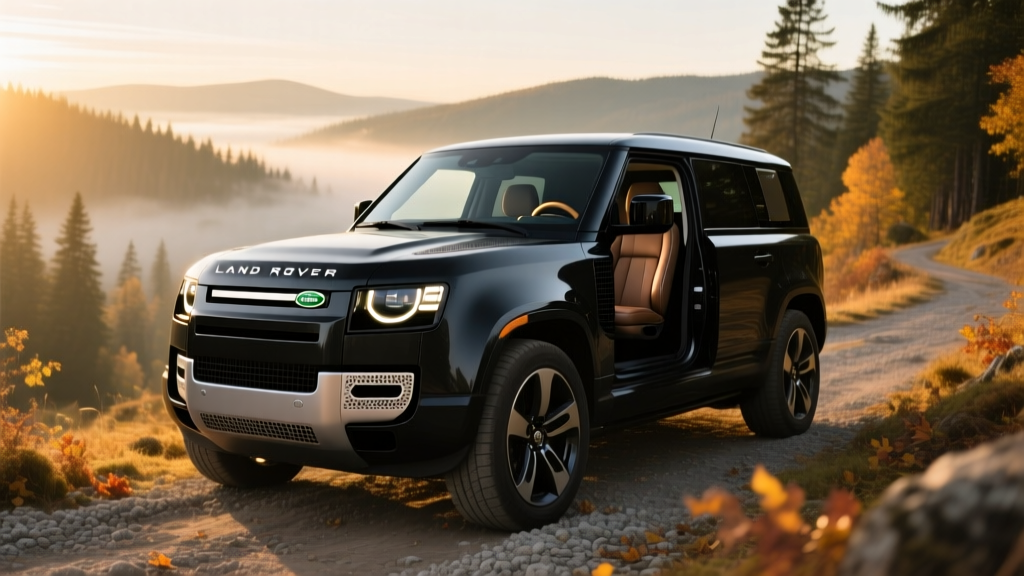
The all-electric Land Rover Defender EV (officially the Defender OCTA Electric and broader electric Defender lineup on JLR's EMA platform) is announced for the 2026 model year with production expected to begin in late 2025/early 2026. Preliminary specs point to a ~100 kWh usable battery (NMC chemistry), an estimated EPA range of 280–310 miles, peak DC fast charging around 200–250 kW, and a starting MSRP likely between $85,000 and $95,000 for the base Defender 110 EV variant. If you need three-row seating, genuine off-road capability, and zero tailpipe emissions, it will be one of the few luxury off-roaders to offer all three. However, if you regularly tow heavy loads, drive in extreme cold, or lack reliable home charging access, the current gas or mild-hybrid Defender 110 remains the lower-risk choice until independent EPA and real-world testing confirm JLR's claims.
What We Know About the 2026 Defender EV Platform
Land Rover's parent company, Jaguar Land Rover (JLR), confirmed the electric Defender will ride on the company's Electric Modular Architecture (EMA) — a skateboard-style platform with an 800-volt electrical system. This is the same architecture underpinning the upcoming electric Range Rover Sport. The 800V system is critical: it enables faster DC charging and more efficient power delivery compared to older 400V EV platforms.
JLR has stated the electric Defender will retain the boxy silhouette, aluminum-intensive body structure, and off-road hardware (including the Terrain Response system, wading depth capability, and available locking differentials) that define the current Defender 110. What changes is the powertrain: dual-motor all-wheel drive is expected across all trims, with a possible tri-motor OCTA performance variant producing upward of 600 horsepower.
| Spec | Defender 110 EV (Est.) | Defender OCTA Electric (Est.) |
|---|---|---|
| Battery (usable) | ~100 kWh, NMC | ~115 kWh, NMC |
| EPA Range | 280–310 mi | 260–285 mi |
| Drivetrain | Dual-motor AWD | Tri-motor AWD |
| Horsepower | ~450 hp | ~620 hp |
| 0–60 mph | ~5.2 sec | ~3.8 sec |
| Peak DC Charge Rate | ~200 kW | ~250 kW |
| 10–80% DC Charge | ~28 min | ~25 min |
| Level 2 Charge Rate | 11 kW (~37 mi/hr) | 11 kW (~37 mi/hr) |
| Estimated Base MSRP | $85,000–$95,000 | $140,000+ |
| Wading Depth | ~35.4 in (900 mm) | ~35.4 in (900 mm) |
| Battery Warranty | 8 yr / 100,000 mi (est.) | 8 yr / 100,000 mi (est.) |
Real-World Range Reality Check: The estimated EPA range of 280–310 miles assumes moderate temperatures, mixed driving, and no towing. Expect ~220–250 miles on sustained highway driving at 70+ mph due to the Defender's boxy aerodynamics (drag coefficient likely around 0.38–0.42). In sub-freezing temperatures, plan for a 20–30% range reduction, bringing real-world winter range down to approximately 195–240 miles. Towing a 4,000-lb trailer could cut range by 40–50%. These estimates are based on comparable large, body-on-frame-style EVs like the Rivian R1S and GMC Hummer EV — independent testing will be required once production vehicles reach reviewers.
Defender EV vs. Gas Defender 110: Cost and Capability Compared
The current 2025 Land Rover Defender 110 with the P400 mild-hybrid inline-six starts at approximately $69,900 MSRP and delivers an EPA-estimated 18 MPG combined. Let's compare the total cost picture over five years and 75,000 miles of driving.
| Category | Defender 110 EV (Est.) | Gas Defender 110 P400 |
|---|---|---|
| Purchase Price (base MSRP) | $90,000 | $69,900 |
| Federal Tax Credit (§30D) | $0–$7,500* | $0 |
| Net Purchase Cost | $82,500–$90,000 | $69,900 |
| Fuel/Energy (75k mi) | $3,750–$5,600 | $12,500 |
| Maintenance (5 yr) | $1,800–$2,500 | $4,500–$6,000 |
| Insurance (5 yr avg.) | $12,000–$15,000 | $9,500–$12,000 |
| Estimated 5-Yr Total Cost | $100,050–$113,100 | $96,400–$100,400 |
*Federal §30D tax credit eligibility for the Defender EV depends on MSRP caps (vans/SUVs: $80,000 cap — higher trims may exceed this), buyer income limits ($300k MFJ / $150k single), and battery critical-mineral and component sourcing requirements. Always verify current eligibility at IRS.gov and consult a tax professional. The credit can be transferred to the dealer at point of sale as an instant discount.
The EV variant carries a $15,000–$20,000 upfront premium but saves approximately $7,000–$9,000 in fuel and $2,500–$3,500 in maintenance over five years. The gap narrows further if you qualify for the full $7,500 credit and have access to low-cost home charging (under $0.15/kWh). If you primarily rely on DC fast charging at $0.40–$0.55/kWh, the energy-cost advantage shrinks considerably.
Charging the Defender EV: Home and Public Infrastructure
With an estimated 100–115 kWh battery, the Defender EV will demand serious charging infrastructure. Here is what ownership actually looks like across the three charging levels:
| Level | Power (kW) | Miles Added/Hour | 0–100% Time | Best Use Case |
|---|---|---|---|---|
| Level 1 (120V outlet) | 1.4 kW | ~4 mi/hr | ~70+ hours | Emergency only |
| Level 2 (240V, 48A) | 11.5 kW | ~37 mi/hr | ~9–10 hours | Daily overnight home charging |
| DC Fast Charge | 200–250 kW peak | N/A | 10–80% in ~25–28 min | Road trips |
Home charging is nearly essential for a vehicle with this battery size. Level 1 trickle charging at 1.4 kW would take over 70 hours to fill a depleted 100 kWh battery — effectively useless for daily driving. A Level 2 home charger (240V, 48-amp circuit) is the practical minimum. Expect to invest $1,200–$3,500 for a professional Level 2 installation, including:
| Item | Cost Range |
|---|---|
| Level 2 charger hardware (48A, Wi-Fi-enabled) | $400–$700 |
| Electrician labor (240V/50A circuit run) | $600–$2,000 |
| Electrical permit | $50–$200 |
| Panel upgrade (if needed: 100A → 200A) | $1,500–$3,500 |
| Total (no panel upgrade) | $1,050–$2,900 |
| Total (with panel upgrade) | $2,550–$6,400 |
The Defender EV's NACS vs. CCS connector situation depends on JLR's final decision for the North American market. As of 2025, most legacy JLR products in the U.S. use CCS1. However, with nearly every major automaker adopting the Tesla NACS standard for 2025+ models, JLR is expected to equip the electric Defender with a NACS port — granting native access to the Tesla Supercharger network (over 25,000 stalls in North America). If it ships with CCS1, a NACS adapter (~$200–$250) will be necessary for Supercharger access. Confirm the connector type before purchase.
Real-World Ownership: Who Should (and Shouldn't) Buy the Defender EV
Decision Framework: Is the Defender EV Right for You?
Choose the Defender EV if:
- You have reliable Level 2 home charging (garage or dedicated driveway circuit)
- Your daily commute is under 100 miles round-trip, with occasional 250-mile road trips
- You want a luxury off-roader with zero tailpipe emissions for environmental or urban-low-emission-zone reasons
- You live in a moderate climate, or you accept a 20–30% winter range penalty
- You can absorb the $85,000+ starting price and higher insurance premiums
Stick with the gas or mild-hybrid Defender if:
- You lack home charging access and your area has sparse DC fast-charging infrastructure
- You tow more than 3,500 lbs regularly (towing devastates EV range)
- You frequently drive in sub-20°F conditions on long rural routes
- You need maximum cargo flexibility and don't want to worry about battery-pack floor height
- You plan to keep the vehicle 10+ years and are concerned about out-of-warranty battery replacement costs ($20,000–$30,000+ for a 100+ kWh pack)
Cold-weather buyers take note: The Defender EV's large battery provides a thermal-mass buffer, but JLR has not confirmed whether the EMA platform includes a standard heat pump — critical for maintaining cabin heating efficiency in freezing temperatures without cannibalizing range. If a heat pump is optional or absent, expect even steeper winter range losses. We will update this article once JLR publishes final thermal-management specifications.
Off-road capability is where the Defender EV could genuinely differentiate. Electric motors deliver instant torque at zero RPM — an advantage over internal combustion in low-speed rock-crawling scenarios. The battery pack's low placement also drops the center of gravity. However, underbody battery protection against rock strikes, the vehicle's approach/departure angles with the battery housing, and field-repairability in remote areas remain open questions until JLR releases detailed off-road specifications.
Common Misconceptions About the Defender EV
| Myth | Fact |
|---|---|
| "It will have 400+ miles of range." | With a ~100 kWh battery and a boxy, heavy SUV form factor, 280–310 EPA miles is realistic. The aerodynamic drag penalty at highway speeds is significant. No production boxy SUV currently exceeds 350 EPA miles. |
| "It qualifies for the full $7,500 tax credit." | Not guaranteed. The §30D credit has an $80,000 MSRP cap for SUVs/vans. Higher Defender EV trims (SE, HSE, OCTA) will likely exceed this cap. Battery-sourcing rules may also reduce or eliminate the credit. Always check the fueleconomy.gov tax credit lookup closer to launch. |
| "DC fast charging means 20 minutes to full." | Peak charge rates (200–250 kW) only apply between roughly 10–50% State of Charge. Above 80%, the charge curve tapers sharply — often to under 50 kW. A 10–80% charge may take 25–28 minutes, but 80–100% can add another 25+ minutes. |
| "It can't really off-road because it's electric." | Electric drivetrains offer precise torque vectoring and instant low-end torque — both advantages off-road. The Rivian R1T/R1S has demonstrated credible off-road performance. The real question is underbody battery armor and ground-clearance packaging, which JLR has not yet fully detailed. |
| "I can charge it on a regular wall outlet overnight." | Level 1 (120V) charging adds roughly 4 miles of range per hour. After a 10-hour overnight charge, you'd gain only ~40 miles — insufficient for most daily driving. A Level 2 (240V) home charger is effectively mandatory for this vehicle. |
What First-Time EV Buyers Should Know Before Ordering
If the Defender EV will be your first electric vehicle, prepare for these ownership shifts:
- Plan charging around your life, not the other way around. With a 100+ kWh battery, public DC fast chargers will take 25–40 minutes for a meaningful charge. Route planning on road trips matters — use apps like A Better Routeplanner or PlugShare to verify charger availability and uptime along your regular routes.
- Understand kW vs. kWh. Kilowatts (kW) measure power — how fast energy flows into the battery. Kilowatt-hours (kWh) measure energy capacity — how much the battery holds. A 200 kW charger fills a 100 kWh battery faster than a 50 kW charger, but only when the battery's charge curve allows it.
- Insurance will cost more. Luxury EVs carry higher insurance premiums due to expensive battery packs, specialized repair requirements, and higher vehicle MSRP. Budget an additional $2,500–$4,000 per year compared to the gas Defender, depending on your state and driving record.
- Tire wear accelerates on heavy EVs. The Defender EV will likely weigh 6,000+ lbs. Combined with instant electric torque, expect to replace tires every 25,000–35,000 miles rather than the 40,000–50,000 miles typical of lighter vehicles. Budget $1,200–$2,000 for a set of premium all-terrain or all-season tires.
- Resale value is uncertain. EV depreciation has been steeper than ICE vehicles in recent years, partly due to rapid battery-tech improvements and Tesla price cuts dragging down the market. JLR's brand equity helps, but plan for 40–55% depreciation over five years until the EV resale market stabilizes.
Pricing, Trims, and Federal Tax Credit Eligibility
| Trim | Est. MSRP | Under $80K §30D Cap? | Est. After Max Credit |
|---|---|---|---|
| Defender 110 EV S | $85,000–$90,000 | No | $85,000–$90,000 |
| Defender 110 EV SE | $95,000–$100,000 | No | $95,000–$100,000 |
| Defender 110 EV HSE | $105,000–$115,000 | No | $105,000–$115,000 |
| Defender OCTA Electric | $140,000+ | No | $140,000+ |
Critical tax credit note: Under current IRS §30D rules, the federal clean vehicle credit is capped at $80,000 MSRP for SUVs, vans, and pickup trucks. Based on Land Rover's historical pricing strategy, even the base Defender EV trim is likely to exceed this threshold — meaning most or all Defender EV variants may be ineligible for the federal credit. Some buyers may be able to structure a lease to access the commercial clean vehicle credit (§45W) through the lessor, which has different rules. Consult a tax professional and check IRS.gov clean vehicle credits for the latest guidance before making a purchase decision.
State and local incentives may still apply. California's CVRP, Colorado's innovative motor vehicle credit, and various utility-company rebates can reduce net cost by $2,000–$7,500 depending on your jurisdiction. Check your state's energy office and local utility for current programs.
Frequently Asked Questions
When will the Land Rover Defender EV be available to buy?
JLR has confirmed the electric Defender is in development on the EMA platform, with production targeted for 2026. U.S. deliveries are expected no earlier than mid-to-late 2026. Reservation timelines have not been announced. This article reflects preliminary and estimated specifications — final EPA range, pricing, and equipment will be confirmed closer to launch.
Will the Defender EV have the same off-road capability as the gas Defender?
JLR has stated the electric Defender will match or exceed the current model's off-road capability, including Terrain Response modes, configurable air suspension, and wading depth. Electric motors provide advantages in low-speed torque control. However, detailed approach/departure/breakover angles and underbody protection specs have not been published. The vehicle's additional weight (estimated 6,000+ lbs) may affect soft-surface performance like sand and deep mud.
How long will the Defender EV battery last?
Modern NMC lithium-ion batteries in liquid-cooled packs typically retain 80–90% of original capacity after 100,000–150,000 miles based on data from comparable EVs. JLR is expected to offer an 8-year/100,000-mile battery warranty with a capacity-retention threshold (likely 70%). Out-of-warranty replacement for a 100+ kWh pack would likely cost $20,000–$30,000+ based on current industry pricing. To maximize longevity, avoid routinely charging to 100% or depleting below 10%, and use preconditioning before DC fast charging.
Can I tow with the Defender EV?
The gas Defender 110 is rated to tow up to 8,201 lbs. JLR has not published a tow rating for the EV variant, but comparable electric SUVs (Rivian R1S: 7,700 lbs; BMW iX: 3,500 lbs) suggest a rating between 5,000 and 7,500 lbs is plausible. However, towing at or near maximum capacity will reduce range by 40–50% — turning a 300-mile range into roughly 150–180 miles. For frequent heavy towing, the gas or plug-in hybrid Defender remains more practical.
Is the Defender EV eligible for HOV lane access?
In most U.S. states that offer HOV/carpool lane stickers for EVs (California, Colorado, Maryland, etc.), a new zero-emission Defender EV would qualify, subject to program caps and income restrictions that vary by state. Check your state's DMV for current clean-air vehicle sticker programs and expiration dates.