The Quick Answer: Is the Electric Defender Worth the Wait?
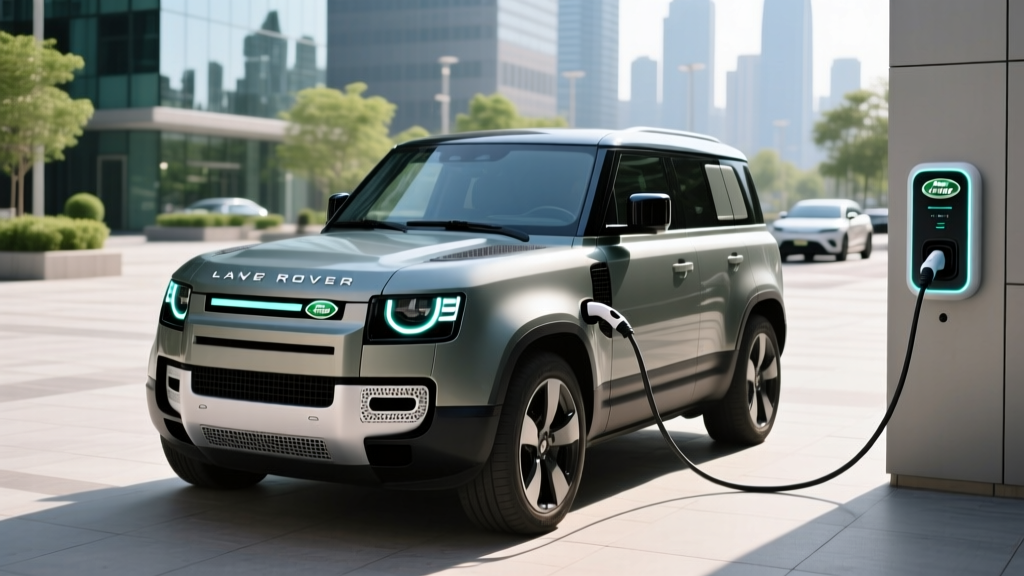
The Land Rover Defender Electric is expected to arrive in U.S. showrooms in late 2026 or early 2027, built on Jaguar Land Rover's new Electric Modular Architecture (EMA). Based on preliminary specifications and the EMA platform's confirmed capabilities, expect an EPA-estimated range in the 280–330 mile bracket, an 800-volt architecture supporting DC fast charging at up to ~250 kW, and a starting MSRP likely between $100,000 and $115,000. It will compete directly with the Mercedes G 580 EQG and the electric Porsche Cayenne. Because the MSRP will far exceed the IRS §30D tax credit cap of $80,000 for SUVs, federal tax credit eligibility is unlikely. This is a luxury-first EV — buyers should evaluate it on capability, tech, and ownership experience rather than incentive-driven economics.
What We Know About the Electric Defender's Specs
Jaguar Land Rover confirmed the Defender Electric as part of its "Reimagine" strategy, and the model will ride on the Electric Modular Architecture (EMA) — the same flexible platform underpinning upcoming electric Range Rover Sport and mid-size Land Rover models. While JLR has not released finalized U.S. specifications as of early 2026, the EMA platform's engineering parameters and statements from JLR executives give us a reliable picture of what's coming.
| Specification | Estimated Figure |
|---|---|
| Platform | EMA (Electric Modular Architecture) |
| Battery Capacity (usable) | ~100–115 kWh (NMC chemistry expected) |
| EPA Range (est.) | 280–330 miles (varies by body style) |
| Architecture | 800V nominal |
| Peak DC Fast Charge Rate | ~250 kW |
| 10–80% DC Fast Charge Time | ~20–25 minutes (est.) |
| Level 2 AC Charging | ~11–22 kW onboard charger |
| Powertrain | Dual-motor AWD (tri-motor variant possible) |
| Horsepower | ~450–600 HP (depending on variant) |
| 0–60 mph | ~4.5–5.5 seconds (est.) |
| Towing Capacity | ~7,700 lbs (est., matching ICE Defender 110) |
| Wading Depth | TBD (ICE Defender: 35.4 in / 900 mm) |
| Starting MSRP (est.) | $100,000–$115,000 |
| Battery/Powertrain Warranty | 8 years / 100,000 miles (JLR standard EV warranty) |
Important caveat: These are estimated figures based on EMA platform disclosures and JLR's public statements. Final EPA range, pricing, and charging specs will be confirmed closer to the on-sale date. We'll update this guide when official numbers are published on Land Rover's U.S. site.
Real-World Range Expectations
EPA Estimate: ~280–330 miles (pending official certification)
Real-World Highway (70–75 mph): Expect ~230–275 miles. The Defender's boxy aerodynamic profile (high drag coefficient) will penalize highway efficiency more than a sleeker SUV like the BMW iX.
Cold Weather (below 32°F): Plan for 20–30% range reduction, bringing usable range to ~195–260 miles depending on conditions and whether the heat pump (expected standard) is active.
Off-Road/Low-Speed Trail Use: Range impact is minimal at low speeds; expect near-EPA figures on trails. Regenerative braking on descents can recoup meaningful energy.
Charging: 800V Architecture and What It Means
The EMA platform's 800-volt electrical architecture is the most significant charging-related detail. For context, most current EVs use 400V systems (Tesla Model Y, Ford Mustang Mach-E), while 800V platforms (Hyundai Ioniq 5, Porsche Taycan, Lucid Air) can accept higher charge rates with less heat buildup and thinner, lighter wiring.
At a 350 kW DC fast charger (like Electrify America's newest stalls), the Defender Electric should peak around 250 kW — translating to roughly 10–80% in 20–25 minutes under ideal conditions. However, real-world charging curves always taper above 80% SoC to protect the battery. Expect a full 10–100% session to take closer to 35–40 minutes.
| Charging Level | Power | Miles Added per Hour | Typical Use Case |
|---|---|---|---|
| Level 1 (120V household) | ~1.4 kW | ~3–4 mi/hr | Emergency/trickle only |
| Level 2 (240V home) | ~11 kW | ~28–35 mi/hr | Overnight home charging (~10 hrs for full charge) |
| Level 2 (240V, 22 kW capable) | ~22 kW | ~55–70 mi/hr | Faster home/public AC (~5 hrs for full charge) |
| DC Fast Charge (250 kW peak) | ~250 kW | ~600+ mi/hr (peak) | Road trips; 10–80% in ~20–25 min |
Home charging reality check: A ~110 kWh battery is large. On a standard 11 kW Level 2 home charger (48 amps on a 60-amp circuit), a full 10–100% charge takes roughly 9–10 hours. Most owners will charge from 20–80% overnight, which takes about 6 hours — perfectly manageable for daily use. If your electrical panel supports a 22 kW Wallbox or similar (requires 3-phase power, uncommon in most U.S. homes), you can cut that roughly in half.
Electric Defender vs. Gas Defender: The Cost Breakdown
The current ICE Defender 110 (P400 mild-hybrid inline-six) starts around $63,800 and delivers roughly 19 MPG combined per fueleconomy.gov. The Electric Defender will carry a substantial price premium. Here's how the economics compare over a typical 5-year / 75,000-mile ownership period:
| Cost Category | Defender Electric (est.) | Defender 110 P400 (gas) |
|---|---|---|
| Purchase Price (MSRP) | $107,000 | $68,000 (loaded comparable trim) |
| Federal Tax Credit (§30D) | $0 (exceeds $80K SUV cap) | $0 |
| Fuel / Electricity (75K mi) | $3,400–$5,200 | $13,800–$15,800 |
| Maintenance (5 years) | $2,500–$3,500 | $5,500–$7,000 |
| Insurance (5 years) | $14,000–$18,000 | $11,000–$14,000 |
| Estimated Depreciation | $40,000–$50,000 | $30,000–$38,000 |
| Total 5-Year Cost | $127,000–$144,000 | $98,000–$113,000 |
Key takeaways from this comparison:
- Fuel savings are real but don't close the price gap. At a national average of $0.16/kWh (home charging) and $3.50/gallon gas, the electric Defender saves roughly $9,000–$12,000 in fuel over 5 years. Public DC fast charging at $0.40–$0.50/kWh narrows that advantage.
- Maintenance savings are meaningful. No oil changes, no transmission fluid, fewer brake replacements (regen braking reduces pad wear). Expect 40–50% lower routine maintenance costs.
- Insurance will cost more. Luxury EVs carry higher premiums due to battery replacement costs and specialized repair requirements. Budget an extra $500–$800/year vs. the gas model.
- Depreciation is the wild card. Luxury EV depreciation has been steeper than ICE luxury vehicles in 2024–2025. JLR's brand cachet could help, but the Electric Defender's high starting price means larger absolute dollar depreciation.
Off-Road Capability: Will Electrification Compromise It?
This is the question every Defender buyer asks. The ICE Defender's reputation rests on its all-terrain prowess — 11.5 inches of ground clearance, 35.4 inches of wading depth, and Land Rover's Terrain Response system. Here's what electrification changes, based on JLR's EMA engineering disclosures:
Advantages of electric for off-road:
- Instant torque at zero RPM — electric motors deliver maximum torque from standstill, ideal for rock crawling and low-speed technical terrain.
- Individual wheel torque vectoring — dual or tri-motor setups can independently control each axle (and potentially each wheel), offering faster traction response than any mechanical differential.
- Lower center of gravity — the battery pack sits in the floor, reducing rollover risk on side slopes.
- Silent operation — useful for wildlife observation and a more serene trail experience.
Concerns and unknowns:
- Weight. The battery pack will add significant mass — likely pushing curb weight past 6,000 lbs. Heavier vehicles are harder on trails (more momentum on descents, more tire wear, deeper ruts in soft terrain).
- Underbody vulnerability. The battery pack sits beneath the floor. While JLR will certainly engineer robust skid plating, a punctured battery on a remote trail is a far more serious (and expensive) problem than a dented oil pan.
- Wading depth. Electric motors don't need air intake, which theoretically enables deeper wading. However, sealing a ~110 kWh battery pack to IP67+ standards for prolonged submersion is an engineering challenge. JLR has not confirmed a wading figure.
- Range on the trail. Low-speed technical off-roading is relatively efficient (no highway aero drag), but sand running or high-load climbing will draw significant current. Plan trail routes with range in mind.
Tax Credits and Incentives: What to Expect
Here's where the math gets less favorable. Under current IRS §30D rules, the federal clean vehicle credit has hard MSRP caps:
- $80,000 for SUVs, vans, and pickup trucks
- $55,000 for sedans and other body styles
The Defender Electric's estimated starting price of $100,000–$115,000 exceeds the $80,000 SUV cap, making it ineligible for the up-to-$7,500 federal credit regardless of battery sourcing or buyer income. This is a non-negotiable statutory cap.
Federal §30D Credit Eligibility — Defender Electric
- ❌ MSRP Cap: Fails — estimated MSRP exceeds $80,000 SUV limit
- ✅ Vehicle Classification: SUV (higher cap applies)
- ⚠️ Buyer Income Cap: $300K joint / $225K head of household / $150K individual (moot if MSRP fails)
- ⚠️ Battery Sourcing: Critical minerals + battery component rules apply (moot if MSRP fails)
- ❌ Point-of-Sale Transfer: Not available if vehicle doesn't qualify
State incentives may still apply. Some states (California, Colorado, New York, etc.) offer separate EV rebates or HOV lane access that aren't bound by federal MSRP caps. Check your state's energy office or DMV for current programs. A qualified tax professional can advise on any applicable state-level credits.
Who Should Buy the Electric Defender (And Who Shouldn't)
| Myth | Fact |
|---|---|
| "It'll get the $7,500 tax credit" | Almost certainly not — MSRP will exceed the $80K SUV cap under §30D |
| "Electric means it can't off-road" | Instant torque and torque vectoring may actually improve low-speed trail capability, though weight and underbody risk are trade-offs |
| "It charges as fast as a Tesla" | 800V architecture should deliver competitive ~250 kW peak rates, comparable to Tesla V4 Superchargers |
| "I'll save money vs. gas" | Fuel and maintenance savings are real (~$12K–$16K over 5 years) but won't offset the ~$40K higher purchase price |
| "It'll tow just like the gas Defender" | Towing capacity should be similar (~7,700 lbs), but towing will cut range by 40–50% — plan for ~150 miles of range while towing |
Decision Framework: Is the Electric Defender Right for You?
Choose the Electric Defender if:
- You want a luxury off-road EV and the Mercedes G 580 EQG's ~$160K+ price tag is too steep
- You have reliable home Level 2 charging and rarely drive more than 250 miles in a single day
- You value instant torque and a silent, vibration-free driving experience on-road and off
- You're willing to pay a luxury premium for brand heritage and design
- You want lower running costs (fuel + maintenance) and accept the higher upfront price
Stick with the Gas Defender (or wait) if:
- You regularly take multi-day overlanding trips into areas with no charging infrastructure
- You need maximum range certainty in extreme cold or while towing heavy loads
- Your budget is under $80,000 and you need the §30D tax credit
- You prefer the proven reliability track record of JLR's inline-six mild-hybrid powertrain
- You plan to keep the vehicle 10+ years and are concerned about long-term battery replacement costs (~$20,000–$30,000 out of warranty)
Frequently Asked Questions
When will the Land Rover Defender Electric be available in the U.S.?
JLR has confirmed the Defender Electric is in development on the EMA platform. Based on the brand's rollout timeline (electric Range Rover arriving first in 2025–2026), the Defender Electric is expected to reach U.S. dealerships in late 2026 or early 2027. Reservations may open in mid-2026.
Will the Electric Defender have the same body styles (90, 110, 130)?
JLR has not confirmed which body styles will be electrified first. The 110 (four-door, most popular) is the most likely launch variant. The 90 (two-door) and 130 (extended) may follow, though packaging a large battery in the shorter 90 wheelbase presents engineering challenges.
What's the expected battery chemistry — LFP or NMC?
Given the Defender's luxury positioning and need for high energy density (to offset its boxy shape and off-road hardware), NMC (nickel manganese cobalt) chemistry is most likely. LFP offers longer cycle life and lower cost but is heavier per kWh — a disadvantage in an already heavy vehicle. NMC also supports the fast-charging rates JLR will target on the 800V EMA platform.
Can I charge the Electric Defender at Tesla Superchargers?
JLR has not confirmed its North American connector choice for the Defender Electric. However, with most major automakers adopting NACS (Tesla's connector) for 2025+ models, it's likely the Electric Defender will either ship with a native NACS port or include a CCS-to-NACS adapter. Confirm this closer to launch.
How much will home charging installation cost?
For a Level 2 home charger (240V, 48-amp circuit), expect $1,200–$3,500 for a straightforward installation (charger unit + electrician + permit). If your electrical panel needs an upgrade from 100A to 200A service, add $1,500–$3,000. Always get a quote from a licensed electrician — costs vary significantly by region and panel condition.
How does the Electric Defender compare to the Mercedes G 580 EQG?
The G 580 EQG (quad-motor, ~$160,000+) is more expensive and more extreme in its off-road tech (including tank turns). The Electric Defender will likely be positioned as a more accessible (relatively speaking) luxury off-road EV at roughly $100K–$130K, with Land Rover's traditional terrain-response approach rather than four independent motors. The Porsche Cayenne EV will be a more on-road-focused competitor in a similar price range.
What happens to the battery after the warranty expires?
JLR's expected EV battery warranty is 8 years / 100,000 miles, typically guaranteeing 70% capacity retention. NMC batteries in modern thermal-managed packs are degrading at roughly 1.5–2.5% per year in normal use, meaning you'd likely see 85–90% capacity at 8 years. Out-of-warranty battery replacement for a ~110 kWh pack would be expensive — likely $20,000–$30,000 — though prices are expected to decline as the battery supply chain matures.
Bottom Line: A Premium EV for a Specific Buyer
The Land Rover Defender Electric will be a compelling option for luxury SUV buyers who want genuine off-road capability, modern EV powertrain benefits, and the Defender's iconic design — and who can absorb a six-figure price tag without relying on federal tax credits. The 800V architecture and ~300-mile range should make it practical for daily driving and weekend trips, while instant electric torque could make it the most capable Defender yet on technical trails.
However, the economics are straightforward: you'll pay $35,000–$50,000 more upfront than a comparably equipped gas Defender 110, and while fuel and maintenance savings partially offset that over time, total 5-year ownership costs will remain significantly higher. This is a purchase driven by desire, capability, and driving experience — not by the spreadsheet. For buyers in that position, it promises to be one of the most distinctive EVs on the market.
Sources: Land Rover USA, fueleconomy.gov (ICE Defender data), IRS §30D Clean Vehicle Credit rules. All Electric Defender specifications are preliminary estimates pending official JLR confirmation.