The Quick Answer on the Land Cruiser EV
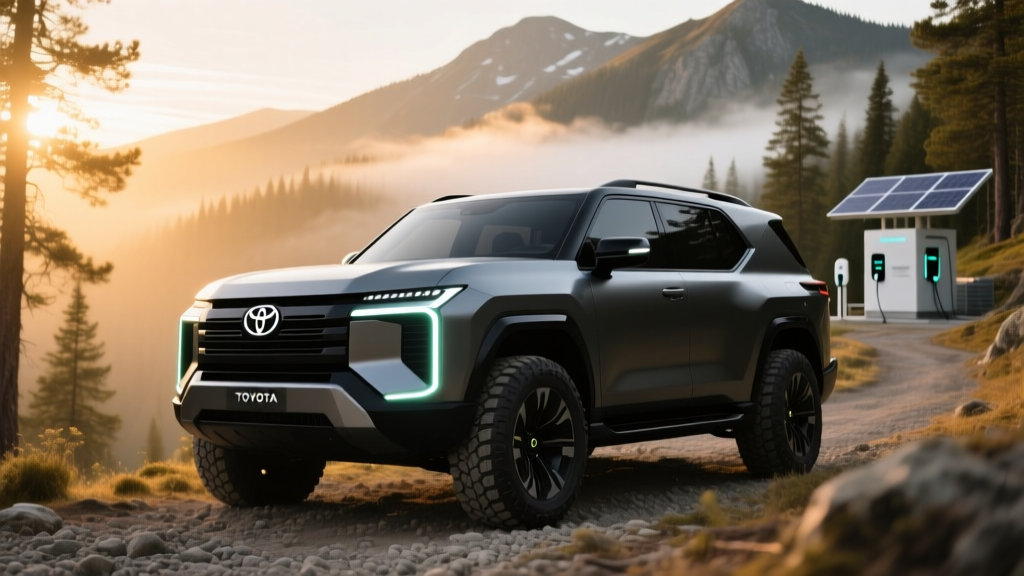
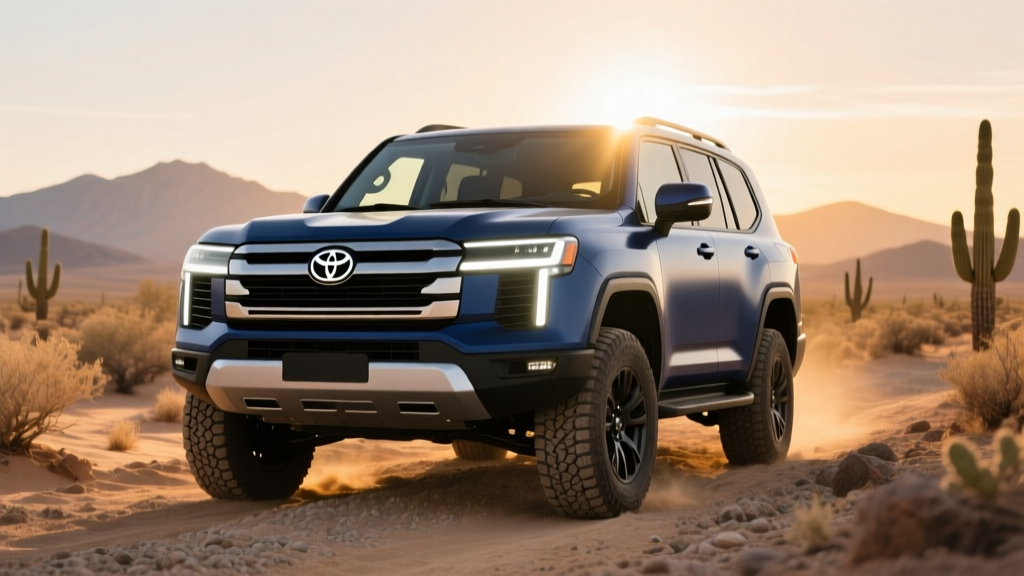
As of early 2026, the Toyota Land Cruiser EV (officially the Land Cruiser Se concept previewing a production model) has been announced but is not yet available for purchase. Toyota confirmed a battery-electric Land Cruiser is in development, targeting a three-row, body-on-frame SUV with expected EPA range of 280–320 miles, dual-motor AWD, and a starting MSRP likely between $58,000 and $72,000. If you need an electrified Land Cruiser today, the current 2026 Land Cruiser Hybrid (i-FORCE MAX powertrain) is on sale now with an EPA-estimated 27 MPG combined and starts around $57,345. Below, we break down everything confirmed, everything estimated, and how an electric Land Cruiser stacks up against the hybrid and legacy gas models for real-world ownership.
What Is the Land Cruiser EV? Toyota's Electric Off-Road Plans
Toyota revealed the Land Cruiser Se concept at the Japan Mobility Show in late 2023, signaling a battery-electric, monocoque, three-row SUV wearing the Land Cruiser nameplate. Since then, Toyota has confirmed that a production battery-electric Land Cruiser is part of its expanded EV roadmap, with a target market launch no earlier than the 2027 model year (likely arriving in late 2026 as an early-order program or in calendar 2027). This is distinct from the current 2026 Land Cruiser, which uses the i-FORCE MAX 2.4L turbo hybrid powertrain.
Here is what Toyota has confirmed or strongly signaled, versus what remains preliminary:
| Specification | Status | Expected Figure |
|---|---|---|
| Platform | Confirmed direction | Monocoque (unibody), not body-on-frame |
| Seating | Confirmed (concept) | Three rows / 7 passengers |
| Battery capacity | Estimated | ~95–110 kWh usable (likely NMC chemistry) |
| EPA range | Estimated | 280–320 miles |
| Drivetrain | Confirmed direction | Dual-motor AWD |
| Horsepower | Estimated | ~400–480 HP combined |
| 0–60 mph | Estimated | ~5.0–5.8 seconds |
| Peak DC fast charge rate | Estimated | ~150–200 kW (10–80% in ~25–30 min) |
| Level 2 onboard charger | Estimated | 11.5 kW (~7.7 kW on some Toyota bZ models) |
| Towing capacity | Estimated | ~5,000–6,000 lbs |
| Starting MSRP | Estimated | $58,000–$72,000 (before incentives) |
| Availability | Announced | 2027 model year (late 2026 or 2027) |
| Battery warranty | Likely per Toyota policy | 8 years / 100,000 miles |
Key caveat: All performance, range, and pricing figures above are estimates based on the Land Cruiser Se concept details, Toyota's existing EV architecture (as seen in the bZ4X and upcoming bZ lineup), and segment benchmarks. Final EPA-certified numbers will not be available until closer to launch. We will update this guide when official specs are published.
Land Cruiser EV vs. Hybrid vs. Gas: Which Powertrain Fits You?
The current 2026 Land Cruiser is a hybrid (HEV), not a plug-in. If Toyota follows its pattern with the RAV4 and Highlander, a PHEV variant may or may not arrive. The EV version represents a fundamentally different ownership proposition. Here is how the three powertrains compare on paper, using the current hybrid as a baseline and the EV as projected:
| Metric | 2026 Land Cruiser Hybrid (HEV) | Land Cruiser EV (Estimated) |
|---|---|---|
| Powertrain | 2.4L turbo I-4 + electric motor (i-FORCE MAX) | Dual-motor BEV |
| Horsepower | 326 HP combined | ~400–480 HP |
| 0–60 mph | ~6.2 sec | ~5.0–5.8 sec |
| Fuel / Energy | Gasoline (87 octane recommended) | Electricity (Level 2 home + DC fast) |
| EPA Economy | 27 MPG combined (23 city / 29 hwy est.) | ~80–90 MPGe combined (est.) |
| Total Range | ~475 miles (17.9-gal tank) | ~280–320 miles (battery only) |
| Refuel / Recharge Time | ~5 minutes at a gas station | ~25–30 min (10–80% DC fast); 8–10 hr (Level 2 home) |
| Towing Capacity | 6,000 lbs | ~5,000–6,000 lbs (est.) |
| Annual Fuel/Energy Cost | ~$2,800–$3,200 (15,000 mi/yr at $3.50/gal) | ~$600–$900 (home charging at $0.14/kWh) |
| Base MSRP | $57,345 | $58,000–$72,000 (est.) |
| Federal Tax Credit (§30D) | Not eligible (HEV) | Potentially up to $7,500 (if sourcing/income rules met) |
The hybrid wins on total range and refueling convenience — critical for overlanding or remote trail use where charging infrastructure is nonexistent. The EV wins on daily operating cost, instant torque for low-speed trail crawling, and home "refueling" convenience if you have Level 2 access.
Decision Framework: Which Land Cruiser Powertrain Should You Choose?
- Choose the 2026 Land Cruiser Hybrid if: You frequently tow, overland in remote areas, take long road trips into charging deserts (rural West, Alaska Highway, Baja), or cannot install a home charger. The 475-mile range and 5-minute refuel are unmatched for expedition use.
- Wait for the Land Cruiser EV if: You have reliable home Level 2 charging, your daily driving is under 200 miles, you want lower running costs ($600–$900/yr vs. $3,000+/yr on gas), and you're willing to plan charging stops on road trips. Also choose EV if trail crawling is your priority — electric motors deliver peak torque at 0 RPM.
- Consider a competitor EV now if: You want a three-row electric SUV immediately. The Kia EV9 (EPA 304 mi, ~$54,900), Rivian R1S (EPA 321–410 mi, ~$79,900), or the refreshed Tesla Model X are available today with confirmed specs.
Real-World Ownership Costs: Land Cruiser EV vs. Hybrid
Sticker price is only the beginning. Here is a projected 5-year total cost of ownership comparison, assuming 15,000 miles/year, $3.50/gallon gas, $0.14/kWh home electricity, and standard insurance/maintenance estimates:
| Cost Category | 2026 Hybrid (HEV) | Land Cruiser EV (Est.) |
|---|---|---|
| Purchase price (base MSRP) | $57,345 | $65,000 (midpoint est.) |
| Federal tax credit (§30D) | $0 | Up to $7,500 (if eligible) |
| Net purchase price | $57,345 | ~$57,500 |
| Fuel / energy (5 yrs, 75,000 mi) | $15,000–$16,000 | $3,000–$4,500 |
| Maintenance (5 yrs) | $3,500–$4,500 | $1,500–$2,500 |
| Insurance (5 yrs) | $9,000–$11,000 | $10,000–$13,000 |
| Home charger install (one-time) | $0 | $1,200–$2,500 |
| Total 5-year cost (est.) | $84,845–$88,845 | $73,200–$80,000 |
Key takeaways:
- The EV's higher sticker price is partially offset by the potential $7,500 federal tax credit (subject to IRS §30D eligibility rules including MSRP caps, buyer income limits, and battery critical-mineral sourcing requirements — confirm with a tax professional).
- Energy savings are the EV's biggest advantage: roughly $10,000–$12,000 less over five years if you charge primarily at home.
- EV insurance tends to run 10–20% higher due to battery replacement cost exposure and higher repair complexity. Get quotes before committing.
- Maintenance savings on the EV come from no oil changes, no spark plugs, no transmission fluid, and regenerative braking extending pad life significantly.
Charging the Land Cruiser EV: What Home Setup Do You Need?
A three-row SUV with an estimated 95–110 kWh battery is energy-hungry. Here is what charging looks like at each level:
| Charging Level | Power (kW) | Miles Added per Hour | Full Charge Time (est.) | Where |
|---|---|---|---|---|
| Level 1 (120V standard outlet) | ~1.4 kW | ~4–5 mi/hr | ~70–80 hours | Any standard outlet |
| Level 2 (240V home charger) | ~11.5 kW | ~30–35 mi/hr | ~8–10 hours | Home garage / driveway |
| DC Fast Charging | ~150–200 kW peak | ~500–700 mi/hr (peak) | 10–80% in ~25–30 min | Public stations (Electrify America, EVgo, etc.) |
Real-world charging considerations:
- Home charging is essential for practical EV ownership. Level 1 on a standard 120V outlet will add only 4–5 miles per hour — insufficient for a heavy SUV used daily. Budget $1,200–$2,500 for a professional Level 2 installation (40-amp or 48-amp circuit). If your home electrical panel is maxed out at 100 amps, a panel upgrade to 200 amps can add $1,500–$3,500. Consult a licensed electrician for your specific situation.
- DC fast charging tapers above 80%. The peak rate of 150–200 kW applies only at low states of charge (typically 10–40%). Above 80%, the charge curve drops dramatically to protect the battery. Plan road-trip stops around the 10–80% window for fastest sessions.
- Cold weather reduces range by 20–30% in freezing temperatures, based on data from similar large BEVs. A 300-mile EPA rating could mean 210–240 real-world miles in sub-30°F conditions. Preconditioning the battery while plugged in mitigates this somewhat.
- Connector: Toyota has been transitioning to the NACS (Tesla-style) connector for its newer EVs. The production Land Cruiser EV is expected to ship with a NACS port, granting access to Tesla Supercharger stations via native compatibility — a significant advantage for road-trip charging coverage.
Common Land Cruiser EV Misconceptions, Addressed with Facts
| Myth | Fact |
|---|---|
| "An EV Land Cruiser can't off-road." | Electric motors deliver instant, controllable torque at 0 RPM — ideal for rock crawling. The Rivian R1S and Hummer EV have proven EV off-road capability. The trade-off is range loss under heavy low-speed load and vulnerability of the underbody battery pack to rock strikes (skid plate engineering is critical). |
| "The battery will need replacing in 5 years." | Modern NMC and LFP batteries are engineered for 200,000+ miles with less than 20% degradation. Toyota's expected warranty is 8 years / 100,000 miles for battery capacity retention (typically guaranteed above 70% of original capacity). Real-world data from Tesla, Hyundai, and others shows most packs retain 85–90% capacity at 100,000 miles. |
| "I'll save $7,500 automatically." | The IRS §30D credit has strict requirements: buyer income caps ($150K single / $300K joint), MSRP caps ($80K for SUVs), and battery critical-mineral and component sourcing thresholds that tighten annually. Not every EV qualifies for the full amount, and rules may change. Always verify current-year eligibility with a tax professional. |
| "It'll tow just like the gas Land Cruiser." | EVs can tow, but range drops 40–50% when towing a heavy trailer due to aerodynamic drag and weight. A 300-mile EV may deliver only 150–180 miles while towing 5,000 lbs. The hybrid's 475-mile range is far more practical for towing without frequent stops. |
| "The Land Cruiser EV is available now." | It is not. As of early 2026, the electric Land Cruiser is announced and in development. The production timeline targets the 2027 model year. If you need an electrified Land Cruiser today, the 2026 i-FORCE MAX Hybrid is on dealer lots now. |
What First-Time EV Buyers Should Know Before Reserving
If the Land Cruiser EV will be your first battery-electric vehicle, these realities are worth internalizing before you put down a deposit:
- Home charging access is non-negotiable for daily convenience. Without a Level 2 home charger, you'll rely on public infrastructure or painfully slow Level 1 charging. Confirm you can install a 240V circuit in your garage or driveway before committing.
- Plan road trips around charging, not gas stations. Apps like PlugShare and A Better Routeplanner (ABRP) let you map DC fast charger stops. On a 600-mile trip, expect 2–3 charging stops of 25–35 minutes each. That's more time than a gas-car equivalent, but manageable with planning.
- Your "fuel" cost depends on your electricity rate. At $0.14/kWh (national average), a 100 kWh battery costs ~$14 for a full charge. At $0.30/kWh (some California utilities during peak hours), that same charge costs $30. Time-of-use rates matter — charge overnight for the lowest cost.
- Tire costs are higher on EVs. The Land Cruiser EV will likely weigh 5,500–6,000+ lbs. Heavy EVs wear through tires 20–30% faster than equivalent gas vehicles. Budget for premium all-terrain or all-season tires every 30,000–40,000 miles.
- Depreciation is uncertain. EV resale values have been volatile. Toyota's brand strength and the Land Cruiser nameplate's legendary resale history may insulate this model better than average, but early EV depreciation data is still mixed across the industry.
Land Cruiser EV: Should You Wait or Buy Now?
Final Verdict
Buy the 2026 Land Cruiser Hybrid now if you need a capable, efficient, expedition-ready SUV today. The i-FORCE MAX hybrid delivers 326 HP, 27 MPG, 6,000-lb towing, and 475 miles of range with no charging dependency. It is the pragmatic choice for overlanders, tow-heavy users, and anyone without reliable home charging.
Wait for the Land Cruiser EV if you have home Level 2 charging, your daily commute is under 200 miles, you prioritize low running costs and instant torque, and you're comfortable planning road-trip charging. The EV will likely be a superior daily driver with dramatically lower fuel and maintenance costs — but it won't match the hybrid's range for remote expeditions.
Buy a competitor EV now if you want a three-row electric SUV in 2026. The Kia EV9, Rivian R1S, and Hyundai Ioniq 9 are available with confirmed EPA ranges, real charging networks, and established service infrastructure. You won't have the Land Cruiser badge, but you'll have a proven electric family hauler today.
Frequently Asked Questions
When will the Toyota Land Cruiser EV be available to buy?
Toyota has confirmed the electric Land Cruiser is in development, with a production target around the 2027 model year. This could mean late 2026 for early reservations or calendar 2027 for general availability. No firm date has been announced as of early 2026.
Will the Land Cruiser EV qualify for the $7,500 federal tax credit?
It is too early to confirm. Eligibility under IRS §30D depends on the vehicle's MSRP (must be under $80,000 for SUVs), the buyer's adjusted gross income (capped at $150K single / $300K joint), and the battery's critical-mineral and component sourcing percentages — which tighten each year. Toyota's battery supply chain decisions will determine eligibility. Check the IRS Clean Vehicle credit list at the time of purchase.
How does the Land Cruiser EV compare to the Rivian R1S?
The Rivian R1S is available now with EPA range of 321–410 miles (depending on battery pack), up to 665 HP, and proven off-road capability. Its starting price is significantly higher (~$79,900+). The Land Cruiser EV is projected to start $10,000–$20,000 lower but with less range and later availability. If you need an electric three-row off-roader today, the R1S is the benchmark.
Can the Land Cruiser EV handle serious off-road trails?
Electric drivetrains offer advantages for low-speed technical off-roading: instant torque, precise individual wheel control, and no risk of stalling. The challenge for Toyota will be underbody battery protection (skid plates), suspension articulation on a monocoque platform, and range management under heavy low-speed load. Until production specs and real-world testing data are available, off-road capability remains projected, not proven.
What will it cost to charge the Land Cruiser EV at home?
Assuming a ~100 kWh battery and the national average electricity rate of $0.14/kWh, a full charge costs roughly $14. Over a year of 15,000 miles at an estimated 2.5–3.0 miles/kWh, annual home charging cost would be approximately $700–$840 — compared to $2,800–$3,200 for the hybrid on gasoline. Your actual cost depends on your utility rate, time-of-use plan, and whether you have solar panels.
Is the Land Cruiser EV body-on-frame like the classic Land Cruiser?
No. The Land Cruiser Se concept uses a monocoque (unibody) platform, which is standard for modern EVs to maximize interior space and reduce weight. This is a departure from the traditional body-on-frame construction of the Land Cruiser 300 Series and prior generations. It will likely trade some extreme articulation for better on-road comfort and packaging efficiency.