Quick Answer: Lamborghini's first fully electric vehicle is the Lanzador, a high-riding 2+2 grand tourer expected to arrive as a 2028/2029 model year vehicle with preliminary orders potentially opening in late 2026. Lamborghini has confirmed a dual-motor all-wheel-drive powertrain producing over 1,340 horsepower (1 megawatt), but has not yet published official EPA range, battery capacity (kWh), or MSRP figures. Based on industry estimates and platform-sharing with Audi/Porsche, expect a 100+ kWh battery, roughly 280–320 miles of EPA range, a base price north of $250,000, and no federal §30D tax credit eligibility due to MSRP and income caps. If you're researching a Lamborghini EV today, the Lanzador is the only confirmed battery-electric model; the Revuelto remains a V12 plug-in hybrid (PHEV), not a full EV.
What Is the Lamborghini EV Lineup in 2026?
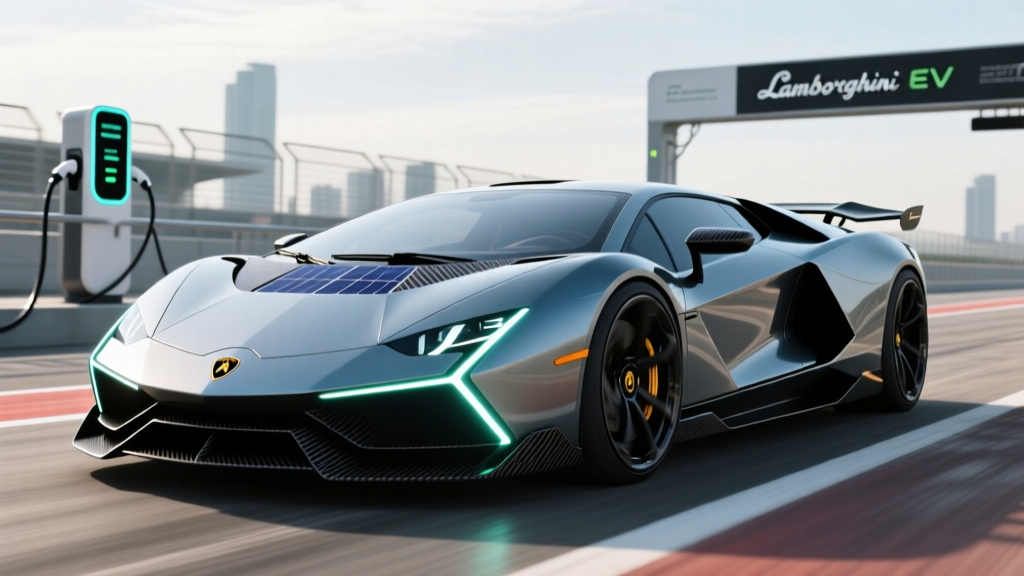
As of early 2026, Lamborghini has one confirmed battery-electric vehicle (BEV) in development: the Lanzador. Unveiled as a concept during Monterey Car Week in August 2023 and confirmed for production by CEO Stephan Winkelmann, the Lanzador is positioned as an ultra-high-performance "2+2" grand tourer with raised ride height — Lamborghini calls the segment a "Ultra GT."
It's critical to distinguish Lamborghini's electrified offerings, because marketing language can confuse first-time EV shoppers:
- Lanzador (upcoming BEV): Fully battery-electric, dual-motor AWD, 1,340+ HP. Not yet available for purchase or official EPA testing.
- Revuelto (current PHEV): A 6.5-liter naturally aspirated V12 paired with three electric motors and a 3.8 kWh battery. This is a plug-in hybrid, not a full EV. Electric-only range is approximately 6 miles.
- Urus SE (current PHEV): Lamborghini's performance SUV, now offered as a plug-in hybrid with a 25.9 kWh battery and an estimated 37 miles of electric-only range (WLTP; expect ~30 miles EPA).
If your search intent is a pure-electric Lamborghini you can plug in and charge to 100% with zero tailpipe emissions, the Lanzador is the sole answer — and it is not yet on sale. All specs below are based on Lamborghini's official statements, Volkswagen Group platform data (PPE — Premium Platform Electric), and informed industry estimates. Final production figures may differ.
Lanzador Estimated Specs: Range, Battery, and Charging
Lamborghini has not released a full specification sheet for the production Lanzador. However, the vehicle will ride on the VW Group's PPE (Premium Platform Electric) architecture, co-developed with Porsche and also underpinning the Porsche Macan EV and Audi Q6 e-tron. This gives us a strong basis for estimation.
| Attribute | Estimated Figure | Notes |
|---|---|---|
| Powertrain | Dual-motor AWD | Confirmed by Lamborghini |
| Peak Horsepower | 1,340+ HP (1 MW+) | Confirmed by Lamborghini |
| Battery Capacity (usable) | ~100–110 kWh | Estimated based on PPE platform max configuration |
| Battery Chemistry | NMC (Nickel Manganese Cobalt) | Expected for energy density and performance |
| EPA Range (est.) | 280–320 miles | Performance tuning and weight will reduce range vs. Audi/Porsche siblings |
| Real-World Highway Range | ~220–270 miles | Expect 15–20% reduction at sustained 75+ mph speeds |
| Peak DC Fast Charge Rate | ~270 kW | PPE platform supports up to 270 kW on 800V architecture |
| 10–80% DC Fast Charge Time | ~20–25 minutes | Based on Porsche Macan EV and Audi Q6 e-tron benchmarks |
| Level 2 Charging (AC) | Up to 11 kW (est.) | Full charge in ~10–11 hours from empty |
| 0–60 mph | <2.5 seconds (est.) | Consistent with 1,340 HP and AWD traction |
| Connector | NACS (expected) | VW Group has committed to NACS adoption in North America by 2025+ |
Real-World Range Reality: The EPA sticker for the Lanzador will likely land in the 280–320 mile range. However, Lamborghini's performance-oriented tuning — aggressive acceleration curves, wider tires, higher drag from the GT body, and a heavier curb weight — will push real-world consumption higher than the Audi Q6 e-tron or Porsche Macan EV. On a cold-weather highway drive (35°F, 75 mph), expect closer to 200–230 miles before needing to charge. Plan road trips around 180-mile segments to maintain a comfort buffer.
How Does a Lamborghini EV Compare to Gas Exotics and Hybrids?
If you're cross-shopping a Lamborghini EV against the brand's current lineup or competing exotics, the comparison looks very different from a mainstream EV vs. gas sedan. Here's how the numbers stack up against the Revuelto PHEV and key rivals.
| Attribute | Lanzador (BEV, est.) | Revuelto (PHEV) | Ferrari Purosangue (Gas V12) |
|---|---|---|---|
| Powertrain | Dual-motor electric | V12 + 3 electric motors | 6.5L V12 |
| Horsepower | 1,340+ | 1,001 | 715 |
| 0–60 mph | <2.5 sec | 2.5 sec | 3.3 sec |
| Electric-Only Range | 280–320 mi (full EV) | ~6 mi | 0 mi (no EV mode) |
| Fuel/Energy Cost per Mile | ~$0.06–$0.12 | ~$0.35–$0.50 | ~$0.45–$0.60 |
| Estimated Base Price | $250,000+ | $608,358 | $398,000+ |
| Federal Tax Credit (§30D) | Not eligible (MSRP cap) | Not eligible | N/A |
The Lanzador's electric powertrain gives it a massive horsepower advantage and dramatically lower per-mile energy costs compared to the Revuelto or any V12 exotic. However, the Revuelto's $608,000 MSRP reflects Lamborghini's top-tier positioning — the Lanzador, while still extremely expensive, is expected to slot below the Revuelto and possibly below the fully optioned Urus SE, making it a relative "entry point" into the brand at roughly $250,000–$350,000 depending on trim and options.
Lamborghini EV Ownership Costs: What Buyers Should Budget
Buying a Lamborghini — electric or otherwise — is not a cost-saving exercise. But understanding the ownership economics helps set expectations, especially when comparing against gas exotics or mainstream luxury EVs like the Porsche Taycan or Tesla Model S Plaid.
| Cost Category | Lanzador (est.) | Revuelto (PHEV) | Porsche Taycan Turbo S |
|---|---|---|---|
| Purchase Price (base MSRP) | $280,000 | $608,358 | $197,400 |
| Federal Tax Credit | $0 (MSRP exceeds $80K cap) | $0 | $0 (MSRP exceeds $55K sedan cap) |
| Fuel/Energy (5 yr, 12K mi/yr) | ~$5,400 | ~$24,000 | ~$6,600 |
| Insurance (5 yr, est.) | ~$45,000–$60,000 | ~$50,000–$70,000 | ~$25,000–$35,000 |
| Maintenance (5 yr) | ~$3,000–$5,000 | ~$12,000–$18,000 | ~$5,000–$8,000 |
| Estimated Depreciation (5 yr) | ~$110,000–$140,000 | ~$200,000–$250,000 | ~$80,000–$100,000 |
| Est. 5-Year Total Cost | ~$445,000–$490,000 | ~$895,000–$970,000 | ~$315,000–$345,000 |
Key takeaways for prospective Lamborghini EV buyers:
- No federal tax credit. The IRS §30D clean vehicle credit caps eligible sedars at $55,000 MSRP and SUVs/pickups/vans at $80,000. The Lanzador will far exceed both. Buyer income caps ($150K single / $300K joint AGI) also eliminate most exotic-car buyers regardless.
- Insurance will be steep. Exotic-car insurance for a 1,340 HP EV with a six-figure price tag will require specialized carriers (Hagerty, Chubb, Grundy). Budget $9,000–$12,000 annually, potentially more for younger drivers or urban garages.
- Maintenance is lower than gas. No oil changes, no spark plugs, no exhaust system. Brake wear is reduced thanks to regenerative braking. Expect tire replacement to be the primary recurring cost — high-performance EV tires on a 5,000+ lb vehicle wear quickly, and Lamborghini-spec rubber will run $400–$600 per tire.
- Depreciation is the wild card. Lamborghini's limited-production strategy and brand cachet historically hold value better than mass-market luxury EVs. However, EV depreciation in the exotic segment is uncharted territory. Early adopters bear the most risk.
Charging a Lamborghini EV at Home: What You'll Need
You cannot charge a Lanzador on a standard 120V household outlet and expect usable results. Level 1 charging at 1.4 kW would add roughly 3–4 miles of range per hour — meaning a full charge from empty would take over 30 hours. That's not practical for a vehicle in this class.
Here's what a realistic home charging setup looks like:
| Component | Cost Range | Notes |
|---|---|---|
| Level 2 Charger (48A, hardwired) | $500–$1,200 | Brands: ChargePoint Home Flex, Emporia Vue, Wallbox Pulsar Plus |
| Electrical Panel Upgrade (if needed) | $1,500–$4,000 | Required if your panel is below 200A or lacks 2 spare breaker slots |
| Electrician Labor (run 60A circuit, 50 ft) | $1,200–$3,500 | Varies by region, wall/foundation penetration, and conduit length |
| Permit & Inspection | $150–$500 | Required in most US jurisdictions |
| Total Estimated Cost | $1,850–$9,200 | Most homes with 200A service: $2,500–$4,500 |
With an 11 kW (48A) Level 2 charger, a full Lanzador charge from 10% to 100% would take approximately 10–11 hours. That's ideal for overnight charging: plug in at 9 PM, wake up to a full battery at 7 AM. Energy cost at the US average residential rate of $0.16/kWh: roughly $16–$18 for a full charge, or about $0.05–$0.06 per mile.
Home charging access is non-negotiable for exotic EV ownership. Public DC fast charging is viable for road trips, but relying on Electrify America or Tesla Superchargers as your primary charging method for a $300,000 vehicle introduces unnecessary wear, scheduling friction, and exposure to unreliable stalls. If you cannot install a Level 2 charger at your residence, a Lamborghini EV is not a practical choice.
Common Misconceptions About the Lamborghini EV
| Myth | Fact |
|---|---|
| "The Lamborghini Revuelto is an EV" | The Revuelto is a PHEV (plug-in hybrid) with a V12 engine and only ~6 miles of electric-only range. It is not a battery-electric vehicle. |
| "I'll get the $7,500 federal tax credit" | The §30D credit caps eligible vehicle MSRP at $55,000 (sedans) or $80,000 (SUVs). The Lanzador will exceed both. Buyer income limits also apply. See IRS guidelines. |
| "Electric Lamborghinis won't be fast" | 1,340+ HP and instant torque from dual electric motors will make the Lanzador one of the quickest production Lamborghinis ever, with a projected sub-2.5-second 0–60. |
| "The battery will degrade quickly with hard driving" | Modern NMC batteries with active thermal management (standard on PPE platform) handle high-discharge cycles well. Expect 85–90% State of Health after 100,000 miles under normal use. Lamborghini will likely offer an 8-year/100,000-mile battery warranty. |
| "I can charge it on any public charger" | The Lanzador is expected to use the NACS connector (Tesla standard), which VW Group has adopted for North America. CCS1 chargers may require an adapter. Always verify connector compatibility before a road trip. |
| "It's available to order now" | As of early 2026, the Lanzador is confirmed for production but is not yet available for order or delivery. Expected production begins in late 2028 or 2029. Any listing claiming otherwise is inaccurate. |
Decision Framework: Is the Lamborghini EV Right for You?
Consider the Lanzador if:
- You want a daily-drivable Lamborghini with four usable seats and a GT touring character
- You have a garage with 200A+ electrical service and can install a dedicated Level 2 charger
- You value instant torque and silent, effortless acceleration over V12 sound and drama
- You're comfortable spending $250,000–$350,000+ on a first-generation EV from a brand new to electrification
- You can wait until 2028–2029 for delivery
Look elsewhere if:
- You want a Lamborghini today — the Revuelto (PHEV) or Urus SE (PHEV) are available now
- Range is a top priority — a Porsche Taycan Turbo GT (EPA ~283 mi) or Lucid Air Sapphire (EPA ~420 mi) offer proven, tested range today
- You rely on public charging — exotic EV ownership demands a reliable home setup
- You're seeking a tax-credit-eligible EV — nothing in the exotic segment qualifies under §30D
- You want a proven battery-electric track record — Lamborghini has zero EV production history
For buyers who want exotic EV performance today, the closest alternatives are the Lotus Eletre R (905 HP, ~300 mi range, ~$120,000+), the Porsche Taycan Turbo GT (1,019 HP, ~283 mi EPA, ~$230,000), or the Pininfarina Battista (1,900 HP, ~300 mi range, ~$2.2M). Each is available or in limited delivery now, with real-world data to evaluate.
Frequently Asked Questions
When will the Lamborghini Lanzador be available to buy?
Lamborghini has confirmed the Lanzador for production but has not announced an exact on-sale date. Based on the brand's typical development timeline and CEO Stephan Winkelmann's public statements, expect customer deliveries to begin in late 2028 or 2029. Reservation or configurator access may open in 2027. As of early 2026, no orders are being accepted.
Will the Lamborghini EV qualify for the $7,500 federal tax credit?
No. The IRS §30D clean vehicle credit imposes an MSRP cap of $55,000 for sedans and $80,000 for SUVs/pickups/vans, along with buyer income limits ($150,000 single / $300,000 joint modified AGI). The Lanzador will far exceed the MSRP cap, and most buyers will exceed the income cap. The credit also has battery component and critical mineral sourcing requirements that are difficult for low-volume European manufacturers to meet.
How does the Lanzador's range compare to a Porsche Taycan or Tesla Model S?
Based on PPE platform estimates, the Lanzador should deliver roughly 280–320 miles EPA. That's comparable to the Porsche Taycan Turbo S (~283 mi EPA) but significantly less than the Tesla Model S Long Range (~402 mi EPA) or Lucid Air Grand Touring (~516 mi EPA). Lamborghini's priority is performance, not efficiency — expect higher kWh/mile consumption than efficiency-focused sedans.
What connector will the Lamborghini Lanzador use?
The Volkswagen Group (Lamborghini's parent company) has committed to adopting the NACS (North American Charging Standard) connector for all new EVs in North America beginning in the 2025–2026 timeframe. The Lanzador, arriving later this decade, is expected to ship with a native NACS port, granting direct access to Tesla Superchargers and the growing NACS-equipped public charging network.
Is the Lamborghini Urus SE an electric vehicle?
No. The Urus SE is a plug-in hybrid electric vehicle (PHEV), combining a 4.0-liter twin-turbo V8 with an electric motor and a 25.9 kWh battery pack. It offers approximately 30 miles of EPA-estimated electric-only range, after which it operates as a conventional hybrid. It cannot be charged to full EV-only operation for long distances like the upcoming Lanzador.
What will maintenance cost on a Lamborghini EV vs. a gas Lamborghini?
Significantly less. A battery-electric Lamborghini eliminates oil changes (~$400–$600 each on a V12), spark plugs, exhaust system repairs, and transmission fluid services. The primary recurring costs will be tires ($1,600–$2,400 per set, replaced every 10,000–15,000 miles under spirited driving), cabin air filters, brake fluid flushes, and windshield washer fluid. Budget $600–$1,000 per year for scheduled maintenance — roughly one-third of what a gas Lamborghini Huracán or Revuelto requires annually.