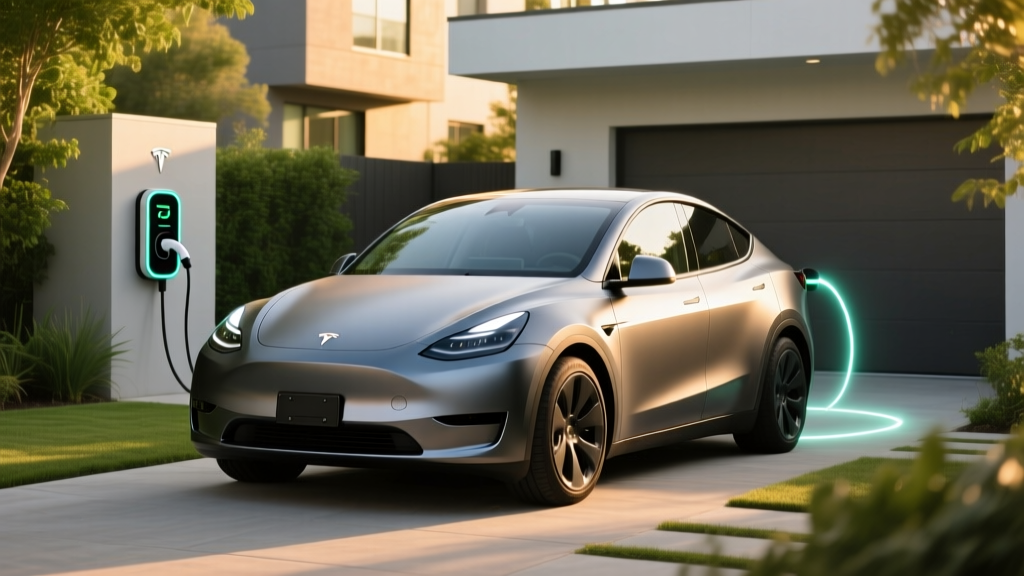
The recent news that Emmanuel Lamacchia leaves Tesla after years overseeing critical Supercharger and vehicle program operations has prompted renewed scrutiny of the company's product direction heading into 2026. While executive departures rarely alter a vehicle already in production, they do raise questions about long-term strategy. What hasn't changed is the hardware: the refreshed Model Y (codenamed Juniper) remains Tesla's highest-volume vehicle and one of the most spec-dense electric SUVs on the market. Below is a data-driven review of what you're actually buying in the 2026 Model year.
2026 Tesla Model Y Quick Specs
| Attribute | Long Range RWD | Long Range AWD | Performance |
|---|---|---|---|
| EPA Range | 320 mi | 308 mi | 277 mi |
| Battery (usable) | ~75 kWh (NMC) | ~75 kWh (NMC) | ~75 kWh (NMC) |
| MPGe (combined) | 122 MPGe | 117 MPGe | 111 MPGe |
| kWh/100 mi | 28 | 29 | 30 |
| 0–60 mph | 5.8 sec | 4.8 sec | 3.5 sec |
| Horsepower | 346 hp | 384 hp | 456 hp |
| Drivetrain | RWD (single motor) | AWD (dual motor) | AWD (dual motor) |
| Base MSRP | $44,990 | $47,990 | $52,490 |
| Destination | $1,390 | ||
Source: fueleconomy.gov and Tesla's official configurator. Specs reflect 2026 model year.
Real-World Range vs. the EPA Sticker
Real-World Expectation: 260–290 mi on highway trips at 70–75 mph; 230–260 mi in sub-30°F cold weather without preconditioning; up to 310 mi in mixed city driving with regen-heavy routes.
Tesla's Juniper refresh brought subtle aero refinements and a revised heat pump that reduces cold-weather cabin energy draw. The Long Range RWD variant achieves its 320-mile EPA figure partly through the lower rolling resistance of the standard 19-inch wheels; stepping up to 20- or 21-inch wheels costs you roughly 8–12% of that range.
The NMC (nickel manganese cobalt) chemistry in the Long Range pack prioritizes energy density over cycle life. Owners who charge daily to 80% and avoid repeated 100% fills should expect less than 10% degradation over the first 100,000 miles based on fleet data. If you want the LFP option for its longevity and tolerance for 100% daily charging, you'll need to look at the base Standard Range variant (not listed above), which uses a CATL-sourced LFP pack with ~60 kWh usable.
Charging Speed: DC Fast and Home Level 2
| Charging Level | Power / Rate | Miles Added per Hour |
|---|---|---|
| Level 1 (120V) | ~1.4 kW | ~4 mi/hr |
| Level 2 (240V, 48A) | 11.5 kW | ~38 mi/hr |
| DC Fast (peak) | 250 kW | — |
| DC Fast 10–80% | ~25 minutes (preconditioned) | |
The 2026 Model Y retains its 250 kW peak DC fast-charge rate via the native NACS connector, meaning full access to the Supercharger network without adapters. On a V4 Supercharger pedestal delivering sustained high power, the charge curve holds near 250 kW up to roughly 40% SoC, then tapers through 150 kW at 60% and drops below 80 kW past 80%. The 10–80% time of approximately 25 minutes assumes the battery has been preconditioned via on-route navigation.
For home charging, the onboard charger accepts up to 11.5 kW on a 60-amp circuit (48A continuous). Most owners installing a Tesla Wall Connector on a dedicated 60A breaker will wake to a full battery in roughly 7–8 hours from near-empty. If your panel is only 100A, you may need a service upgrade ($1,500–$3,000) to support a 60A EV circuit alongside existing household loads.
Tax Credit Eligibility and Pricing
| Trim | MSRP + Dest. | After §30D Credit* | Effective Price |
|---|---|---|---|
| Long Range RWD | $46,380 | –$7,500 | $38,880 |
| Long Range AWD | $49,380 | –$7,500 | $41,880 |
| Performance | $53,880 | –$7,500 | $46,380 |
*Federal §30D credit eligibility depends on multiple factors. See checklist below.
- MSRP Cap: SUVs must have an MSRP at or below $80,000 — all Model Y trims qualify.
- Buyer Income Cap: AGI must not exceed $150,000 (single), $225,000 (head of household), or $300,000 (joint).
- Battery Sourcing: Critical minerals and battery components must meet phased-in domestic/free-trade-area thresholds per IRS guidelines. Tesla's shifting supply chain has maintained eligibility through 2026, but always verify at purchase.
- Point-of-Sale Transfer: You can transfer the credit to the dealer at purchase, reducing the purchase price directly rather than waiting for a tax refund.
Interior, Cargo, and Everyday Livability
The Juniper refresh added acoustic glass, ventilated front seats, ambient lighting, and a rear-seat touchscreen — addressing the most common complaints from pre-2025 owners. Cargo space remains generous:
- Cargo (rear seats up): 30.2 cu ft
- Cargo (rear seats folded): 72.1 cu ft
- Front trunk (frunk): 4.1 cu ft
- Rear legroom: 41.6 inches
- Front headroom: 40.3 inches
The ventilated seats and improved cabin insulation are not just comfort upgrades — they reduce HVAC energy draw, contributing to the modest range gains over the pre-refresh Model Y. The rear 8-inch screen lets passengers control climate and media, which matters on family road trips.
Driver Assistance: Autopilot and FSD Supervised
The 2026 Model Y ships with Tesla's HW4.0 computer and a camera-only vision suite. Autopilot (included) handles adaptive cruise and lane centering competently on divided highways. FSD Supervised ($8,000 one-time or $99/month) extends capability to city streets, stop signs, and some parking maneuvers — but real-world performance varies widely by geography and weather. In heavy rain or construction zones, the system will disengage and hand control back abruptly. Budget for FSD only if you view it as a convenience feature, not a replacement for attentive driving.
Warranty and Long-Term Ownership
- Basic Vehicle: 4 years / 50,000 miles
- Battery & Drive Unit: 8 years / 120,000 miles (Long Range/Performance) with a minimum 70% capacity retention guarantee
- Rust-through: 12 years, unlimited miles
The 8-year/120,000-mile battery warranty is competitive. If degradation drops below 70% within that window, Tesla replaces or refurbishes the pack at no cost. Out-of-warranty replacement runs approximately $12,000–$16,000 depending on pack variant — a figure worth insuring against via comprehensive coverage with EV-specific endorsements.
Pros and Cons at a Glance
- Best-in-class Supercharger network access (native NACS)
- 250 kW DC fast charging with reliable preconditioning
- Strong efficiency (28–30 kWh/100 mi) for a dual-motor SUV
- Generous cargo and passenger volume
- OTA updates continue to add features post-purchase
- Full §30D tax credit eligibility across all trims
- Ride quality still firm on broken pavement (stiffer than Ioniq 5)
- No Apple CarPlay or Android Auto
- FSD Supervised is expensive and inconsistent
- Panel gaps and paint quality vary unit-to-unit
- Insurance premiums run 15–25% above segment average
- Executive departures (Lamacchia, others) add strategic uncertainty
Who Should Buy the 2026 Model Y?
Look elsewhere if: You prioritize ride comfort over efficiency (consider the Hyundai Ioniq 5 or Kia EV6), need a true LFP battery for daily 100% charging without degradation concern, or want Apple CarPlay integration.
Frequently Asked Questions
What is the real-world range of the 2026 Model Y?
Expect 260–290 miles on highway road trips and up to 310 in city-heavy driving. Cold weather below freezing reduces range by 15–25% unless you precondition the battery while plugged in.
How fast does the Model Y charge at home and on the road?
At home on a 48A Level 2 charger, it adds about 38 miles per hour (full charge in ~7–8 hours). On a 250 kW Supercharger, it goes from 10% to 80% in roughly 25 minutes with preconditioning.
Does the 2026 Model Y qualify for the $7,500 federal tax credit?
All trims fall under the $80,000 SUV MSRP cap. Eligibility depends on your AGI (income caps apply) and current battery-sourcing compliance per IRS §30D rules. The credit can be transferred at point of sale.
How does the Model Y compare to the Hyundai Ioniq 5 or Ford Mustang Mach-E?
The Model Y leads in charging infrastructure access and cargo volume. The Ioniq 5 offers a more comfortable ride and 800V architecture (slightly faster 10–80% times). The Mach-E provides a more traditional interior layout and Apple CarPlay. See our head-to-head comparison for full specs.
What does Emmanuel Lamacchia leaving Tesla mean for buyers?
While executive turnover at Tesla has been notable, the Juniper Model Y is already in full production with locked-in supply chains. Near-term product quality and Supercharger reliability are unaffected. Long-term strategic direction is harder to predict, but Tesla's hardware commitments through 2027 appear stable.