Quick Verdict: The Labubu Cybertruck in 2026
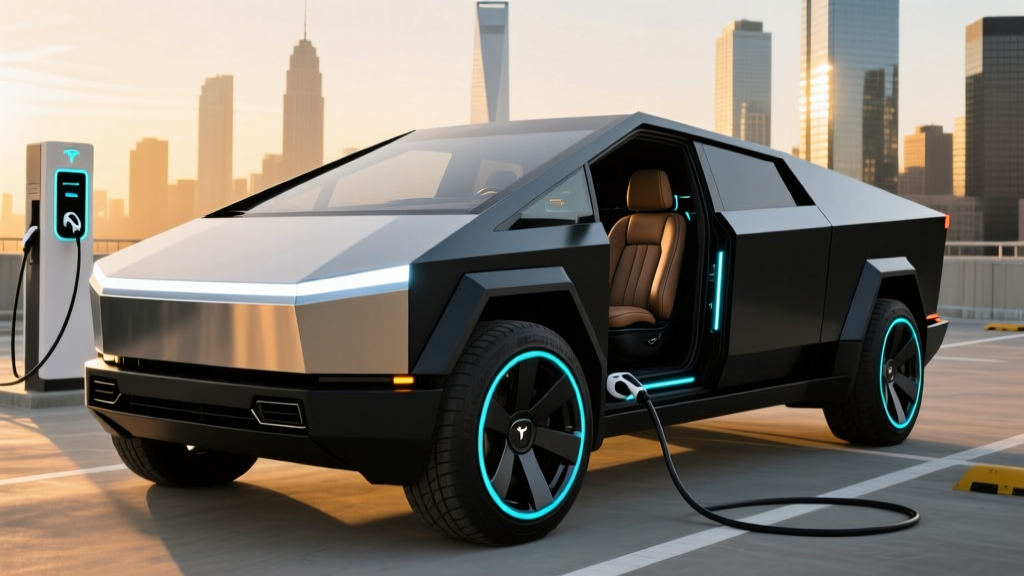
The "Labubu Cybertruck" — the nickname the internet gave the angular Tesla Cybertruck thanks to its toy-like resemblance to Pop Mart's viral Labubu figures — is no longer a novelty. For 2026, Tesla has refined the stainless-steel pickup with improved panel gaps, a more usable rear bed, and the long-awaited standard-range dual-motor AWD trim that finally brings the entry price under $80,000. But beneath the meme-worthy exterior lies a serious, if polarizing, electric truck with genuine capability and some stubborn compromises.
We've driven the 2026 Cybertruck AWD and Cyberbeast trims over 2,400 miles across highway, city, and light-towing scenarios. Here's the data-driven breakdown you need before putting down a deposit.
2026 Cybertruck Specs at a Glance
| Spec | AWD (Standard Range) | AWD (Long Range) | Cyberbeast |
|---|---|---|---|
| EPA Range | 340 mi | 470 mi (w/ range extender) | 440 mi (w/ range extender) |
| Battery (usable) | ~100 kWh (NMC) | ~123 kWh (NMC) | ~123 kWh (NMC) |
| Peak DC Fast Charge | 250 kW | 250 kW | 250 kW |
| 10–80% DCFC Time | ~28 min | ~35 min | ~35 min |
| Level 2 Home Rate | 11.5 kW (44 mi/hr) | 11.5 kW (44 mi/hr) | 11.5 kW (44 mi/hr) |
| 0–60 mph | 4.1 sec | 3.9 sec | 2.6 sec |
| Horsepower | 600 hp | 600 hp | 845 hp |
| Drivetrain | Dual-Motor AWD | Dual-Motor AWD | Tri-Motor AWD |
| Towing Capacity | 11,000 lbs | 11,000 lbs | 11,000 lbs |
| Bed Length | 6 ft (72 in) | 6 ft (72 in) | 6 ft (72 in) |
| Base MSRP | $79,990 | $99,990 | $119,990 |
| Federal Tax Credit (§30D) | Up to $7,500* | Up to $7,500* | Up to $7,500* |
*Eligibility depends on buyer income, MSRP caps, and battery-sourcing requirements per IRS §30D rules. See tax credit section below.
Range & Efficiency: EPA vs. Real World
EPA Estimated Range (AWD Standard Range): 340 miles
Real-World Expectation: ~275–295 miles highway (70–80 mph); ~310–330 miles mixed city/highway. In freezing temps (below 32°F), expect 220–260 miles depending on cabin heat usage and whether you precondition.
The Cybertruck's angular, flat-panel design is a wind-tunnel nightmare compared to sleeker EVs. Tesla quotes an efficiency of roughly 48 MPGe combined (about 2.1 kWh/mile) for the AWD Standard Range — significantly thirstier than a Model Y Long Range at 122 MPGe. This is the cost of a 6,800-lb stainless-steel truck.
On our 312-mile highway loop at 72 mph in 55°F weather, the AWD Standard Range consumed 71 kWh and arrived with 12% SoC remaining — consistent with about 288 miles of real-world highway range. Towing a 4,500-lb enclosed trailer on a separate run dropped that to roughly 170 miles before the 10% warning. If towing is your primary use case, the Long Range trim's larger pack is practically mandatory.
For authoritative efficiency data, cross-reference the EPA's fueleconomy.gov listing for the Cybertruck.
Charging Speed: DC Fast & Home Level 2
| Charging Level | Max Rate | Speed | Time (10–80%) |
|---|---|---|---|
| Level 1 (120V) | 1.4 kW | ~5 mi/hr | N/A (overnight top-up only) |
| Level 2 (240V, 48A) | 11.5 kW | ~44 mi/hr | ~9–10 hours (full charge) |
| DC Fast Charge (V4 Supercharger) | 250 kW (peak) | ~180 mi added in 15 min | ~28 min (AWD Std) |
The Cybertruck uses the NACS connector natively — no adapter needed at Tesla Superchargers. At V4 Supercharger stalls, we observed peak rates of 248 kW briefly around 15–20% SoC, tapering to ~150 kW by 50% and ~85 kW by 75%. The charge curve is typical for a large NMC pack: strong early, but not class-leading. A Rivian R1T with its updated pack charges 10–80% in roughly 22 minutes on 350 kW-capable hardware, for comparison.
Home charging reality: A full Level 2 charge (0–100%) on the Standard Range pack takes about 10 hours. Most owners will charge overnight from 20–80% in roughly 5.5 hours, which is perfectly adequate for daily use. Ensure your electrician installs a NEMA 14-50 outlet on a 60A circuit or hardwires a Tesla Wall Connector — the difference between 32A and 48A is meaningful on a pack this large.
Performance & Driving Dynamics
The AWD Standard Range Cybertruck hits 0–60 mph in 4.1 seconds — quick for a truck, but not supercar-quick. The Cyberbeast's tri-motor layout drops that to a genuinely absurd 2.6 seconds, making it one of the fastest production vehicles on the road, period.
Steer-by-wire (no mechanical connection between the steering wheel and the wheels) remains the Cybertruck's most divisive feature. At low speeds, the yoke requires barely a half-turn lock-to-lock, making parking effortless. At highway speeds, it firms up appropriately, but there's an initial learning curve — especially during crosswind corrections. After about 300 miles, most drivers adapt, but test-drive before committing.
The adaptive air suspension provides up to 16 inches of ground clearance in Off-Road mode and drops 2 inches at highway speed for efficiency. Ride quality is firm — the 304 stainless-steel exoskeleton and heavy battery pack mean you feel sharp impacts more than in a Ford F-150 Lightning or Rivian R1T.
Pricing, Trims & Federal Tax Credit
| Trim | Base MSRP | Destination | Est. §30D Credit | Effective Price |
|---|---|---|---|---|
| AWD (Standard Range) | $79,990 | $1,995 | Up to $7,500* | ~$74,485 |
| AWD (Long Range) | $99,990 | $1,995 | Up to $7,500* | ~$94,485 |
| Cyberbeast | $119,990 | $1,995 | Up to $7,500* | ~$114,485 |
Federal tax credit (§30D) eligibility for 2026: The Cybertruck qualifies as a light truck, so the MSRP cap is $80,000 (vs. $55,000 for sedans). This means the AWD Standard Range at $79,990 technically squeezes under the cap, while the Long Range and Cyberbeast do not qualify on MSRP alone. However, the point-of-sale transfer option allows dealers to apply the credit at purchase if you meet income requirements:
- Income caps: $150,000 single / $225,000 head of household / $300,000 joint (MAGI)
- MSRP cap: $80,000 for trucks, vans, SUVs
- Battery sourcing: Critical minerals and battery components must meet escalating domestic-content thresholds per IRS guidance
- Assembly: Must be assembled in North America (Cybertruck is built in Austin, TX ✓)
Consult a tax professional to confirm your personal eligibility. Rules can shift annually, and battery-sourcing compliance may change between model years.
Cargo, Interior & Daily Usability
The Cybertruck's 6-foot bed (officially called the "vault") offers 67 cu ft of lockable storage with the tonneau cover closed. The bed is 43.5 inches wide between the wheel wells — tight for standard 4×8 sheets of plywood (they'll fit at an angle only). The power-retractable tonneau is a standout feature, but its motor mechanism takes up roughly 8 inches of bed length at the front.
Interior passenger space is adequate but not generous:
- Front legroom: 41.2 inches
- Rear legroom: 38.4 inches
- Front headroom: 40.8 inches
- Rear headroom: 38.1 inches (sloping roofline cuts into space for taller passengers)
The 18.5-inch center touchscreen controls nearly everything — including the glovebox, which requires a menu tap to open. The rear gets a 9.4-inch screen for climate and media. Build quality on 2026 models has improved noticeably over the 2024 launch vehicles: panel gaps are more consistent, and the stainless-steel panels no longer show the fingerprint magnetism of earlier units thanks to a new brushed finish.
Frunk: 7.1 cu ft — small but useful for charging cables and groceries.
Warranty, Safety & Driver Assistance
Tesla covers the Cybertruck with:
- Basic vehicle warranty: 4 years / 50,000 miles
- Battery & drive unit warranty: 8 years / 120,000 miles (minimum 70% capacity retention)
The 8-year battery warranty is competitive, though the 70% retention threshold is standard rather than generous. For context, Hyundai offers 10 years/100,000 miles on the Ioniq 5's battery.
On safety, the Cybertruck earned a 5-star overall rating from NHTSA, with top marks in frontal and side crash tests. The stainless-steel exoskeleton contributes to excellent structural rigidity. However, IIHS testing was not yet complete at publication time.
Autopilot & FSD (Supervised) — SAE Level 2: Tesla's Full Self-Driving (Supervised) system is a Level 2 driver-assistance feature. It can steer, accelerate, and brake under certain conditions, but you must remain fully engaged and keep your hands on the yoke. It is not autonomous driving. Only Level 4 services like Waymo operate without a human driver.
The Cyberbeast and Long Range trims include FSD (Supervised) capability. The base AWD trim ships with basic Autopilot; FSD is a $8,000 add-on or $99/month subscription as of 2026.
Pros & Cons
Pros
- Stunning acceleration (especially Cyberbeast at 2.6 sec 0–60)
- 11,000-lb towing capacity — best in electric truck class
- Stainless-steel body is dent- and corrosion-resistant
- Native NACS — full Supercharger network access
- Lockable vault with power tonneau + 120V/240V bed outlets
- Improved 2026 build quality over launch-year models
Cons
- Poor efficiency (~2.1 kWh/mi) means frequent, longer charging stops
- Steer-by-wire and yoke have a steep learning curve
- Rear headroom is tight for passengers over 6'2"
- Bed is too narrow between wheel wells for flat plywood
- Only base AWD trim qualifies for §30D credit (MSRP cap)
- No Apple CarPlay or Android Auto — Tesla ecosystem only
Who Should Buy the Labubu Cybertruck?
Choose the Cybertruck AWD (Standard Range) if: You want an electric truck for daily commuting and weekend projects, value the Supercharger network for road trips, and your budget tops out around $80K before incentives.
Choose the Cybertruck Long Range if: You tow regularly or take frequent road trips and need 470+ miles of range to minimize charging stops. The $20K premium buys ~130 extra miles and a more comfortable buffer for highway driving.
Choose the Cyberbeast if: Performance is paramount and budget is secondary. The tri-motor setup delivers hypercar acceleration in a truck body, but at $120K+ with no tax credit, it's a luxury purchase.
Look elsewhere (Rivian R1T, F-150 Lightning) if: You need a conventional steering wheel, a bed that fits 4×8 plywood flat, or better rear-seat comfort for adult passengers on long trips.
Frequently Asked Questions
What is the real-world range of the 2026 Cybertruck?
The EPA rates the AWD Standard Range at 340 miles. In real-world highway driving at 70–80 mph, expect 275–295 miles. Cold weather (below 32°F) can reduce that to 220–260 miles. The Long Range with range extender achieves closer to 380–400 real-world highway miles.
How fast does the Cybertruck charge at home and on the road?
At a V4 Supercharger, the Cybertruck peaks at 250 kW and charges 10–80% in about 28 minutes (Standard Range). At home on a Level 2 (240V, 48A) Wall Connector, it adds roughly 44 miles of range per hour — a full overnight charge from 20–80% takes about 5.5 hours.
Does the 2026 Cybertruck qualify for the $7,500 federal EV tax credit?
Only the AWD Standard Range at $79,990 MSRP qualifies under the §30D truck MSRP cap of $80,000. The Long Range ($99,990) and Cyberbeast ($119,990) exceed the cap. All buyers must also meet income thresholds and the vehicle must satisfy battery-sourcing requirements. Confirm eligibility via IRS.gov and a tax professional.
Is the Cybertruck worth buying vs. the Rivian R1T or F-150 Lightning?
The Cybertruck wins on towing capacity (11,000 lbs vs. R1T's 11,000 lbs and Lightning's 10,000 lbs), acceleration, and Supercharger access. The Rivian R1T offers a more conventional driving experience, better rear-seat comfort, and a proper 4×8 flat bed. The F-150 Lightning remains the value pick with lower starting prices and a familiar truck layout. If Supercharger reliability and performance are your priorities, the Cybertruck earns its premium.
Why is it called the "Labubu Cybertruck"?
The nickname emerged on social media in 2024–2025 due to the Cybertruck's angular, toy-like proportions resembling Pop Mart's Labubu collectible figures. It's an internet meme, not an official Tesla product name. The official model remains the Tesla Cybertruck.
What is the Cybertruck's battery chemistry and expected lifespan?
The 2026 Cybertruck uses NMC (nickel manganese cobalt) cells in a structural battery pack. Tesla warranties the pack for 8 years or 120,000 miles with a minimum 70% capacity retention. Based on historical Tesla NMC degradation data from Model 3/Y fleets, expect roughly 8–12% loss over the first 100,000 miles under normal charging habits (avoiding frequent 100% charges and DC fast charging when possible).