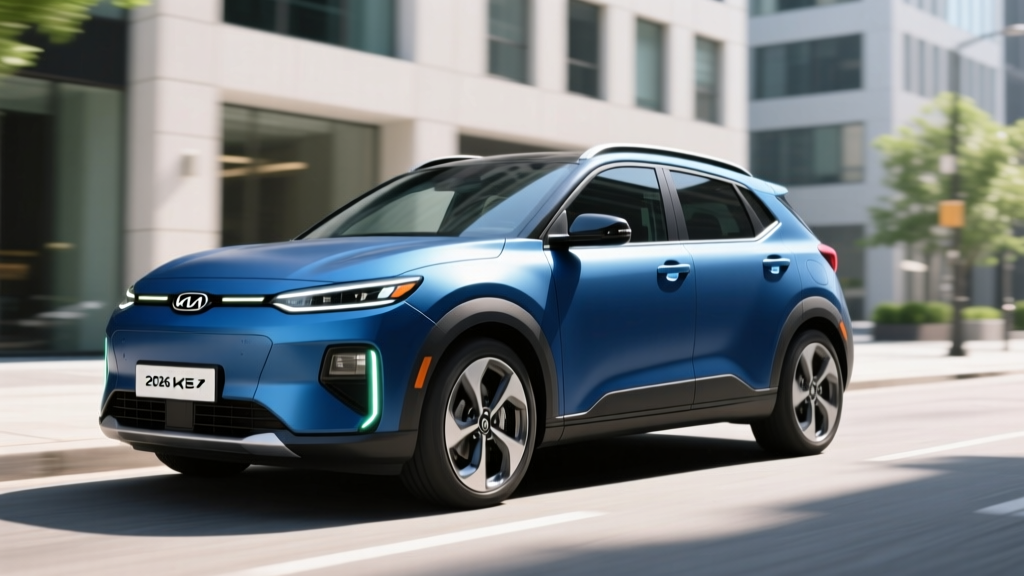
Quick Verdict: Should You Skip the 2026 Kona EV?
Don't skip it if: You want an affordable compact EV crossover with 261 miles of EPA range, mostly drive under 50 miles daily, can charge at home, and want to stay under $35,000 before incentives.
Skip it if: You need DC fast charging faster than ~43 minutes (10-80%), regularly road-trip in cold climates, need all-wheel drive, or want the latest 800V charging architecture found on pricier rivals like the Ioniq 5.
The Hyundai Kona Electric has been a staple of the affordable EV segment since its debut, and the 2026 model year carries forward the redesigned second-generation platform introduced for 2024. But with an increasingly crowded sub-$40,000 EV market — including rivals like the Chevrolet Equinox EV, Nissan Ariya, and Hyundai's own Ioniq 5 — the question many shoppers are asking is whether the Kona EV still earns its spot on the shortlist, or whether it's one to skip.
This guide walks through the exact numbers, real-world ownership considerations, and cost comparisons you need to make that call. No hype, no hand-waving — just the data.
2026 Kona Electric: The Specs That Matter
Before deciding, you need the hard numbers. Here's what the 2026 Hyundai Kona Electric delivers across its key trims, based on EPA data and Hyundai's published specifications.
| Spec | SE / SEL (Standard Range) | SEL Convenience / Limited (Extended Range) |
|---|---|---|
| EPA Range | ~200 mi | 261 mi |
| Battery (usable) | ~48.6 kWh (LFP) | ~64.8 kWh (NMC) |
| Motor Output | 133 hp / 188 lb-ft | 201 hp / 188 lb-ft |
| 0-60 mph | ~8.5 sec | ~7.2 sec |
| DC Fast Charge (peak) | ~100 kW | ~100 kW |
| 10-80% DC Charge | ~40 min | ~43 min |
| Level 2 Charge (7.2 kW) | ~6.5 hr | ~9 hr |
| MPGe (combined) | ~118 MPGe | ~116 MPGe |
| Base MSRP | ~$32,975 | ~$36,975–$41,475 |
| Drivetrain | FWD only (no AWD option) | |
| Battery Warranty | 10 years / 100,000 miles | |
Real-world range reality check: The EPA's 261-mile figure for the Extended Range is achievable in mixed city/suburban driving in mild weather. Expect roughly 220–240 miles on highway-heavy trips at 70+ mph, and as low as 175–195 miles in sustained sub-30°F winter conditions. The Kona EV lacks a heat pump on lower trims, which compounds cold-weather range loss — a detail many first-time EV buyers overlook until their first January commute.
How the Kona EV Compares to Gas and Hybrid Alternatives
The Kona Electric doesn't exist in a vacuum. Hyundai sells a gas-powered Kona alongside it, and many cross-shoppers also consider compact hybrids. Here's how the numbers stack up over a typical ownership period.
| Cost Factor | 2026 Kona EV (Extended) | 2026 Kona Gas (2.0L) | Compact Hybrid (e.g., Toyota Corolla Cross Hybrid) |
|---|---|---|---|
| Base MSRP | $36,975 | $25,975 | $31,000 |
| Estimated Federal Credit (§30D) | Up to $7,500* | $0 | $0 |
| Effective Purchase Price | ~$29,475 | $25,975 | $31,000 |
| Fuel/Energy (5 yrs) | ~$3,200 (home L2) | ~$9,400 (28 MPG, $3.50/gal) | ~$5,900 (42 MPG) |
| Maintenance (5 yrs) | ~$1,800 | ~$4,200 | ~$3,500 |
| Insurance (5 yrs est.) | ~$9,500 | ~$7,800 | ~$8,200 |
| 5-Year Total (purchase + fuel + maint + ins) | ~$43,975 | ~$47,375 | ~$48,600 |
*Federal EV tax credit eligibility under IRS §30D depends on your taxable income, the vehicle's MSRP (must be under $55,000 for SUVs), battery component sourcing, and critical mineral requirements. The Kona EV's eligibility has fluctuated as Hyundai shifted production to the U.S. Verify current-year status on the IRS Clean Vehicle credit page before purchase. Point-of-sale transfer is available if eligible.
The takeaway: if you qualify for the full federal credit, the Kona EV's effective purchase price drops below the hybrid alternative, and energy savings compound every year. If you don't qualify — due to income caps ($150K single / $300K joint) or sourcing disqualification — the gas Kona remains substantially cheaper upfront, and the math takes longer to pencil out.
Charging Reality: Home, Public, and the 100 kW Problem
The Kona Electric's most debated spec in 2026 is its DC fast-charging speed. At a peak of roughly 100 kW, it trails rivals equipped with 800V architectures (the Ioniq 5 peaks at 240 kW; the Equinox EV at ~150 kW). For a 10-80% charge, plan on ~43 minutes at a compatible DC fast charger — functional, but noticeably slower than the ~18-minute stops you'll see from 800V competitors.
Charging Myths vs. Facts — Kona EV Edition
| Myth | Fact |
|---|---|
| "I can charge at any public station in 20 minutes." | At 100 kW peak with a tapering charge curve above 60% SoC, expect 40-45 minutes for 10-80% on a 150+ kW charger. On a 50 kW unit, plan for 70+ minutes. |
| "The Kona EV uses Tesla Superchargers." | Hyundai adopted the NACS connector for some 2025+ models. Confirm whether your specific 2026 Kona EV trim ships with NACS or CCS1 — a CCS-to-NACS adapter may be required for Supercharger access. |
| "I don't need home charging; public stations are everywhere." | Public DC charging costs $0.30–$0.60/kWh (vs. ~$0.13/kWh residential average). Without home Level 2, your "fuel" cost nearly triples, eroding the EV savings advantage. |
| "Cold weather won't affect me — I live in a mild climate." | Even 40-50°F weather can reduce range 5-10%. Below freezing, expect 20-30% loss, especially without a heat pump (standard only on upper trims). |
Home Charging: What It Actually Costs
For most Kona EV buyers, home Level 2 charging is the backbone of ownership. Here's what installation typically runs:
| Item | Low Estimate | High Estimate |
|---|---|---|
| Level 2 charger (32-48A, hardwired) | $350 | $700 |
| Electrician labor (4-8 hrs) | $600 | $1,600 |
| Electrical panel upgrade (if needed, 100A→200A) | $1,500 | $3,500 |
| Permit and inspection | $100 | $400 |
| Total (no panel upgrade) | $1,050 | $2,700 |
| Total (with panel upgrade) | $2,550 | $6,200 |
The Kona EV's onboard charger accepts up to 7.2 kW (single-phase, 30A). A 48A home charger will future-proof your garage for a next vehicle, but the Kona itself won't draw more than 7.2 kW. At that rate, a full 0-100% charge on the Extended Range battery takes roughly 9 hours — easily accomplished overnight.
Real-World Ownership: Who Should Buy and Who Should Skip
Numbers only go so far. The Kona EV's suitability depends heavily on your driving patterns, climate, and living situation. Here's a practical decision framework:
Should You Buy the 2026 Kona Electric?
BUY IT if:
- Your daily round-trip commute is under 80 miles (leaves ample buffer for errands, climate, and battery aging).
- You have access to Level 2 home or workplace charging.
- You take road trips of 200+ miles fewer than 4-5 times per year (manageable with one DC fast stop).
- You live in a mild-to-moderate climate, or you're willing to accept 25-30% winter range loss.
- You qualify for the §30D federal credit or a state incentive that meaningfully reduces the purchase price.
- You want a compact crossover footprint for urban/suburban driving without paying $45K+.
SKIP IT if:
- You rely exclusively on public DC fast charging and need sub-25-minute charge stops (look at 800V platforms like the Ioniq 5 or EV6).
- You need all-wheel drive for snow/ice — the Kona EV is FWD-only.
- Your regular road trips exceed 300 miles in a single day across charging-desert regions.
- You don't qualify for federal or state incentives and the price premium over the gas Kona doesn't justify itself on fuel savings alone.
- You want to tow — the Kona EV is not rated for towing.
First-Time EV Buyer Considerations
If the Kona EV would be your first electric vehicle, a few realities are worth internalizing before you sign:
- kW vs. kWh: The battery holds ~64.8 kWh of energy (think: gallons in the tank). The charger delivers power in kW (think: gallons per minute at the pump). Confusing the two is the most common new-owner mistake.
- Charge curve taper: The "100 kW peak" number applies only between roughly 10-50% state of charge. Above 60%, charging slows significantly to protect battery health. This is normal EV physics, not a defect.
- Insurance premium bump: EVs typically cost 15-25% more to insure than their gas equivalents due to higher repair costs and battery replacement risk. Get a quote before purchase — it can shift the total-cost equation.
- Tire wear: The instant torque of an EV accelerates tire wear by roughly 20-30% vs. a comparable gas car. Budget for replacement tires sooner than you're used to.
- Dealer service familiarity: Not all Hyundai dealers have robust EV service departments. Confirm your local dealer's EV capability before committing.
The Competition: Where the Kona EV Stands in 2026
The sub-$40K EV crossover segment has matured considerably. Here's how the Kona EV Extended Range stacks against key rivals at a glance:
| Model | EPA Range | Peak DC Charge | 10-80% Time | AWD Option | Base MSRP |
|---|---|---|---|---|---|
| Hyundai Kona EV (Extended) | 261 mi | ~100 kW | ~43 min | No | ~$36,975 |
| Hyundai Ioniq 5 (Std Range) | 240 mi | ~175 kW (800V) | ~20 min | Yes | ~$42,500 |
| Chevrolet Equinox EV (LT) | 319 mi | ~150 kW | ~30 min | Yes | ~$33,600 |
| Nissan Ariya (Engage) | 216 mi | ~130 kW | ~35 min | No | ~$39,590 |
| Kia EV6 (Light RWD) | 232 mi | ~175 kW (800V) | ~20 min | Yes | ~$42,900 |
The Kona EV's advantage is price — it undercuts nearly every rival here while delivering competitive range. Its disadvantage is charge speed: if you road-trip frequently, those extra 20 minutes per stop add up over a long drive. For a mostly-local driver, that trade-off is irrelevant. For a frequent highway traveler, it's the reason to look at the Ioniq 5 or EV6 despite the higher MSRP.
According to IIHS ratings, the Kona has historically performed well in crash testing, though you should verify the latest model-year results, as criteria tighten annually.
Tax Credits, Incentives, and the Fine Print
The Kona EV's value proposition shifts dramatically depending on incentive eligibility. Under current IRS §30D rules, the federal Clean Vehicle Credit offers up to $7,500 — but only if all of the following apply:
- Income cap: Modified AGI ≤ $150,000 (single) / $225,000 (head of household) / $300,000 (joint).
- MSRP cap: Vehicle MSRP must not exceed $55,000 for SUVs/crossovers (the Kona EV clears this easily).
- Battery sourcing: A percentage of battery components must be manufactured or assembled in North America, and critical minerals must be sourced from the U.S. or free-trade-agreement partners. These thresholds increase annually — verify current-year compliance on the IRS eligible vehicle list.
- Point-of-sale transfer: If eligible, you can transfer the credit to the dealer at purchase, reducing your out-of-pocket cost immediately rather than waiting for a tax refund.
Many states also offer additional rebates or tax credits (California's CVRP, Colorado's state credit, etc.), but amounts and eligibility vary by jurisdiction. Check your state energy office or DMV for current programs — never assume a state incentive is guaranteed.
Bottom Line: Skip or Buy?
The 2026 Hyundai Kona Electric is a competent, value-oriented compact EV that serves a specific buyer very well: the daily commuter with home charging, moderate road-trip needs, and a budget that prioritizes affordability over bleeding-edge charge speeds. It is not the fastest-charging, longest-range, or most technologically advanced EV in its class — and it doesn't pretend to be.
Skip it if your lifestyle demands rapid DC charging, all-wheel drive, or 300+ mile road-trip capability. Buy it if you want a practical, warranty-backed EV daily driver at one of the lowest entry prices in the segment — especially if the §30D credit brings your effective cost below $30,000.
Does the 2026 Kona EV qualify for the $7,500 federal tax credit?
It may, depending on current-year battery sourcing compliance, your income, and the MSRP cap. Hyundai's U.S. production (at the Ellabell, GA Metaplant) has improved eligibility for several models, but critical-mineral and component sourcing thresholds tighten each year. Always check the IRS eligible vehicle list before purchasing.
Can I road-trip the Kona EV cross-country?
Yes, but plan for 40-45 minute DC fast-charge stops every 180-220 real-world miles. That's roughly 20 minutes longer per stop than an 800V vehicle like the Ioniq 5. For one or two road trips a year, most owners find it manageable. For monthly long-distance driving, a faster-charging platform is worth the premium.
Is the Kona EV good in snow?
The Kona EV is front-wheel drive only — no AWD option exists. With proper winter tires, it handles light-to-moderate snow adequately for a FWD crossover. If you live in a region with heavy, sustained snowfall, AWD rivals like the Ioniq 5, EV6, or Equinox EV are better choices.
How long will the Kona EV battery last?
Hyundai warranties the battery for 10 years / 100,000 miles against capacity loss below 70% of original. Real-world data from first-generation Kona EVs (2019-2023) suggests 85-92% capacity retention at 100,000 miles under normal use. Avoid habitual DC fast charging and routinely sitting at 100% SoC to maximize longevity.
Should I get the Standard Range or Extended Range?
If your budget allows, the Extended Range (261 mi EPA, ~64.8 kWh) is the stronger choice for most buyers — the additional range provides meaningful buffer for cold weather, highway driving, and battery aging over a 10-year ownership horizon. The Standard Range makes sense only if your daily driving is under 40 miles and you want the lowest possible purchase price.