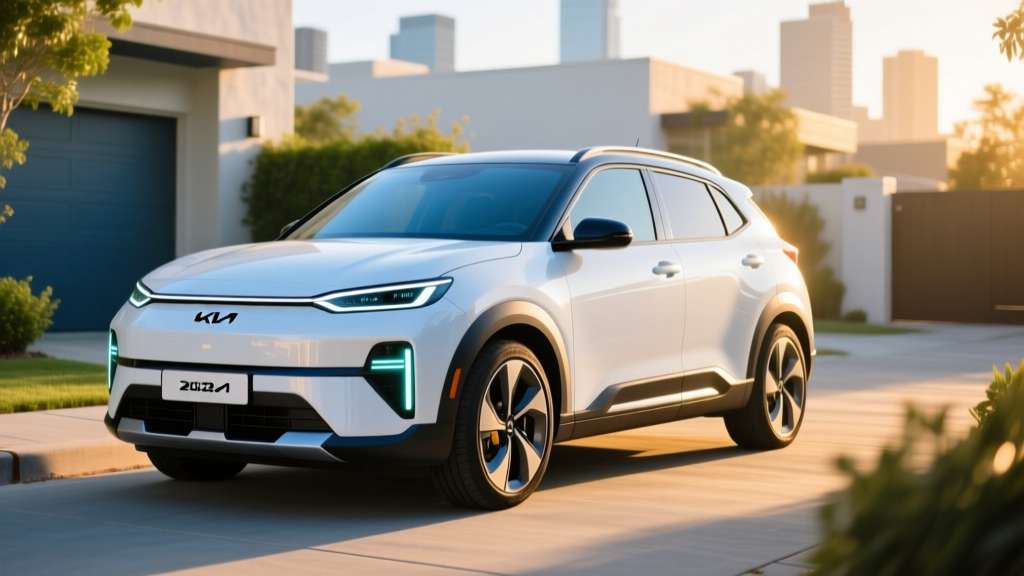
Searching for Kona Electric lease deals can feel like a numbers game. Advertised monthly payments look attractive, but the real question is what this compact EV actually costs to own once you factor in charging, insurance, maintenance, depreciation, and incentives. The Hyundai Kona Electric remains one of the most affordable long-range EVs on the market, but lease math requires more than just dividing a sticker price by 36 months.
This guide dissects the true five-year cost of putting a Kona Electric in your driveway — whether you lease or buy — using current 2026 model-year data, EPA figures, and IRS tax-credit rules.
2026 Kona Electric: The Numbers That Matter
Before crunching ownership costs, here's the spec sheet that drives them. The current-generation Kona Electric rides on a dedicated EV platform with meaningful improvements over the pre-2024 model.
| Spec | SE / SEL (Standard Range) | Limited (Extended Range) |
|---|---|---|
| EPA Range | 261 miles | 261 miles |
| Battery (usable) | 65.4 kWh (NMC) | 65.4 kWh (NMC) |
| Motor Output | 201 hp / 188 lb-ft | 201 hp / 188 lb-ft |
| 0–60 mph | ~7.4 seconds | ~7.4 seconds |
| Max DC Fast Charge | ~100 kW (10–80% in ~43 min) | ~100 kW (10–80% in ~43 min) |
| Level 2 Charge Rate | 10.9 kW | 10.9 kW |
| Combined MPGe | 112 MPGe | 112 MPGe |
| Efficiency | 30 kWh/100 mi | 30 kWh/100 mi |
| Base MSRP | ~$33,550 | ~$38,550 |
| Battery Warranty | 10 years / 100,000 miles | |
| Vehicle Warranty | 5 years / 60,000 miles | |
Lease vs. Buy: How Kona Electric Lease Deals Actually Work
A typical Kona Electric lease in 2026 runs 36 months with 10,000–12,000 miles per year. Advertised deals often highlight monthly payments in the $300–$400 range, but the fine print matters:
- Capitalized cost: The negotiated price the lease is based on — aim below MSRP.
- Money factor: The lease interest rate (multiply by 2,400 to get an approximate APR).
- Residual value: Hyundai typically sets this around 48–52% of MSRP for a 36-month Kona Electric lease. Lower residuals mean higher payments.
- Disposition fee: Usually $395–$495 if you don't purchase at lease end.
The critical lease advantage: under IRS §30D rules, the leasing company (not you) technically claims the federal tax credit. However, most manufacturers pass this savings through as a "lease cash" rebate that reduces the capitalized cost — effectively giving you the $7,500 benefit as a lower monthly payment. This can make leasing cheaper than buying even if you'd qualify for the purchase credit.
Five-Year Total Cost of Ownership Breakdown
Here's what owning a Kona Electric actually costs over five years and 60,000 miles, compared against a similarly priced gas-powered compact crossover (we'll use a 28 MPG combined gas vehicle at $3.40/gallon as the baseline).
| Cost Category | Kona Electric (5 yr) | Gas Crossover (5 yr) | Difference |
|---|---|---|---|
| Purchase / Lease (net after incentives) | $28,500* | $29,000 | −$500 |
| Fuel / Charging | $2,700 | $7,286 | −$4,586 |
| Maintenance | $1,200 | $3,500 | −$2,300 |
| Insurance (5 yr total) | $9,750 | $7,500 | +$2,250 |
| Depreciation | $14,300 | $11,600 | +$2,700 |
| Total 5-Year Cost | $56,450 | $58,886 | −$2,436 |
| Cost Per Mile | $0.94 | $0.98 | −$0.04 |
*Assumes purchase with full $7,500 §30D credit applied. Lease scenarios may vary based on residual and lease-cash pass-through. Depreciation calculated on net purchase price.
The Kona Electric wins on operating costs but gives back some ground on insurance and depreciation. The net result is modest five-year savings — but the monthly cash-flow story is better than the headline suggests because fuel and maintenance savings compound from day one.
Charging vs. Gas: The Per-Mile Math
This is where the Kona Electric earns its keep. The math depends on your electricity rate and how much you charge at home versus on public DC fast chargers.
| Scenario | Rate | Cost Per Mile | Annual Cost (12k mi) |
|---|---|---|---|
| Home charging (national avg $0.16/kWh) | $0.16/kWh × 30 kWh/100mi | $0.048/mi | $576 |
| Home charging (off-peak utility rate $0.09/kWh) | $0.09/kWh × 30 kWh/100mi | $0.027/mi | $324 |
| Public DC fast charging (avg $0.40/kWh) | $0.40/kWh × 30 kWh/100mi | $0.12/mi | $1,440 |
| Gas vehicle (28 MPG, $3.40/gal) | $3.40 ÷ 28 MPG | $0.121/mi | $1,457 |
The takeaway: If you charge primarily at home (which roughly 80% of EV owners do, per DOE data), you'll spend $324–$576 per year on electricity versus $1,457 on gas. That's $881–$1,133 in annual fuel savings. If you rely entirely on public fast charging, the cost advantage evaporates — DC charging at $0.40/kWh is roughly equivalent to $3.40/gallon gas.
Source: fueleconomy.gov efficiency data and EIA electricity pricing.
Federal Tax Credit: Do You Actually Qualify?
The IRS §30D Clean Vehicle Credit offers up to $7,500 for qualifying new EV purchases, but the eligibility rules are layered. Here's the current-year checklist:
- MSRP Cap: The Kona Electric (classified as an SUV by the IRS) must have an MSRP at or below $80,000. All trims qualify — the most expensive Limited trim is well under this cap.
- Buyer Income Limits (MAGI): $150,000 single filer / $225,000 head of household / $300,000 married filing jointly. You must fall under the cap in either the purchase year or the prior year.
- Battery Component Sourcing: At least 60% of battery component value must be manufactured or assembled in North America (threshold increases annually). Verify current-year compliance on Hyundai's spec sheet.
- Critical Minerals: A percentage of critical minerals must be sourced from the US or a free-trade-agreement country (threshold also increases annually). Partial or full credit depends on compliance with both sourcing prongs.
- Point-of-Sale Transfer: As of 2024, you can transfer the credit to the dealer at purchase, reducing your out-of-pocket cost immediately rather than waiting for a tax refund. This is effectively an instant $7,500 discount if you qualify.
- One Credit Per VIN: The vehicle must be new, purchased for personal use, and primarily used in the United States.
State, Local, and Utility Incentives
Beyond the federal credit, many buyers stack additional incentives:
- State rebates: States like California (CVRP, up to $7,000 for income-qualified buyers), Colorado (up to $5,000), and Massachusetts (MOR-EV, up to $3,500) offer significant point-of-sale rebates. These programs have income tiers and funding caps — check your state energy office.
- Utility rebates: Many electric utilities offer $250–$1,500 rebates for purchasing an EV, plus discounted off-peak charging rates that can cut your electricity cost by 40–50%.
- HOV lane access: Several states grant solo carpool-lane access to EVs — a significant time and fuel savings for commuters in metro areas.
- Home charger incentives: Some utilities and states subsidize Level 2 home charger purchase and installation, offsetting $500–$1,500 in costs.
These incentives vary dramatically by ZIP code. A buyer in California stacking federal, state, and utility incentives could save $12,000–$14,000 off the effective purchase price. A buyer in a state with no EV incentives might only capture the federal credit.
Maintenance Savings: Fewer Parts, Less Wear
EVs have a fraction of the moving parts in a gas powertrain — no oil, no spark plugs, no timing belts, no exhaust system, no multi-speed transmission.
| Maintenance Item | Kona Electric | Gas Crossover |
|---|---|---|
| Oil changes | None | $250–$400/yr (2–3×/yr) |
| Brake pads | Every 80,000–100,000+ mi (regen braking reduces wear) | Every 30,000–50,000 mi |
| Transmission fluid | None (single-speed reducer) | $150–$300 at 60,000 mi |
| Coolant flush | At ~100,000 mi | At ~60,000 mi |
| Cabin air filter | Every 15,000–20,000 mi (~$30–$50) | Every 15,000–20,000 mi (~$30–$50) |
| Tire rotation | Every 8,000–10,000 mi (EVs wear tires slightly faster due to weight and torque) | Every 8,000–10,000 mi |
| 5-Year Estimated Total | ~$1,200 | ~$3,500 |
The regenerative braking system is a hidden savings multiplier. Because the motor slows the car and recaptures energy, the friction brakes engage far less frequently. Many EV owners report original brake pads lasting well past 80,000 miles. The trade-off: EV tires wear somewhat faster due to the Kona Electric's ~3,700-lb curb weight and instant torque delivery. Budget for a tire replacement around 35,000–45,000 miles.
The Insurance Reality: Expect to Pay More
This is the cost category EV skeptics rightfully point to, and the data supports it. The Kona Electric typically costs 15–25% more to insure than its gas-powered Kona sibling. National average EV insurance premiums run $1,800–$2,200 per year depending on your profile, versus $1,400–$1,600 for a comparable gas crossover.
Why? Several factors:
- Higher repair costs: EV battery packs and power electronics are expensive to replace after collision damage. Insurers price this risk in.
- Specialized labor: Fewer body shops are certified for high-voltage EV repairs, increasing labor rates.
- Total-loss thresholds: A minor battery enclosure damage claim can push an EV to total-loss status faster than a gas car.
- Vehicle value: The Kona Electric's higher MSRP (before incentives) means higher comprehensive and collision premiums.
Cost-saving tips: Shop quotes from at least three insurers — EV premiums vary wildly between carriers. Companies like Progressive, Geico, and Tesla Insurance (where available) have become more competitive on EV rates. Bundling home and auto, maintaining a clean record, and selecting a higher deductible ($1,000 vs $500) can narrow the gap to $100–$150/year more than a gas vehicle.
Depreciation and Resale Value Trends
EV depreciation has been the industry's sore spot, and the Kona Electric is not immune. Industry data from iSeeCars and Kelley Blue Book shows mainstream EVs losing 45–55% of their value over five years, compared to 35–45% for comparable gas vehicles.
For the Kona Electric specifically:
- Purchase price (after $7,500 credit): ~$26,050 (SE) to ~$31,050 (Limited)
- Estimated 5-year resale: 45–50% of pre-credit MSRP retained, or roughly $14,000–$18,000 depending on mileage and condition
- Net 5-year depreciation: ~$12,000–$14,300
The depreciation story is improving. As the used-EV market matures and the $4,000 used-EV tax credit (§25E) creates demand for pre-owned electrics, resale values are stabilizing. Hyundai's class-leading 10-year/100,000-mile battery warranty also provides a floor — a well-maintained Kona Electric with 70,000 miles still has three years of battery coverage remaining, which supports used-market confidence.
If depreciation is your primary concern, leasing sidesteps the risk entirely. The leasing company absorbs the residual-value gamble. If the Kona Electric depreciates faster than projected, that's Hyundai Capital's problem, not yours.
Decision Framework: Should You Lease or Buy the Kona Electric?
Choose a Kona Electric lease if:
- You want to capture the $7,500 federal credit even if your income exceeds §30D limits (lease credits have no income cap for the lessee)
- You want to avoid depreciation risk in a volatile EV resale market
- You drive under 12,000 miles per year (lease mileage limits)
- You prefer a lower monthly payment and plan to upgrade in 3 years
Choose to buy the Kona Electric if:
- You qualify for the full $7,500 §30D credit and want to own the asset
- You drive 12,000+ miles per year (avoiding lease overage penalties)
- You plan to keep the vehicle 5+ years (maximizing the fuel and maintenance savings)
- You have home charging access and low electricity rates (maximizing the cost-per-mile advantage)
Frequently Asked Questions
How much does a Kona Electric lease typically cost per month in 2026?
With manufacturer lease cash (the passed-through federal credit), expect $299–$399/month on a 36-month lease with $2,500–$3,500 due at signing for the SE trim. The Limited trim typically runs $379–$449/month. Actual deals vary by dealer, region, and credit tier.
Does the Kona Electric qualify for the full $7,500 federal tax credit?
The Kona Electric's MSRP falls well under the $80,000 SUV cap. Whether you receive the full $7,500, a partial $3,750, or nothing depends on your income (MAGI limits), and whether the vehicle's battery meets current-year critical-mineral and component-sourcing thresholds. Verify on fueleconomy.gov for the specific model year.
How much will I save on fuel charging a Kona Electric at home?
At the national average electricity rate of $0.16/kWh and the Kona's 30 kWh/100mi efficiency, you'll spend about $0.048 per mile — roughly $576 per year for 12,000 miles. A comparable 28 MPG gas crossover at $3.40/gallon costs $1,457 per year. That's ~$880 in annual savings, or $4,400 over five years.
Is the Kona Electric more expensive to insure than a gas car?
Yes, typically 15–25% more. Expect $1,800–$2,200 per year versus $1,400–$1,600 for a gas Kona. Higher repair costs, specialized labor, and battery replacement risk drive the premium. Shop multiple insurers — rates vary significantly for EVs.
How well does the Kona Electric hold its value?
Mainstream EVs like the Kona Electric currently depreciate 45–55% over five years, somewhat more than gas counterparts (35–45%). However, the 10-year battery warranty, the $4,000 used-EV credit boosting demand, and growing EV adoption are narrowing the gap. Leasing transfers depreciation risk to the lessor.
What happens if the battery degrades?
Hyundai warranties the Kona Electric's battery for 10 years / 100,000 miles against capacity loss below 70%. NMC batteries in modern EVs typically lose 1–2% capacity per year under normal use, meaning you'd still have ~90% capacity at 5 years. Real-world degradation data from similar Hyundai/Kia platforms supports this trajectory.