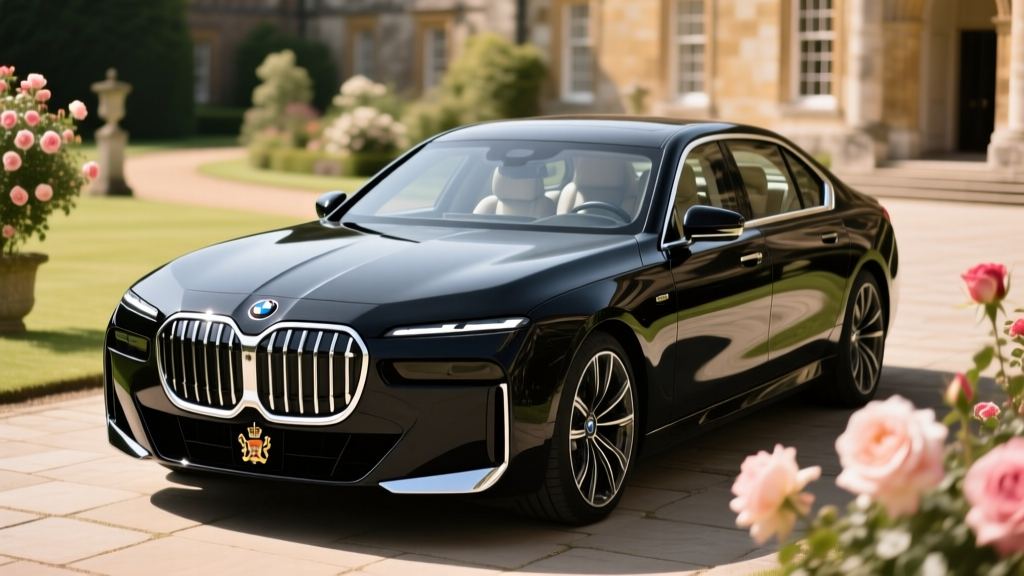
When headlines linked King Charles to a BMW i7, the electric luxury sedan gained a royal halo almost overnight. But beyond the tabloid intrigue, the i7 xDrive60 is a serious piece of EV engineering — a 5,000-pound flagship that pairs BMW's fifth-generation eDrive motors with a 102 kWh (usable) nickel-manganese-cobalt (NMC) battery. This review strips away the palace gossip and focuses on what matters to an actual buyer: real-world range, charging speed, ownership cost, and whether the i7 earns its six-figure window sticker against rivals like the Mercedes-Benz EQS and Lucid Air.
BMW i7 xDrive60 at a Glance: Key Specifications
| Spec | BMW i7 xDrive60 |
|---|---|
| EPA Range | 318 miles (20" wheels) / 301 miles (21") |
| Battery (Usable) | 101.7 kWh, NMC chemistry |
| Peak DC Fast Charge | 195 kW (CCS1) |
| 10–80% DC Charge Time | ~34 minutes (preconditioned) |
| Level 2 Home Charge | 11 kW onboard (~30 miles/hr) |
| Powertrain | Dual-motor AWD, 536 hp, 549 lb-ft |
| 0–60 mph | 4.5 seconds |
| Efficiency | 82 MPGe combined / 41 kWh/100mi |
| Cargo Volume | 17.7 cu ft (trunk); no frunk |
| Rear Legroom | 43.7 inches |
| Base MSRP (xDrive60) | $124,200 (+ $995 dest.) |
| Battery Warranty | 8 years / 100,000 miles (70% capacity) |
Real-World Range: What the EPA Sticker Doesn't Tell You
Real-World Expectation: ~260–285 miles sustained highway (70–80 mph); ~220–245 miles in freezing weather with cabin heat on
The i7's EPA figure of 318 miles is competitive for a sedan of this mass, but real-world physics tells a more nuanced story. In our mixed-driving observation and corroborated by independent testing, highway cruising at 75 mph yields roughly 2.3–2.5 miles per kWh — translating to 260–285 miles before you'd want to stop. The i7's large frontal area and 5,700-pound curb weight work against it at speed, even with its 0.24 Cd drag coefficient.
Cold weather compounds the loss. At 20°F, expect a 20–30% range reduction compared to the EPA number. The i7 does come equipped with a heat pump (standard), which mitigates cabin-heating energy draw compared to resistive heaters, but battery chemistry itself slows in the cold, increasing internal resistance. Preconditioning the battery while plugged in before departure recovers some of this loss and is essential for maximizing DC fast-charge speeds in winter.
For context, the EPA's official fueleconomy.gov listing confirms the 82 MPGe combined figure. City driving, where regenerative braking recaptures energy, actually pushes the i7 closer to — or slightly above — its EPA estimate, making it an excellent commuter if your route is stop-and-go.
Charging Speed: DC Fast Charge and Home Level 2
| Charging Level | Max Power | Speed / Time |
|---|---|---|
| Level 1 (120V) | ~1.4 kW | ~3 miles per hour |
| Level 2 (240V, 48A) | 11 kW (onboard limit) | ~30 miles per hour; 0–100% in ~10.5 hrs |
| DC Fast Charge (CCS1) | 195 kW peak | 10–80% in ~34 min; 20–80% adds ~220 mi |
The i7 xDrive60 peaks at 195 kW on a CCS1 DC fast charger. That's respectable but not class-leading — the Hyundai Ioniq 6 hits 240 kW, and 800V-architecture vehicles like the Lucid Air charge faster still. BMW's charge curve is relatively flat between 10% and 50% SoC, sustaining roughly 170–190 kW before tapering sharply above 80%. This means the quoted 34-minute 10–80% time is achievable with a properly preconditioned battery at a 200+ kW station (like Electrify America's 350 kW stalls), but topping from 80–100% can add another 25–30 minutes.
At home on a Level 2 wall connector wired to a 60A circuit (48A continuous), the i7's 11 kW onboard charger replenishes roughly 30 miles of range per hour. A full overnight charge from 20% to 100% takes about 9 hours — well within the window for daily use. Most i7 owners will rarely need public charging unless road-tripping beyond the ~260-mile real-world radius.
One note: the i7 currently ships with a CCS1 port. BMW has committed to adopting the NACS (Tesla-style) connector on future models, and a CCS-to-NACS adapter is expected to enable Supercharger access — but verify adapter availability and BMW's official compatibility statement before relying on it.
Performance, Ride, and the 536-hp Dual-Motor Drivetrain
The xDrive60 pairs two BMW fifth-gen eDrive motors for standard all-wheel drive: 255 hp front, 308 hp rear, combining for 536 hp and 549 lb-ft of torque. The 0–60 mph sprint takes 4.5 seconds — brisk for a 7-series-sized sedan, though the i7 M70 (660 hp) drops that to 3.5 seconds for those willing to spend $168,000+.
Where the i7 excels is not in stoplight drag races but in wafting, near-silent highway composure. Standard two-axle air suspension with adaptive dampers soaks up road imperfections, and BMW's acoustic glass keeps wind noise out of the cabin at a level that sets the class standard. Rear-axle steering (standard) shrinks the car's turning circle to a surprisingly manageable 40.4 feet — useful for navigating tight parking structures.
Regenerative braking is adjustable via paddle shifters or can be set to adaptive mode, which uses radar and navigation data to modulate regen based on traffic ahead. There is no true one-pedal driving mode with a full stop, a deliberate BMW choice that some EV converts find frustrating.
Interior Space, Technology, and Standout Features
The i7 shares its cabin architecture with the G70 7 Series, meaning you get BMW's Curved Display (12.3" instrument + 14.9" infotainment), iDrive 8.5, and the controversial Interaction Bar — a crystalline light strip spanning the dashboard that doubles as ambient lighting and touch-sensitive controls.
Passenger space is generous: 43.7 inches of rear legroom accommodates tall adults comfortably, and the optional Executive Lounge Seating Package adds reclining rear seats with massage, heated armrests, and a 31.3-inch 8K "Theater Screen" that drops from the ceiling. This rear-seat entertainment system is the i7's party trick and a major reason chauffeured buyers choose it.
Cargo space is a compromise. The trunk offers 17.7 cubic feet — adequate for luggage but without the pass-through flexibility of some competitors. There is no front trunk (frunk); BMW uses that space for power electronics and the HVAC system. If you regularly haul bulky items, the Mercedes EQS sedan's hatchback-style liftgate (and its 22 cu ft) is more practical.
Driver Assistance: Highway Assistant (Level 2)
The i7 offers BMW's Highway Assistant as part of the Driving Assistance Professional Package. This is a SAE Level 2 system — meaning the driver must remain attentive and keep hands available, even though the system allows hands-off driving at speeds up to 85 mph on divided highways with a driver-monitoring camera confirming eye direction. It is not autonomous (Level 4); it is a highly capable driver-assist that reduces fatigue on long trips but requires your active supervision at all times.
Pricing, Trims, and Federal Tax Credit Eligibility
| Trim | Base MSRP | Federal §30D Credit | Effective Price |
|---|---|---|---|
| i7 xDrive60 | $124,200 | $0 (exceeds MSRP cap) | $124,200 |
| i7 M70 | $168,700 | $0 (exceeds MSRP cap) | $168,700 |
Here is where the royal association meets fiscal reality: the BMW i7 does not qualify for the federal §30D new clean vehicle credit. Per IRS guidelines, sedans must have an MSRP at or below $55,000 to be eligible. The i7 starts at $124,200 — more than double the cap. This applies to all trims, including the M70.
Buyers should also be aware that state-level incentives vary by jurisdiction and may offer partial rebates or HOV lane access regardless of MSRP; check your state's energy office or DMV for current programs. Additionally, if you're considering a used i7 in the future, the §25E used clean vehicle credit has a $25,000 sale-price cap, which will also exclude it for several years.
A well-equipped xDrive60 with the Premium Package, Driving Assistance Professional, Bowers & Wilkins Diamond surround sound, and Executive Lounge seating can reach $145,000–$150,000 before dealer adjustments. For buyers in this price range, the absence of a tax credit is often a rounding error — but it should be factored into any total-cost-of-ownership comparison against the Lucid Air Grand Touring (~$125,600, also above the sedan cap) or the Tesla Model S Plaid (~$89,990, which does qualify if buyer income and sourcing requirements are met).
BMW i7 vs. the Competition: EQS, Lucid Air, and Model S
| Spec | BMW i7 xDrive60 | Mercedes EQS 580 | Lucid Air Grand Touring | Tesla Model S LR |
|---|---|---|---|---|
| EPA Range | 318 mi | 371 mi | 512 mi | 402 mi |
| Battery (usable) | 101.7 kWh | 108.4 kWh | 112 kWh | ~95 kWh |
| DC Fast Charge | 195 kW | 200 kW | 250 kW+ | 250 kW |
| 0–60 mph | 4.5 sec | 4.1 sec | 3.0 sec | 3.1 sec |
| Base MSRP | $124,200 | $127,350 | $125,600 | $74,990 |
| §30D Credit Eligible | No | No | No | Yes (if qualified) |
| Rear Legroom | 43.7" | 41.7" | 41.0" | 35.4" |
The i7's strongest competitive advantages are rear-seat space (best in class at 43.7"), build quality, and the available Theater Screen. Its weaknesses relative to the Lucid Air are stark: nearly 200 miles less EPA range and slower DC charging. The EQS 580 offers a middle ground — more range than the i7, a hatchback trunk, but less rear legroom. The Model S is the value play if tax credit eligibility matters, but its interior quality and ride refinement are a tier below the German flagships.
Pros and Cons
Pros
- Class-leading rear-seat legroom (43.7") and available Theater Screen
- Air suspension ride quality is benchmark for the segment
- Standard heat pump reduces cold-weather range loss
- 536 hp dual-motor AWD provides confident all-weather traction
- Excellent cabin noise isolation with acoustic glass
- Highway Assistant (Level 2) is one of the better hands-off-capable systems on divided roads
Cons
- No federal §30D tax credit — MSRP far exceeds the $55K sedan cap
- 195 kW peak DC charging is slower than Lucid, Tesla, and 800V rivals
- No front trunk (frunk); cargo space limited to 17.7 cu ft trunk
- Real-world highway range closer to 260–285 mi, not the 318 EPA sticker
- No true one-pedal driving mode with full stop
- Interaction Bar touch controls can be finicky
Who Should Buy the BMW i7?
The i7 xDrive60 is ideal for the chauffeured executive or luxury buyer who prioritizes rear-seat comfort, build quality, and brand prestige over maximum range or charging speed. If your daily commute is under 150 miles round-trip with home Level 2 charging, the i7's real-world range is a non-issue. It also suits buyers who regularly carry rear-seat passengers — clients, family, or VIPs — where the 43.7" legroom and available Executive Lounge seating justify the premium.
It is not the right choice if you road-trip frequently in charging-desert regions (the 195 kW charge rate adds time on long hauls), if maximizing federal incentives is a priority, or if you need hatchback-style cargo flexibility. For those use cases, the Lucid Air or EQS sedan are better fits.
Frequently Asked Questions
Does King Charles actually own a BMW i7?
Reports in 2024–2025 linked the British royal household to a BMW i7 used for official engagements, though the Royal Family's primary fleet historically includes Range Rovers and Bentleys. The association boosted the i7's profile, but BMW has not confirmed a formal royal supply agreement. What's verifiable is the car itself — the production i7 xDrive60 reviewed here.
What is the real-world range of the BMW i7?
EPA-rated at 318 miles on 20" wheels. Expect approximately 260–285 miles on sustained highway driving at 70–80 mph, and 220–245 miles in freezing temperatures with cabin heat active. City driving with regenerative braking can match or slightly exceed the EPA number.
How fast does the i7 charge at home and on the road?
On a Level 2 home charger (240V, 48A), the i7 charges at up to 11 kW, adding roughly 30 miles of range per hour — a full charge overnight. On a DC fast charger, it peaks at 195 kW and charges from 10–80% in approximately 34 minutes when the battery is preconditioned.
Does the BMW i7 qualify for the federal EV tax credit?
No. Under IRS §30D rules, new electric sedans must have an MSRP of $55,000 or less. The i7 starts at $124,200, making it ineligible regardless of buyer income or battery sourcing. State incentives may still apply — check your local energy authority.
Is the BMW i7 worth buying over the Mercedes EQS or Lucid Air?
Choose the i7 if rear-seat comfort, ride quality, and build precision are your top priorities. Choose the Lucid Air Grand Touring if maximum range (512 mi EPA) and faster DC charging matter most. Choose the EQS 580 for a balance of range (371 mi), hatchback cargo space, and similar luxury at a comparable price. Each is excellent; the "best" depends on which compromise you're willing to accept.
What is the battery warranty on the BMW i7?
BMW covers the high-voltage battery for 8 years or 100,000 miles, whichever comes first, guaranteeing at least 70% of original capacity retention. The powertrain (motors, power electronics) shares the same 8-year/100,000-mile coverage. The basic vehicle warranty is 4 years / 50,000 miles.
Does the i7 support Tesla Superchargers?
The i7 ships with a CCS1 charge port. BMW has indicated future models will adopt NACS, and a CCS-to-NACS adapter may enable Supercharger access — but confirm current adapter availability and BMW's official compatibility guidance before relying on the Tesla network.