Quick Answer: The Kia Telluride Electric Doesn't Exist Yet — Here's What to Know
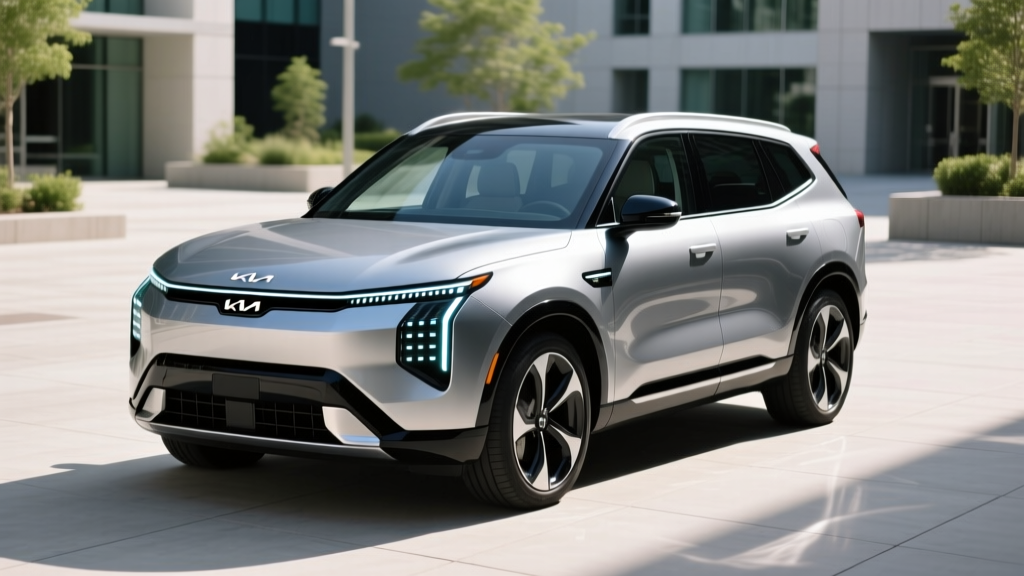
As of early 2026, Kia has not released an electric version of the Telluride. However, the Kia EV9 is Kia's production 3-row electric SUV that fills the role buyers search for when they type "Kia Telluride electric." The EV9 offers up to 304 miles of EPA range, a starting MSRP around $54,900, and seating for up to seven. If you want a Kia electric SUV with Telluride-size space today, the EV9 is the vehicle to evaluate. Kia has hinted at future electrified Telluride variants, but nothing is confirmed or available for purchase.
Why Buyers Search for a Kia Telluride Electric
The gas-powered Kia Telluride has been a dominant 3-row midsize SUV since its 2020 launch, earning back-to-back awards and loyal buyers for its spacious interior, composed ride, and value pricing. It's natural that shoppers now look for an electric equivalent. The Telluride's formula — three usable rows, strong towing, family-friendly tech — maps perfectly onto what EV buyers want in a large SUV.
Kia's answer arrived in the form of the Kia EV9, which launched for the 2024 model year on the Hyundai Motor Group's E-GMP platform (shared with the Hyundai Ioniq 9). The EV9 is slightly larger than the gas Telluride in wheelbase and offers competitive interior volume, but it's a distinct model, not a badge-swap. For shoppers specifically wanting the Telluride nameplate with a battery, patience is required — Kia executives have referenced a potential next-generation Telluride with electrified powertrain options, possibly around 2027–2028, but no official timeline, specs, or pricing exist.
Kia EV9 Specs: The Closest Thing to an Electric Telluride Today
If your search intent is "I want a big Kia electric SUV," the EV9 is the vehicle to cross-shop. Here are the key numbers for the 2026 model year:
| Spec | EV9 Light (RWD) | EV9 Wind/Land (RWD) | EV9 GT-Line (AWD) |
|---|---|---|---|
| EPA Range | 230 mi | 304 mi | 270 mi |
| Battery (usable) | 76.1 kWh | 99.8 kWh (NMC) | 99.8 kWh (NMC) |
| Power | 215 hp | 201 hp | 379 hp |
| 0-60 mph | ~8.2 sec | ~9.0 sec | ~5.0 sec |
| Peak DC Fast Charge | ~175 kW | ~210 kW | ~210 kW |
| 10–80% DC Time | ~24 min | ~24 min | ~24 min |
| Level 2 (240V) Rate | 10.9 kW | 10.9 kW | 10.9 kW |
| Towing Capacity | 2,000 lb | 2,000 lb | 5,000 lb |
| MPGe (combined) | 83 MPGe | 88 MPGe | 83 MPGe |
| Base MSRP | ~$54,900 | ~$59,900 | ~$73,900 |
| Battery/Powertrain Warranty | 10 years / 100,000 miles | ||
Real-World Range vs. EPA Sticker
The EV9's 304-mile EPA rating (Wind/Land RWD with the 99.8 kWh pack) is achievable in moderate temperatures at city and suburban speeds. In real-world highway testing at 70–75 mph, expect roughly 250–270 miles. In freezing temperatures (below 32°F), range can drop to 200–230 miles due to battery chemistry limitations and cabin heating demand. The EV9's heat pump (standard on most trims) helps mitigate cold-weather loss compared to EVs without one, but physics still applies.
EV9 vs. Gas Telluride: Cost and Capability Compared
The most practical question for families is whether going electric saves money and meets daily needs compared to the gas Telluride. Here's a side-by-side breakdown using the 2026 Telluride SX V6 AWD as a comparison baseline:
| Factor | 2026 Kia Telluride SX AWD (Gas) | 2026 Kia EV9 Land AWD |
|---|---|---|
| Base MSRP | ~$48,500 | ~$64,900 |
| Federal Tax Credit (§30D) | $0 | Up to $7,500 (see eligibility) |
| Effective Starting Price | ~$48,500 | ~$57,400 (if credit applies) |
| Fuel / Energy Cost (15,000 mi/yr) | ~$2,250/yr (22 MPG combined, $3.30/gal) | ~$650/yr (home charging, $0.14/kWh) |
| Annual Maintenance | ~$600–$900/yr | ~$150–$300/yr |
| 5-Year Fuel + Maintenance | ~$14,250–$18,750 | ~$4,000–$4,500 |
| EPA Range / Tank Range | ~418 mi (18.8 gal tank) | 270 mi (AWD) / 304 mi (RWD) |
| Towing | 5,000 lb | 5,000 lb (AWD only) |
| 3rd-Row Usability | Excellent | Good (slightly less hip room) |
The EV9 costs more upfront — even after the federal credit — but the annual energy and maintenance savings of roughly $2,000–$2,500 per year can close the gap over 5–7 years of ownership. The math works best if you can charge at home on a Level 2 circuit at residential electricity rates. Public DC fast charging at $0.35–$0.50/kWh narrows the savings dramatically.
Federal Tax Credit: What Actually Applies
The IRS §30D Clean Vehicle Credit offers up to $7,500, but eligibility for the EV9 is not guaranteed for every buyer. Under current 2026 rules:
- MSRP cap: SUVs must be under $80,000 MSRP. The EV9 Wind, Land, and most trims qualify; the fully loaded GT-Line Prestige may push close to or above this threshold depending on options.
- Income cap: Adjusted gross income must not exceed $150,000 (single), $225,000 (head of household), or $300,000 (married filing jointly).
- Battery sourcing: The $7,500 credit splits into two halves — $3,750 for critical minerals and $3,750 for battery component manufacturing. Sourcing requirements tighten annually, and Kia's supply chain determines whether you get the full $7,500, a partial $3,750, or nothing.
- Point-of-sale transfer: You can transfer the credit to the dealer at purchase for an immediate price reduction, rather than waiting to claim it on your tax return.
- Final assembly: Must occur in North America. The EV9 is assembled in West Point, Georgia, satisfying this requirement.
Always verify current eligibility on the IRS §30D page and cross-check the vehicle's VIN on fueleconomy.gov before signing a purchase agreement. Battery sourcing compliance can shift mid-year as supply chains change.
Real-World Ownership: What First-Time EV Buyers Must Plan For
Home Charging Is the Make-or-Break Factor
The EV9's 99.8 kWh battery is one of the largest in any consumer EV. On a standard 120V household outlet (Level 1), you'll recover roughly 3–4 miles of range per hour — meaning a full recharge from near-empty could take over 30 hours. That's not viable for daily use.
A Level 2 home charger at 240V/48A (11.5 kW) adds about 30–35 miles per hour of charging, meaning an overnight session (8–10 hours) restores 240–300+ miles — enough to refill the battery completely. Installation costs vary:
| Item | Estimated Cost Range |
|---|---|
| Level 2 charger hardware (48A) | $400–$700 |
| Electrician labor (standard install) | $500–$1,500 |
| Electrical permit | $50–$200 |
| Panel upgrade (if 200A service needed) | $1,500–$3,500 |
| Total (no panel upgrade) | $950–$2,400 |
| Total (with panel upgrade) | $2,450–$5,900 |
The EV9's large battery makes a panel upgrade more likely than with smaller EVs, since you want a dedicated 60A circuit for a 48A charger. Get a quote from a licensed electrician before committing to the vehicle — the installation cost is a real part of your EV budget.
Public Charging: Speeds and Reality
The EV9's 800V architecture enables peak DC fast charging at roughly 210 kW, which is excellent. On a 350 kW Electrify America or Tesla Supercharger (with NACS adapter), a 10–80% session takes approximately 24 minutes. However, charging speed tapers significantly above 80% to protect the battery — a 10–95% session can take 45+ minutes. Plan road-trip stops around the 10–80% window for efficiency.
Kia provides complimentary charging through Electrify America for a limited period (typically 3 years with a capped kWh allowance) on new EV9 purchases, which helps offset early ownership costs.
Common Misconceptions About a Kia Telluride Electric
| Myth | Fact |
|---|---|
| "The electric Telluride is available now." | No electric Telluride exists as of 2026. The Kia EV9 is the production 3-row electric SUV. |
| "EVs can't tow." | The EV9 AWD tows 5,000 lb — matching the gas Telluride. Range will drop 30–50% while towing, however. |
| "The battery will need replacing in 5 years." | Kia warranties the EV9 battery for 10 years/100,000 miles against degradation below 70% capacity. NMC chemistry in large packs typically retains 85–90%+ after 100,000 miles based on industry data. |
| "I'll save money no matter how I charge." | Home charging at $0.10–$0.18/kWh saves significantly. Exclusive public DC charging at $0.35–$0.50/kWh can cost as much as or more than gasoline per mile. |
| "The EV9 is self-driving." | The EV9 offers Highway Driving Assist 2, an SAE Level 2 driver-assistance system. The driver must remain engaged with hands on the wheel at all times. |
SAE Automation Level: Level 2
Kia's Highway Driving Assist 2 and other EV9 driver-assistance features operate at SAE Level 2. This means the system can manage steering and acceleration simultaneously under certain conditions, but the human driver is fully responsible for monitoring the road and intervening instantly. This is not autonomous driving.
Decision Framework: Should You Buy the EV9, Wait, or Stick with Gas?
If X, Then Y
- If you have home charging access and drive under 250 miles/day: The EV9 Wind RWD (304 mi, ~$59,900) is an excellent family EV. The daily convenience of waking up "full" outweighs the higher purchase price over time.
- If you tow frequently or take long road trips monthly: The gas Telluride remains more practical. EV towing cuts range drastically, and DC fast charging adds 20–40 minutes per stop on a 400-mile trip.
- If you rely exclusively on apartment/curbside parking with no charging access: Do not buy any EV until you have reliable daily charging. Public infrastructure is improving but is not yet a substitute for home charging with a large-battery SUV.
- If you live in a cold climate (prolonged sub-30°F winters): Budget for 20–30% range loss. The EV9 Land AWD's 270-mile EPA range becomes roughly 190–215 miles in deep cold. If that's insufficient for your commute and obligations, consider the gas Telluride or a PHEV alternative.
- If you want the Telluride nameplate specifically and can wait: A next-generation Telluride with a hybrid or PHEV variant is more likely in the near term than a full BEV Telluride. Watch for official Kia announcements around 2027.
- If budget is the primary concern: The gas Telluride starts ~$10,000–$15,000 lower than the EV9, and the 5-year energy savings alone won't fully close that gap unless you drive high annual miles (18,000+) on cheap home electricity.
5-Year Cost of Ownership: EV9 vs. Gas Telluride
| Cost Category | Gas Telluride SX AWD | EV9 Land AWD (with $7,500 credit) |
|---|---|---|
| Purchase Price (after credit) | $48,500 | $57,400 |
| Home Charger Install | $0 | $2,000 |
| Fuel/Energy (5 yr, 15k mi/yr) | $11,250 | $3,250 |
| Maintenance (5 yr) | $3,750 | $1,250 |
| Insurance (5 yr, est.) | $7,500 | $9,000 |
| Estimated Depreciation (5 yr) | $19,400 (40%) | $25,830 (45%) |
| Total 5-Year Cost | $90,400 | $98,730 |
| Cost Per Mile | $1.21/mi | $1.32/mi |
The EV9 still carries a modest total-cost premium over 5 years, primarily due to higher purchase price and steeper projected depreciation (EV depreciation curves remain more uncertain than established gas models). However, if electricity rates are low in your area, you drive more than 15,000 miles annually, or you qualify for additional state incentives, the gap narrows or reverses. Run your own numbers with local utility rates and IRS credit eligibility before deciding.
Frequently Asked Questions
Will Kia make an electric Telluride?
Kia has not officially confirmed an electric Telluride. The company has referenced electrified options for future Telluride generations, which could include hybrid, plug-in hybrid, or full electric variants. No timeline, specs, or pricing have been announced. The EV9 currently serves as Kia's production 3-row electric SUV.
Is the Kia EV9 bigger than the Telluride?
The EV9 has a longer wheelbase (122.0 inches vs. the Telluride's 110.2 inches) and slightly more overall length, but interior packaging differs. Third-row legroom and cargo volume behind the third row are competitive but not identical. The EV9's flat floor (no transmission tunnel) creates a more open cabin feel, while the Telluride offers slightly wider hip room in the second row.
Does the EV9 qualify for the $7,500 federal tax credit?
Eligibility depends on your income, the specific trim's MSRP, and the battery's critical-mineral and component sourcing at the time of purchase. The EV9 is assembled in Georgia, meeting the North American final-assembly requirement. Verify eligibility using the VIN on fueleconomy.gov and consult a tax professional for your specific situation.
How long does it take to charge the EV9 at home?
On a Level 2 (240V, 48A) home charger delivering 11.5 kW, a full charge of the 99.8 kWh battery from 10% to 100% takes approximately 8.5–9 hours. Most owners charge overnight and rarely need a full 0–100% cycle, as daily driving uses 20–40% of the battery.
What happens to the EV9's range in winter?
Expect a 20–30% range reduction in sustained freezing temperatures. The 304-mile RWD model may deliver 210–245 real-world miles in cold weather. Using seat heaters and a heated steering wheel instead of cranking cabin heat helps preserve range. The EV9's heat pump (standard on most trims) reduces HVAC energy draw compared to resistive heating systems.
Can I use Tesla Superchargers with the EV9?
The EV9 currently uses the CCS1 connector. Kia has announced that future models will adopt the NACS (Tesla) connector, and adapters are expected to be available or included for existing CCS-equipped Kias to access Tesla's Supercharger network. Check with your dealer for the latest adapter availability and compatibility for your specific model year.