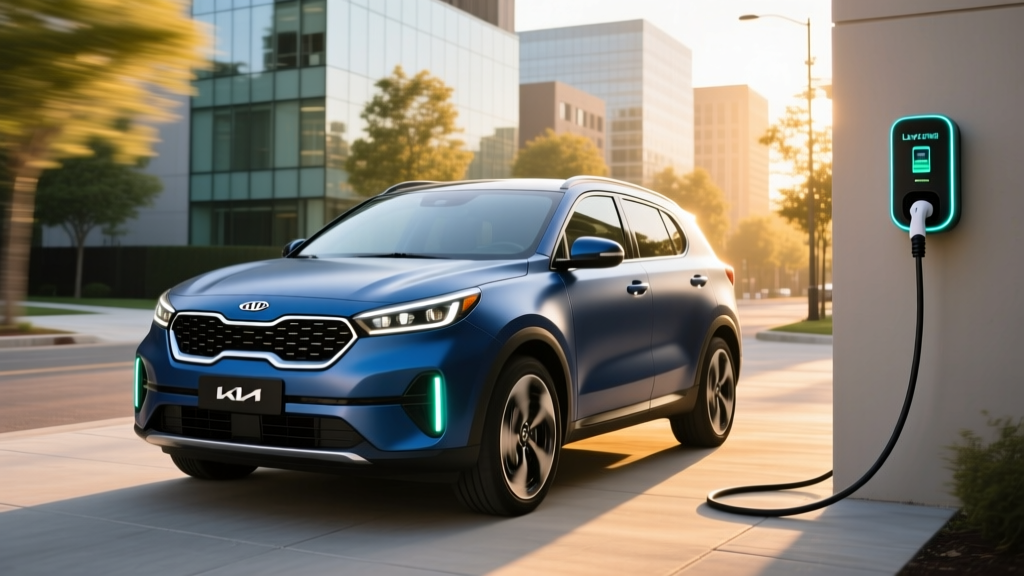
Is the 2026 Kia Sportage EV the Right Compact Electric SUV for You?
Bottom line up front: The 2026 Kia Sportage EV (officially the EV5 in some markets, built on Kia's E-GMP platform) targets buyers who want a practical compact electric SUV with ~270–310 miles of EPA-estimated range, 200+ kW DC fast-charging capability, and a starting MSRP in the low-to-mid $40,000s. It slots between the smaller Niro EV and the larger EV6/EV9 in Kia's lineup. If you can charge at home and drive under 50 miles daily, operating costs drop to roughly 4–6 cents per mile depending on your electricity rate — about half the fuel cost of the gas Sportage. But if you lack home or workplace charging access, or regularly drive in sub-20°F winters, you'll need to plan around real-world range loss of 15–30% and public-charger reliability.
The compact electric SUV segment has exploded, and the Kia Sportage EV enters a field that includes the Hyundai Ioniq 5, Ford Mustang Mach-E, Volkswagen ID.4, and Toyota bZ4X. Kia's advantage is packaging: the E-GMP platform's flat battery floor and long wheelbase translate to strong interior volume for the footprint. The trade-off is that E-GMP vehicles have historically shown slightly higher energy consumption (kWh/100mi) than Tesla's more aero-optimized designs, which matters for highway efficiency.
Range, Battery, and Charging: The Numbers That Matter
| Spec | 2026 Sportage EV (AWD Long Range) |
|---|---|
| EPA Range (est.) | ~290–310 mi (real-world highway: ~240–270 mi; cold weather: ~210–240 mi) |
| Battery Capacity | ~77.4 kWh usable (NMC chemistry) |
| Peak DC Fast Charge | ~230 kW (10–80% in ~18–20 min on 350 kW charger) |
| Sustained DC Charge (avg 10-80%) | ~150–170 kW (charge curve tapers above 60% SoC) |
| Level 2 AC Charging | 10.9 kW onboard charger (~7 hrs 10–100%) |
| Connector | NACS (native Tesla Supercharger access); CCS1 via adapter |
| 0–60 mph | ~5.0 sec (AWD dual motor, ~320 hp) |
| MPGe (combined, est.) | ~105–110 MPGe |
| Battery/Powertrain Warranty | 10 years / 100,000 miles |
Real-world range reality check: The EPA sticker is a lab-controlled estimate. On a 70-mph highway run in 75°F weather, expect to use roughly 33–35 kWh/100mi in the AWD model, which nets about 240–270 miles before you need to stop. In sub-20°F winter conditions, battery chemistry and cabin heating demands push consumption to 38–42 kWh/100mi, cutting effective range to 210–240 miles. Kia's standard heat pump (confirmed on AWD trims) mitigates this somewhat compared to resistive heating, but physics wins in deep cold.
Charging-curve honesty: Peak charge rate of ~230 kW is reached only between roughly 10–40% state of charge (SoC). Above 60%, the rate tapers significantly — often below 80 kW — to protect the NMC cells. This means a 10–80% session takes about 18–20 minutes, but 10–100% could stretch past 40 minutes. Plan road-trip stops to charge to 80% and drive on; the last 20% is rarely worth the wait.
EPA vs. Reality: EPA ~300 mi → Highway (70 mph, 75°F) ~255 mi → Highway (70 mph, 20°F) ~220 mi → City mixed driving (moderate climate) ~290 mi. Preconditioning the battery via the navigation-linked thermal management system before DC fast charging is essential to hit peak kW rates.
Sportage EV vs. Gas Sportage vs. Sportage Hybrid: Cost Comparison
Many buyers cross-shop the Sportage EV against the gas and hybrid variants. Here's how the math actually works over 5 years and 75,000 miles:
| Cost Factor (5 yr / 75k mi) | Sportage EV AWD | Sportage Hybrid AWD | Sportage Gas AWD |
|---|---|---|---|
| Base MSRP (approx.) | $43,000 | $33,500 | $30,500 |
| Est. Federal Tax Credit (§30D) | $0–$7,500* | $0 | $0 |
| Fuel/Energy Cost | $3,750 (home charging @ $0.14/kWh) | $7,500 (38 MPG @ $3.40/gal) | $10,200 (28 MPG @ $3.40/gal) |
| Maintenance (est.) | $1,200 | $2,800 | $3,200 |
| Insurance (avg) | $8,500 | $7,200 | $6,800 |
| 5-Year Total (before credit) | $56,450 | $51,000 | $50,700 |
| 5-Year Total (after max credit) | $48,950 | $51,000 | $50,700 |
*§30D federal tax credit eligibility depends on MSRP caps (SUVs: $80,000), buyer income limits ($150k single / $300k joint), battery critical-mineral and component sourcing requirements, and point-of-sale transfer rules. Verify current-year rules at IRS.gov. As of 2026, many Korean-built Kia models face sourcing-related credit reductions — check before you buy.
The EV wins on operating costs: roughly $0.05/mile for electricity vs. $0.10/mile for the hybrid and $0.14/mile for the gas model (at national averages). But the EV's higher purchase price, potentially higher insurance premiums, and uncertain tax-credit eligibility mean the break-even point depends heavily on your specific situation.
Real Ownership Considerations: Charging, Climate, and Daily Life
Home charging is the make-or-break factor. If you have a garage or dedicated parking spot where a Level 2 (240V) charger can be installed, the Sportage EV transforms daily life: you wake up every morning with a "full tank." A typical Level 2 installation costs $800–$2,000 (charger hardware: $400–$700; electrician labor and permit: $400–$1,300), assuming your electrical panel has capacity. If your home has a 100-amp panel with limited breaker space, a panel upgrade to 200 amps can add $1,500–$3,000. Level 1 (120V) charging from a standard outlet adds only ~3–4 miles per hour — adequate if you drive under 30 miles daily, but inadequate for regular road trips.
Public charging reliability remains a mixed bag. Tesla Superchargers (now accessible via native NACS port on 2026 Kias) are the most reliable network, with uptime above 95%. Electrify America and EVgo stations vary — plan backups on road trips using apps like PlugShare or A Better Routeplanner. In rural areas or the Mountain West, charging deserts are real: some 150-mile stretches lack DC fast chargers entirely.
Climate matters more than most buyers expect. Owners in Phoenix, Miami, or San Diego will see range close to the EPA sticker year-round. Owners in Minneapolis, Chicago, or Boston should budget 20–30% range loss in January and February. The heat pump helps, but cabin heating at 10°F still draws 3–5 kW continuously — that's energy not going toward miles.
Driving patterns determine whether the battery size is sufficient. A 60-mile daily round trip with home charging? The Sportage EV handles it easily, charging overnight on Level 2. A 200-mile daily commute with no workplace charging? You'll be DC fast-charging multiple times per week, accelerating battery wear and eating into your time.
Federal Tax Credit Eligibility: What You Actually Qualify For
- MSRP cap: Vehicle must be under $80,000 (SUVs/vans/pickups) or $55,000 (sedans) — the Sportage EV clears this easily.
- Buyer income cap: Modified AGI must not exceed $150,000 (single), $225,000 (head of household), or $300,000 (joint filers).
- Critical minerals requirement: A percentage of battery minerals must be sourced from the US or free-trade-agreement countries — this threshold increases annually. Kia's supply chain compliance varies by model year; confirm with the dealer.
- Battery components requirement: A percentage of battery components must be manufactured or assembled in North America — this also tightens yearly.
- Foreign entity of concern (FEOC) exclusion: Vehicles with battery components or minerals from designated FEOCs (certain Chinese, Russian, North Korean, Iranian entities) are disqualified — a significant factor for Korean OEMs navigating supply chains.
- Point-of-sale transfer: You can transfer the credit to the dealer at purchase to reduce the sale price directly, rather than waiting for tax filing.
The maximum combined credit is $7,500 ($3,750 for critical minerals + $3,750 for battery components). Many Kia EVs have historically qualified for the partial $3,750 credit due to component-sourcing rules, but eligibility shifts as supply chains adjust. Always verify with your tax professional and the IRS clean vehicle credit page before committing to a purchase.
Common Misconceptions About the Sportage EV
| Myth | Fact |
|---|---|
| "EV batteries need replacing every few years" | Kia warranties the battery for 10 years/100,000 miles with a 70% capacity retention threshold. Real-world NMC degradation data shows ~10–15% loss over 100,000 miles with proper care (avoiding frequent 100% charges and DC fast-charging abuse). |
| "Charging takes too long for road trips" | At a 350 kW station with preconditioning, 10–80% takes ~18–20 minutes — comparable to a gas stop with food and restroom break. The issue is charger availability, not speed. |
| "The Sportage EV is self-driving" | Kia's Highway Driving Assist 2 is an SAE Level 2 system — it handles lane centering and adaptive cruise but requires your hands on the wheel and full attention at all times. It is not autonomous. |
| "EVs cost more to insure" | Sometimes true: EV insurance averages 10–20% higher than comparable gas models due to repair costs and battery replacement risk. Shop quotes from multiple carriers before buying. |
| "I can't tow anything with an EV" | The Sportage EV AWD is expected to tow up to ~2,000–3,500 lbs (check final specs), adequate for a small utility trailer or a pair of jet skis — but towing cuts range by 30–50%. |
Decision Framework: Should You Buy the Sportage EV?
Buy the Sportage EV if:
- You have reliable home Level 2 charging (or can install it for under $2,000).
- Your daily driving is under 80 miles round-trip, with occasional 200–300 mile road trips.
- You qualify for at least a partial §30D tax credit, bringing the effective price closer to the hybrid.
- You value instant torque, quiet operation, and lower per-mile energy costs.
- You live in a moderate or warm climate where range loss is minimal.
Buy the Sportage Hybrid instead if:
- You lack home or workplace charging and rely on street parking.
- You regularly drive 300+ miles in a single day or live in a charging-desert region.
- You experience extended sub-zero winters where range loss compounds daily inconvenience.
- Your budget is firm under $35,000 and you can't wait for potential credit eligibility changes.
- You tow frequently and can't afford a 40% range penalty per trip.
Consider the gas Sportage only if: upfront cost is the absolute priority, you drive under 10,000 miles per year (minimizing fuel-cost differences), or you need the cheapest possible entry point into the Sportage's cargo and seating package.
Frequently Asked Questions
What's the real-world range of the 2026 Kia Sportage EV?
Expect roughly 250–270 miles on a highway trip in moderate weather, and 210–240 miles in cold conditions (below 25°F). The EPA estimate of ~290–310 miles is most achievable in city/suburban mixed driving between 30–65 mph in 60–80°F temperatures. Check fueleconomy.gov for finalized EPA numbers when published.
How long does it take to charge the Sportage EV at home?
On a Level 2 (240V, 48-amp) home charger, a full 10–100% charge takes approximately 7 hours using the 10.9 kW onboard charger. Overnight charging is the standard routine. On a Level 1 (120V) household outlet, expect ~36–40 hours for a full charge — only practical for very low daily mileage or as an emergency backup.
Does the 2026 Sportage EV use NACS or CCS?
The 2026 model year Kia EVs sold in North America come equipped with the NACS (North American Charging Standard) port, granting native access to Tesla Supercharger stations. CCS1 chargers can be used with an adapter. This is a significant advantage over 2024 and earlier Kia EVs that shipped with CCS1 only.
How does the Sportage EV compare to the Hyundai Ioniq 5?
Both ride on the E-GMP platform with similar battery capacity (~77.4 kWh usable) and charging architecture (~230 kW peak). The Ioniq 5 is slightly lower and more car-like; the Sportage EV offers a more traditional SUV seating position and cargo profile. Range and charging times are comparable within ~10 miles and ~2 minutes. The Ioniq 5 has been on sale longer, so real-world ownership data is more abundant.
Will the battery need replacing, and what does it cost?
NMC battery replacement on an E-GMP vehicle currently costs $12,000–$18,000 out of warranty. However, data from early E-GMP vehicles (EV6, Ioniq 5) shows degradation of roughly 8–12% over the first 60,000 miles, with the curve flattening significantly afterward. With Kia's 10-year/100,000-mile battery warranty (covering drops below 70% capacity), most owners will never need an out-of-pocket replacement.
Is the Sportage EV eligible for the $7,500 federal tax credit?
Eligibility depends on your income, the vehicle's battery sourcing compliance for the current year, and MSRP caps. The Sportage EV's MSRP falls under the $80,000 SUV cap. However, Kia's battery supply chain has historically qualified for only the partial $3,750 credit on some models due to component-sourcing rules. Confirm your specific eligibility via the IRS clean vehicle credit page and consult a tax professional before purchase.