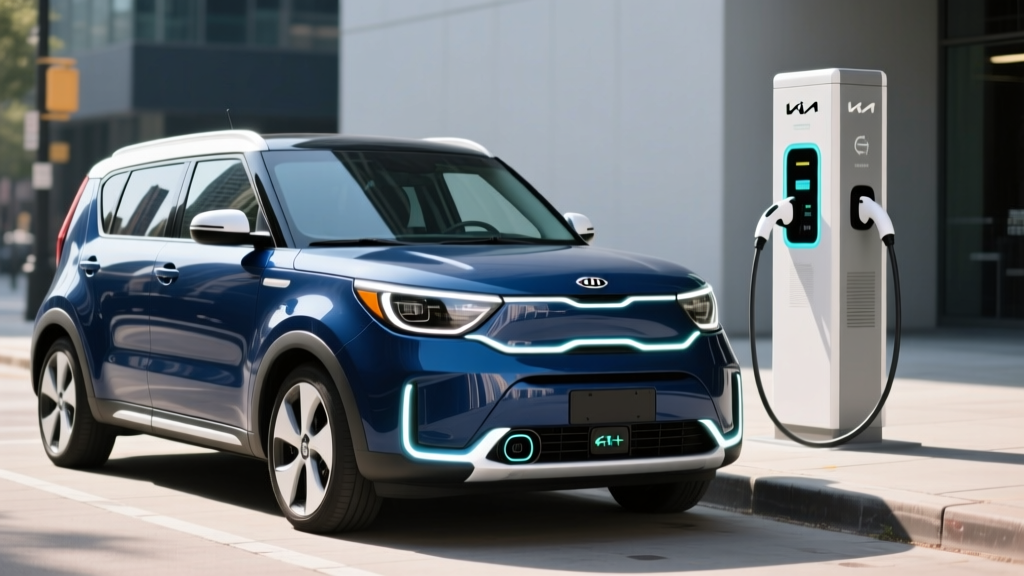
Quick Verdict: Who Should Buy the 2026 Kia Soul EV+?
The 2026 Kia Soul EV+ targets urban commuters who want a practical, boxy hatchback with an EPA-estimated 243 miles of range, a 64.0 kWh NMC battery, and DC fast charging that peaks at 77 kW (10–80% in approximately 54 minutes). Starting around $34,990 before destination, it qualifies for the full $7,500 federal tax credit under current IRS §30D rules for many buyers, dropping effective cost to roughly $27,490. Buy it if: you commute under 80 miles daily, have Level 2 home charging, and value interior space over highway road-trip speed. Skip it if: you regularly drive 300+ miles between charging stops or live in extreme cold climates where real-world range drops to ~170 miles.
Range, Battery & Real-World Efficiency
The 2026 Soul EV+ carries a 64.0 kWh usable lithium-ion battery pack using NMC (nickel-manganese-cobalt) chemistry. The EPA rates it at 243 miles of combined range with a combined efficiency of 120 MPGe (28 kWh/100 mi). Those numbers hold up reasonably well in mild climates, but real-world driving tells a more nuanced story.
EPA vs. Real-World Range: What to Actually Expect
| Condition | Estimated Range | Notes |
|---|---|---|
| EPA Combined (sticker) | 243 mi | Mixed city/highway, 68°F |
| City-dominant driving | 255–265 mi | Regen braking recovers energy |
| Highway (70 mph sustained) | 205–220 mi | Aero drag reduces efficiency ~15% |
| Cold weather (20°F, heater on) | 165–185 mi | NMC pack lacks heat pump in base trim |
| Hot weather (95°F, A/C max) | 220–235 mi | Thermal management active |
The Soul EV+ uses a resistive PTC heater rather than a heat pump on most trims, which means winter range loss is more pronounced than competitors like the Hyundai Kona Electric (which includes a heat pump). If you live above the 40th parallel, budget for 30–35% winter range reduction.
Charging Speeds: Home & DC Fast Charging
Understanding the difference between kW (power — how fast energy flows) and kWh (energy — how much the battery holds) is essential. The Soul EV+ battery holds 64.0 kWh of energy; the charger delivers power measured in kW.
| Level | Power (kW) | Miles Added per Hour | Full Charge Time |
|---|---|---|---|
| Level 1 (120V household) | ~1.4 kW | ~4 mi/hr | ~45 hours |
| Level 2 (240V, 32A) | 7.2 kW | ~24 mi/hr | ~9.5 hours |
| DC Fast Charge (CCS) | 77 kW peak | ~250 mi/hr (peak) | 10–80% in ~54 min |
The 77 kW peak DC charge rate is the Soul EV+'s most significant competitive weakness. Rivals like the Chevrolet Bolt EUV (peak 55 kW but smaller battery) and Hyundai Kona Electric (peak 100+ kW) differ in real-world road-trip utility. At 77 kW, the Soul EV+ sustains close to peak rate from roughly 10–55% state of charge, then tapers to ~45 kW through 70%, and drops further to ~25 kW above 85%. On a road trip, plan for 50–60 minute charging stops every 180–200 miles in temperate weather.
The Soul EV+ uses the CCS1 connector standard for DC fast charging and J1772 for Level 2 AC. As Kia transitions to NACS (Tesla Supercharger-compatible) on newer platforms, the 2026 Soul EV+ retains CCS — meaning you'll need a CCS-to-NACS adapter (sold separately, ~$200–$250) to access Tesla Supercharger stalls that don't offer native CCS cables.
EV vs. Gas: Cost Comparison for the Soul EV+
How does the Soul EV+ stack up against a gasoline equivalent? The closest gas counterpart is the Kia Soul LX (1.6L turbo, ~30 MPG combined, ~$21,990 MSRP). Here's a 5-year, 75,000-mile ownership comparison:
| Category | Soul EV+ ($34,990) | Gas Soul LX ($21,990) |
|---|---|---|
| Purchase price (after tax credit) | $27,490* | $21,990 |
| Fuel / Electricity | $2,625 (home L2 @ $0.14/kWh) | $9,375 (@ $3.50/gal, 30 MPG) |
| Maintenance | $1,200 | $3,800 |
| Insurance (avg.) | $7,500 | $6,250 |
| Depreciation (est.) | $11,000 | $9,500 |
| Total 5-Year Cost | $49,815 | $50,915 |
*Assumes full $7,500 §30D federal credit at point of sale. Actual eligibility depends on income caps, battery sourcing, and MSRP limits per IRS guidelines.
The Soul EV+ breaks even against the gas Soul within 4–5 years for most buyers who charge primarily at home. If you rely exclusively on DC fast charging at $0.35–$0.48/kWh (common on Electrify America and EVgo networks), fuel costs rise to roughly $5,500–$7,000 over 5 years, narrowing the savings gap significantly.
Pricing, Trims & Federal Tax Credit Eligibility
The 2026 Kia Soul EV+ starts at an MSRP of approximately $34,990 (including destination). Available in two primary trims:
- Soul EV S (Wind): ~$34,990 — 64 kWh battery, 243 mi EPA, basic ADAS suite, 10.25-inch infotainment
- Soul EV+ (Limited): ~$38,500 — adds Harman Kardon audio, sunroof, heated/ventilated front seats, highway driving assist
§30D Federal Tax Credit Checklist (2026 Rules)
- MSRP cap: Must be under $55,000 (Soul EV+ qualifies ✓)
- Buyer income cap: AGI ≤ $150,000 (single) / $225,000 (head of household) / $300,000 (joint)
- Battery sourcing: Critical minerals and battery components must meet phased-in domestic/free-trade sourcing thresholds — confirm VIN eligibility at fueleconomy.gov
- Point-of-sale transfer: You can apply the $7,500 credit directly at the dealer, reducing your out-of-pocket price immediately
- One vehicle per VIN, one credit per taxpayer per year
Always verify your specific eligibility with a tax professional and check the latest IRS sourcing requirements, as these thresholds tighten annually.
Performance, Interior & Daily Drivability
The Soul EV+ is front-wheel drive with a single permanent-magnet motor producing 201 horsepower and 291 lb-ft of torque. The 0–60 mph sprint takes approximately 6.8 seconds — adequate for highway merging but not sporty. Top speed is electronically limited to 104 mph.
Where the Soul EV+ genuinely excels is interior packaging. The boxy design yields:
- Cargo volume: 24.2 cu ft (rear seats up) / 62.1 cu ft (rear seats folded)
- Headroom: 39.7 in front — among the best in the compact EV segment
- Ground clearance: 6.1 in — adequate for light snow but not off-road
The infotainment system runs Kia's latest Connect interface on a 10.25-inch touchscreen with wireless Apple CarPlay and Android Auto. The ADAS suite includes forward collision-avoidance assist, lane-keeping assist, blind-spot monitoring, and rear cross-traffic alert. Note: the highway driving assist feature is a SAE Level 2 driver-assistance system — it requires continuous driver engagement and is not autonomous or self-driving in any capacity.
Battery Warranty, Longevity & Replacement
Kia covers the Soul EV+ battery with a 10-year/100,000-mile warranty against capacity loss below 70% of original capacity. Based on NMC chemistry degradation data from similar Kia/Hyundai packs, expect approximately 8–12% total capacity loss over 100,000 miles under normal use. Best practices for longevity:
- Charge to 80% daily; reserve 100% charges for road trips
- Avoid letting the pack sit at 0% or 100% for extended periods
- Use DC fast charging sparingly — frequent 77 kW sessions accelerate degradation slightly
- Precondition the battery in cold weather before charging
Out-of-warranty battery replacement for the 64 kWh pack currently ranges from $8,000–$12,000 (parts and labor), though prices continue to decline as the supply chain matures.
Common Misconceptions: Myth vs. Fact
| Myth | Fact |
|---|---|
| "EVs are worse in winter" | Range drops 25–35% in sub-freezing temps, but the Soul EV+ still delivers 165+ usable miles — sufficient for most commutes. Cabin heating is instant and doesn't require a warm-up like a gas engine. |
| "The battery will need replacing in 5 years" | NMC packs routinely exceed 150,000 miles with under 15% degradation. Kia's 10-year/100,000-mile warranty protects against premature failure. |
| "I can't road-trip in an EV" | You can, but the Soul EV+'s 77 kW charge rate means longer stops (~55 min per 10–80%). Road-trippers should consider the Hyundai Ioniq 5 or Tesla Model Y instead (200+ kW peak charging). |
| "EVs cost more to insure" | The Soul EV+ typically costs 15–20% more to insure than the gas Soul due to higher repair costs for battery/electronics. Shop multiple carriers — some EV-specialty insurers offer competitive rates. |
| "I need a 200-amp panel upgrade" | Many homes with a 100-amp or 150-amp panel can support a 32A Level 2 charger (7.2 kW) without a panel upgrade. A licensed electrician can confirm — expect $300–$800 for a basic L2 install if no panel work is needed. |
Decision Framework: Should You Buy the 2026 Kia Soul EV+?
Choose the Soul EV+ If:
- Your daily round-trip commute is under 80 miles
- You have access to Level 2 home or workplace charging
- You value interior headroom and cargo space over sporty performance
- You qualify for the §30D tax credit (bringing effective price under $28,000)
- You rarely take road trips exceeding 200 miles between stops
Look Elsewhere If:
- You frequently drive 300+ miles in a day (consider Hyundai Ioniq 5, Tesla Model Y)
- You live in extreme cold and lack garage parking (consider a PHEV like the Kia Niro PHEV)
- You need all-wheel drive (Soul EV+ is FWD only — consider the Hyundai Kona Electric AWD or Subaru Solterra)
- Fast DC charging is critical to your use case (Soul EV+ peaks at 77 kW; Ioniq 5 peaks at 240 kW)
Frequently Asked Questions
Does the 2026 Kia Soul EV+ qualify for the $7,500 federal tax credit?
It qualifies on MSRP (under the $55,000 SUV/van cap) and is expected to meet battery sourcing requirements, but buyer income limits and annual sourcing rule changes apply. Verify your VIN's eligibility at fueleconomy.gov and consult a tax professional before relying on the credit.
How long does it take to charge the Soul EV+ at home?
On a 240V Level 2 charger at 32 amps (7.2 kW), a full 0–100% charge takes approximately 9.5 hours. Most owners plug in overnight and wake to a full battery. Level 1 (120V) charging adds only ~4 miles per hour and is impractical as a primary charging method.
Is the Kia Soul EV+ good for road trips?
It's adequate but not ideal. The 243-mile EPA range is sufficient for most routes, but the 77 kW peak DC charge rate means 50–60 minute charging stops every ~180 miles. Competitors like the Hyundai Ioniq 5 (10–80% in ~18 minutes at 240 kW) are significantly more road-trip-friendly.
What's the real-world range in winter?
Expect 165–185 miles in sustained sub-freezing temperatures with cabin heat active. The Soul EV+ uses a resistive PTC heater rather than a heat pump, which draws more energy from the battery. Preconditioning the cabin while plugged in helps preserve range.
Can I use Tesla Superchargers with the Soul EV+?
Only with a CCS-to-NACS adapter (~$200–$250), and only at Supercharger stalls equipped with the Magic Dock or native CCS compatibility. Kia is expected to adopt NACS natively on future models, but the 2026 Soul EV+ ships with CCS1.
Sources: fueleconomy.gov, IRS §30D Clean Vehicle Credit, Kia America.