The Quick Answer: Is the Kia Soul EV Right for You?
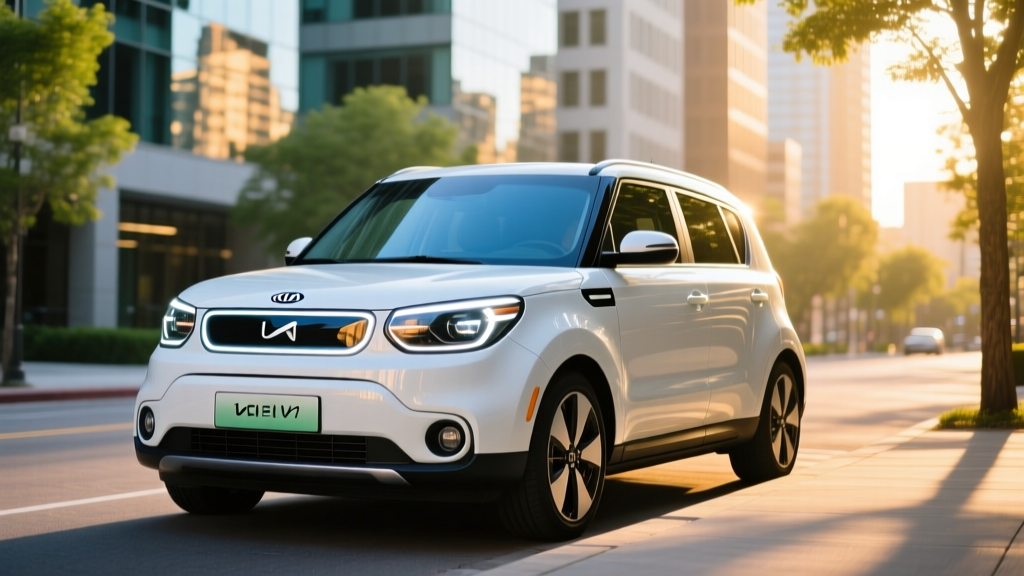
The Kia Soul EV (badged as the Kia electric car Soul in some markets) was discontinued in the United States after the 2023 model year. As of 2026, no new Kia Soul EV is available for purchase in the U.S. If you're searching for a Kia electric car with Soul-like practicality, your closest current options are the Kia Niro EV (239 miles EPA range, ~$39,600 MSRP) or the upcoming next-generation Soul EV, which Kia has hinted at but not officially confirmed for the U.S. market. On the used market, a 2022–2023 Soul EV offers 243 miles of EPA range and may qualify for the up-to-$4,000 used-EV federal tax credit under IRS §25E, depending on your income and the vehicle's sale price.
What Happened to the Kia Soul EV?
The second-generation Kia Soul EV debuted for the 2020 model year with a 64 kWh battery pack and an EPA-rated 243 miles of range — impressive for its class at the time. It shared its platform and powertrain with the Hyundai Kona Electric. However, Kia discontinued the Soul EV in the U.S. after 2023, citing shifting demand toward larger crossovers like the EV6 and EV9. The gasoline Kia Soul continues in showrooms, but the electric version is gone from new-car lots.
This leaves prospective buyers with three paths: buy a used Soul EV, cross-shop a current Kia EV, or consider the gas or hybrid Soul. Let's break down each option with hard numbers.
Used Kia Soul EV: Specs, Range, and What to Expect
If you're considering a pre-owned 2022 or 2023 Soul EV, here are the specifications that matter:
| Specification | 2022–2023 Kia Soul EV |
|---|---|
| EPA Range | 243 miles |
| Battery Capacity | 64 kWh usable (NMC chemistry) |
| Motor Output | 201 hp / 291 lb-ft torque |
| 0–60 mph | ~7.0 seconds |
| DC Fast Charging (peak) | ~77 kW (CCS1 connector) |
| 10–80% DC Fast Charge | ~54 minutes |
| Level 2 Charging | 7.2 kW onboard charger |
| EPA Efficiency | 120 MPGe combined |
| Battery Warranty (original) | 10 years / 100,000 miles (transferable) |
| Original MSRP | $33,550–$39,550 |
Real-World Range Reality
The EPA sticker says 243 miles, but real-world results vary. In moderate temperatures with mixed city/highway driving, expect 210–230 miles. On sustained highway runs at 70+ mph, plan for 180–200 miles. In cold weather (below 30°F), range can drop to 155–175 miles due to battery chemistry limitations and cabin heating demand. The Soul EV lacks a heat pump in U.S. trims, which worsens winter efficiency compared to competitors like the EV6.
The Soul EV's peak DC fast-charge rate of roughly 77 kW is its most significant weakness by 2026 standards. While the Kia EV6 can peak at 239 kW and charge from 10–80% in about 18 minutes, the Soul EV takes nearly an hour on the same journey. For daily commuting with home charging, this is irrelevant. For road trips, it's a meaningful trade-off.
Kia Soul EV vs. Gas Soul vs. Kia Niro EV: Cost Comparison
Here's where the math matters most. We compared a used 2023 Soul EV (average market price ~$22,000 before credit), a new 2026 gas Kia Soul S (~$24,590 MSRP), and a new 2026 Kia Niro EV Wind (~$42,300 MSRP before credits). All calculations assume 12,000 miles/year, $3.50/gallon gas, and $0.14/kWh home electricity.
| Cost Factor | Used 2023 Soul EV | New 2026 Gas Soul S | New 2026 Niro EV Wind |
|---|---|---|---|
| Purchase Price | ~$22,000 | $24,590 | $42,300 |
| Federal Tax Credit | Up to $4,000 (§25E used) | None | Up to $7,500 (§30D new)* |
| Effective Purchase | ~$18,000 | $24,590 | ~$34,800 |
| Annual Fuel/Energy | ~$560 (electricity) | ~$1,430 (gasoline) | ~$590 (electricity) |
| Annual Maintenance | ~$300 | ~$700 | ~$300 |
| 5-Year Fuel + Maint. | $4,300 | $10,650 | $4,450 |
| 5-Year Total Cost | ~$22,300 | ~$35,240 | ~$39,250 |
*Niro EV §30D eligibility depends on battery sourcing, buyer income caps ($150K single / $300K joint), and MSRP cap ($80K SUVs). Confirm current eligibility at IRS.gov. The used-EV credit (§25E) requires the vehicle to be sold for $25,000 or less through a licensed dealer, with buyer income caps of $75K single / $150K joint.
The used Soul EV wins on pure economics if you can find a qualifying example. The gas Soul costs roughly $2.55/mile more in fuel and maintenance over five years. The Niro EV is the best new-car alternative if you want Kia's current warranty and faster charging, but it costs significantly more upfront.
Charging the Soul EV: Home and Public Realities
The Soul EV uses a CCS1 connector for DC fast charging and a J1772 connector for Level 1 and Level 2 AC charging. Here's what charging looks like in practice:
| Charging Level | Power | Miles Added per Hour | Best For |
|---|---|---|---|
| Level 1 (120V outlet) | ~1.4 kW | ~4–5 miles/hr | Overnight top-ups, low mileage drivers |
| Level 2 (240V home charger) | 7.2 kW | ~25–28 miles/hr | Daily charging, full overnight refill |
| DC Fast Charge | Peak ~77 kW | ~150+ miles in 30 min | Road trips (plan longer stops) |
Home charging is essential for Soul EV ownership satisfaction. A full Level 2 home charge from empty takes roughly 9 hours. At the national average of $0.14/kWh, filling the 64 kWh battery costs about $8.96 — versus $42+ to fill the gas Soul's 14.2-gallon tank at $3.50/gallon.
If you live in an apartment without charging access or rely exclusively on public chargers, the Soul EV's slow DC charging speed becomes a genuine inconvenience. Electrify America and EVgo stations will charge it, but you'll spend nearly an hour where an EV6 owner spends 18 minutes. Consider your living situation honestly before buying.
Level 2 home charger installation typically costs $500–$2,000 depending on whether your electrical panel needs an upgrade. A 200-amp panel is usually sufficient; older homes with 100-amp service may need a $1,500–$3,000 panel upgrade. Always get a quote from a licensed electrician before committing.
Common Misconceptions About the Kia Soul EV
| Myth | Fact |
|---|---|
| "The Soul EV battery will need expensive replacement soon." | Kia's 10-year/100,000-mile battery warranty is transferable to second owners. NMC batteries in the Soul EV typically retain 85–90% capacity at 100K miles based on fleet data. Replacement, if needed, runs $8,000–$12,000. |
| "I can still buy a new Soul EV at a Kia dealer." | Kia discontinued the U.S. Soul EV after 2023. Only used examples remain. The gas Soul is still sold new. |
| "It charges as fast as other Kia EVs." | The Soul EV peaks at ~77 kW DC. The EV6 peaks at 239 kW on 800V architecture — three times faster. This matters on road trips. |
| "Electric cars don't save money." | At 12K miles/year, the Soul EV saves ~$870/year in fuel and ~$400/year in maintenance vs. the gas Soul. Over 5 years, that's $6,350 in savings, even before tax credits. |
| "The Soul EV qualifies for the $7,500 new EV credit." | The new-vehicle §30D credit applies only to new purchases. A used Soul EV may qualify for the separate §25E credit (up to $4,000 or 30% of sale price, whichever is less). |
Decision Framework: Should You Buy, Cross-Shop, or Wait?
Choose the Used Kia Soul EV If:
- You want a practical, boxy EV under $20,000 (after the used-EV credit)
- Your daily commute is under 80 miles round-trip
- You have access to home Level 2 charging
- Road trips are infrequent (2–3 times per year or less)
- You value cargo space (24.2 cu ft behind rear seats, 62.1 cu ft folded)
Choose the Kia Niro EV Instead If:
- You want a new vehicle with full factory warranty
- You need faster DC charging for regular road trips
- You qualify for the §30D new-vehicle credit
- You want the latest ADAS features (the Niro EV includes Highway Driving Assist)
Choose the Gas Kia Soul If:
- You cannot install home charging and lack reliable public charger access
- You regularly drive in extreme cold (below 10°F) where EV range loss exceeds 30%
- Your budget is strictly under $22,000 and no clean used Soul EV is available
- You tow (the gas Soul can tow up to 2,000 lbs; the Soul EV is not rated for towing)
Wait If:
- Kia officially confirms a next-generation Soul EV for the U.S. — rumored but unannounced as of early 2026
- You want 800V fast-charging architecture in a small-crossover form factor (the upcoming Kia EV3 may fill this gap)
What First-Time EV Buyers Must Know
If the Soul EV is your entry point into electric ownership, keep these realities front and center:
- kW vs. kWh: kW measures charging power (how fast energy flows in); kWh measures battery energy (how much the tank holds). The Soul EV has a 64 kWh battery and charges at up to 77 kW. Don't confuse these at the charger.
- The charge curve tapers: Peak 77 kW only holds between roughly 10–40% state of charge. Above 60%, the rate slows significantly. This is why 10–80% takes 54 minutes, not the ~35 minutes you'd calculate from peak rate alone.
- Preconditioning matters: The Soul EV does not have a dedicated battery preconditioning feature for fast charging like the EV6. In cold weather, arrive at DC chargers with the battery warmed by driving 15–20 minutes first for faster charge speeds.
- Insurance costs more: EV insurance premiums run 15–25% higher than equivalent gas vehicles. Get quotes before buying — the fuel savings can be partially offset.
- Regen braking takes adjustment: The Soul EV offers adjustable regenerative braking via paddle shifters, including near-one-pedal driving at the max setting. Plan your first week with it accordingly.
Frequently Asked Questions
Is Kia making a new electric Soul for 2026 or 2027?
Kia has not officially announced a next-generation Soul EV for the U.S. market as of early 2026. The company has hinted at expanding its EV lineup, and a Soul EV successor based on a newer platform is plausible, but any specs or timeline would be speculative. Monitor Kia's U.S. press site for official announcements.
How much does it cost to charge a Kia Soul EV at home?
At the U.S. average electricity rate of $0.14/kWh, a full charge of the 64 kWh battery costs approximately $8.96. For a typical driver covering 40 miles daily (~12 kWh consumed), the daily cost is about $1.68 — roughly $51 per month. Compare that to the gas Soul at 29 MPG combined: 40 miles daily at $3.50/gallon costs about $4.83/day or $145/month.
Does the used Kia Soul EV qualify for any tax credits?
Yes, potentially. Under IRS §25E, a used EV purchased from a licensed dealer for $25,000 or less can qualify for a credit of up to $4,000 (or 30% of the sale price, whichever is less). Income caps apply: $75,000 for single filers, $112,500 for head of household, $150,000 for joint filers. The vehicle must be at least two model years old. Confirm details at IRS.gov used vehicle credit page.
How does the Soul EV compare to the Chevy Bolt EV?
The 2023 Chevy Bolt EV offers 259 miles of EPA range (16 more than the Soul EV) and originally had a lower MSRP. However, the Bolt also charges slowly on DC (peak ~55 kW), has less cargo space (16.3 cu ft vs. 24.2 cu ft), and was discontinued after 2023 as well. The Soul EV wins on interior room and ride comfort; the Bolt wins on range per dollar. Both are solid used-EV picks.
Is the Kia Soul EV reliable?
The Soul EV shares its powertrain with the Hyundai Kona Electric, which has demonstrated strong reliability in fleet and owner surveys. The NMC battery pack has shown modest degradation — typically 5–10% over the first 60,000 miles. Kia's transferable 10-year/100,000-mile battery warranty provides additional peace of mind. Check NHTSA.gov for any open recalls on specific VINs before purchasing.