Quick Verdict: Is the Kia Soul EV Hatchback Worth It in 2026?
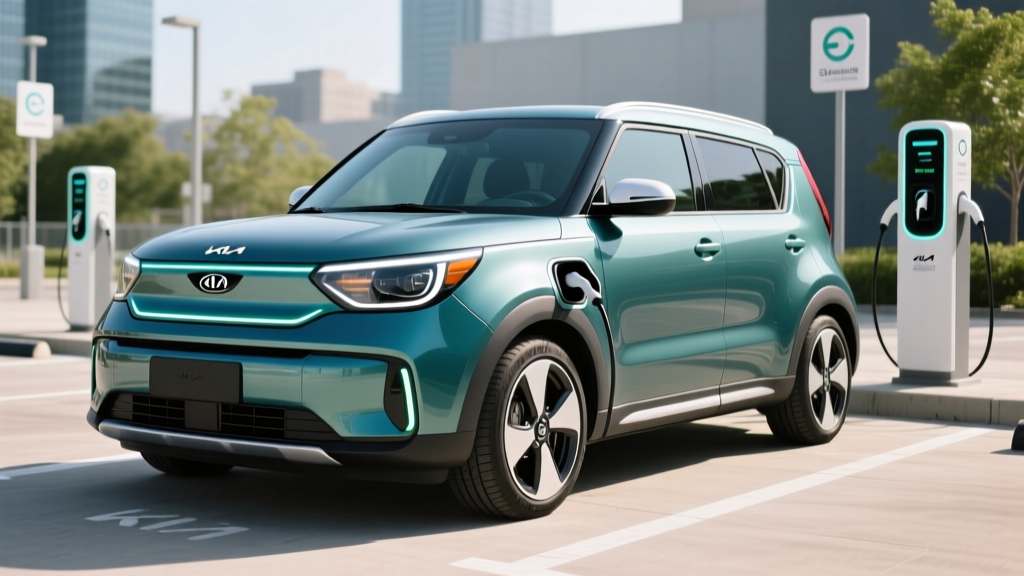
The Kia Soul EV hatchback is a practical, boxy urban commuter with a 64 kWh battery, 243 miles of EPA-estimated range, and a starting MSRP around $35,000. It excels at city driving where its tall cabin and generous cargo space shine, but its 77 kW peak DC fast-charging rate means road trips require patience — expect 10–80% charges in roughly 54 minutes. Real-world highway range drops to approximately 200–215 miles, and cold weather can cut that further. If you charge at home and drive mostly under 40 miles daily, the Soul EV delivers strong economics. If you road-trip frequently or lack home charging, consider a faster-charging alternative like the Hyundai Kona Electric or a plug-in hybrid instead.
Kia Soul EV Hatchback: Core Specs at a Glance
Before we get into ownership costs and comparisons, here are the exact numbers that matter for the current-generation Kia Soul EV (sold in select markets; availability varies by region and model year):
| Spec | Value |
|---|---|
| EPA Range | 243 miles |
| Battery (usable) | 64 kWh, NMC chemistry |
| Motor Output | 201 hp / 291 lb-ft torque |
| 0–60 mph | ~7.0 seconds |
| DC Fast Charge (peak) | 77 kW (CCS) |
| 10–80% DC Charge | ~54 minutes |
| Level 2 Charge (7.2 kW) | ~9.5 hours (0–100%) |
| MPGe (combined) | 120 MPGe |
| Cargo Volume | 24.2 cu ft (rear seats up) / 62.1 cu ft (folded) |
| Base MSRP | ~$35,000 (varies by market/trim) |
| Battery Warranty | 10 years / 100,000 miles |
Real-World Range vs. EPA Sticker
The EPA rates the Soul EV at 243 miles, but expect roughly 200–215 miles on sustained highway driving at 70+ mph. In cold weather (below 32°F), plan for 160–185 miles due to battery heating demands and cabin climate load. City driving with regenerative braking can match or slightly exceed the EPA figure. The Soul EV lacks a heat pump in most trims, which worsens cold-weather efficiency compared to competitors that include one.
How the Kia Soul EV Hatchback Compares to Gas and Hybrid Alternatives
Many buyers cross-shop the Soul EV against the gasoline Kia Soul and compact hybrids. Here's how they stack up on paper and in practice:
| Metric | Kia Soul EV (BEV) | Kia Soul Gas (2.0L) | Toyota Corolla Hybrid |
|---|---|---|---|
| MSRP (base) | ~$35,000 | ~$22,500 | ~$24,500 |
| Fuel/Energy Cost per Mile | ~$0.04 (home charging) | ~$0.14 (gas at $3.50/gal) | ~$0.07 (gas, 50 MPG) |
| Annual Fuel Cost (12k mi) | ~$480 | ~$1,680 | ~$840 |
| EPA Range / MPG | 243 mi / 120 MPGe | ~390 mi / 30 MPG combined | ~540 mi / 50 MPG combined |
| 5-Year Fuel Savings vs Gas Soul | ~$6,000 | — | ~$4,200 |
| Maintenance (5-yr est.) | ~$1,200 | ~$2,800 | ~$2,500 |
The Soul EV's higher sticker price is offset by fuel and maintenance savings. According to fueleconomy.gov, the EV's 120 MPGe combined translates to roughly $500/year in electricity at national average rates — a fraction of the gas Soul's cost. However, the $12,500 MSRP gap means you need roughly 7–9 years of driving to break even without tax incentives.
Total Cost of Ownership: What You'll Actually Spend
Here's a realistic 5-year cost breakdown assuming 12,000 miles/year, home charging at $0.14/kWh (national average), and no major tax incentives:
| Cost Category | Kia Soul EV | Gas Kia Soul |
|---|---|---|
| Purchase Price | $35,000 | $22,500 |
| Federal Tax Credit (§30D)* | Up to $7,500 (see eligibility) | $0 |
| Effective Purchase | $27,500–$35,000 | $22,500 |
| 5-Year Fuel/Energy | $2,400 | $8,400 |
| 5-Year Maintenance | $1,200 | $2,800 |
| 5-Year Insurance (est.) | $7,500 | $6,000 |
| Home Charger Install (Level 2) | $800–$2,000 | $0 |
| 5-Year Total (with credit) | $39,400–$48,900 | $39,700 |
*The federal §30D tax credit has strict requirements: buyer income caps ($150k single / $300k joint), vehicle MSRP caps ($55k for cars), battery critical-mineral and component sourcing rules, and the credit can be transferred to the dealer at point of sale. Check current eligibility on IRS.gov before purchasing. The Soul EV's battery sourcing may or may not qualify depending on the model year and supply-chain changes — verify with your dealer.
Insurance note: EVs typically cost 15–25% more to insure than their gas equivalents due to higher repair costs and battery replacement risk. Get quotes before committing.
Charging Reality: Home, Public, and Road Trips
The Soul EV's 77 kW peak DC charging rate is the single biggest practical limitation for road-trippers. Here's what each charging level looks like:
| Charging Level | Power (kW) | Miles Added per Hour | Use Case |
|---|---|---|---|
| Level 1 (120V outlet) | 1.4 kW | ~5 miles/hr | Overnight trickle; emergency |
| Level 2 (240V home) | 7.2 kW | ~25 miles/hr | Daily home charging |
| DC Fast (CCS) | 77 kW peak | ~150 mi in 54 min (10–80%) | Road trips |
Home Charging Is Essential
Without home charging, owning the Soul EV becomes inconvenient. Public Level 2 chargers add ~25 miles per hour — fine for topping off while shopping, but not for daily needs if you drive 40+ miles. A Level 2 home charger (240V, 32–40 amp circuit) costs $800–$2,000 installed depending on your electrical panel. If you need a panel upgrade (common in older homes), add $1,500–$3,000. Always get a quote from a licensed electrician before purchasing.
Road-Trip Charging Curve
The Soul EV's 77 kW peak is modest by 2026 standards. Competitors like the Hyundai Kona Electric charge at up to 100+ kW, and the Tesla Model Y at 250 kW. On a road trip, expect to stop every ~180 miles and spend ~45–55 minutes charging from 10–80%. The charge curve tapers significantly above 80% SoC — charging from 80–100% can take nearly as long as 10–80%. Plan to charge only to 80% unless you need the extra range to reach your destination.
Common Misconceptions About the Soul EV
| Myth | Fact |
|---|---|
| "The battery will need replacing in 5 years." | NMC batteries in modern EVs typically retain 85–90% capacity after 100,000 miles. Kia's 10-year/100,000-mile battery warranty covers defects and excessive degradation (typically below 70% capacity). |
| "It qualifies for the full $7,500 tax credit." | Eligibility depends on battery sourcing, buyer income, and MSRP caps. The Soul EV's credit status varies by model year — verify on fueleconomy.gov and IRS.gov. |
| "I can road-trip just like a gas car." | With a 77 kW charge rate and ~200-mile real-world highway range, road trips require planning around CCS-compatible chargers and accepting 45+ minute stops every 2–3 hours. |
| "EVs don't work in cold weather." | They work, but range drops 20–35% in sub-freezing temperatures. Preconditioning the battery while plugged in mitigates some loss. |
| "Charging is more expensive than gas." | At $0.14/kWh (national average), home charging costs ~$0.04/mile vs. $0.14/mile for gas. Public DC fast charging can approach gas costs at $0.35–$0.50/kWh. |
Who Should Buy the Kia Soul EV Hatchback — and Who Shouldn't
Decision Framework
Choose the Kia Soul EV if:
- You have reliable home charging (garage or driveway with 240V access)
- Your daily commute is under 50 miles round-trip
- You value cargo space and a tall, easy-entry cabin
- You rarely drive more than 200 miles in a single day
- You want low running costs and minimal maintenance
- You qualify for the federal or state EV tax credits, narrowing the price gap
Skip the Soul EV (and consider alternatives) if:
- You lack home charging access and rely on street parking
- You take frequent road trips over 250 miles
- You live in a region with extreme cold and need maximum range retention (look for EVs with heat pumps)
- You need fast DC charging for commercial or high-mileage use — consider the Hyundai Kona Electric, Tesla Model Y, or Chevrolet Equinox EV
- The upfront cost gap (even after credits) strains your budget — a hybrid like the Toyota Corolla Hybrid offers strong MPG at a lower entry price
What First-Time EV Buyers Must Know Before Purchasing
If the Soul EV is your first electric vehicle, here are the non-obvious ownership realities:
- kW vs. kWh: Kilowatts (kW) measure power — how fast you charge. Kilowatt-hours (kWh) measure energy — your battery's capacity. The Soul EV has a 64 kWh battery and charges at up to 77 kW. Don't confuse the two.
- Preconditioning matters: Warming the battery before DC fast charging (via the car's navigation system or app) significantly improves charge speed in cold weather. Skip this step and your 77 kW peak might drop to 40 kW.
- Tire wear accelerates: EVs are heavier and deliver instant torque. Expect to replace tires 20–30% sooner than on a gas car. Budget $600–$900 for a set of EV-rated tires every 30,000–40,000 miles.
- Regenerative braking changes driving: The Soul EV offers adjustable regen levels. At maximum, you can nearly one-pedal-drive in city traffic, reducing brake wear to near zero.
- Charging networks vary: The Soul EV uses the CCS connector. Networks like Electrify America and EVgo support CCS, but reliability varies. Download multiple charging apps (PlugShare, ChargePoint, EVgo) and have backup plans on road trips.
- NACS transition: Tesla's NACS connector is becoming the North American standard. CCS vehicles like the Soul EV will need adapters for Tesla Superchargers — check adapter availability and compatibility for your model year.
Frequently Asked Questions
Is the Kia Soul EV still sold in the US?
Availability has been inconsistent. Kia initially sold the Soul EV in select US states (primarily California and ZEV-mandate states) and paused broader US availability. Check with your local Kia dealer for current model-year availability, or consider the Kia Niro EV as a widely available alternative with similar specs.
How long does the Soul EV battery last?
Kia warranties the battery for 10 years or 100,000 miles against defects and excessive degradation (typically defined as falling below 70% of original capacity). Real-world data from similar 64 kWh NMC packs suggests 85–90% capacity retention at 100,000 miles under normal use.
Can I charge the Soul EV at a Tesla Supercharger?
Not natively — the Soul EV uses a CCS connector. As Tesla opens Superchargers to non-Tesla EVs via the NACS standard, CCS-to-NACS adapters may become available, but compatibility depends on your model year and Kia's official support. Check with Kia and Tesla's non-Tesla Supercharger map for current status.
What does it cost to charge at home?
At $0.14/kWh (US national average), a full 64 kWh charge costs about $9.00 and provides ~243 miles of range — roughly $0.037 per mile. This compares to $0.12–$0.15 per mile in a gas Kia Soul at current fuel prices.
Does the Soul EV qualify for the $7,500 federal tax credit?
It may, depending on the model year's battery sourcing, your income (capped at $150k single / $300k joint), and the vehicle's MSRP (capped at $55k for cars). The credit can be transferred to the dealer at point of sale as a price reduction. Verify current eligibility on IRS.gov and consult a tax professional.
How does the Soul EV handle in snow and cold?
The front-wheel-drive layout and instant torque provide decent traction, and winter tires help significantly. However, expect 20–35% range loss in sub-freezing temperatures due to battery heating and cabin climate demands. The Soul EV lacks a heat pump in most trims, which reduces cold-weather efficiency versus competitors that include one.