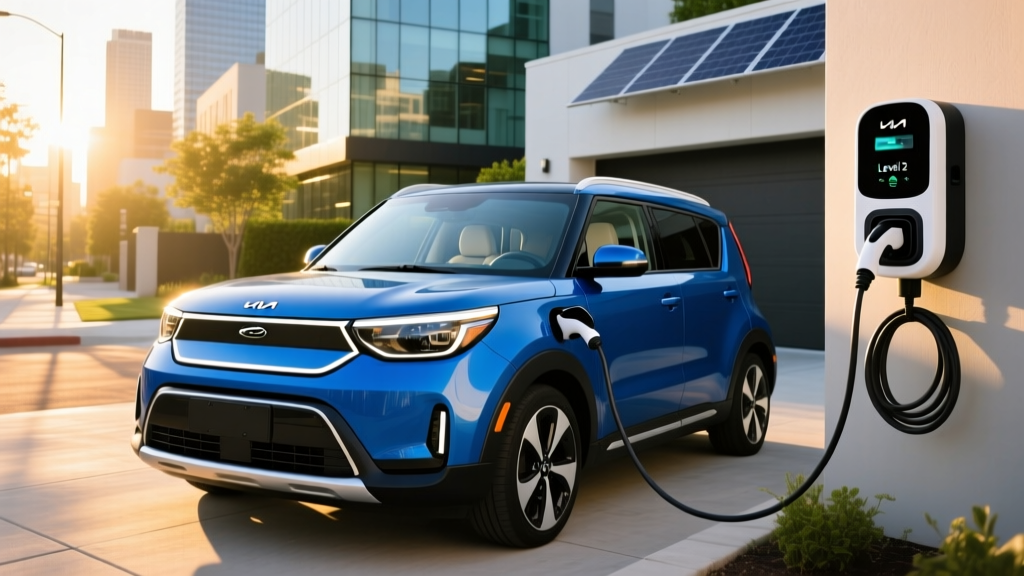
Quick Answer: The Kia Soul EV (last updated for the U.S. market with a 64 kWh battery and 243 miles of EPA range) remains one of the most practical and affordable electric crossovers for urban and suburban drivers. Starting around $35,000 before incentives, it delivers competitive efficiency at 120 MPGe combined, DC fast charging up to 77 kW (10–80% in roughly 45 minutes), and a spacious, boxy interior. However, its charging speed lags behind newer rivals like the Hyundai Kona Electric and Chevrolet Equinox EV. If you can charge at home and mostly drive under 150 miles daily, the Soul EV is a strong value. If you road-trip frequently or live in a charging desert, consider a faster-charging alternative.
What the Kia Soul EV Actually Offers in 2026
The Kia Soul EV occupies a unique space: a subcompact crossover with a hatchback's practicality and an EV's low running costs. Kia has kept the model in its U.S. lineup with incremental updates, but the core powertrain — a 64 kWh liquid-cooled lithium-ion battery (NMC chemistry) paired with a front-mounted 201-horsepower electric motor — carries forward. Here's the spec snapshot:
| Spec | Value |
|---|---|
| EPA Range | 243 miles |
| Battery (usable) | 64 kWh, NMC |
| Motor Output | 201 hp / 291 lb-ft torque |
| 0–60 mph | ~7.0 seconds |
| EPA Efficiency | 120 MPGe combined (28 kWh/100 mi) |
| Max DC Fast Charge | 77 kW (CCS1) |
| 10–80% DC Time | ~45 minutes |
| Level 2 Charge Rate | 7.2 kW (onboard charger) |
| Level 2 10–100% Time | ~9.5 hours |
| Cargo Volume | 24.3 cu ft (rear seats up) |
| Base MSRP (2026 est.) | ~$35,000 |
| Battery/Powertrain Warranty | 10 years / 100,000 miles |
Real-World Range Reality: The EPA rates the Soul EV at 243 miles, but real-world results vary. Expect approximately 210–225 miles in mixed highway driving at 70 mph, and as low as 170–185 miles in sub-freezing winter conditions. The Soul EV lacks a heat pump on lower trims, meaning cabin heating draws directly from the traction battery in cold weather. Preconditioning while plugged in mitigates some of this loss.
Kia Soul EV vs. Gas Soul vs. Hybrid Alternatives
The conventional Kia Soul (gasoline 2.0L 4-cylinder) starts around $21,000 and returns roughly 29 MPG combined per fueleconomy.gov. A loaded gas Soul can push $28,000. Here's how the economics stack up over five years and 75,000 miles:
| Factor | Kia Soul EV | Kia Soul (Gas) |
|---|---|---|
| Purchase Price | $35,000 | $23,000 (avg. equipped) |
| Federal Tax Credit (§30D) | Up to $7,500* | $0 |
| Effective Purchase | ~$27,500 | $23,000 |
| Fuel/Energy Cost (5 yr) | ~$3,750 (home charging at $0.14/kWh) | ~$8,620 (gas at $3.50/gal, 29 MPG) |
| Maintenance (5 yr) | ~$1,500 | ~$3,200 |
| 5-Year Total Cost | ~$32,750 | ~$34,820 |
*§30D tax credit eligibility depends on buyer income caps ($150K single / $300K joint), vehicle MSRP caps ($55K for SUVs/crossovers), and battery critical-mineral and component sourcing requirements. Credit may be applied at point of sale. Always verify current rules at IRS.gov and consult a tax professional.
The Soul EV breaks even against the gas Soul within roughly 3–4 years for a typical driver, and the gap widens if you have access to cheap home electricity or solar. Against a hybrid like the Kia Niro Hybrid (~50 MPG, ~$28,000), the Soul EV still wins on fuel cost but takes longer to close the upfront price gap — roughly 5–6 years depending on mileage.
Real Costs of Owning the Kia Soul EV
Beyond the sticker price, here's what ownership actually costs:
| Cost Category | Estimated Annual | Notes |
|---|---|---|
| Home Charging (Level 2) | $750–$900 | Based on 12,000 mi/yr, $0.14/kWh national avg. |
| Public DC Fast Charging | $1,200–$1,800 | If >50% of charging is public at $0.35–$0.50/kWh |
| Insurance | $1,600–$2,100 | EVs carry 10–20% higher premiums on average |
| Tires | $600–$800 | EVs wear tires 20–30% faster due to instant torque and weight |
| Routine Maintenance | $200–$350 | Cabin filter, brake fluid, wipers — no oil changes |
| Home Charger Install | $500–$1,500 (one-time) | 240V/32A Level 2 unit + electrician; panel upgrade adds $1,500–$3,000 |
The Soul EV's 7.2 kW onboard charger means a full Level 2 charge takes about 9.5 hours — perfectly suited for overnight charging. However, the 77 kW DC fast-charge peak is the model's biggest competitive weakness. Rivals like the Hyundai Kona Electric (100+ kW peak) and the Chevrolet Equinox EV (150+ kW) recover range on road trips significantly faster. On a 300-mile trip, you'll spend roughly 45–55 minutes charging the Soul EV versus 25–35 minutes in a faster-charging competitor.
Charging the Soul EV: What First-Time Buyers Need to Know
Understanding the difference between kW (power — how fast energy flows) and kWh (energy — how much the battery holds) is critical. The Soul EV's battery stores 64 kWh of energy. Its DC fast charger accepts up to 77 kW of power, meaning at peak rate it could theoretically fill the battery in under an hour — but charging slows significantly above 80% State of Charge to protect battery health. This taper is why the 10–80% time (~45 min) is a more honest metric than peak kW alone.
| Charging Level | Power | Miles Added per Hour | Use Case |
|---|---|---|---|
| Level 1 (120V) | ~1.4 kW | ~5 miles | Emergency/top-up only |
| Level 2 (240V) | 7.2 kW | ~26 miles | Home overnight charging |
| DC Fast Charge | Up to 77 kW | ~190 miles/hr (peak) | Road trips, public stations |
The Soul EV uses a CCS1 connector for DC fast charging and a J1772 inlet for Level 1/2. It does not have a NACS (Tesla) port. Adapters are available to use Tesla destination chargers (Level 2), but Tesla Supercharger access for non-Tesla CCS vehicles remains limited and varies by station. Check the Tesla Supercharger map for NACS-open stations in your area before planning trips.
Common Kia Soul EV Misconceptions
| Myth | Fact |
|---|---|
| "The battery will need replacing in 5 years." | Kia warranties the battery for 10 years / 100,000 miles and guarantees it will retain at least 70% of original capacity. NMC degradation data shows most 64 kWh packs retain 85–90% after 100K miles with normal use. |
| "I can't road-trip in an EV." | You can, but the Soul EV's 77 kW charging makes stops longer. Plan 45-min breaks every ~170 miles. Faster-charging EVs are better for frequent road-trippers. |
| "EVs are worse in cold weather." | Range drops 15–30% in freezing temps. The Soul EV's battery thermal management helps, but preconditioning while plugged in is essential. A heat pump (available on higher trims or absent depending on model year) significantly improves winter efficiency. |
| "The tax credit is guaranteed $7,500." | §30D eligibility requires meeting income caps, MSRP limits, and battery sourcing requirements that change annually. Not all buyers or trims qualify. Verify at IRS.gov before purchasing. |
| "Public charging is unreliable everywhere." | Network reliability varies. Electrify America and EVgo have improved uptime, but CCS connector issues persist at some stations. Apps like PlugShare show real-time status. Home charging eliminates this concern entirely. |
Decision Framework: Is the Kia Soul EV Right for You?
Choose the Kia Soul EV if:
- You can install a Level 2 home charger (240V garage or driveway access)
- Your daily commute is under 120 miles round-trip
- You road-trip fewer than 4–5 times per year
- You value interior space and a tall seating position in a compact footprint
- You qualify for the §30D tax credit or local utility rebates to close the price gap
- You want a proven battery with a 10-year warranty from a mainstream brand
Look elsewhere if:
- You rely exclusively on public charging (the 77 kW peak means longer sessions and higher costs)
- You frequently drive 250+ miles in a day (the real-world range and charging speed become limiting)
- You live in an area with extreme cold and no garage (range loss is significant without a heat pump on base trims)
- You want the latest ADAS features — the Soul EV's driver-assist suite is SAE Level 2 (supervised) and lags behind Tesla, Hyundai, and GM in capability
- You need AWD — the Soul EV is front-wheel drive only
Frequently Asked Questions
How long does the Kia Soul EV battery last?
Kia covers the high-voltage battery for 10 years or 100,000 miles, guaranteeing at least 70% capacity retention. Real-world data from similar NMC packs suggests 85–90% retention at 100,000 miles is typical. Full battery replacement, if ever needed out of warranty, currently ranges from $8,000–$12,000 depending on labor and pack availability.
Can I charge the Kia Soul EV at a Tesla Supercharger?
Not natively. The Soul EV uses a CCS1 connector. Tesla has opened select Superchargers to non-Tesla vehicles via the Tesla app and a built-in CCS adapter cable, but availability is limited and station-dependent. A third-party CCS-to-NACS adapter (such as those from Lectron or A2Z) can provide access to more stations, but verify compatibility and safety certifications before purchasing.
What's the real-world range in winter?
In temperatures below 32°F, expect 170–185 miles of range — a 25–30% reduction from the 243-mile EPA figure. Highway driving at 70+ mph compounds the loss. Preconditioning the battery and cabin while still plugged into your Level 2 charger recovers a significant portion of this loss and is strongly recommended.
Does the Kia Soul EV qualify for the $7,500 federal tax credit?
Potentially, but it depends on current-year §30D rules. Eligibility requires: buyer AGI under $150K (single) or $300K (joint), vehicle MSRP under $55,000 (SUV/crossover classification), and the battery must meet critical-mineral and component-sourcing thresholds that tighten annually. The credit can now be transferred to the dealer at point of sale as an instant discount. Always check the latest rules at IRS.gov and confirm with your tax advisor.
How does the Soul EV compare to the Hyundai Kona Electric?
The Kona Electric offers a similar price point but typically provides faster DC charging (100+ kW), slightly more EPA range (261 miles on newer models), and a more modern infotainment platform. The Soul EV counters with a roomier, more upright interior (24.3 cu ft cargo vs. ~25.8 for the Kona, but with superior rear headroom and a more usable shape). If cargo versatility matters, the Soul wins. If road-trip charging speed matters, the Kona is the better pick.
Is the Kia Soul EV front-wheel drive or all-wheel drive?
Front-wheel drive only. There is no AWD option. If you need AWD for snow or rough roads, consider the Hyundai Ioniq 5, Kia EV6, or Ford Mustang Mach-E, all of which offer dual-motor AWD variants.