Quick Answer: Is the Kia Soul EV Car Worth Buying?
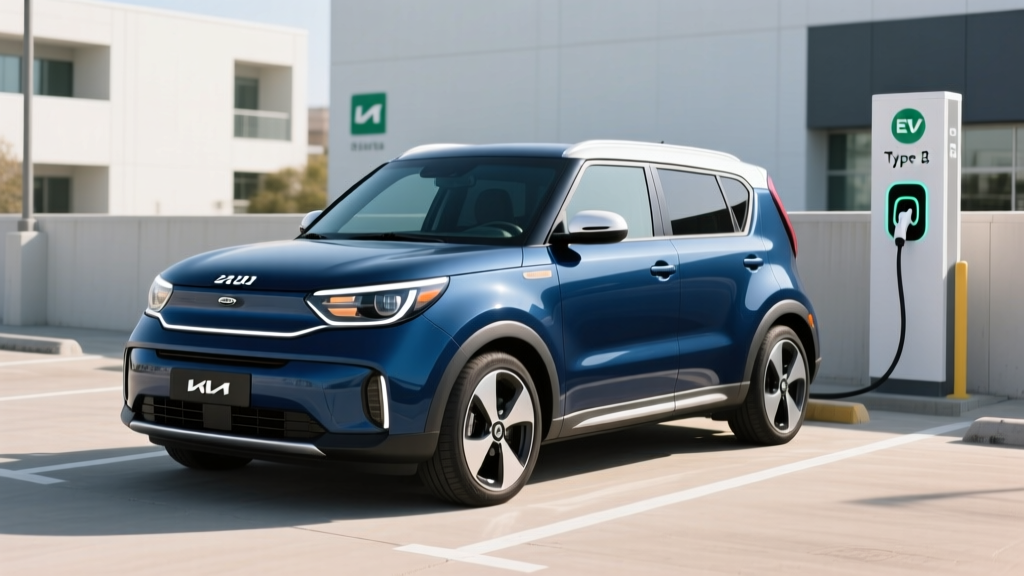
The Kia Soul EV is a practical, boxy electric hatchback best suited for urban and suburban drivers who can charge at home and rarely take road trips exceeding 200 miles. Its 243-mile EPA range and spacious interior are strong points, but its modest 77 kW DC fast-charging speed and limited long-distance practicality mean it's a commuter-first EV. If you need a fun, roomy daily driver and have access to Level 2 home charging, the Soul EV delivers solid value. If you regularly drive 300+ miles between charges or live in a charging desert, look at alternatives like the Hyundai Ioniq 5 or Tesla Model Y.
Kia Soul EV: The Specs That Matter
Before we get into ownership costs and comparisons, here's the complete spec picture for the latest available Kia Soul EV (note: the Soul EV has not been sold new in the US since the 2023 model year was discontinued; if you're shopping in 2026, you're likely looking at the used market or a very limited remaining inventory). Always verify exact specs with the EPA's fueleconomy.gov database for the specific model year you're considering.
| Spec | Value |
|---|---|
| EPA Range | 243 miles (real-world highway: ~200-215 mi; cold weather: ~175-195 mi) |
| Battery Capacity | 64 kWh usable (NMC chemistry) |
| Motor Output | 201 hp / 291 lb-ft torque |
| 0-60 mph | ~7.0 seconds |
| DC Fast Charge (peak) | 77 kW (10-80% in ~54 minutes) |
| Level 2 Charge (240V) | 7.2 kW (~9.5 hours for full charge) |
| Connector | CCS1 (DC) / J1772 (AC) |
| Efficiency | 120 MPGe combined (28 kWh/100 mi) |
| Cargo Volume | 24.2 cu ft (rear seats up) / 62.1 cu ft (folded) |
| Battery Warranty | 10 years / 100,000 miles |
| Original MSRP (2023) | ~$34,990 (base) to ~$39,000 (loaded) |
Real-World Range Reality Check
The EPA sticker says 243 miles, but real-world results depend heavily on your conditions. On a 70-mph highway drive in moderate temperatures, expect roughly 200-215 miles. In winter conditions (below 30°F), the NMC battery loses efficiency and cabin heating draws significant power — plan for 175-195 miles. The Soul EV lacks a heat pump, which is a meaningful disadvantage in cold climates compared to competitors like the Ioniq 5 or Tesla Model Y that use heat-pump-based thermal management.
How the Kia Soul EV Compares to Gas and Hybrid Alternatives
The Soul EV doesn't exist in a vacuum. Many shoppers cross-shop it against the gas-powered Kia Soul, the Kia Niro EV, or hybrids like the Toyota Corolla Hybrid. Here's how the numbers stack up over 5 years of ownership (assuming 12,000 miles/year, $3.50/gal gas, $0.14/kWh electricity):
| Factor | Kia Soul EV (Used ~$22K) | Kia Soul Gas (New ~$22K) | Toyota Corolla Hybrid (~$24K) |
|---|---|---|---|
| Fuel/Energy Cost (5 yrs) | ~$4,200 | ~$7,350 | ~$5,250 |
| Maintenance (5 yrs) | ~$1,800 | ~$3,500 | ~$3,200 |
| Insurance (5 yrs, avg) | ~$7,500 | ~$6,000 | ~$5,800 |
| Purchase Price | ~$22,000 (used) | ~$22,000 (new) | ~$24,000 (new) |
| Est. 5-Year Total Cost | ~$35,500 | ~$38,850 | ~$38,250 |
| EPA Efficiency | 120 MPGe / 28 kWh/100mi | 30 MPG combined | 50 MPG combined |
Key takeaway: The Soul EV saves roughly $3,000-$3,500 over five years compared to its gas counterpart, primarily through lower fuel and maintenance costs. However, EV insurance premiums tend to run 15-25% higher, which partially offsets the savings. The Corolla Hybrid sits in the middle — less fuel savings than the EV but no range concerns and lower insurance.
Real Costs of Owning the Kia Soul EV
Let's break down ownership beyond the sticker price. These are the numbers that determine whether the Soul EV actually saves you money or costs you more than expected.
Charging Costs: Home vs. Public
Charging at home on Level 2 (240V) at the national average of $0.14/kWh costs about $8.96 for a full 64 kWh charge, giving you 243 miles. That's roughly $0.037 per mile — compared to $0.12/mile for a 30-MPG gas car at $3.50/gallon.
| Charging Method | Cost per Full Charge | Cost per Mile | Time (0-100%) |
|---|---|---|---|
| Level 1 (120V household) | ~$9.00 | $0.037 | ~53 hours |
| Level 2 (240V home) | ~$9.00 | $0.037 | ~9.5 hours |
| DC Fast (Electrify America, ~$0.48/kWh) | ~$30.70 | $0.126 | ~54 min (10-80%) |
| DC Fast (Tesla Supercharger w/ adapter, ~$0.35/kWh) | ~$22.40 | $0.092 | ~54 min (10-80%) |
The critical insight: public DC fast charging at $0.40-$0.50/kWh erases most of the EV fuel-cost advantage. If you rely primarily on public chargers, your per-mile cost approaches that of a fuel-efficient hybrid. The Soul EV's economics only work if you can charge at home most of the time.
Home Charging Installation
Most Soul EV owners need a Level 2 home charger. Budget for:
- Level 2 charger hardware: $350-$700 (ChargePoint Home Flex, Emporia Vue, Wallbox Pulsar Plus)
- Electrician installation (240V/40A circuit): $800-$2,500 depending on panel proximity
- Electrical panel upgrade (if needed, 100A to 200A): $1,500-$4,000
- Permits: $50-$200
Total home charging setup: $1,200-$7,400. Most homeowners with a modern 200A panel spend $1,500-$2,500 total. Always get a quote from a licensed electrician before purchasing — your panel capacity determines whether an upgrade is needed.
Maintenance Savings
The Soul EV eliminates oil changes, transmission fluid, spark plugs, and exhaust system repairs. Expect to spend on:
- Tire rotation/replacement (EVs wear tires ~20% faster due to instant torque and heavier weight)
- Cabin air filter ($20-$40, DIY)
- Brake fluid flush (every 2-3 years, ~$80-$120)
- Wiper blades and washer fluid
Annual maintenance: roughly $300-$500 vs. $700-$1,000 for the gas Soul.
Charging Speed: The Soul EV's Biggest Limitation
Here's where the Kia Soul EV shows its age. At a peak of 77 kW on DC fast charging, it's significantly slower than modern competitors:
- Hyundai Ioniq 5: 240 kW peak, 10-80% in ~18 minutes
- Tesla Model Y: 250 kW peak, 10-80% in ~15 minutes
- Kia EV6: 240 kW peak, 10-80% in ~18 minutes
- Kia Soul EV: 77 kW peak, 10-80% in ~54 minutes
On a road trip, that 54-minute stop for 10-80% means you'll spend nearly an hour at every charging station. And because the Soul EV uses CCS1 connectors, you'll rely on Electrify America, EVgo, or ChargePoint networks — which have historically lower uptime rates than Tesla's Supercharger network. Kia now offers a NACS adapter for CCS vehicles, granting access to Tesla Superchargers, but the 77 kW bottleneck remains regardless of which network you use.
Charge curve reality: The 77 kW figure is a peak rate you'll see between roughly 10-40% state of charge. Above 60%, charging slows to 50-60 kW, and above 80%, it drops to under 20 kW. This is normal for all EVs, but the Soul EV's lower peak means the taper hurts more.
Federal Tax Credit and Incentives (2026 Rules)
If you're buying the Soul EV used (which is the only realistic option in 2026 since new US sales ended after 2023), you may qualify for the Used Clean Vehicle Credit under IRS §25E — up to $4,000 or 30% of the sale price, whichever is less. Key requirements per IRS guidelines:
- Sale price must be $25,000 or less
- Buyer income caps: $75,000 single / $112,500 head of household / $150,000 joint
- Vehicle must be at least 2 model years old
- Must purchase from a licensed dealer (private-party sales don't qualify)
- Credit can be transferred to the dealer at point of sale for an immediate price reduction
At a typical used Soul EV price of $18,000-$24,000, many buyers will qualify for the full $4,000 credit — bringing effective cost down significantly. Always verify current rules with a tax professional before purchasing, as incentive structures can change.
Decision Framework: Should You Buy the Kia Soul EV?
Buy the Kia Soul EV If:
- You can install or already have Level 2 home charging
- Your daily commute is under 80 miles round-trip
- You take fewer than 4 road trips per year exceeding 200 miles
- You want a tall-riding, easy-entry hatchback with excellent cargo space
- You're buying used and can leverage the $4,000 §25E credit
- You live in a moderate climate (minimal extreme cold)
Look Elsewhere If:
- You regularly drive 250+ miles between charging opportunities
- You live in an apartment or lack reliable home/workplace charging access
- You live in a region with harsh winters and need maximum cold-weather range
- Fast DC charging speed matters to you (road trips will feel slow)
- You need AWD (the Soul EV is front-wheel drive only)
- You want the latest ADAS tech — the Soul EV's driver assists are basic Level 2 lane-keeping and adaptive cruise, not comparable to Tesla Autopilot or GM Super Cruise
Common Misconceptions About the Kia Soul EV
| Myth | Fact |
|---|---|
| "The Soul EV has 243 miles of range no matter what." | EPA range is a lab estimate. Highway driving at 75 mph yields ~200-215 miles. In sub-30°F weather, expect 175-195 miles due to battery chemistry and resistive cabin heating (no heat pump). |
| "It charges fast at any DC station." | Peak 77 kW is modest by 2026 standards. A 10-80% charge takes ~54 minutes — roughly 3x longer than an Ioniq 5 or EV6 at a 350 kW station. |
| "I can use Tesla Superchargers natively." | The Soul EV uses CCS1. You'll need Kia's NACS adapter to access Tesla Superchargers, and you'll still be limited to 77 kW even at a 250 kW Supercharger stall. |
| "EV batteries need replacing every few years." | Kia's battery warranty covers 10 years/100,000 miles with a capacity retention threshold (typically 70%). NMC batteries in the Soul EV have shown strong longevity data — most owners report less than 10% degradation over 5 years. |
| "The Soul EV is still sold new in the US." | Kia discontinued US Soul EV sales after the 2023 model year. In 2026, you're shopping the used market or certified pre-owned inventory. |
What First-Time EV Buyers Should Know About the Soul EV
If the Soul EV is your first electric vehicle, here are the practical realities no brochure mentions:
1. Plan Your Charging Before You Buy
Check your electrical panel. If you have a 100-amp panel and already run central AC, an electric dryer, and an electric stove, you may need a panel upgrade before adding a 40-amp EV circuit. Get an electrician's assessment before purchasing the car. A $3,000 panel upgrade changes the total-cost equation significantly.
2. Download Charging Apps Before Your First Road Trip
The Soul EV's built-in navigation shows some chargers, but you'll need PlugShare, A Better Routeplanner (ABRP), and the Electrify America app for reliable trip planning. ABRP lets you input the Soul EV's specific charge curve and battery size for accurate stop predictions.
3. Regenerative Braking Takes a Week to Master
The Soul EV offers multiple regen levels controlled by steering-wheel paddles. Level 3 provides near one-pedal driving in city traffic but won't bring the car to a complete stop — you'll still need the friction brakes at the final few mph. Budget a week of conscious adaptation.
4. Cold Weather Demands Strategy
Without a heat pump, the Soul EV uses resistive heating for the cabin — which draws 3-5 kW continuously in cold weather. Preconditioning the battery and cabin while still plugged in at home is essential. Use the Kia Connect app to schedule preconditioning 30 minutes before departure, pulling power from the grid instead of the battery.
Frequently Asked Questions
What is the real-world range of the Kia Soul EV?
The EPA rates it at 243 miles, but real-world highway driving in moderate temperatures yields approximately 200-215 miles. In cold weather (below 30°F), expect 175-195 miles. City driving with regenerative braking can approach or slightly exceed the EPA figure.
How long does it take to charge the Kia Soul EV at home?
On a Level 2 (240V/32A) home charger at 7.2 kW, a full 0-100% charge takes approximately 9.5 hours. Most owners plug in overnight and wake up to a full battery. On a standard 120V outlet (Level 1), a full charge takes roughly 53 hours — useful for topping off but impractical as a primary charging method.
Is the Kia Soul EV still available new in 2026?
No. Kia discontinued the Soul EV for the US market after the 2023 model year. In 2026, buyers should look at certified pre-owned inventory or the used market, where prices typically range from $16,000 to $24,000 depending on mileage and condition.
Can the Kia Soul EV use Tesla Superchargers?
Not natively. The Soul EV uses a CCS1 connector. However, Kia offers a NACS adapter that enables access to Tesla's Supercharger network. Even with the adapter, the Soul EV's 77 kW peak charge rate means you won't benefit from Tesla's faster 250 kW stalls — charging speed is limited by the car, not the station.
How does the Soul EV compare to the Kia Niro EV?
The Niro EV offers a slightly larger battery (64.8 kWh), longer EPA range (251 miles vs. 243), and similar 77 kW DC charging. The Niro is lower to the ground and more car-like; the Soul EV is taller with easier entry/exit and slightly more cargo room. Both share the same charging-speed limitation. The Niro remains available in newer model years, making it easier to find with current warranty coverage.
What's the battery replacement cost for the Soul EV?
Out-of-warranty 64 kWh NMC battery replacement runs approximately $12,000-$16,000 including labor, based on current Kia parts pricing. However, Kia's 10-year/100,000-mile battery warranty covers capacity loss below the retention threshold, and real-world degradation data suggests most Soul EV batteries retain 85-92% capacity after 5 years of typical use.