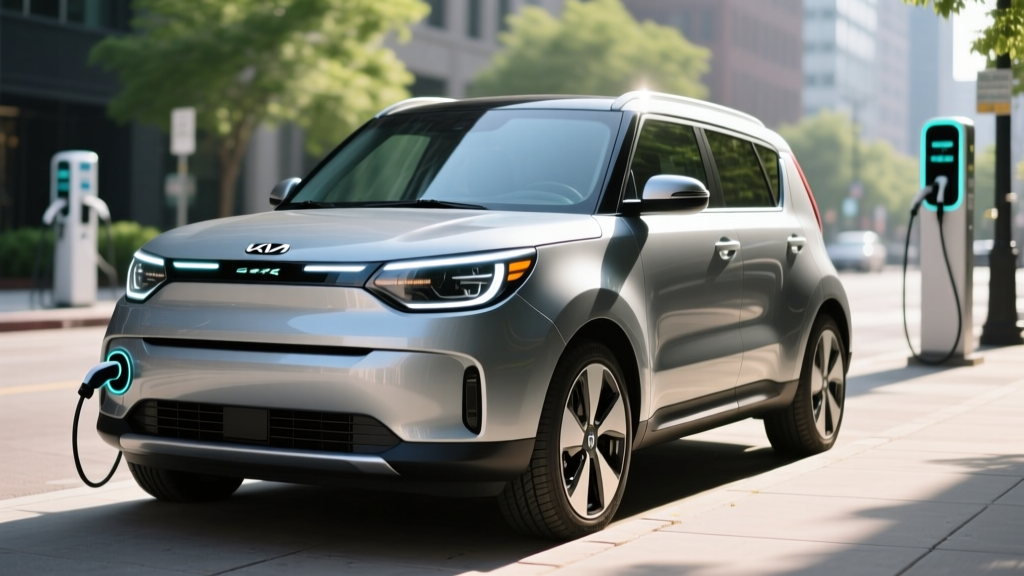
Quick Answer: As of the 2026 model year, Kia does not sell a new all-electric Soul in the United States. The Kia Soul EV was discontinued after the 2023 model year and has not been replaced by a direct electric successor. If you're searching for a kia soul electric car, your options are: (1) buy a used 2020–2023 Soul EV on the secondary market, or (2) consider Kia's current electric lineup — the EV6 crossover or the EV9 three-row SUV — which share Kia's E-GMP platform. A used 2023 Soul EV S with the 64 kWh battery typically lists between $22,000 and $28,000 depending on mileage and condition, and may qualify for the IRS §25E used-EV credit of up to $4,000 if you meet income and dealer requirements.
Why the Kia Soul EV Disappeared — and What Replaced It
Kia introduced the second-generation Soul EV for the 2020 model year with two battery options: a 39.2 kWh pack (S trim, ~149 miles EPA) and a 64 kWh pack (EX/EX+ trims, ~243 miles EPA). The 64 kWh version used an NMC (nickel-manganese-cobalt) lithium-ion battery paired with a 150 kW (201 hp) front-mounted motor. It delivered a 0–60 mph time around 7.3 seconds and a combined MPGe of roughly 112, per fueleconomy.gov.
Despite solid specs, Kia discontinued the Soul EV in the U.S. after 2023. The reasons were practical, not technical: Kia pivoted its EV production capacity toward the higher-volume EV6 and EV9, both built on the 800-volt E-GMP architecture that supports DC fast charging up to 240 kW. The Soul EV's older platform topped out at roughly 77 kW DC — adequate for daily driving but uncompetitive in a market where rivals like the Hyundai Ioniq 5 and Chevrolet Equinox EV offered faster charge curves and longer ranges.
If you want a Kia electric car in 2026, the closest spiritual successor in size and price is the Kia Niro EV (EPA range ~239 miles, 64.8 kWh battery, starting around $39,600 MSRP), or you step up to the Kia EV6 (EPA range up to ~310 miles, 77.4 kWh battery, starting around $42,600 MSRP).
Used Kia Soul EV: Real-World Range, Charging, and Specs
For buyers committed to the Soul EV's boxy styling and tall roofline, the used market remains the only path. Here's what you're actually getting with the most common variant — the 2022–2023 Soul EV with the 64 kWh battery:
| Spec | 2022–2023 Kia Soul EV (64 kWh) |
|---|---|
| EPA Range | 243 miles (EX/EX+) |
| Real-World Range (highway, 70 mph) | ~200–215 miles |
| Real-World Range (cold, 20°F) | ~170–190 miles |
| Battery Capacity (usable) | 64 kWh, NMC chemistry |
| DC Fast Charge (peak) | 77 kW (CCS1) |
| 10–80% DC Charge Time | ~54 minutes |
| Level 2 AC Charge Rate | 7.2 kW (~22 mi/hr) |
| Motor Output | 150 kW / 201 hp / 291 lb-ft |
| 0–60 mph | ~7.3 seconds |
| Combined MPGe | 112 MPGe |
| Battery Warranty (original) | 10 yr / 100,000 mi (transferable) |
| Typical Used Price (2026) | $22,000–$28,000 |
Real-World Range Reality: The EPA's 243-mile sticker assumes mixed city/highway driving at moderate temperatures. In sustained 70+ mph highway driving, expect closer to 200–215 miles. In sub-freezing winter conditions, range can drop to 170–190 miles due to cabin heating load and reduced battery efficiency. The Soul EV lacks a heat pump (standard on newer E-GMP Kias), which means resistive heating draws heavily from the traction battery in cold weather.
Charging Curve Honest Assessment
The Soul EV's 77 kW peak DC charge rate is its most dated spec. Unlike 800V-architecture EVs that sustain peak power from 10% to 50%+ SoC, the Soul EV's charge curve tapers early. You'll see ~77 kW briefly in the 10–30% SoC window, then it drops to ~50 kW through the mid-range, and slows further above 80%. A 10–80% session takes roughly 54 minutes at a 150+ kW CCS station — nearly double the ~18-minute benchmark set by E-GMP Kias. For daily use with Level 2 home charging, this is irrelevant. For road trips, it means longer rest stops.
EV vs Gas: Soul EV Compared to the Gas Kia Soul
The gasoline Kia Soul remains one of the most affordable new cars in America, starting around $22,000 MSRP in 2026 and averaging about 30 MPG combined. How does a used Soul EV stack up in total ownership cost over five years?
| Cost Factor | Used 2023 Soul EV (64 kWh) | New 2026 Gas Soul (LX) |
|---|---|---|
| Purchase Price | ~$25,000 (used) | ~$22,500 (new MSRP) |
| Federal Tax Credit | Up to $4,000 (§25E used EV) | $0 |
| Effective Purchase | ~$21,000 | ~$22,500 |
| Fuel/Energy (5 yr, 60k mi) | ~$3,600 (home charging, $0.14/kWh avg) | ~$7,000 ($3.50/gal, 30 MPG) |
| Maintenance (5 yr) | ~$1,200 (tires, cabin filter, fluid top-offs) | ~$3,500 (oil, filters, brakes, belts) |
| Insurance (5 yr avg) | ~$8,500 | ~$7,200 |
| Depreciation (5 yr est.) | ~$9,000 | ~$11,000 |
| 5-Year Total Cost | ~$43,300 | ~$51,200 |
Key takeaway: Over five years and 60,000 miles, the used Soul EV saves roughly $7,900 despite a similar starting price — driven by fuel savings (~$3,400), lower maintenance (~$2,300), and the used-EV tax credit. Insurance runs about 15–18% higher on the EV, partially offsetting the advantage.
Note: The §25E used clean vehicle credit is worth 30% of the sale price, up to $4,000. It requires purchasing from a licensed dealer, buyer income below $75,000 (single) / $150,000 (joint), and a sale price at or below $25,000. Verify current rules at irs.gov.
Real-World Ownership: What First-Time EV Buyers Must Know
Buying any used EV — the Soul EV included — requires homework that gas-car buyers never face. Here are the ownership realities that determine whether this car works for your life:
Home Charging Access Is Non-Negotiable
The Soul EV's 77 kW DC charging and 54-minute 10–80% time make public-only charging impractical for daily use. You need Level 2 home charging to make this car work. A 7.2 kW Level 2 charger adds roughly 22 miles of range per hour, meaning an overnight session (8–10 hours) fully replenishes the battery. If you live in an apartment without charging access or park on the street, the Soul EV's modest DC speed becomes a genuine friction point.
Level 2 home installation costs typically range from $800 to $2,500 total (charger hardware: $300–$650; electrician labor + permit: $500–$1,800), assuming your electrical panel has spare capacity. A panel upgrade from 100A to 200A adds $1,500–$3,500. Always get a licensed electrician to assess your panel before committing to a vehicle purchase.
Battery Health Verification
The Soul EV's 10-year/100,000-mile battery warranty is transferable to subsequent owners. Kia defines a warranty-covered failure as the battery dropping below 70% of original capacity. Before buying used, request a State of Health (SoH) reading from a Kia dealer's diagnostic tool. A 2022 model with 35,000 miles should show 93–97% SoH under normal conditions. Avoid vehicles with SoH below 90% unless the seller can document a warranty claim in progress.
Cold-Weather Realities
The Soul EV uses resistive cabin heating rather than a heat pump. In sustained sub-30°F weather, expect 20–30% range loss compared to the EPA sticker. If your daily round-trip commute exceeds 140 miles and you live in a cold climate (Upper Midwest, Northeast, Mountain West), the Soul EV's effective winter range of ~170 miles may not provide adequate buffer. Preconditioning the battery while plugged in mitigates some loss but doesn't eliminate it.
Common Misconceptions — Myth vs. Fact
| Myth | Fact |
|---|---|
| "The Kia Soul EV is still sold new in 2026." | Kia discontinued the Soul EV in the U.S. after the 2023 model year. Only used examples are available domestically. |
| "EV batteries need replacing every 5 years." | NMC batteries in the Soul EV are designed for 1,000+ full charge cycles with ~70–80% capacity retention at 100,000 miles. The 10-year/100,000-mile warranty backs this up. Full replacement (rare) costs $8,000–$14,000. |
| "I can fast-charge the Soul EV in 20 minutes." | The 77 kW peak rate means a 10–80% charge takes ~54 minutes. Marketing "peak kW" figures don't reflect sustained charge speed. |
| "The $4,000 used-EV credit applies to every Soul EV." | The §25E credit requires the sale price to be $25,000 or less, purchase through a licensed dealer, buyer income under IRS caps, and the vehicle must be at least 2 model years old. Not every listing qualifies. |
| "EVs cost more to insure, so savings disappear." | Insurance runs 15–18% higher on average, but fuel and maintenance savings ($5,700 combined over 5 years) far exceed the insurance premium difference (~$1,300). |
Decision Framework: Should You Buy a Kia Soul Electric Car?
Buy the used Soul EV if:
- You have Level 2 home charging (garage or driveway with a 240V outlet).
- Your daily driving is under 120 miles round-trip, even in winter.
- You value the Soul's tall roofline, easy entry, and compact footprint for urban driving.
- You find a dealer-listed example at or below $25,000 to capture the §25E credit.
- You accept that road-trip charging will take ~54 minutes per stop, not 20.
Look elsewhere if:
- You rely exclusively on public DC fast charging — the 77 kW peak and 54-minute sessions will frustrate you.
- You regularly drive 250+ miles in a single day — the real-world highway range of ~210 miles means mandatory stops.
- You live in a severe cold climate with commutes over 140 miles — winter range loss brings the buffer too close to zero.
- You want a new vehicle with full warranty coverage and the latest tech — consider the Kia Niro EV or EV6 instead.
- You need the §30D new-EV credit ($7,500) — the Soul EV is discontinued, so this credit doesn't apply.
Alternatives to the Kia Soul EV in 2026
If the Soul EV's limitations don't fit your needs, here are three alternatives at similar price points:
- Used Hyundai Kona Electric (2022–2024): 258 miles EPA, 64 kWh NMC, 100 kW DC peak, ~$23,000–$29,000 used. Slightly longer range and faster charging than the Soul EV, with a similar compact-crossover footprint.
- New Kia Niro EV (2026): 239 miles EPA, 64.8 kWh battery, 85 kW DC peak, ~$39,600 MSRP. Eligible for §30D new-EV credit (verify current sourcing requirements). New-car warranty, modern infotainment, heat pump included.
- Used Chevrolet Bolt EV/EUV (2022–2023): 259/247 miles EPA, 65 kWh NMC, 55 kW DC peak (slow charging is the trade-off), ~$18,000–$24,000 used. The value champion if DC charge speed isn't a priority.
Frequently Asked Questions
Can I still buy a new Kia Soul EV in 2026?
No. Kia discontinued the Soul EV in the United States after the 2023 model year. It remains available in some international markets (South Korea, Europe) under different names, but U.S. buyers can only source used examples from the 2020–2023 model years.
Does the Kia Soul EV qualify for any tax credit?
A used 2020–2023 Soul EV may qualify for the federal §25E used clean vehicle credit — up to $4,000 or 30% of the sale price, whichever is less. Requirements include: purchase from a licensed dealer, sale price at or below $25,000, buyer modified adjusted gross income under $75,000 (single) or $150,000 (joint filing), and the vehicle must be at least two model years old. The credit is claimed at the point of sale through a registered dealer. Always verify current rules at irs.gov before purchasing.
How long does the Soul EV battery last?
Kia warranties the 64 kWh battery for 10 years or 100,000 miles against capacity loss below 70%. Real-world data from similar NMC packs suggests 85–92% State of Health at 100,000 miles with normal use (avoiding frequent 100% charges and deep discharges). A full battery replacement, if needed out of warranty, typically costs $8,000–$14,000 at a Kia dealer.
Is the Soul EV good for road trips?
It's workable but not ideal. With ~210 miles of real-world highway range and a 54-minute 10–80% DC charge time, you'll stop more often and wait longer than drivers of 800V-architecture EVs like the Kia EV6 or Hyundai Ioniq 5. For trips under 300 miles with one stop, it's fine. For 500+ mile days, plan accordingly.
What connector does the Kia Soul EV use?
The 2020–2023 Soul EV sold in the U.S. uses the CCS1 (Combined Charging System) connector for DC fast charging and a J1772 inlet for Level 1/Level 2 AC charging. It does not have the NACS (Tesla-style) connector. You can use Tesla Superchargers only if the station offers a CCS-equipped Magic Dock adapter — availability varies by location.
How much does it cost to charge a Soul EV at home?
Fully recharging the 64 kWh battery from empty at the U.S. residential average of $0.14/kWh costs approximately $8.96. With the Soul EV's efficiency of roughly 3.0 miles/kWh, that works out to about $0.047 per mile — compared to roughly $0.117 per mile for the gas Soul at $3.50/gallon and 30 MPG. Over 12,000 miles per year, home charging saves roughly $840 annually vs. gasoline.