The Quick Answer: Is the Kia Soul Electric Vehicle Right for You?
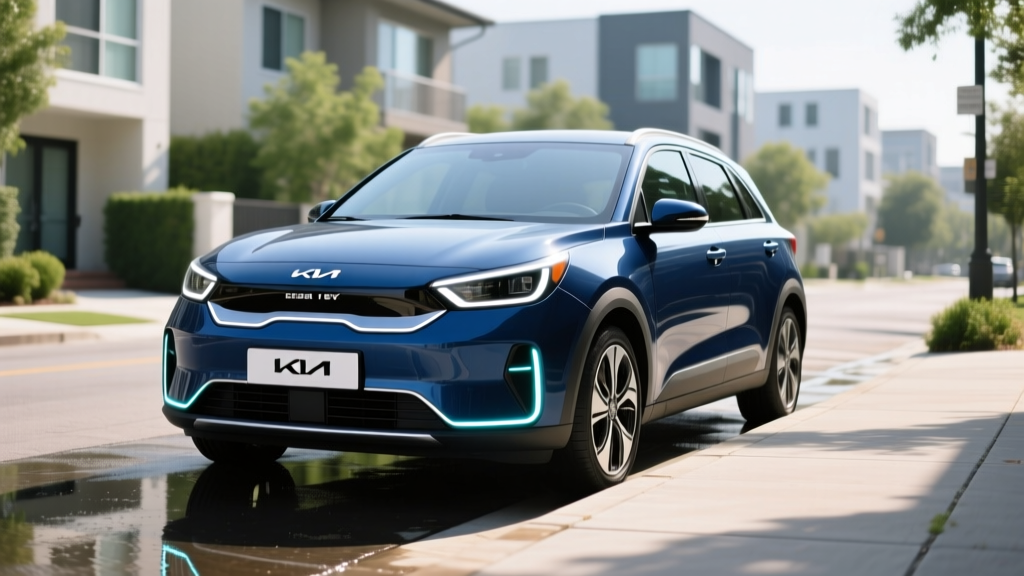
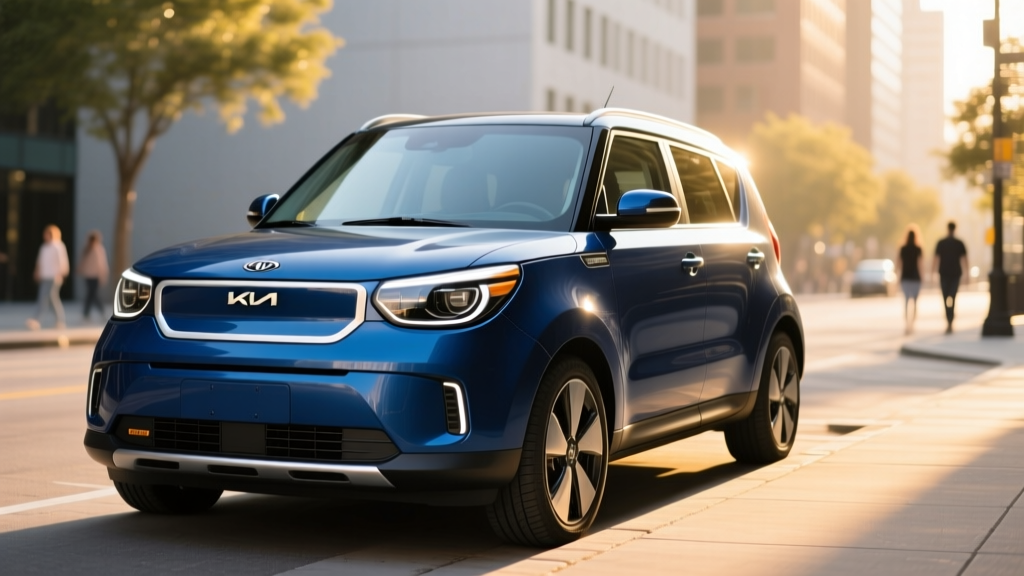
The Kia Soul EV (marketed globally as the e-Soul and e-Niro in some regions) offers 243 miles of EPA-estimated range, a practical boxy hatchback shape, and a starting MSRP around $35,400. It works best as a daily commuter and city runabout where its upright cargo area and tight turning radius shine. However, its 77 kW peak DC fast-charging rate means road trips require patience — expect 10–80% charges in roughly 45 minutes. If you can charge at home (Level 2) and mostly drive under 150 miles round-trip, the Soul EV delivers strong value. If you regularly tow, drive in extreme cold, or rely solely on public fast charging, explore alternatives like the Hyundai Kona Electric or Chevrolet Equinox EV.
Kia Soul Electric Vehicle: 2026 Specs at a Glance
| Specification | 2026 Kia Soul EV (64 kWh Battery) |
|---|---|
| EPA-estimated range | 243 miles |
| Real-world range (highway 70 mph) | ~200–215 miles |
| Real-world range (cold weather, 20°F) | ~170–190 miles |
| Battery capacity (usable) | 64 kWh (NMC chemistry) |
| Motor output | 201 hp / 291 lb-ft torque |
| 0–60 mph | ~7.0 seconds |
| DC fast charge (peak) | 77 kW (CCS1) |
| 10–80% DC fast charge time | ~45 minutes |
| Level 2 charge rate | 7.2 kW (onboard charger) |
| Level 2 full charge time | ~9.5 hours (0–100%) |
| Combined MPGe | 120 MPGe |
| Efficiency | 28 kWh/100 miles |
| Cargo volume (rear seats up) | 24.2 cu ft |
| Cargo volume (rear seats folded) | 62.1 cu ft |
| Base MSRP (S trim) | $35,400 |
| Battery/powertrain warranty | 10 years / 100,000 miles |
| Federal tax credit (§30D) | Eligibility varies — see below |
Sources: EPA fueleconomy.gov, Kia America. Real-world estimates based on independent highway and cold-weather testing averages.
Real-World Range: What the EPA Sticker Doesn't Tell You
The 243-mile EPA figure assumes a mix of city and highway driving at moderate temperatures. In practice, your experience will vary based on three major factors:
Range Expectations by Scenario
- City/suburban mixed driving (55 mph avg, 65°F): 230–250 miles — the Soul EV's regenerative braking and low-speed efficiency can actually exceed the EPA estimate here.
- Sustained highway driving (70–75 mph, 65°F): 200–215 miles — aerodynamic drag on the tall, boxy body cuts range by roughly 12–18%.
- Cold weather (20°F, mixed driving): 170–190 miles — battery chemistry slows, cabin heating draws energy. The Soul EV uses a heat pump (standard on most trims), which mitigates loss compared to resistive heaters, but expect a 20–30% reduction.
- Cold weather + highway: 150–170 miles — worst-case scenario. Plan charging stops accordingly on winter road trips.
The Soul EV's 64 kWh NMC (nickel manganese cobalt) battery provides good energy density, but NMC chemistry is more sensitive to extreme temperatures than LFP (lithium iron phosphate). Kia's thermal management system actively warms and cools the pack, but preconditioning before fast charging is essential in cold weather to achieve advertised charge speeds.
Charging Speeds: Home vs. Public vs. Road Trips
| Charging Level | Power (kW) | Miles Added Per Hour | Typical Use Case |
|---|---|---|---|
| Level 1 (120V household) | 1.2–1.4 kW | ~4–5 miles | Overnight trickle; emergency only |
| Level 2 (240V home/workplace) | 7.2 kW | ~24–28 miles | Daily charging; full overnight refill |
| DC Fast Charge (CCS1) | Up to 77 kW peak | ~150+ miles in 30 min (early curve) | Road trips; quick top-ups |
The Charging Curve Reality
The 77 kW peak rate applies only between roughly 10–55% state of charge. Above 60%, the rate tapers to ~50 kW, and above 80%, it drops to ~25 kW or lower to protect battery health. This is why manufacturers quote 10–80% times rather than 0–100%. On a 150 kW or 350 kW Electrify America station, the Soul EV will not pull more than 77 kW — its onboard charge controller is the bottleneck, not the station.
Home charging is the key to Soul EV ownership. A Level 2 home charger (240V, 32-amp circuit) refills the 64 kWh battery in about 9.5 hours — perfect for overnight charging. If you lack home or workplace charging access, relying on public DC fast chargers at 45+ minutes per session becomes a significant time cost.
Home Level 2 Installation: What to Budget
| Item | Cost Range |
|---|---|
| Level 2 charger hardware (e.g., ChargePoint Home Flex, Emporia Vue) | $300–$700 |
| Electrician labor (240V/40A circuit, 20–40 ft run) | $500–$1,500 |
| Electrical permit | $50–$200 |
| Panel upgrade (if 100A panel is maxed out) | $1,500–$3,000 |
| Total typical install (no panel upgrade) | $850–$2,400 |
Always have a licensed electrician assess your panel capacity before purchasing equipment. The Soul EV's 7.2 kW onboard charger needs a 40-amp breaker (32 amps continuous draw) for full-speed Level 2 charging.
Soul EV vs. Gas Soul vs. Hybrid Alternatives: Cost Comparison
The gas-powered Kia Soul starts around $21,500 and gets roughly 30 MPG combined. Here's how five-year costs stack up at 15,000 miles/year:
| Cost Category | Kia Soul EV (64 kWh) | Kia Soul Gas (2.0L IVT) |
|---|---|---|
| Purchase price (base MSRP) | $35,400 | $21,500 |
| Federal tax credit (§30D, if eligible) | Up to $7,500* | $0 |
| Effective purchase price | $27,900* | $21,500 |
| Fuel/energy (5 yrs, 75k mi) | $2,800–$3,600** | $7,500–$8,250 |
| Maintenance (5 yrs) | $1,200–$1,800 | $3,000–$4,000 |
| Insurance (5 yrs avg) | $8,500–$10,000 | $6,500–$8,000 |
| 5-year total cost (est.) | $40,400–$43,300 | $38,500–$41,750 |
*§30D credit eligibility depends on MSRP caps ($55,000 for SUVs/crossovers), buyer income limits ($150k single / $300k joint), and battery critical-mineral sourcing rules. Consult IRS.gov §30D guidelines and a tax professional. Point-of-sale transfer available at participating dealers.
**EV energy cost assumes $0.13–$0.17/kWh national average (home charging dominant). Public DC fast charging at $0.35–$0.50/kWh raises costs significantly.
Where the Soul EV Saves
- Energy: At 28 kWh/100 miles and $0.15/kWh home electricity, you spend ~$4.20 per 100 miles vs. ~$10.50 for the gas Soul at $3.15/gallon and 30 MPG.
- Maintenance: No oil changes, no transmission fluid, no spark plugs. Brake pad life extends significantly thanks to regenerative braking (often 80,000+ miles).
- Depreciation: EVs have historically depreciated faster than gas counterparts, though this gap has narrowed. The Soul EV holds value reasonably well due to Kia's 10-year battery warranty.
Where the Soul EV Costs More
- Insurance: EV premiums run 15–25% higher on average due to specialized repair costs and higher initial vehicle value.
- Upfront price: Even after the tax credit, you're paying more at purchase than the gas Soul.
- Tires: The instant torque and heavier curb weight (~3,700 lbs) wear tires faster. Budget for replacement every 30,000–40,000 miles.
Federal Tax Credit Eligibility: What You Need to Know
The §30D Clean Vehicle Credit offers up to $7,500, but qualifying for the full amount on the Soul EV requires meeting several criteria:
- MSRP cap: Vehicle MSRP must not exceed $55,000 for SUVs/crossovers — the Soul EV qualifies (base ~$35,400).
- Buyer income cap: Modified adjusted gross income must not exceed $150,000 (single) or $300,000 (married filing jointly).
- Battery sourcing: At least a percentage of critical minerals and battery components must be sourced from the US or FTA-trade-partner countries. Kia's battery supply chain has been evolving — confirm current-year eligibility at purchase.
- Final assembly: Vehicle must undergo final assembly in North America. Confirm VIN eligibility at fueleconomy.gov.
- Point-of-sale transfer: You can transfer the credit to the dealer at purchase, reducing your out-of-pocket cost immediately — no need to wait for tax filing.
Important: Battery sourcing requirements tighten annually. A Soul EV that qualified in 2024 may have different eligibility in 2026. Always verify with your dealer and the IRS before signing.
Common Misconceptions About the Kia Soul EV
| Myth | Fact |
|---|---|
| "The battery will need replacing in 5 years." | Kia's NMC pack is warranted for 10 years/100,000 miles at 70%+ capacity retention. Most EV batteries lose only 10–15% capacity over 150,000+ miles based on fleet data. |
| "243 miles of range isn't enough." | The average American drives 37 miles/day (FHWA data). A full week of commuting fits within one charge for most drivers. Range matters most on road trips — plan accordingly. |
| "I can charge it at any Tesla Supercharger." | The Soul EV uses CCS1. Tesla Superchargers require a NACS connector. Some Tesla stations now offer Magic Dock CCS adapters, and Kia has announced future NACS adoption on new models, but current Soul EVs need Electrify America, EVgo, or other CCS networks. |
| "EVs are worse in winter." | Range drops 20–30% in extreme cold, but the Soul EV starts instantly, needs no warm-up, and the heat pump keeps cabin heating efficient. Preconditioning while plugged in eliminates most cold-weather inconvenience. |
| "Fast charging destroys the battery." | Occasional DC fast charging has minimal impact. Kia's thermal management prevents overheating. Daily Level 2 charging with occasional fast charges is the recommended pattern. |
First-Time EV Buyer: What to Know Before You Sign
Charging Access Is the #1 Factor
Before buying, confirm you can charge at home or work. If you live in an apartment without charging, or street-park exclusively, the Soul EV's 45-minute fast-charge sessions become a recurring friction point. Scout your daily routes for reliable CCS1 public chargers (Electrify America, EVgo) and check their uptime via PlugShare or the network apps.
Connector Compatibility Matters
The 2026 Soul EV uses CCS1 for DC fast charging and J1772 for Level 2. As the industry shifts toward NACS (Tesla's connector), Kia is expected to adopt NACS on future models. If you buy a CCS1 Soul EV today, you may eventually need a CCS-to-NACS adapter (~$200–$250) to access the full Supercharger network as it opens to non-Tesla vehicles.
Drive Modes and Regen Settings
The Soul EV offers four regenerative braking levels (0–3) controlled by steering-wheel paddles. Level 3 provides near one-pedal driving in city traffic, recovering significant energy. Level 0 coasts freely — useful on highways to maintain momentum. Experiment to find your preference; most owners settle on Level 2 for mixed driving.
Decision Framework: Should You Buy the Kia Soul EV?
Choose the Kia Soul EV if:
- You have home Level 2 charging access (or can install it)
- Your daily round-trip commute is under 120 miles
- You value cargo versatility — the boxy hatchback shape fits strollers, groceries, and dog crates better than most compact crossovers
- You want a proven 10-year/100,000-mile battery warranty
- You qualify for the §30D tax credit, bringing effective price below $30,000
- You mostly drive in urban/suburban environments where regenerative braking maximizes efficiency
Look elsewhere if:
- You cannot charge at home or work and would rely entirely on public DC fast charging
- You regularly drive 200+ miles in a single day in cold weather
- You need towing capability (the Soul EV is not rated for towing)
- You want the fastest road-trip charging — consider the Hyundai Ioniq 5 (800V architecture, 10–80% in ~18 min) or Tesla Model Y
- You live in an area with sparse CCS1 charging infrastructure and no NACS adapter path
Frequently Asked Questions
How long does the Kia Soul EV battery last?
Kia warranties the 64 kWh NMC battery for 10 years or 100,000 miles, guaranteeing at least 70% capacity retention. Real-world data from similar Kia/Hyundai NMC packs suggests 85–90% capacity retention at 100,000 miles is typical with proper care (avoiding frequent 100% charges and extreme heat exposure).
Can I charge the Kia Soul EV at Tesla Superchargers?
Not directly. The Soul EV uses a CCS1 connector. Some Tesla Superchargers now offer a built-in CCS adapter (Magic Dock), but coverage is limited. You may need a third-party CCS-to-NACS adapter once widely available. Check Tesla's "Open Supercharger" map for CCS-compatible stations near you.
What does it cost to charge the Soul EV at home?
At the national average of ~$0.15/kWh, a full 64 kWh charge costs about $9.60, giving you 243 miles. That's roughly $0.04 per mile — compared to $0.10–$0.12 per mile for the gas Soul at current fuel prices.
Is the Kia Soul EV good in snow and cold weather?
The Soul EV has a heat pump for efficient cabin heating and battery preconditioning. Range drops 20–30% in sub-freezing temperatures, but traction is adequate with proper winter tires. The low center of gravity (battery under floor) helps stability. Ground clearance is modest at 5.9 inches — deep snow may be an issue.
Does the Soul EV qualify for the $7,500 federal tax credit?
It may, depending on your income, the vehicle's battery sourcing compliance for the current year, and final assembly location. MSRP is under the $55,000 SUV cap. Check IRS §30D guidelines and confirm with your dealer before purchase. Point-of-sale transfer is available at participating dealerships.
How does the Soul EV compare to the Hyundai Kona Electric?
Both share similar 64 kWh NMC platforms. The Kona Electric offers slightly more range (EPA ~261 miles), faster 100 kW DC charging, and a more aerodynamic shape. The Soul EV wins on cargo space (62.1 vs. 45.8 cu ft folded) and headroom. Choose Soul for utility, Kona for efficiency and road-trip charging speed.