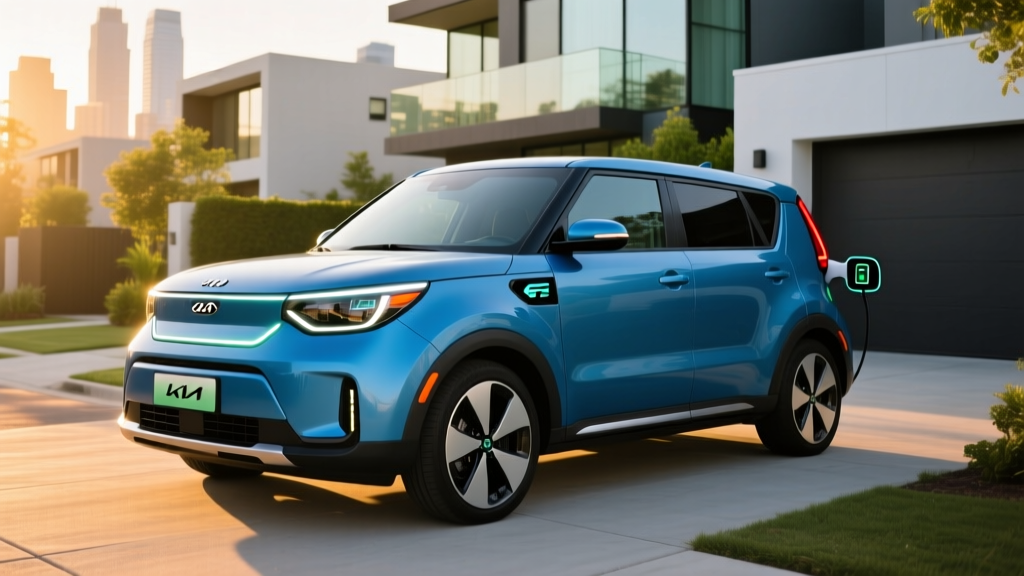
Quick Answer: The Kia Soul EV was discontinued in the U.S. market after the 2023 model year. If you're searching for a "Soul electric vehicle" in 2026, you're looking at the used EV market. The 2020–2023 Kia Soul EV offers an EPA-estimated 243 miles of range (Long Range trim), a 64 kWh battery, and peak DC fast charging around 77 kW. Used prices typically range from $16,000–$26,000 depending on mileage and condition. It remains a practical, affordable used EV — but buyers should understand its charging limitations and battery health before purchasing.
What Happened to the Kia Soul EV?
Kia sold the Soul EV in the United States from 2015 through the 2023 model year. The second-generation Soul EV (2020–2023) was the standout, jumping from the original's modest 93-mile range to a much more usable 243 miles EPA on the Long Range (EX and EX Designer trims). However, Kia discontinued the Soul EV stateside as it shifted its U.S. electric lineup to the EV6, EV9, and Niro EV. The Soul EV continues in select international markets, but U.S. buyers in 2026 are shopping the pre-owned market exclusively.
This doesn't make it a bad buy — far from it. The used Soul EV occupies a rare sweet spot: a compact crossover with genuine range, a spacious interior, and a price point that undercuts most new EVs by $15,000 or more. Let's break down what ownership actually looks like.
2020–2023 Kia Soul EV: Key Specifications
| Specification | Soul EV (Long Range EX) | Soul EV (S / Short Range) |
|---|---|---|
| EPA Range | 243 miles | 111 miles (2020 only) |
| Battery Capacity | 64 kWh (usable ~60 kWh) | 39.2 kWh (usable ~36 kWh) |
| Battery Chemistry | NMC (Nickel Manganese Cobalt) | NMC |
| Motor Output | 150 kW (201 hp) / 291 lb-ft torque | 100 kW (134 hp) |
| 0–60 mph | ~7.0 seconds | ~9.6 seconds |
| DC Fast Charge (Peak) | ~77 kW (CCS) | ~50 kW (CCS) |
| 10–80% DC Charge Time | ~54 minutes | ~42 minutes |
| Level 2 AC Charging | 7.2 kW (~9.5 hrs 0–100%) | 7.2 kW |
| EPA Efficiency | 120 MPGe combined | 112 MPGe combined |
| Cargo Volume | 24.2 cu ft (rear seats up) / 62.1 cu ft (folded) | 24.2 / 62.1 cu ft |
| Battery/Powertrain Warranty (Original) | 10 years / 100,000 miles | 10 years / 100,000 miles |
Real-world range note: Per fueleconomy.gov, the 243-mile EPA figure assumes mixed driving at moderate temperatures. Expect roughly 195–215 miles in sustained highway driving at 70+ mph, and 170–195 miles in freezing winter conditions (below 30°F) without aggressive battery preconditioning. The Soul EV lacks a heat pump on most U.S. trims, which means cabin heating draws directly from the traction battery — a meaningful range penalty in cold climates.
Used Soul EV Pricing and the Federal Tax Credit
As of early 2026, used Kia Soul EV Long Range models typically list between $16,000 and $26,000, depending on model year, mileage, trim level, and regional demand. The 2020–2021 model years cluster in the $16,000–$20,000 range, while low-mileage 2022–2023 examples push toward $24,000–$26,000.
Tax credit eligibility: Under the current IRS §30D used-EV credit rules, qualifying buyers can claim up to $4,000 or 30% of the sale price (whichever is lower) on a used EV purchased from a licensed dealer. Key requirements from irs.gov include:
- Sale price must be $25,000 or less
- Buyer income caps: $75,000 single / $112,500 head of household / $150,000 joint
- Vehicle must be at least 2 model years old
- Must purchase from a licensed dealer (private-party sales don't qualify)
- The same vehicle can only receive the used credit once every 3 years
At a $20,000 purchase price, the 30% calculation yields $6,000, but the $4,000 cap applies — bringing your effective cost to around $16,000 if you meet all criteria. This makes the Soul EV one of the most affordable ways into a 240+ mile EV in 2026.
Charging Reality: Home and Public
The Soul EV's charging speed is its most significant limitation compared to newer EVs. The 77 kW peak DC fast-charge rate means you'll spend more time at public chargers than you would in a Hyundai Ioniq 5 (which peaks at ~240 kW) or even a Chevrolet Bolt EUV (~55 kW but similar curve profile).
Charging Levels and What They Mean for Soul EV Owners
| Charging Level | Power | Connector | Soul EV Rate | Miles Added Per Hour |
|---|---|---|---|---|
| Level 1 (120V outlet) | ~1.4 kW | J1772 | 1.4 kW | ~4–5 mi/hr |
| Level 2 (240V home) | 7.2 kW | J1772 | 7.2 kW | ~24–28 mi/hr |
| DC Fast Charge | Up to 77 kW | CCS1 | 77 kW peak | ~150 mi in 30 min (10–60%) |
Home charging is essential. With a 240V Level 2 charger installed at home (typically $500–$1,500 for equipment and $800–$2,500 for electrician installation, depending on panel capacity and run length), a full overnight charge takes roughly 9–10 hours. This is the most practical and cheapest way to own a Soul EV. If you lack access to home or workplace charging, the Soul EV's moderate DC charging speed makes frequent public-charging stops time-consuming — we'd recommend looking at a newer EV with faster charging or a plug-in hybrid instead.
Charging cost estimate: At the U.S. average residential electricity rate of ~$0.17/kWh, fully charging the 64 kWh battery costs approximately $10.88 — delivering 243 miles of range at roughly $0.045 per mile. Compare that to a gas-powered Kia Soul (rated at 29 MPG combined) at $3.20/gallon: $0.11 per mile. Over 15,000 annual miles, that's a fuel savings of roughly $975 per year.
Soul EV vs. Gas Soul vs. Hybrid Alternatives
Understanding how the Soul EV stacks up against its gas counterpart and competing electrified vehicles helps frame the ownership decision.
5-Year Estimated Cost of Ownership (15,000 miles/year)
| Category | Kia Soul EV (Used ~$20K) | Kia Soul Gas (New ~$23K) | Toyota Prius (New ~$29K) |
|---|---|---|---|
| Purchase Price | $20,000 | $23,000 | $29,000 |
| Tax Credit (est.) | −$4,000 | $0 | $0 |
| Net Purchase | $16,000 | $23,000 | $29,000 |
| Fuel/Energy (5 yrs) | $5,440 | $8,275 | $4,600 |
| Maintenance (5 yrs) | ~$1,800 | ~$3,500 | ~$2,800 |
| Insurance (5 yrs, est.) | ~$9,500 | ~$8,200 | ~$8,500 |
| 5-Year Total | ~$32,740 | ~$42,975 | ~$44,900 |
Assumptions: $0.17/kWh electricity, $3.20/gal gas, 29 MPG (gas Soul), 57 MPG (Prius). Insurance estimates vary significantly by state and driver profile. Maintenance for EV excludes oil changes, spark plugs, and transmission fluid. Source data from fueleconomy.gov.
The used Soul EV wins decisively on total cost for buyers who qualify for the used-EV credit and have home charging. The Prius hybrid offers better highway range and no charging dependency but costs significantly more upfront. The gas Soul is cheapest to insure but bleeds money at the pump over time.
Real-World Ownership: What First-Time EV Buyers Should Know
Owning a Soul EV differs from a gas car in several practical ways that don't always show up in spec sheets:
Battery degradation: The NMC battery in the Soul EV will lose capacity over time. Industry data from sources like Recurrent Auto suggests modern NMC packs retain approximately 90–95% capacity after 5 years / 75,000 miles under normal use. Kia's 10-year/100,000-mile battery warranty covers drops below 70% of original capacity — but if you're buying a 2020 model in 2026, only about 4 years and whatever remaining mileage of that original warranty remains. Always check the battery's State of Health (SoH) before purchasing; some dealers can pull this from the BMS, or you can use an OBD2 dongle with apps like SoulEvScanner.
Cold-weather range loss: Without a heat pump, the Soul EV can lose 25–35% of its range in sustained sub-freezing temperatures. A 243-mile EPA rating can drop to 160–180 miles in harsh winter driving with cabin heat on. Preconditioning the battery while plugged in (using the scheduled departure feature) helps mitigate this — it warms the battery using grid power rather than battery power.
Maintenance savings: No oil changes, no transmission fluid, no spark plugs, no exhaust system. Brake pads last significantly longer due to regenerative braking (often 80,000+ miles). The main scheduled maintenance items are cabin air filter replacement, tire rotation, and brake fluid checks — typically $100–$200 per year.
Insurance premium reality: EVs generally carry 10–20% higher insurance premiums than comparable gas vehicles, due to higher repair costs and battery replacement risk. Budget $1,700–$2,100/year depending on your state and driving record.
Common Misconceptions About the Kia Soul EV
| Myth | Fact |
|---|---|
| "243 miles means I'll always get 243 miles" | EPA is a laboratory estimate. Highway driving at 75 mph yields ~200–215 mi; winter conditions can drop to ~170 mi. Plan routes conservatively. |
| "The battery will need replacing soon" | NMC batteries typically degrade 1–2% per year. A 2020 Soul EV in 2026 should retain ~90–94% capacity. Full replacement is rare before 150,000+ miles. |
| "DC fast charging will be quick" | At 77 kW peak (and tapering significantly above 60% SoC), a 10–80% charge takes ~54 minutes — considerably slower than modern 150–350 kW-capable EVs. |
| "I can charge from any home outlet" | Level 1 (120V) adds only ~4–5 miles per hour — a full charge takes over 40 hours. A 240V Level 2 installation is practically mandatory for daily use. |
| "The federal tax credit is $7,500" | The $7,500 credit applies only to new EVs. Used EVs qualify for up to $4,000 under separate rules with income and price caps. |
Decision Framework: Is the Used Kia Soul EV Right for You?
Choose the used Kia Soul EV if:
- You have access to Level 2 home or workplace charging
- Your daily commute is under 80 miles round-trip
- You live in a moderate climate (or accept winter range loss)
- You want a 240+ mile EV under $20,000 (after credit)
- You rarely take road trips over 200 miles without a planned charging stop
- You value cargo space and a tall, upright seating position
Look elsewhere if:
- You lack reliable access to home or workplace charging
- You regularly drive 300+ mile routes and need fast DC charging
- You live in an extreme cold climate and need maximum winter range
- You want the latest ADAS features (the Soul EV's highway driving assist is basic compared to 2026 models)
- You need AWD — the Soul EV is front-wheel drive only
Frequently Asked Questions
Can I still buy a new Kia Soul EV in 2026?
No. Kia discontinued the Soul EV in the U.S. after the 2023 model year. Only used examples are available domestically. The Soul EV may still be sold in some international markets.
How long does the Kia Soul EV battery last?
Based on NMC chemistry degradation data, expect the battery to retain approximately 88–95% of original capacity after 5–7 years of normal use. Kia's original 10-year/100,000-mile battery warranty covers drops below 70% capacity. Full battery replacement on a Soul EV would cost approximately $8,000–$14,000 at a dealer, though this is rarely needed.
Does the Kia Soul EV qualify for any tax credit in 2026?
As a used vehicle, it may qualify for the IRS used clean vehicle credit of up to $4,000 (or 30% of sale price, whichever is lower). Requirements include: sale price ≤$25,000, purchase from a licensed dealer, buyer income under $75K/$112.5K/$150K (single/HOH/joint), and the vehicle must be at least 2 model years old. Check current rules at irs.gov before purchasing.
How does the Soul EV compare to a Chevy Bolt EV or Bolt EUV?
The Chevy Bolt EV/EUV (also discontinued after 2023, expected to return in 2026) offers similar range (259 mi EPA for the Bolt EV) and comparable pricing on the used market. The Bolt charges at a similar ~55 kW DC rate, has slightly less cargo space, but a lower starting price used. The Soul EV offers more headroom and a more upright, practical interior. Neither is a fast charger by 2026 standards.
Is the Kia Soul EV reliable?
The Soul EV has generally strong reliability ratings. The electric powertrain has fewer moving parts than a gas engine, and Kia's build quality on this generation is solid. Common issues reported by owners include 12V auxiliary battery drain (a problem shared with many EVs) and occasional infotainment glitches. The NHTSA gave the Soul EV a 4-star overall safety rating.