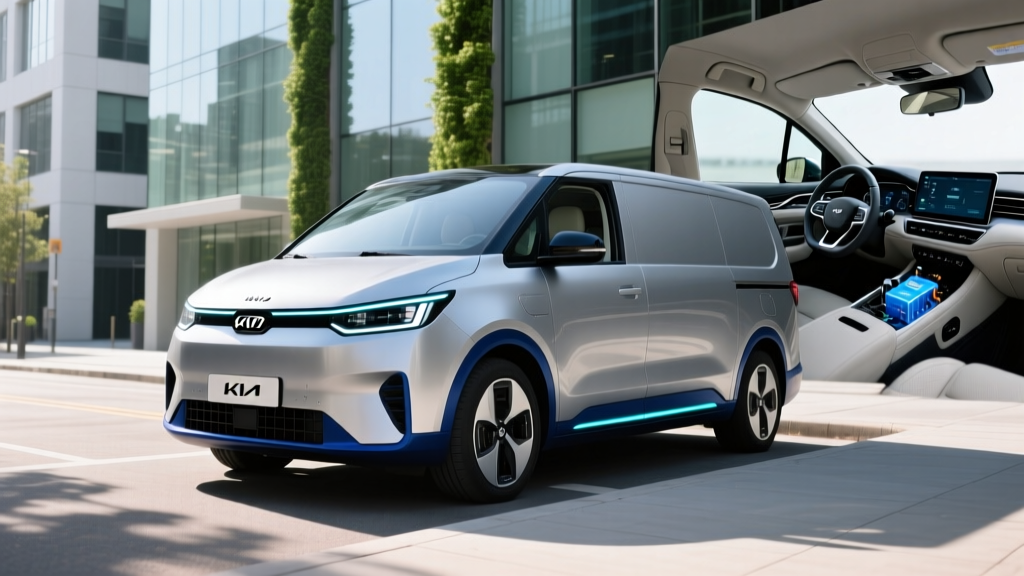
The Kia PV5 electric van is a purpose-built, modular commercial EV platform targeting last-mile delivery, tradesperson use, and passenger shuttle fleets. For 2026, the PV5 enters the U.S. market with an estimated 81.2 kWh NMC battery pack, an EPA-estimated range near 230 miles (pending final certification), and peak DC fast charging at approximately 150 kW. Pricing for the cargo-oriented PV5 Basic variant starts around $42,000 before destination, with the passenger-configured PV5 Wagon and high-roof PV5 LWB variants reaching the mid-$50,000s.
Quick Answer: Is the Kia PV5 Right for Your Fleet or Business?
The PV5 makes the most financial sense for operators who drive 60–150 miles per day in urban/suburban routes, can install Level 2 depot charging overnight, and qualify for the IRS §30D federal tax credit (up to $7,500, subject to MSRP caps, buyer income limits, and battery-sourcing requirements) or the §45W commercial credit for business entities that don't owe income tax. If your routes exceed 200 miles daily, include sustained highway runs above 75 mph, or operate in extreme cold without depot charging, a diesel or hybrid van like the Ford Transit EcoBlue or the Transit PHEV may still offer operational advantages.
PV5 Platform Overview: Purpose-Built, Not a Conversion
Unlike retrofit EVs that stuff batteries into existing unibody vans, the Kia PV5 rides on Hyundai Motor Group's dedicated "Platform Beyond Vehicle" (PBV) skateboard architecture. This means the battery pack sits flat beneath the floor, lowering the load floor and freeing interior volume. Kia offers three wheelbase/roof configurations at launch:
- PV5 Basic (Short Wheelbase): Compact cargo van, ~140 cu ft cargo volume, ideal for dense urban delivery.
- PV5 LWB (Long Wheelbase): Extended cargo area, ~200+ cu ft, targeting parcel and trade use.
- PV5 Wagon: Passenger-oriented, configurable 7–11 seats, targeting shuttle and ride-hail.
Because the PV5 is primarily a commercial vehicle, final consumer MSRP and trim packaging differ from Kia's retail EVs like the EV6 or EV9. Fleet buyers typically negotiate through commercial channels, and many PV5s will be upfitted by third-party body builders (refrigeration, shelving, wheelchair ramps) before reaching the end operator.
Range, Battery, and Real-World Efficiency
| Specification | PV5 Basic (SWB) | PV5 LWB | PV5 Wagon |
|---|---|---|---|
| Battery (usable) | ~81.2 kWh (NMC) | ~81.2 kWh (NMC) | ~81.2 kWh (NMC) |
| EPA Est. Range | ~230 mi (est.) | ~215 mi (est.) | ~210 mi (est.) |
| Real-World Highway (70 mph) | ~180–195 mi | ~170–185 mi | ~165–180 mi |
| Cold-Weather (20°F, city mix) | ~160–175 mi | ~150–165 mi | ~145–160 mi |
| Efficiency (est.) | ~2.6 mi/kWh | ~2.4 mi/kWh | ~2.3 mi/kWh |
| Motor Output | ~160 kW (215 hp) front | ~160 kW (215 hp) front | ~160 kW (215 hp) front |
| Payload Capacity | ~1,650 lbs | ~2,200 lbs | Varies by config |
Real-World Range Reality Check
The EPA sticker for the PV5 will likely land in the 210–230 mile range depending on configuration. In practice, a fully loaded LWB cargo van running highway speeds in winter conditions with HVAC demand can see range drop to 150–165 miles. Operators planning routes should budget for a 25–30% reduction from EPA in worst-case conditions. The PV5's flat floor and relatively low frontal area help highway efficiency compared to tall-roof competitors, but payload weight and accessory draw (refrigeration units, power takeoff) will further reduce range.
Charging Speeds and Infrastructure Requirements
The PV5 uses the North American Charging Standard (NACS) connector, granting access to Tesla Superchargers (with native NACS port) and the broader CCS/NACS public network via adapter where necessary. Kia has confirmed 800V-class architecture is reserved for its passenger EVs; the PV5 operates on a 400V system optimized for cost and fleet duty cycles.
| Charging Level | Power | Miles Added/Hour | Time (10–80%) | Use Case |
|---|---|---|---|---|
| Level 1 (120V) | ~1.4 kW | ~4 mi/hr | N/A (impractical) | Emergency/trickle only |
| Level 2 (240V, 48A) | ~11.5 kW | ~30 mi/hr | ~6.5 hours | Overnight depot charging |
| Level 2 (240V, 32A) | ~7.7 kW | ~20 mi/hr | ~9.5 hours | Standard commercial install |
| DC Fast Charge | Peak ~150 kW | ~350 mi/hr (peak) | ~30 minutes | Mid-shift top-up, opportunity charging |
Charging curve reality: The PV5's ~150 kW peak rate applies only between roughly 10–40% state of charge. Expect the rate to taper to ~80 kW by 60% SoC and drop below 40 kW past 80%. For fleet operators, this means opportunity charging during a 30-minute lunch break can add approximately 100–120 miles of range — enough to extend a shift without returning to depot.
Depot charging installation costs for a commercial site running 4–8 Level 2 chargers typically range from $15,000–$40,000 per stall installed, depending on trenching distance, panel upgrades, and local utility demand-charge structures. The Alternative Fuels Data Center maintains a database of state and utility incentives that can offset 30–50% of infrastructure costs in many jurisdictions.
PV5 vs. Gas and Hybrid Vans: Cost Comparison
The PV5's competitive set includes the Ford E-Transit, Mercedes-Benz eSprinter, and Rivian EDV, as well as ICE incumbents like the Ford Transit EcoBlue, Ram ProMaster, and Mercedes Sprinter diesel. Here's how the numbers stack up for a typical 25,000-mile/year urban delivery route:
| Cost Factor (Annual) | Kia PV5 (EV) | Ford E-Transit (EV) | Ford Transit Gas (3.5L V6) |
|---|---|---|---|
| Fuel / Electricity | $2,100 (depot L2 @ $0.14/kWh) | $2,200 | $5,400 (gas @ $3.40/gal, 16 mpg) |
| Maintenance | $600 | $650 | $1,800 |
| Insurance (commercial) | $2,800 | $2,900 | $2,400 |
| Downtime (est. days) | 3–5 | 4–6 | 7–10 |
| 5-Year Total Operating Cost | ~$27,500 | ~$28,750 | ~$48,000 |
The PV5's lower center of gravity and reduced drivetrain complexity translate to measurably lower maintenance spend — no oil changes, no transmission fluid, no exhaust system failures, and significantly less brake wear due to regenerative braking. Commercial EV insurance premiums remain 10–20% higher than ICE equivalents due to repair cost data gaps and higher upfront vehicle values, but the fuel and maintenance savings typically offset this within 18–24 months of operation.
Tax Credits, Incentives, and the Purchase Equation
Commercial EV buyers face a different incentive landscape than retail consumers. The PV5 may qualify under two federal programs:
- §30D Clean Vehicle Credit (individual buyers): Up to $7,500. Requires MSRP ≤ $80,000 for vans. Buyer modified adjusted gross income must not exceed $150,000 (single) / $300,000 (joint). Battery components and critical minerals must meet phased-in sourcing thresholds. Point-of-sale transfer available.
- §45W Commercial Clean Vehicle Credit (businesses/tax-exempt): Up to $7,500 for vehicles under 14,000 lbs GVWR. No MSRP cap, no income cap, no personal-use restriction. Available to tax-exempt entities (municipalities, nonprofits) as a direct payment. Battery sourcing requirements apply but are structured differently than §30D.
- State/utility incentives: Vary widely. California's HVIP, New York's Truck Voucher Incentive Program, and numerous utility make-ready programs can stack $5,000–$15,000+ on top of federal credits.
Important caveat: Battery-sourcing requirements under the Inflation Reduction Act have tightened annually. By 2026, a significant percentage of critical minerals and battery components must be sourced from the U.S. or FTA-partner nations. Kia's supply chain for the PBV platform has not been fully disclosed, and §30D/§45W eligibility for specific PV5 VINs should be verified at the point of purchase against the IRS clean vehicle credit guidance. Do not assume the full $7,500 applies without confirming your specific vehicle's eligibility.
5-Year Total Cost of Ownership: PV5 vs. Gas Transit
| Category | Kia PV5 LWB | Ford Transit 250 Gas |
|---|---|---|
| Purchase Price (after fed. credit) | ~$40,000 | ~$48,000 |
| Fuel (5 years, 25k mi/yr) | $10,500 | $27,000 |
| Maintenance (5 years) | $3,000 | $9,000 |
| Insurance (5 years) | $14,000 | $12,000 |
| Depreciation (est.) | $18,000 | $15,000 |
| 5-Year Total | ~$85,500 | ~$111,000 |
First-Time EV Van Buyer: What You Need to Know
If you're transitioning a fleet or single-vehicle operation from diesel/gas to electric, the operational shift is more significant than the driving experience. Here's what catches new commercial EV operators off guard:
1. Route planning is non-negotiable. Unlike a gas van where you refuel in 5 minutes anywhere, an EV van requires you to know your daily energy budget. Map your routes, identify en-route DC fast chargers for contingency, and build a 15–20% buffer for traffic, HVAC load, and detours. Tools like A Better Routeplanner (ABRP) support commercial vehicle profiles.
2. Depot charging is your lifeline. Relying solely on public DC fast charging is economically destructive — commercial DC rates often exceed $0.40–$0.60/kWh, erasing the fuel-cost advantage. A Level 2 depot charger (or multiple) charging overnight at utility commercial rates ($0.08–$0.18/kWh) is what makes the math work. Budget $3,000–$8,000 per stall for a basic commercial L2 installation, plus potential utility demand-charge management hardware.
3. Cold weather demands operational adjustments. At 20°F, expect 25–35% range loss. Preconditioning the battery while plugged in (using grid power, not battery) mitigates some of this and preserves fast-charge speed. In northern climates, some fleets spec auxiliary diesel heaters for the cargo area to avoid drawing battery power for cabin heat — a pragmatic tradeoff.
4. Payload affects range more than you think. A fully loaded PV5 carrying 2,000 lbs of cargo will consume 10–15% more energy than an empty one. Route planning should account for average load, not best-case weight.
| Common Misconception | Reality |
|---|---|
| "EVs can't handle commercial duty cycles" | Urban delivery routes averaging 60–120 mi/day are well within EV range. The PV5 is designed specifically for this use case. |
| "Battery replacement will bankrupt the business" | Kia offers a battery warranty of 10 years/100,000 miles (commercial terms may vary). Real-world degradation data from Hyundai Motor Group's NMC packs shows ~8–12% capacity loss at 150,000 miles — still leaving 180+ miles of range. |
| "Public charging is unreliable for business" | It is — for daily operations. That's why depot charging is the standard. Public DC is a contingency, not a primary strategy. |
| "EVs cost more, period" | Higher purchase price is offset by dramatically lower operating costs. Break-even typically occurs at 18–30 months for commercial use at 25,000+ miles/year. |
Decision Framework: Should You Buy the Kia PV5?
Choose the Kia PV5 If:
- Your daily routes are under 150 miles and primarily urban/suburban
- You have access to (or can install) overnight Level 2 depot charging
- You operate in a state or utility zone with EV infrastructure incentives
- You want to reduce operating costs over a 5+ year ownership horizon
- You need a low, flat load floor for cargo or wheelchair accessibility
- You value Kia's 10-year/100,000-mile powertrain warranty coverage
Consider a Gas/Hybrid Van Instead If:
- Your routes regularly exceed 200 miles per day with no mid-shift charging opportunity
- You operate in extreme cold (below 0°F) without climate-controlled depot parking
- You cannot install depot charging and must rely on public infrastructure
- Your operation is highly variable — some days 40 miles, some days 350 — with no predictable pattern
- You need immediate maximum range for long-haul intercity runs
- Your business cannot absorb the higher upfront cost even with tax credit offsets
Battery Longevity, Warranty, and Residual Value
Kia's standard EV battery warranty covers 10 years or 100,000 miles against capacity loss below 70% of original. For commercial use, fleet managers should note that frequent DC fast charging accelerates degradation slightly — fleets that DC-charge daily at 150 kW may see 12–15% capacity loss at 150,000 miles versus 8–10% for primarily L2-charged vehicles. This is consistent with NMC chemistry behavior across the industry and does not indicate a Kia-specific issue.
Battery replacement cost for an ~81 kWh pack is estimated at $12,000–$18,000 out of warranty (based on current NMC cell pricing and labor). However, the vast majority of commercial vans will be retired, sold, or repurposed before reaching this threshold. Residual value data for purpose-built commercial EVs is still maturing; early indicators from the Ford E-Transit suggest 3-year residuals around 45–55% of MSRP, slightly below diesel equivalents but improving as fleet familiarity grows.
Frequently Asked Questions
Is the Kia PV5 available for individual (non-fleet) purchase?
Yes, though Kia's initial allocation prioritizes fleet and commercial accounts. Individual buyers can order through participating Kia dealers with a commercial vehicle desk. The Wagon passenger variant is more likely to be stocked for retail buyers. Point-of-sale §30D tax credit transfer is available to eligible individual buyers, subject to income and sourcing verification.
How does PV5 range compare to the Ford E-Transit?
The Ford E-Transit carries a 68 kWh usable battery and is EPA-rated at 126 miles (low-roof cargo). The PV5's larger ~81.2 kWh pack gives it a significant range advantage — roughly 80–100 more EPA-estimated miles depending on configuration. This is the PV5's strongest competitive differentiator in the U.S. electric van segment.
Can I tow with the Kia PV5?
Kia has indicated a towing capacity of approximately 2,600–3,300 lbs for the PV5 (final rating TBD by configuration). This is adequate for light utility trailers but below the diesel Sprinter's 7,500-lb rating. Towing will reduce range by 30–50% depending on trailer weight and speed.
What's the maintenance schedule for the PV5?
Commercial EVs eliminate oil changes, spark plugs, timing belts, and exhaust maintenance. Expect cabin air filter replacement every 15,000–20,000 miles, brake fluid flush every 2–3 years, coolant service every ~100,000 miles, and tire rotation every 7,500 miles. Brake pads typically last 100,000+ miles due to regenerative braking handling the majority of deceleration.
Does the PV5 support vehicle-to-load (V2L) or vehicle-to-grid (V2G)?
What ADAS features does the PV5 include?
The PV5 comes equipped with Kia's latest Highway Driving Assist 2 (HDA2), a SAE Level 2 driver-assistance system combining adaptive cruise control, lane-centering, and lane-change assist. This is not autonomous driving — the operator must maintain hands-on-wheel awareness and full supervisory control at all times. For fleet managers, HDA2 reduces driver fatigue on highway segments, which has measurable safety and retention benefits in commercial operations.