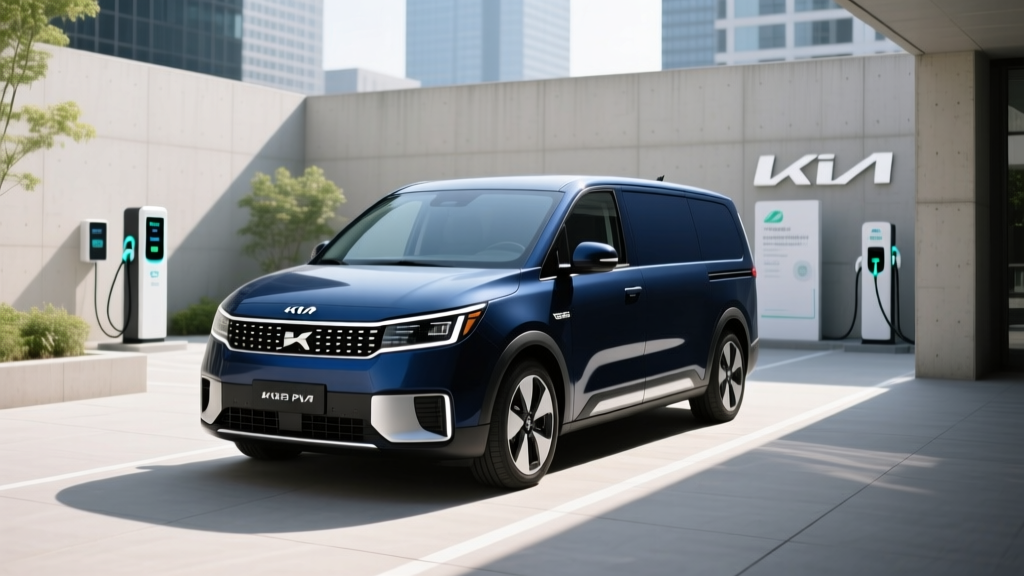
Quick Verdict: Is the Kia PV5 Cargo Electric Van Right for Your Fleet?
The 2026 Kia PV5 Cargo is a purpose-built electric commercial van targeting last-mile delivery and urban fleet operators. With an estimated EPA range of 230 miles (Standard Range) to 310 miles (Long Range), peak DC fast charging at 150 kW, and a modular PBV (Purpose Beyond Vehicle) platform, it undercuts comparable gas vans on per-mile operating cost while offering competitive cargo volume. However, real-world range drops 15–25% in cold climates and highway-speed driving, and the $48,000–$58,000 estimated MSRP requires a cost-per-mile analysis to justify over a $38,000 Ford Transit or Ram ProMaster. Federal §30D commercial clean vehicle credits (§45W for business use) may offset up to $7,500 for vehicles under 14,000 lbs GVWR, but battery sourcing and MSRP caps apply.
Range, Battery, and Charging: The Numbers That Matter
The Kia PV5 rides on Hyundai Motor Group's dedicated PBV skateboard platform, offered in two battery configurations for the 2026 model year. Here are the preliminary specifications Kia has published for the Cargo variant:
| Specification | Standard Range | Long Range |
|---|---|---|
| Battery Capacity (usable) | ~58 kWh (LFP) | ~84 kWh (NMC) |
| EPA Range (est.) | ~230 miles | ~310 miles |
| Real-World Range (mixed) | ~185–205 miles | ~250–280 miles |
| Peak DC Fast Charge | 150 kW | 150 kW |
| 10–80% DC Charge Time | ~28 minutes | ~32 minutes |
| Level 2 AC Charge Rate | 11 kW | 11 kW |
| Level 2 Full Charge Time | ~6 hours | ~8.5 hours |
| Motor Output | 160 kW (214 hp) | 160 kW (214 hp) |
| 0–60 mph (est.) | ~8.2 sec | ~8.5 sec |
kW vs. kWh — a critical distinction: kW (kilowatts) measures power — how fast energy flows into the battery during charging. kWh (kilowatt-hours) measures energy capacity — how much the battery holds total. The PV5's 150 kW peak charge rate means it can accept energy quickly, but that rate is not sustained across the entire session. Like all EVs, the PV5's charge curve tapers significantly above 80% state of charge to protect battery health. Expect the final 80–100% to add 15–20 additional minutes on a DC fast charger.
Real-World Range Reality Check
EPA estimates are measured under controlled conditions. For commercial van duty cycles, expect the following adjustments:
- Urban stop-and-go delivery routes (25–35 mph avg): Range often matches or exceeds EPA thanks to regenerative braking recapturing energy.
- Highway-speed routes (65–75 mph): Subtract 15–20% from EPA. The Long Range PV5 drops to roughly 250–265 miles.
- Cold weather (below 32°F): Subtract 20–30%. Battery chemistry becomes less efficient, and cabin/cargo heating draws significant power. The Long Range variant may deliver only 215–250 miles in sustained freezing temps.
- Heavy payload (near max cargo capacity): Subtract 5–10% depending on weight and terrain.
The Long Range PV5 with its 84 kWh NMC battery handles cold better than LFP variants, but preconditioning — warming the battery before a DC fast charge session — is essential in winter to achieve advertised charge speeds.
Purchase Price, Tax Credits, and Total Cost of Ownership
Upfront cost is the first hurdle for fleet managers evaluating the PV5 against established gas cargo vans. Here's the estimated pricing breakdown for the 2026 model year:
| Trim / Config | Est. MSRP | After §45W Credit* |
|---|---|---|
| Standard Range, Short Wheelbase | $48,000 | $40,500 |
| Standard Range, Long Wheelbase | $51,000 | $43,500 |
| Long Range, Short Wheelbase | $55,000 | $47,500 |
| Long Range, Long Wheelbase | $58,000 | $50,500 |
*The federal §45W Commercial Clean Vehicle Credit provides up to $7,500 for qualifying commercial EVs under 14,000 lbs GVWR. Eligibility depends on battery component and critical mineral sourcing requirements that tighten annually. Consult a tax professional to confirm your fleet's eligibility. Personal-use buyers may qualify for the §30D Clean Vehicle Credit instead, subject to MSRP caps ($80,000 for vans/SUVs/trucks), buyer income limits, and the same sourcing rules.
5-Year Total Cost of Ownership: PV5 vs. Gas Cargo Van
The real financial story emerges over time. Below is a 5-year / 100,000-mile TCO comparison between the PV5 Long Range and a comparably equipped 2026 Ford Transit 250 Cargo (3.5L V6, gas):
| Cost Category | Kia PV5 Long Range | Ford Transit 250 Gas |
|---|---|---|
| Purchase Price (after credit) | $47,500 | $42,000 |
| Fuel / Electricity | $4,800 (home L2 @ $0.14/kWh) | $14,300 (@ $3.50/gal, 17 MPG) |
| Maintenance | $2,200 | $6,500 |
| Insurance (est.) | $9,500 | $7,800 |
| Depreciation (est. 5-yr) | $18,000 | $16,500 |
| Total 5-Year Cost | $82,000 | $87,100 |
| Cost Per Mile | $0.82 | $0.87 |
Key takeaways:
- Fuel savings are massive: At $0.14/kWh (national average residential rate) and an efficiency of ~2.0 kWh/mile, the PV5 costs roughly $0.048/mile to "fuel." The Transit at 17 MPG combined and $3.50/gallon costs $0.143/mile — nearly 3x more. Over 100,000 miles, that's ~$9,500 in fuel savings for the EV.
- Maintenance is dramatically lower: No oil changes, no transmission fluid, no spark plugs, no exhaust system. Brake pad life extends significantly thanks to regenerative braking. Expect 60–70% lower scheduled maintenance costs.
- Insurance runs higher: EV commercial insurance premiums currently run 15–25% higher than gas equivalents due to repair cost structures and parts availability. This gap is narrowing as EV fleet populations grow.
- Depreciation uncertainty remains: Used electric commercial vans lack long-term resale data. Battery health at the 5-year mark will heavily influence residual value.
Cargo Capacity, Configurations, and Fleet Practicality
The PV5's PBV architecture places the battery pack flat under the floor, freeing up interior volume. Kia has announced the following cargo specifications for the 2026 Cargo variant:
- Cargo Volume (SWB): ~280 cu ft (Long Range) / ~300 cu ft (Standard Range, smaller battery pack)
- Cargo Volume (LWB): ~360 cu ft (Long Range) / ~380 cu ft (Standard Range)
- Max Payload: ~2,400 lbs (SWB) / ~2,200 lbs (LWB Long Range)
- Cargo Floor Length: ~95 in (SWB) / ~118 in (LWB)
- Low Load Floor Height: ~21 in — competitive with the Transit and ProMaster for easy loading
The PBV platform's defining feature is modularity. Kia has designed the PV5 to accept aftermarket upfitting — shelving systems, refrigeration units, mobile workshop configurations — with standardized mounting points and a high-voltage accessory port for powered equipment. This is a direct play against the Ford E-Transit, which offers similar upfitting but with a shorter 126-mile EPA range and 68 kWh battery.
Charging Infrastructure: What Fleet Operators Need
For depot-based fleets, the PV5's 11 kW Level 2 onboard charger means a full overnight charge on a standard commercial Level 2 station (such as a ChargePoint CPF50 or similar). A fleet of five PV5 Long Range vans would require roughly 420 kWh of energy delivery overnight — achievable with five 11 kW chargers running for 8.5 hours, or five 19.2 kW chargers (if the PV5 supports higher AC input via future OTA) completing in under 5 hours.
DC fast charging for mid-day top-ups: At 150 kW peak, the PV5 can add roughly 100 miles of range in a 15-minute session at a compatible CCS or NACS station (connector availability varies by market; Kia has committed to NACS adoption for North American models by 2025–2026). However, sustained charge rates average closer to 90–110 kW across the 10–80% session — the 150 kW figure is a peak, not an average.
Common Misconceptions About Electric Cargo Vans
| Myth | Fact |
|---|---|
| "Electric vans can't handle cold weather." | Cold reduces range 20–30%, but regenerative braking and heat pump systems (standard on the PV5 Long Range) mitigate losses. Preconditioning the battery while plugged in preserves range. |
| "You need to charge every night or you'll run out." | Most urban delivery routes cover 60–120 miles/day. The PV5 Long Range's 250+ real-world miles provides substantial buffer. Depot charging overnight at Level 2 is sufficient for the vast majority of routes. |
| "EV batteries need replacing every few years." | Kia backs the PV5 battery with a 10-year/100,000-mile warranty covering capacity retention below 70%. Industry data from Geotab's fleet battery study shows average degradation of ~2.3% per year for modern lithium-ion packs — meaning 88% capacity at year 5. |
| "Electric vans are too expensive to be practical." | Higher MSRP is offset by fuel and maintenance savings. At 20,000 miles/year, the PV5's per-mile operating cost undercuts gas vans within 2–3 years, depending on local electricity rates and credit eligibility. |
| "Charging takes too long for commercial use." | Overnight depot charging takes 6–8.5 hours on Level 2 — aligned with fleet downtime. Mid-day DC fast charging adds 100 miles in ~15 minutes for route extensions. |
How the PV5 Compares: EV Van vs. Gas Van vs. Hybrid Alternatives
Fleet buyers have three electrification paths for cargo vans. Here's how they stack up for a typical urban/suburban delivery operation covering 80–150 miles per day:
| Factor | Kia PV5 (BEV) | Ford Transit (Gas) | PHEV Van (if available) |
|---|---|---|---|
| Fuel Cost Per Mile | $0.048 | $0.143 | $0.08–0.10 |
| Daily Range | 250+ mi (Long Range) | 380+ mi | 30–40 mi electric + 300+ mi gas |
| Refuel/Recharge Time | 6–8.5 hr (L2) / 30 min (DC) | 5–10 min | 5–10 min gas / 2–4 hr L2 |
| Maintenance Cost (5-yr) | ~$2,200 | ~$6,500 | ~$4,500 |
| Upfront Cost | $48K–$58K | $38K–$48K | $45K–$55K |
| Emissions (tailpipe) | Zero | ~400 g CO₂/mi | ~200–300 g CO₂/mi |
| Best For | Depot-based urban routes under 200 mi/day | Long-haul, rural, no charging access | Mixed urban + occasional long routes |
Decision Framework: Should You Buy the Kia PV5 Cargo?
If-Then Guide for Fleet Buyers
- IF your routes are under 180 miles/day and you have depot charging access → the PV5 Long Range is a strong fit. Fuel savings will offset the higher MSRP within 2–3 years.
- IF your routes regularly exceed 220 miles or include sustained highway driving in cold climates → consider the gas Transit or wait for higher-capacity battery options. Range margin matters for commercial reliability.
- IF you lack depot charging and rely on public infrastructure → the PV5 is risky for daily commercial use. Public DC charger reliability remains inconsistent, and downtime is revenue loss. Invest in depot Level 2 infrastructure first.
- IF your operation qualifies for §45W or state-level commercial EV incentives (check AFDC's state incentive database) → the effective purchase price drops significantly, accelerating payback.
- IF you need a refrigerated or heavily upfitted van → the PV5's PBV modular platform and high-voltage accessory port make it one of the most upfit-friendly EV vans available, but confirm your upfitter has PV5-compatible systems before ordering.
- IF total cost per mile is your primary KPI and routes fit the range → the PV5 delivers ~$0.05/mile lower operating cost than gas equivalents, which scales powerfully across a multi-van fleet.
First-Time EV Fleet Buyer: What You Must Know Before Ordering
If this is your fleet's first electric van, these ownership realities will determine success or failure:
- Install depot charging BEFORE the vans arrive. A commercial electrician will need to assess your panel capacity. Five Level 2 chargers at 11 kW each require ~55 kW of continuous electrical capacity — many commercial buildings need a panel upgrade ($3,000–$15,000 depending on existing infrastructure). Lead times for utility upgrades can stretch 3–6 months.
- Train drivers on regenerative braking and efficiency. One-pedal driving mode maximizes energy recapture in stop-and-go delivery routes. Aggressive acceleration and high HVAC settings erode range quickly.
- Plan for cold-weather range reduction. If your winter routes push 180+ miles, the PV5 Long Range's real-world cold-weather range of ~215–250 miles leaves thin margins. Consider route optimization software that factors in temperature and payload.
- Negotiate insurance early. Commercial EV insurance is still maturing. Get quotes from multiple carriers — some now offer EV fleet discounts that narrow the premium gap.
- Monitor battery State of Health (SoH). The PV5's telematics system should report battery degradation data. Tracking SoH from day one protects your warranty claim if capacity drops below 70% within the 10-year/100,000-mile coverage window.
- Understand the tax credit timeline. The §45W credit is claimed on your federal tax return (or potentially transferred at point of sale for §30D-eligible personal purchases). Battery sourcing requirements tighten each year — a PV5 ordered in late 2026 may face different eligibility rules than one ordered in early 2026. Check current IRS guidance before committing.
Warranty, Reliability, and Long-Term Outlook
Kia's commercial vehicle warranty for the 2026 PV5 includes:
- Battery Pack: 10 years / 100,000 miles (capacity retention above 70%)
- Electric Powertrain (motor, inverter, reducer): 10 years / 100,000 miles
- Bumper-to-Bumper: 5 years / 60,000 miles
- Corrosion Perforation: 5 years / 100,000 miles
Kia's 10-year battery warranty is among the strongest in the commercial van segment and matches the coverage offered on its consumer EVs like the EV6 and EV9. For fleet operators, this warranty effectively de-risks the largest single replacement cost concern — a battery swap outside warranty could cost $12,000–$18,000 depending on pack size, though industry-wide battery cost declines continue to push replacement prices lower.
Frequently Asked Questions
Can the Kia PV5 Cargo tow a trailer?
Kia has not published a towing rating for the PV5 Cargo as of early 2026. Most electric cargo vans in this class (Ford E-Transit, for example) are not rated for towing due to the range impact and thermal load on the battery and motor. If towing is a requirement, a gas Transit or a heavy-duty EV platform like the BrightDrop Zevo 600 may be more appropriate.
What connector does the PV5 use — CCS or NACS?
For the North American market, Kia has committed to equipping its 2025+ EVs with the NACS (Tesla-style) charge port. The 2026 PV5 is expected to ship with NACS, granting access to Tesla Supercharger stations (via adapter or native compatibility) in addition to Electrify America, EVgo, and other networks. CCS compatibility is available via adapter.
Is the Kia PV5 eligible for the $7,500 federal tax credit?
For business/fleet use, the relevant credit is §45W (Commercial Clean Vehicle Credit), which offers up to $7,500 for vehicles under 14,000 lbs GVWR. Eligibility hinges on battery component sourcing (North America or FTA-partner assembly) and critical mineral sourcing (US or FTA-partner extraction/recycling). These requirements tighten annually. Confirm eligibility with your tax advisor and check the DOE's qualifying vehicle list at the time of purchase.
How does the PV5 compare to the Ford E-Transit?
The Ford E-Transit offers 126 miles of EPA range and a 68 kWh battery — significantly less than the PV5 Long Range's estimated 310 miles and 84 kWh pack. The E-Transit's advantage is lower starting MSRP (~$45,000) and Ford's established commercial dealer/service network. For routes under 100 miles, the E-Transit is adequate and cheaper. For routes approaching 200 miles, the PV5's range advantage is decisive.
What happens if the battery degrades significantly after the warranty expires?
Industry data shows modern NMC and LFP packs degrading roughly 2–2.5% per year under normal use. At year 10, a PV5 battery might retain 75–80% of original capacity — still functional for shorter routes. If a replacement is needed, projected costs in the 2030s are expected to be $8,000–$14,000 based on current battery price decline trajectories (~$100/kWh at the cell level), down from historical highs.