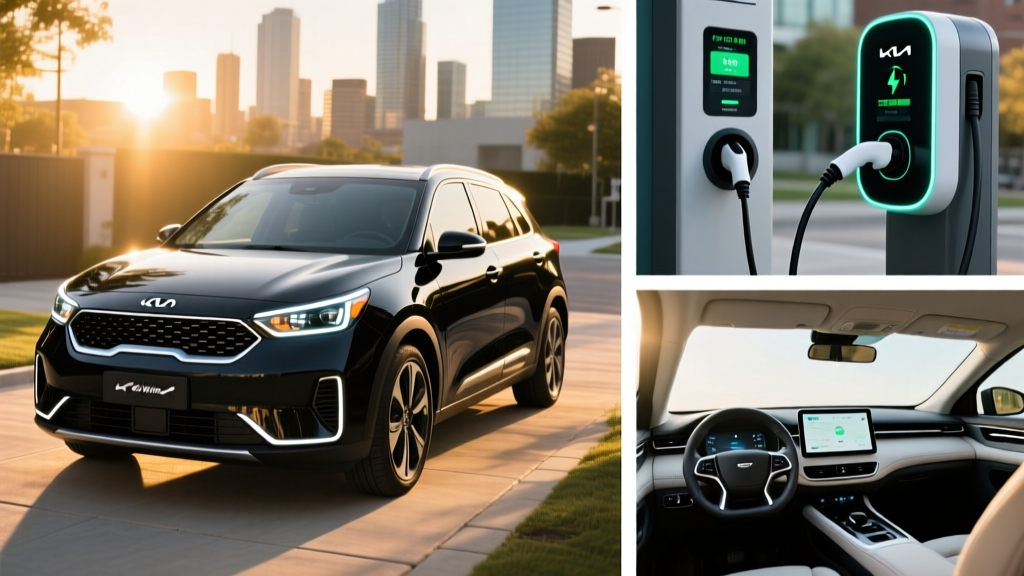
Quick Verdict: Is the 2026 Kia Niro EV Wind Worth It?
The 2026 Kia Niro EV Wind starts at $40,990 (including destination) and delivers an EPA-estimated 239 miles of range from a 64.8 kWh (usable) battery. It DC fast-charges at a peak of ~85 kW (10–80% in roughly 43 minutes) and qualifies for up to $3,750 in federal tax credits under current IRS §30D rules, depending on your income and battery-sourcing compliance. If you have Level 2 home charging and mostly drive under 150 miles round-trip, the Wind trim offers the best value in the Niro EV lineup. If you regularly road-trip 400+ miles or live in a charging desert, the Niro Hybrid or a longer-range BEV may serve you better.
Range and Efficiency: EPA Sticker vs. Real-World Miles
The Niro EV Wind carries over the same powertrain as the base S trim: a front-mounted permanent-magnet synchronous motor producing 201 horsepower and 291 lb-ft of torque, paired with a 64.8 kWh usable lithium-ion battery pack using NMC (nickel-manganese-cobalt) chemistry. The EPA rates it at 239 miles combined, with an efficiency of 113 MPGe (29 kWh/100 mi), per fueleconomy.gov.
Real-World Range Expectations
EPA Combined: 239 miles
Highway (70 mph, moderate climate): ~205–220 miles
Cold weather (below 30°F, cabin heat): ~165–190 miles
City/regen-heavy driving: ~245–260 miles
The Niro EV lacks a heat pump (resistance heating only), which means winter range loss is more pronounced than rivals like the Hyundai Ioniq 5 or Tesla Model Y. Budget-conscious cold-climate buyers should factor in a 20–30% range reduction from December through February.
Compared to the Niro Hybrid (which returns an EPA-estimated 53 MPG combined with a 400+ mile total range from its 10.6-gallon tank), the EV trades total range for dramatically lower per-mile energy cost—provided you charge at home.
Charging Speeds: Home Level 2 and DC Fast Charging
Understanding the difference between kW (power, or charge rate) and kWh (energy, or battery capacity) is essential. The Niro EV's battery holds 64.8 kWh of energy; the charger delivers power measured in kW.
| Level | Power (kW) | Time (10–80%) | Miles Added/Hour |
|---|---|---|---|
| Level 1 (120V household) | ~1.4 kW | N/A (overnight partial) | ~5 mi/hr |
| Level 2 (240V, 48A home) | ~11 kW | ~6.5 hours (0–100%) | ~37 mi/hr |
| DC Fast Charge (CCS) | Peak ~85 kW | ~43 min (10–80%) | ~150 mi in 30 min |
The Niro EV's peak DC charge rate of roughly 85 kW is its most significant limitation for road-trippers. While competitors like the Ioniq 5 (peak 240 kW on 800V architecture) can add 200 miles in 18 minutes, the Niro EV requires longer stops. The charge curve also tapers noticeably above 60% State of Charge (SoC), meaning the final 20% from 60–80% takes nearly as long as the first 50%. On a road trip, plan to charge to 80% and move on rather than waiting for a full battery.
At home on a Level 2 charger (the practical daily solution), the Niro EV refills easily overnight. A professional Level 2 installation typically costs between $800–$2,000 depending on your electrical panel's proximity to the garage and whether a 200-amp panel upgrade is needed. Always consult a licensed electrician for final specs.
EV vs. Gas vs. Hybrid: What Does the Niro EV Wind Actually Cost to Run?
The Niro lineup gives buyers three powertrains: the Niro Hybrid (HEV), the Niro Plug-in Hybrid (PHEV), and the all-electric Niro EV. Here's how the Wind EV stacks up on annual fueling cost:
| Model | Energy Source | Efficiency | Est. Annual Cost |
|---|---|---|---|
| Niro EV Wind | Electricity ($0.16/kWh avg) | 29 kWh/100 mi | ~$557 |
| Niro Hybrid | Gasoline ($3.40/gal) | 53 MPG combined | ~$770 |
| Typical Gas Crossover (28 MPG) | Gasoline ($3.40/gal) | 28 MPG combined | ~$1,457 |
Charging at home at the national average of $0.16/kWh (per EIA data), the Niro EV Wind costs roughly $557/year to fuel—saving about $213 vs. the Niro Hybrid and nearly $900 vs. a typical gas crossover. However, public DC fast charging at networks like Electrify America or EVgo often costs $0.35–$0.50/kWh, which can push per-mile costs close to or even above the hybrid's. Home charging access is the single biggest factor in whether the EV saves you money.
Total 5-Year Ownership Cost Breakdown
| Category | Niro EV Wind | Niro Hybrid EX |
|---|---|---|
| Purchase Price (MSRP) | $40,990 | $30,490 |
| Federal Tax Credit (§30D) | Up to –$3,750* | $0 |
| Effective Purchase Price | ~$37,240 | $30,490 |
| Fuel/Energy (5 years) | $2,785 | $3,850 |
| Maintenance (5 years) | ~$1,200 | ~$2,800 |
| Insurance (5 years, avg) | ~$8,500 | ~$7,200 |
| Estimated Depreciation | ~$18,000 | ~$12,500 |
| 5-Year Total | ~$67,725 | ~$56,840 |
*Federal tax credit eligibility depends on buyer income caps ($150K single / $300K joint), vehicle MSRP caps ($55K for SUVs), and battery critical-mineral/component sourcing per IRS §30D rules. The Niro EV currently qualifies for $3,750 (partial credit) due to battery-sourcing requirements. Always confirm current-year eligibility with a tax professional.
The EV's higher purchase price and insurance premiums (typically 15–20% more than the hybrid equivalent) mean the Niro EV Wind does not achieve cost parity with the hybrid over five years unless you drive significantly more than 12,000 miles/year, have access to cheap electricity, or receive additional state incentives. The EV's advantage is in lower maintenance (no oil changes, fewer brake replacements due to regenerative braking) and a smoother, quieter daily drive.
What the Niro EV Wind Trim Gets You (vs. the Base S)
The Wind is the mid-level trim in the 2026 Niro EV lineup, sitting above the base S ($40,990 vs. $39,990 for the S). For the $1,000 premium, the Wind adds:
- SynTex (vegan leather) seating surfaces with heated front seats
- Heated steering wheel
- Power-adjustable driver's seat (8-way)
- Wireless phone charging pad
- Harman Kardon premium audio (8 speakers)
- Highway Driving Assist (HDA) — adaptive cruise with lane centering, Kia's Level 2 ADAS system
The top GT-Line trim ($44,690) adds sport styling, a sunroof, and additional safety features but pushes closer to the price of a Tesla Model Y or Ioniq 5, which offer faster charging and more range.
All trims include a 10.25-inch dual-screen setup (digital cluster + infotainment), wireless Apple CarPlay and Android Auto, and Kia's full suite of ADAS features (forward collision-avoidance, blind-spot monitoring, rear cross-traffic alert). Note that all Niro EV driver-assistance features are SAE Level 2—they require your full attention and hands on the wheel at all times.
Common Misconceptions About the Niro EV
| Myth | Fact |
|---|---|
| "The Niro EV gets 239 miles no matter how you drive." | EPA is a combined cycle. Expect ~205–220 miles highway, and ~165–190 in cold weather with heat on. |
| "It charges as fast as a Tesla or Ioniq 5." | Peak DC rate is ~85 kW, roughly one-third of an Ioniq 5's 240 kW peak. Road-trip stops take longer. |
| "The $7,500 tax credit applies to everyone." | Under current §30D rules, the Niro EV qualifies for up to $3,750, subject to income and sourcing requirements. Not all buyers qualify. |
| "EV batteries need replacing every few years." | Kia covers the battery for 10 years / 100,000 miles against defects and capacity loss below 70%. NMC packs routinely last 150,000+ miles with gradual, manageable degradation. |
| "I can't road-trip in an EV." | You can, but the Niro EV's 85 kW charge rate means 40–50 minute stops. It's viable for 1–2 road trips per year; frequent long-distance drivers should consider a faster-charging EV or the hybrid. |
Decision Framework: Should You Buy the Niro EV Wind?
Choose the Niro EV Wind If:
- You have reliable Level 2 home charging (or can install it)
- Your daily round-trip commute is under 100 miles
- You road-trip fewer than 3 times per year and can plan charging stops
- You want a compact crossover with low running costs and Kia's 10-year warranty
- You value a quiet, smooth daily driver over sporty performance
Choose the Niro Hybrid Instead If:
- You lack home charging access and rely on street or apartment parking
- You regularly drive 300+ miles in a day
- You live in a region with sparse public charging infrastructure
- You want the lowest possible upfront cost ($10,500 less MSRP)
Look at the Ioniq 5 or Model Y If:
- DC fast-charging speed matters (240 kW / 250 kW vs. 85 kW)
- You need 300+ miles of EPA range
- You want access to the Tesla Supercharger network natively (Model Y) or NACS adapter compatibility
Frequently Asked Questions
What is the real-world range of the 2026 Kia Niro EV Wind?
The EPA rates it at 239 miles combined. In real-world highway driving at 70 mph in moderate temperatures, expect roughly 205–220 miles. In cold weather (below 30°F) with cabin heating, plan for 165–190 miles. The lack of a heat pump makes the Niro EV less efficient in winter than some competitors.
Does the Niro EV Wind qualify for the full $7,500 federal tax credit?
No. Under current IRS §30D rules, the Niro EV qualifies for up to $3,750 due to battery critical-mineral and component sourcing requirements. Eligibility also depends on your adjusted gross income (capped at $150K single / $300K joint) and the vehicle's MSRP (capped at $55K for SUVs, which the Niro EV meets). The credit may be transferred to the dealer at point of sale. Confirm with a tax professional before purchasing.
How long does it take to charge the Niro EV at home?
On a Level 2 home charger (240V, 48 amps), a full 0–100% charge takes about 6.5 hours. Most owners plug in nightly and wake up fully charged. On a standard 120V outlet (Level 1), you'll add roughly 5 miles per hour—enough for light daily use but impractical as a primary charging method.
Is the Niro EV Wind a good first EV?
Yes, with caveats. It's an approachable compact crossover with familiar controls, a comfortable ride, and Kia's strong warranty. The main limitations for first-time EV buyers are the modest 85 kW DC fast-charging speed (road trips require patience) and the absence of a heat pump (cold-climate range loss is notable). If your routine is predictable and you charge at home, it's an excellent entry point.
What's the battery warranty on the 2026 Niro EV?
Kia provides a 10-year / 100,000-mile warranty on the high-voltage battery pack and EV-specific components. The warranty covers defects and capacity loss below 70% of original capacity. The basic vehicle warranty is 5 years / 60,000 miles, and the powertrain warranty is 10 years / 100,000 miles.
Does the Niro EV support NACS (Tesla-style) charging?
The 2026 Niro EV ships with a CCS1 charge port. Kia has announced a transition to NACS on future models, but for the current model year, you'll use CCS connectors at public chargers (Electrify America, EVgo, ChargePoint). A NACS-to-CCS adapter may become available from Kia for Supercharger access—check Kia's official announcements for compatibility updates.
How does the Niro EV compare to the Niro Plug-in Hybrid?
The Niro PHEV offers about 33 miles of electric-only range before the gas engine engages, then returns 48 MPG combined. It's ideal for drivers who want EV commuting during the week and gas flexibility for weekend trips. The PHEV starts around $34,390 and qualifies for a smaller federal credit. The EV wins on per-mile cost and simplicity; the PHEV wins on total range flexibility.