Quick Verdict: Is the 2026 Kia Niro EV Worth It?
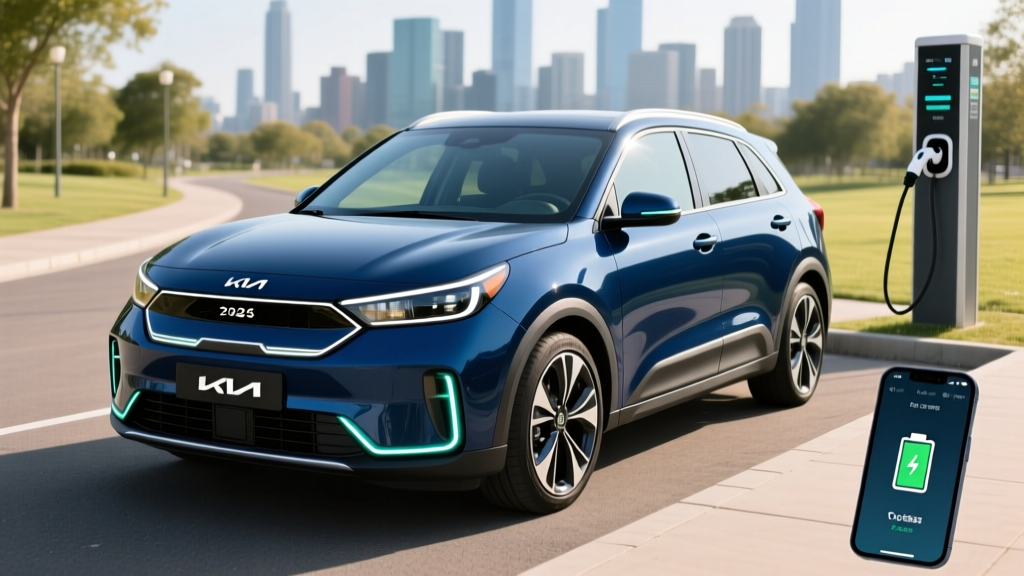
The 2026 Kia Niro EV delivers an EPA-estimated 239 miles of range from its 64.8 kWh NMC battery, peaks at ~80 kW DC fast charging (10–80% in roughly 45 minutes), and starts at $39,600 before incentives. It is one of the most practical and affordable compact electric crossovers for buyers with home Level 2 charging who commute under 60 miles round-trip. However, its modest DC charge rate makes it a poor fit for frequent long-distance road trippers. Federal §30D tax credit eligibility depends on battery sourcing, MSRP caps, and buyer income — check current IRS rules before assuming a $7,500 credit.
Range, Battery, and Real-World Efficiency
The Niro EV uses a 64.8 kWh usable lithium-ion battery pack with NMC (nickel manganese cobalt) chemistry, paired with a single front-mounted permanent-magnet synchronous motor producing 201 horsepower and 291 lb-ft of torque. The EPA rates it at 239 miles of combined range and 113 MPGe combined (source: fueleconomy.gov).
Real-World Range Expectations
EPA Sticker: 239 miles
Mild-weather city/suburban driving: 230–250 miles (regen-friendly stop-and-go can slightly exceed EPA)
Highway (70+ mph sustained): 195–215 miles
Cold weather (below 32°F): 160–190 miles (NMC packs lose 20–30% capacity in deep cold without preconditioning)
Mountainous terrain: 175–200 miles depending on elevation gain
The Niro EV lacks a heat pump on most trims — cabin heating in winter draws directly from the traction battery, compounding cold-weather range loss. If you live in a climate with sustained sub-freezing winters, budget for roughly 170 miles of usable range between charges.
| Spec | Value |
|---|---|
| EPA Range | 239 miles |
| Battery Capacity (usable) | 64.8 kWh (NMC) |
| MPGe (city / hwy / combined) | 126 / 101 / 113 |
| Motor Output | 201 hp / 291 lb-ft |
| 0–60 mph | ~7.0 seconds |
| Drive | Front-wheel drive |
| Max DC Fast Charge Rate | ~80 kW peak |
| 10–80% DC Fast Charge | ~45 minutes |
| Level 2 Charge Rate | 11 kW (onboard charger) |
| Level 2 Full Charge Time | ~6 hours 15 min (0–100%) |
| Connector | CCS1 (NACS adapter available) |
| Cargo Volume (rear seats up / folded) | 19.4 / 51.2 cu ft |
| Base MSRP (Wind trim) | $39,600 |
| Wave trim MSRP | $43,200 |
| Battery/Powertrain Warranty | 10 years / 100,000 miles |
Charging: Home, Public, and the 80 kW Reality
The Niro EV's charging profile is the single most polarizing aspect of ownership. At home on a Level 2 (240V) charger, the 11 kW onboard replenishes the pack from empty in about 6 hours — more than adequate for overnight charging. Plug in at 9 PM with 30% remaining, and you'll wake up to 100%.
| Level | Power (kW) | Miles Added per Hour | Use Case |
|---|---|---|---|
| Level 1 (120V outlet) | ~1.4 kW | ~4–5 mi/hr | Emergency / trickle top-off |
| Level 2 (240V home) | 11 kW | ~34 mi/hr | Daily overnight charging |
| DC Fast Charge | ~80 kW peak | ~140 mi/hr (at peak) | Road trips, quick top-ups |
On the road, however, the ~80 kW peak DC rate is where the Niro EV shows its age against competitors. The Hyundai Ioniq 5 peaks at 240 kW, the Tesla Model Y at ~250 kW, and even the Chevrolet Equinox EV hits ~150 kW. On a 150+ kW Electrify America or EVgo station, the Niro EV simply won't pull more than its hardware allows. Expect the charge curve to hold near 70–80 kW up to roughly 55% state of charge, then taper progressively: 50–60 kW through 70%, and below 30 kW above 85%.
Practical implication: A 10–80% session takes about 45 minutes. A 20–80% top-up during a road trip lunch stop adds roughly 130 miles — sufficient for another 2 hours of highway driving. If your driving pattern involves weekly 300+ mile trips, this charge speed will frustrate you. If you charge at home nightly and only road-trip a few times a year, it's perfectly livable.
The Niro EV ships with a CCS1 connector. Kia provides access to Tesla Superchargers via a NACS adapter, which meaningfully expands the public charging network available to owners — a significant practical advantage as of the 2025–2026 model years.
Cost Breakdown: Niro EV vs. Gas Niro vs. Niro Hybrid
To understand the Niro EV's value proposition, you have to compare it against its own siblings. Kia sells the Niro in three flavors: EV, hybrid (HEV), and plug-in hybrid (PHEV). Here's how the 5-year ownership math stacks up.
| Category | Niro EV (Wind) | Niro Hybrid (LX) | Gas Niro (if avail.) |
|---|---|---|---|
| Base MSRP | $39,600 | $28,390 | — |
| Est. Federal Tax Credit (§30D) | Up to $7,500* | $0 | $0 |
| Effective Purchase Price | ~$32,100* | $28,390 | — |
| Energy/Fuel Cost (5 yr, 75k mi) | ~$3,375 (home L2 @ $0.135/kWh) | ~$6,525 (53 MPG @ $3.25/gal) | — |
| Maintenance (5 yr) | ~$1,200 | ~$3,800 | — |
| Insurance (5 yr avg.) | ~$9,500 | ~$7,800 | — |
| Est. 5-Year Total | ~$46,175 | ~$46,515 | — |
* Federal §30D tax credit eligibility depends on battery critical-mineral sourcing, buyer AGI ($150k single / $300k joint cap), and the $55,000 SUV MSRP cap. The Niro EV qualifies under MSRP rules. Confirm current-year sourcing compliance and your income eligibility at IRS.gov or with a tax professional. Point-of-sale transfer is available if the dealer is registered.
The takeaway: at current energy prices and with the federal credit applied, the Niro EV achieves cost parity with the Niro Hybrid within roughly 4 years of ownership. Without the credit, the EV costs approximately $7,000–$8,000 more over 5 years — a gap that widens further if you rely on expensive public DC charging instead of affordable home Level 2.
EV vs. Gas and Hybrid: What the Data Shows
| Metric | 2026 Niro EV | 2026 Niro Hybrid |
|---|---|---|
| EPA Range / Fuel Economy | 239 mi / 113 MPGe | 53 MPG combined |
| Energy Cost per Mile | ~$0.045 (home L2) | ~$0.087 ($3.25/gal) |
| "Refueling" Time | 6 hrs (L2 home) / 45 min (DC 10–80%) | ~5 minutes (gas station) |
| 0–60 mph | ~7.0 sec | ~9.2 sec |
| Cargo (behind rear seats) | 19.4 cu ft | 22.8 cu ft |
| Drivetrain Complexity | Single-speed, no transmission | 6-speed DCT, ICE + electric motor |
| Maintenance Items | Tires, cabin filter, wipers, brake fluid | Oil changes, filters, spark plugs, belts, transmission fluid + EV items |
| AWD Available? | No (FWD only) | No (FWD only) |
The hybrid wins on cargo space (the EV's battery pack slightly intrudes), refueling speed, and upfront price. The EV wins on per-mile energy cost, acceleration, driving refinement (silent, instant torque), and long-term maintenance simplicity. Neither offers AWD, which matters for buyers in heavy snow regions — if all-weather traction is non-negotiable, look at the Hyundai Ioniq 5 AWD or Tesla Model Y instead.
First-Time EV Buyer: What You Must Know Before Purchasing
If the Niro EV is your first electric vehicle, these are the non-obvious realities that spec sheets don't highlight:
- Home charging is essential for satisfaction. Charging exclusively on public DC fast chargers costs 2–4× more per mile than home Level 2 and adds inconvenience. Before buying, confirm you can install a 240V / 48A circuit in your garage or driveway. A typical Level 2 home installation (charger + electrician + permit) runs $800–$2,000 depending on panel capacity and run length.
- kW is power, kWh is energy. Think of kW as the width of the pipe (charge speed) and kWh as the tank size (battery capacity). The Niro EV has a 64.8 kWh tank that fills through a ~80 kW pipe at peak.
- Cold weather is the biggest range variable. Expect 20–30% range loss in sustained sub-freezing temperatures. Preconditioning the battery while plugged in mitigates this — use the UVO/Kia Connect app to warm the cabin and battery before departure.
- Tires wear faster on EVs. The Niro EV's instant torque and ~3,800 lb curb weight accelerate tire wear by 15–25% versus a comparable gas car. Budget for replacement tires every 30,000–40,000 miles.
- Insurance premiums are typically 15–25% higher for EVs due to repair cost data. Get a quote before signing the purchase agreement.
- Regenerative braking changes how you drive. The Niro EV offers multiple regen levels controlled by steering-wheel paddles. Level 3 provides near one-pedal driving in city traffic, reducing brake wear substantially.
Common Misconceptions About the Niro EV
| Myth | Fact |
|---|---|
| "The battery will need replacing in 5 years." | Kia warranties the battery for 10 years / 100,000 miles against degradation below 70% capacity. Real-world NMC data shows ~10–15% degradation over 100k miles with normal use. |
| "239 miles of range isn't enough." | The average American drives ~37 miles per day (FHWA data). 239 miles covers nearly a week of average commuting. Range matters most on road trips — and the Niro's 45-min DC stops are manageable with planning. |
| "It qualifies for the full $7,500 federal credit." | Eligibility depends on battery critical-mineral and component sourcing requirements that change annually. Some model years have qualified for the full amount, others for partial or none. Always verify at fueleconomy.gov for the specific model year. |
| "EVs are worse in the rain and cold." | EV battery packs are sealed to IP67 standards. The Niro EV operates safely in rain, snow, and car washes. Cold reduces range but doesn't affect drivability — electric motors deliver full torque regardless of temperature. |
| "Public charging is unreliable everywhere." | Reliability varies by network. Tesla Superchargers (accessible via NACS adapter) consistently report 97%+ uptime. Electrify America and ChargePoint vary by location. Check PlugShare reviews for stations on your regular routes. |
Interior, Tech, and Daily Livability
The Niro EV's cabin is functional rather than luxurious. The Wind trim includes a 10.25-inch dual panoramic display (instrument cluster + infotainment), wireless Apple CarPlay and Android Auto, heated front seats, and a heated steering wheel. The Wave trim adds ventilated front seats, a power passenger seat, and a Harman Kardon premium audio system.
Driver assistance comes via Kia's Highway Driving Assist 2 (HDA2), which combines adaptive cruise control with lane-centering. This is an SAE Level 2 system — you must keep your hands on the wheel and eyes on the road at all times. It is not autonomous driving. HDA2 performs competently on divided highways but requires active supervision on curves, construction zones, and faded lane markings.
Cargo space behind the rear seats is 19.4 cubic feet (51.2 cu ft with seats folded) — adequate for weekly groceries and a couple of carry-on suitcases, but tighter than the Niro Hybrid's 22.8 cu ft due to the under-floor battery pack. There is no front trunk (frunk).
Decision Framework: Should You Buy the Niro EV?
Choose the Niro EV if:
- You have access to home Level 2 charging (garage, driveway, or workplace)
- Your daily round-trip commute is under 80 miles
- You road-trip fewer than 5 times per year and can plan 45-minute DC stops
- You want a practical, affordable EV crossover with a 10-year battery warranty
- You qualify for the §30D federal tax credit and/or state EV incentives
- You value low running costs and quiet, torque-rich driving over cargo space and AWD
Look elsewhere if:
- You cannot install or access Level 2 charging at home or work
- You regularly drive 250+ miles in a single day and can't tolerate 45-minute charge stops
- You need AWD for heavy snow or off-pavement driving
- You need maximum cargo capacity (consider the Ioniq 5, Model Y, or Niro Hybrid)
- You live in a region with extreme cold and no garage — the lack of a heat pump compounds range loss
- You want cutting-edge DC fast-charge speeds (Ioniq 5 at 240 kW or EV6 at 239 kW are in the Kia/Hyundai family)
Frequently Asked Questions
How long does the Niro EV battery last?
Kia warranties the high-voltage battery for 10 years or 100,000 miles against capacity loss below 70%. Based on NMC chemistry degradation data from similar packs in the Hyundai/Kia family, expect roughly 85–90% state of health after 100,000 miles with normal charging habits (avoiding habitual 100% charges and frequent DC fast charging in extreme heat). The battery should remain functional well beyond the warranty period, albeit with reduced range.
Can I charge the Niro EV at a Tesla Supercharger?
Yes. Starting with the 2025 model year, Kia provides a NACS adapter that allows CCS-equipped Niro EVs to access the Tesla Supercharger network. You'll need the adapter and a Kia Connect account linked to the Supercharger payment system. Charge speeds will still be limited by the Niro EV's ~80 kW onboard hardware.
Does the Niro EV qualify for the $7,500 federal tax credit?
Potentially. The Niro EV's MSRP is below the $55,000 SUV cap set by §30D. However, eligibility also depends on battery critical-mineral sourcing percentages and buyer adjusted gross income (single filers: $150,000 cap; joint filers: $300,000 cap). These sourcing rules tighten annually. Verify current eligibility on IRS.gov or consult a tax professional before purchase. The credit can be transferred to the dealer at point of sale as a purchase-price reduction if the dealer is registered with the IRS Energy Credits Online portal.
How much does it cost to charge the Niro EV at home?
At the US average residential electricity rate of ~$0.16/kWh (EIA 2025 data), a full 64.8 kWh charge costs approximately $10.37 and provides ~239 miles — roughly $0.043 per mile. Compare that to the Niro Hybrid at 53 MPG and $3.25/gallon gas: ~$0.061 per mile. If you have access to off-peak utility rates ($0.08–$0.10/kWh), the EV's per-mile cost drops to $0.025–$0.032. Over 15,000 annual miles, home charging saves $500–$900 per year versus the hybrid.
Is the Niro EV good in winter?
Drivability is excellent — electric motors deliver full torque instantly with no cold-start issues, and the low center of gravity aids stability. Range, however, drops 20–30% in sustained sub-freezing temperatures because the Niro EV lacks a heat pump (resistive cabin heating draws significant battery power). Precondition the cabin and battery while plugged in via the Kia Connect app to minimize losses. Owners in northern climates report real-world winter range of 160–190 miles.
What maintenance does the Niro EV require?
Minimal compared to a gas car. Scheduled items include cabin air filter replacement (~every 15,000 miles), tire rotation (~every 7,500 miles), brake fluid inspection, coolant level checks, and windshield washer fluid. There are no oil changes, spark plugs, timing belts, or transmission fluid services. Brake pads last significantly longer due to regenerative braking — many EV owners report 80,000+ miles on original pads.