Quick Answer: Kia Niro EV Miles Range
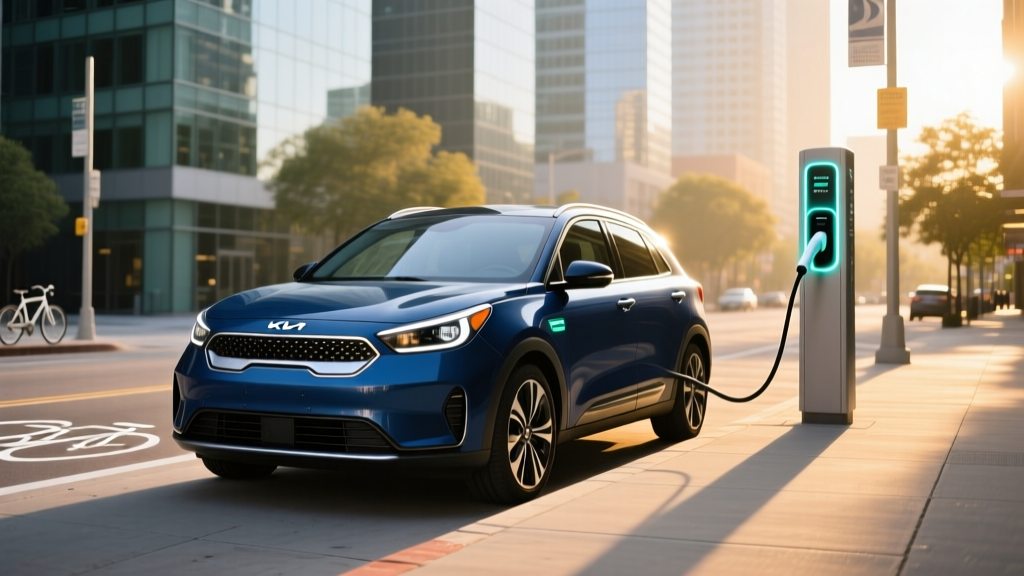
The current-generation Kia Niro EV has an EPA-estimated range of 239 miles on a full charge of its 64.8 kWh (usable) lithium-ion battery pack. In real-world mixed driving, expect roughly 200–225 miles; on sustained highway runs at 70+ mph, plan for approximately 180–195 miles. In freezing temperatures (below 32°F), range can drop to 150–175 miles depending on cabin heating usage and whether you precondition the battery.
For a compact crossover aimed at practical daily driving, the Kia Niro EV's 239-mile EPA range places it squarely in the "enough for most commuters, tight for road trips" category. It isn't chasing Tesla Model Y or Hyundai Ioniq 5 numbers, and it doesn't need to — its value proposition lives in efficiency, affordability, and the hatchback versatility that buyers in this segment actually use every day. Here is a thorough, numbers-first look at what owning a Niro EV actually costs, how its miles stack up against the gas Niro and Niro Hybrid, and whether it makes financial sense for your situation.
Kia Niro EV Range and Efficiency: The Real Numbers
The Niro EV's 64.8 kWh battery (NMC chemistry) powers a single front-mounted permanent-magnet synchronous motor producing 201 horsepower and 188 lb-ft of torque. That translates to a 0–60 mph time of approximately 7.8 seconds — brisk enough for confident highway merging, if not sports-sedan quick.
| Specification | Value |
|---|---|
| EPA Range | 239 miles |
| Real-World Range (mixed) | ~200–225 miles |
| Real-World Range (highway 70+ mph) | ~180–195 miles |
| Real-World Range (cold, <32°F) | ~150–175 miles |
| Battery Capacity (usable) | 64.8 kWh (NMC) |
| EPA Efficiency | 113 MPGe combined (29 kWh/100mi) |
| Motor Output | 201 hp / 188 lb-ft |
| 0–60 mph | ~7.8 seconds |
| Max DC Fast Charge Rate | ~77 kW peak (CCS1) |
| 10–80% DC Fast Charge Time | ~44 minutes |
| Level 2 Onboard Charger | 11 kW (7.2 kW on some trims) |
| Level 2 Full Charge Time | ~7 hours (at 11 kW) |
| Base MSRP (Wind trim) | ~$39,600 |
| Battery/Powertrain Warranty | 10 years / 100,000 miles |
Efficiency is where the Niro EV quietly excels. At 113 MPGe combined (29 kWh per 100 miles), it is one of the most efficient compact electric crossovers on the market. For context, the Hyundai Ioniq 5 RWD rates at 117 MPGe combined, while the Volkswagen ID.4 Pro comes in around 104 MPGe. That efficiency directly translates to lower electricity costs per mile — a factor that compounds meaningfully over five years of ownership.
Why Real-World Miles Differ from the EPA Sticker
The EPA test cycle includes low-speed urban driving and moderate-speed highway segments. It does not fully capture sustained 75–80 mph cruising, aggressive acceleration, roof-rack drag, or winter cabin heating load. The Niro EV lacks a heat pump on base trims (standard on higher trims), which means resistive cabin heating can consume 2–4 kW continuously in cold weather — a direct drain on range. Always plan trips around the lower bound of your expected conditions, not the EPA sticker.
Charging the Niro EV: Speeds, Connectors, and Practical Expectations
The Niro EV uses a CCS1 connector for DC fast charging and a J1772 connector for Level 1 and Level 2 AC charging. It does not natively support the Tesla NACS connector, though CCS-to-NACS adapters are available for Supercharger access on networks that support non-Tesla vehicles.
Here is the honest charging picture. The Niro EV's peak DC fast-charge rate of approximately 77 kW is modest by 2026 standards. Vehicles like the Ioniq 5 and EV6 can accept 240+ kW on compatible chargers. This means the Niro EV's 10–80% charge takes roughly 44 minutes — workable for a lunch stop, but noticeably slower than the class leaders. The charge curve also tapers significantly above 80% state of charge, as is standard for NMC batteries; charging from 80–100% can add another 30–40 minutes.
| Charging Level | Power | Miles Added Per Hour | Typical Use Case |
|---|---|---|---|
| Level 1 (120V household) | ~1.4 kW | ~4–5 miles/hr | Emergency / overnight trickle |
| Level 2 (240V home) | 7.2–11 kW | ~25–38 miles/hr | Daily home charging |
| DC Fast Charge (CCS) | Up to ~77 kW | ~150–200 miles/hr (peak) | Road trips, 10–80% in ~44 min |
For daily ownership, Level 2 home charging is the backbone. A full charge overnight at 11 kW takes about 7 hours — more than adequate if you plug in when you get home. If your home electrical panel supports only a 40-amp circuit (common in older homes), you will be limited to 7.2 kW and approximately 9 hours for a full charge. A licensed electrician can confirm your panel capacity; expect $500–$2,000 for a standard Level 2 installation, or $2,000–$5,000+ if a panel upgrade from 100A to 200A service is required.
Kia Niro EV vs. Gas Niro vs. Niro Hybrid: Miles and Cost Compared
The Niro lineup uniquely offers three powertrains on the same platform: full EV, standard hybrid (HEV), and plug-in hybrid (PHEV). This makes a direct cost-per-mile comparison unusually clean.
| Metric | Niro EV | Niro Hybrid (HEV) | Niro PHEV |
|---|---|---|---|
| EPA Range / MPG | 239 mi / 113 MPGe | 53 MPG combined | 33 mi EV + 48 MPG gas |
| Energy Cost Per Mile | ~$0.04–$0.05 | ~$0.07–$0.08 | ~$0.05–$0.07 blended |
| Fuel/Energy Cost (15,000 mi/yr) | ~$525–$750 | ~$975–$1,200 | ~$600–$900 |
| Annual Maintenance | ~$200–$350 | ~$400–$600 | ~$400–$600 |
| Base MSRP (approx.) | ~$39,600 | ~$26,940 | ~$34,090 |
Electricity costs are based on the U.S. average residential rate of approximately $0.16/kWh (source: EIA). At 29 kWh/100mi, that works out to roughly $0.046 per mile. Gas costs assume $3.30/gallon and the HEV's 53 MPG combined, yielding approximately $0.062 per mile. The EV saves roughly $0.015–$0.02 per mile, which adds up to $225–$300 per year at 15,000 miles — or $1,125–$1,500 over five years in fuel savings alone. Factor in reduced maintenance (no oil changes, fewer brake replacements thanks to regenerative braking), and the EV's operational savings reach roughly $1,500–$2,500 over five years.
However, the Niro EV's approximately $12,660 higher base MSRP over the HEV means those savings do not close the purchase-price gap on their own. The financial case for the EV depends heavily on federal and state incentives, which we address below.
5-Year Cost of Ownership Breakdown
| Cost Category (5 Years) | Niro EV | Niro HEV | Difference |
|---|---|---|---|
| Purchase Price (base MSRP) | $39,600 | $26,940 | EV +$12,660 |
| Federal Tax Credit (§30D) | Up to –$3,750* | $0 | EV –$3,750 |
| Home Charger Install | $500–$2,000 | $0 | EV +$500–$2,000 |
| Fuel/Energy (5 yr) | $2,625–$3,750 | $4,875–$6,000 | EV –$2,250–$2,250 |
| Maintenance (5 yr) | $1,000–$1,750 | $2,000–$3,000 | EV –$1,000–$1,250 |
| Insurance (5 yr est.) | $7,500–$9,500 | $6,000–$8,000 | EV +$1,000–$1,500 |
| Total 5-Year Cost (approx.) | $48,475–$54,600 | $39,815–$43,940 | EV +$5,660–$13,660 |
*The Niro EV's federal tax credit eligibility under IRS §30D depends on battery critical-mineral sourcing, buyer income caps ($150K single / $300K joint), and the vehicle's MSRP staying under the $80,000 SUV cap. As of the current rules, the Niro EV qualifies for a partial credit — typically $3,750 — because some battery minerals do not yet meet full sourcing thresholds. Always verify your specific eligibility with a tax professional and the IRS guidance before purchasing. The credit can be transferred to the dealer at point of sale as a purchase-price reduction.
Insurance costs are typically 10–20% higher for the Niro EV than the HEV, driven by higher repair costs for battery-adjacent damage and the vehicle's higher replacement value. Get quotes from your insurer before committing.
Federal Tax Credit and Incentive Eligibility
§30D New Clean Vehicle Credit — Current Requirements
- Buyer income cap: AGI ≤ $150,000 (single) or ≤ $300,000 (married filing jointly)
- Vehicle MSRP cap: ≤ $80,000 for SUVs/crossovers (Niro EV qualifies)
- Battery component sourcing: Must meet critical-mineral and battery-component thresholds for full $7,500; partial credit ($3,750) available if one threshold is met
- Final assembly: Must occur in North America (the Niro EV is assembled in South Korea — this may disqualify it from the new-vehicle credit entirely; verify current status)
- Point-of-sale transfer: Eligible credit can be applied as an immediate purchase-price reduction at the dealer
An important caveat: the Niro EV has historically been assembled in South Korea, which under current §30D rules would disqualify it from the new-vehicle federal tax credit (the final-assembly-in-North-America requirement). Some buyers have accessed savings through the used EV credit (up to $4,000 or 30% of sale price on qualifying pre-owned EVs) or through state-level incentives. States like California, Colorado, and Massachusetts offer additional rebates of $1,000–$5,000 depending on income. Check your state energy office or AFDC incentive database for current programs.
Real-World Ownership: Who the Niro EV Actually Works For
The Niro EV's 239-mile range and modest DC charging speed create a specific ownership profile. It excels in some scenarios and falls short in others.
Decision Framework: Is the Niro EV Right for You?
Choose the Niro EV if:
- Your daily round-trip commute is under 80 miles and you have Level 2 home charging
- You live in a mild-to-moderate climate (less cold-weather range loss)
- You value efficiency and low running costs over road-trip charging speed
- You want a practical hatchback/crossover with strong cargo versatility (23.9 cu ft behind rear seats, 53.0 cu ft folded)
- You can access state or local incentives that narrow the price gap with the HEV
Consider the Niro HEV or a different EV if:
- You regularly drive 200+ miles in a single day and cannot rely on mid-route charging
- You live in a region with harsh winters (consistent sub-20°F temperatures)
- You lack reliable home or workplace charging access
- You frequently tow (the Niro EV is not rated for towing)
- Fast DC charging speed is a priority — look at the Ioniq 5 or EV6 instead
Home charging access is the single biggest predictor of EV satisfaction. If you can install a Level 2 charger at home or have reliable Level 2 charging at your workplace, the Niro EV's range is more than sufficient for daily life. If you rely exclusively on public DC fast charging, the 44-minute 10–80% charge time will feel slow compared to competitors, and public charger reliability remains inconsistent in many regions.
Common Misconceptions About the Niro EV
| Myth | Fact |
|---|---|
| "239 miles isn't enough range for any real driving." | The average American drives ~37 miles per day (FHWA data). 239 miles covers nearly a week of typical commuting without charging. |
| "The battery will need replacing and cost $20,000." | Kia warranties the battery for 10 years/100,000 miles against degradation below 70% capacity. Real-world NMC degradation data shows most packs retain 85–90% capacity at 100K miles. Full replacement, if ever needed out of warranty, typically runs $8,000–$12,000 — not $20,000. |
| "EVs cost more to insure, so savings disappear." | Insurance is ~10–20% higher, adding roughly $200–$300/year. Fuel and maintenance savings of $500–$700/year more than offset this. |
| "I can't take road trips in a Niro EV." | You can — with planning. Apps like PlugShare and A Better Routeplanner map CCS chargers along routes. Plan 40–45 minute charge stops every 170–190 miles on the highway. |
| "It charges at 77 kW, so an hour gives me a full battery." | Peak charge rate applies only in a narrow state-of-charge window (~10–40%). Above 80%, the rate drops to 20–30 kW. A full 0–100% charge at a DC fast charger takes well over an hour. |
Bottom Line: Miles Per Dollar and the Niro EV's Place
The Kia Niro EV delivers exactly what it promises: an efficient, practical, well-equipped compact electric crossover with enough range for daily life and modest road-trip capability. Its 239 EPA-rated miles are competitive within its price class, and its 113 MPGe efficiency keeps running costs among the lowest in the segment.
Where it does not compete is DC fast-charge speed (77 kW peak in a market increasingly moving toward 150–350 kW) and federal tax credit eligibility (the South Korea assembly is a real limitation under current §30D rules). If those factors are dealbreakers, the Hyundai Ioniq 5, Chevrolet Equinox EV, or Tesla Model Y offer stronger charging performance and, in some cases, better incentive access.
But if your priority is an affordable, efficient daily driver with low running costs, strong cargo space, Kia's 10-year warranty coverage, and a driving experience that is simply a pleasant, quiet, torque-rich commute — the Niro EV's miles add up to a rational, well-priced choice.
Frequently Asked Questions
How many miles does the Kia Niro EV really get on a full charge?
The EPA rates it at 239 miles. In real-world mixed driving, expect 200–225 miles. Sustained highway driving at 70+ mph reduces that to roughly 180–195 miles. In freezing weather with cabin heat, plan for 150–175 miles.
Does the Kia Niro EV qualify for the $7,500 federal tax credit?
Under current IRS §30D rules, the Niro EV's eligibility is limited because it is assembled in South Korea, which fails the North American final assembly requirement. It may qualify for the used-EV credit (up to $4,000) when purchased pre-owned, and some state incentives apply. Always verify with a tax professional.
How long does it take to charge the Niro EV at home?
On a Level 2 (240V) home charger at 11 kW, a full 0–100% charge takes approximately 7 hours. On a 7.2 kW circuit, expect roughly 9–10 hours. A standard 120V outlet (Level 1) adds about 4–5 miles per hour — sufficient only for very low daily mileage or emergency trickle charging.
Is the Niro EV cheaper to own than the gas Niro Hybrid?
It costs more upfront (by roughly $12,000+ at base MSRP) but saves approximately $500–$700 per year in fuel and maintenance. Over five years, total operational savings of $2,500–$3,500 narrow the gap but do not fully close it without incentives. The break-even point typically arrives around years 6–8, depending on your electricity rate, annual mileage, and any state rebates.
Can I use Tesla Superchargers with the Kia Niro EV?
Not natively — the Niro EV uses a CCS1 connector. However, as Tesla opens Supercharger stalls to non-Tesla CCS vehicles, you can use approved CCS-to-NACS adapters at participating locations. Coverage and adapter compatibility vary; check Tesla's "Charge Your Non-Tesla" map for current availability.
What happens if the Niro EV battery degrades?
Kia covers the high-voltage battery for 10 years or 100,000 miles against capacity loss below 70% of original. Industry data on NMC packs of this generation suggests typical degradation of 10–15% over 100,000 miles under normal use — meaning most owners will never approach the warranty threshold. Avoid routinely charging to 100% or draining to 0% for best long-term health; keeping daily charging between 20–80% extends cycle life.