Quick Verdict: Is the Niro Electric Vehicle Worth It?
The 2026 Kia Niro EV delivers an EPA-estimated 239 miles of range from a 64.8 kWh (usable) NMC battery, charges at up to 85 kW DC fast charging (10–80% in roughly 45 minutes), and starts around $39,600 MSRP before incentives. It's a practical, efficiency-first crossover for buyers who want a dedicated EV with low running costs and Kia's strong warranty — but its modest DC charge rate and lack of NACS compatibility make it better suited to commuters with home Level 2 charging than frequent road-trippers. If you drive under 40 miles daily and can charge at home, the Niro EV is one of the most cost-effective electric crossovers available.
Range, Battery, and Efficiency: What the Numbers Actually Mean
The 2026 Niro EV carries over the powertrain introduced with the second-generation platform: a front-mounted permanent-magnet synchronous motor producing 201 horsepower and 188 lb-ft of torque, paired with a 64.8 kWh usable nickel-manganese-cobalt (NMC) lithium-ion battery pack. That translates to an EPA-rated combined efficiency of approximately 113 MPGe (roughly 30 kWh/100 mi), making it one of the more efficient electric crossovers in its class.
EPA Range vs. Real-World Expectations
| Condition | Expected Range |
|---|---|
| EPA Combined (sticker) | 239 miles |
| Highway (70–75 mph, moderate temps) | ~200–215 miles |
| City / suburban mixed driving | ~230–245 miles |
| Cold weather (below 30°F, heater on) | ~165–190 miles |
| Hot weather with A/C (95°F+) | ~210–225 miles |
The Niro EV uses a heat pump (standard on most trims), which helps preserve range in cold weather compared to resistive-heater EVs, but expect 20–30% range reduction in sustained sub-freezing conditions. Highway driving at 75 mph also cuts range noticeably versus the EPA combined figure, which weights city driving more heavily.
According to fueleconomy.gov, the Niro EV's combined efficiency places it ahead of many similarly sized electric crossovers. That efficiency matters more than raw range for daily driving: if your round-trip commute is 30–40 miles, you'll charge every 4–5 days on Level 2 and never touch public fast chargers.
Charging Speeds and Connector Reality
Charging is where the Niro EV reveals its commuter-car priorities. The peak DC fast-charge rate is 85 kW — respectable for daily top-ups but noticeably slower than rivals like the Hyundai Ioniq 5 (which peaks above 230 kW on 800V architecture). Here's what charging actually looks like across levels:
| Level | Power | Connector | Speed (approx.) |
|---|---|---|---|
| Level 1 (120V household) | ~1.4 kW | J1772 | ~4–5 mi/hr |
| Level 2 (240V, 32A) | ~7.7 kW | J1772 | ~25–28 mi/hr (full charge ~9 hrs) |
| DC Fast Charge | Peak 85 kW | CCS1 | 10–80% in ~45 min |
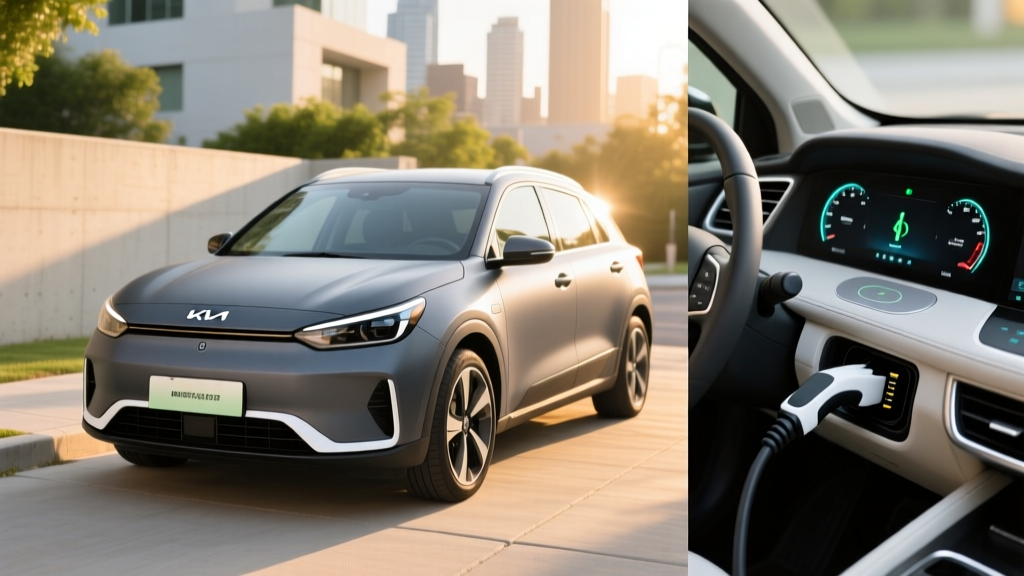
Connector note: The Niro EV uses the CCS1 (Combined Charging System) connector. Kia has announced a transition to NACS (the Tesla-style connector) on future models, but the current-generation Niro EV ships with CCS1. You can charge at Tesla Superchargers using a Tesla Magic Dock adapter at participating stations, but native NACS access is not yet available for this model.
Charging-curve reality check: The 85 kW peak occurs between roughly 10–40% State of Charge (SoC). Above 60%, the rate tapers to approximately 50–60 kW, and above 80% it drops further to protect battery longevity. Plan road-trip stops around 10–80% sessions; charging from 80–100% on DC adds significant time with diminishing range returns.
Niro EV vs. Niro Hybrid vs. Gas Crossover: A Cost Comparison
Kia sells the Niro in three flavors: the all-electric EV, the conventional hybrid (HEV), and a plug-in hybrid (PHEV). Here's how the EV stacks up against its stablemates and a typical gas compact crossover over five years of ownership (15,000 miles/year):
| Category | Niro EV (Wind) | Niro HEV (EX) | Gas Crossover (e.g., 28 MPG avg) |
|---|---|---|---|
| Base MSRP | $39,600 | $28,500 | $30,000 |
| Federal Tax Credit (§30D) | Up to $7,500* | $0 | $0 |
| Effective Purchase Price | ~$32,100 | $28,500 | $30,000 |
| Fuel / Energy (5 yrs)** | $3,000–$4,500 | $5,500–$6,500 | $9,000–$11,000 |
| Maintenance (5 yrs) | $1,200–$1,800 | $2,800–$3,500 | $3,200–$4,000 |
| Insurance (5 yrs)*** | $8,500–$10,500 | $7,000–$8,500 | $7,000–$8,500 |
| Estimated 5-Year Total | ~$45,000–$49,000 | ~$43,800–$47,000 | ~$49,200–$53,500 |
*§30D credit eligibility depends on buyer income (AGI caps: $150K single, $300K joint), MSRP limits ($55K for SUVs/crossovers — Niro qualifies), and battery critical-mineral and component sourcing requirements. Rules are subject to change; verify at IRS.gov and confirm point-of-sale transfer availability with your dealer.
**Energy costs assume $0.15/kWh average for home charging; public DC charging at $0.35–$0.50/kWh. Gas assumes $3.40/gallon average. Actual costs vary significantly by region and utility rate.
***EV insurance premiums run 10–20% higher on average due to repair costs and battery replacement exposure. Get quotes before purchasing.
The Niro EV's total cost of ownership narrows the gap with the cheaper-to-buy Niro HEV thanks to dramatically lower fuel and maintenance costs. Against a conventional gas crossover, the EV saves an estimated $4,000–$8,000 over five years even with higher insurance and upfront cost — and more if you have access to cheap home electricity or workplace charging.
First-Time EV Buyer Checklist: What to Know Before You Buy
If the Niro EV is your first electric vehicle, these practical considerations will determine whether ownership is seamless or frustrating:
Home Charging Access Is Non-Negotiable for Convenience
The Niro EV's 9-hour Level 2 charge time means overnight home charging is the backbone of ownership. A Level 2 home charger installation typically costs $800–$2,500 (charger hardware plus electrician labor), assuming your electrical panel has capacity. If you need a panel upgrade (100A to 200A), add $1,500–$3,000. Relying solely on Level 1 (120V) delivers roughly 4–5 miles of range per hour — enough for very low-mileage drivers but inadequate for most.
Public Charging: Adequate but Not Class-Leading
With CCS1, the Niro EV accesses Electrify America, EVgo, ChargePoint, and other major networks. However, the 85 kW peak charge rate means road-trip stops take longer than in 800V rivals. A 200-mile highway drive with a 10–80% top-up will require roughly 45 minutes at the charger — plan accordingly. Check PlugShare for CCS-compatible stations along your common routes before buying.
Climate Matters More Than You Think
If you live in northern states with sustained sub-freezing winters, budget for 20–30% range loss. The Niro EV's heat pump helps, but preconditioning the battery while plugged in (using the Kia Access app) is essential for preserving both range and charge speed in cold weather. In mild climates, the 239-mile EPA figure is very achievable.
Common Misconceptions About the Niro EV
| Myth | Fact |
|---|---|
| "EV batteries need replacing every few years." | Kia's battery warranty covers 10 years/100,000 miles with a 70% capacity retention threshold. NMC packs in modern EVs typically degrade 1–2% per year; expect 85–90% capacity at 100,000 miles based on industry data. |
| "The Niro EV charges as fast as any other EV." | At 85 kW peak, the Niro EV charges roughly 2.5× slower than 800V platforms like the Ioniq 5 or EV6. Fine for commuters; limiting for road-trippers. |
| "I'll get the full $7,500 tax credit automatically." | The §30D credit requires meeting buyer income caps, MSRP limits, and battery sourcing rules that change periodically. Some buyers qualify for the full amount, some for partial, and some for none. Always verify current rules on IRS.gov. |
| "Electricity is always cheaper than gas." | Home charging at $0.15/kWh is dramatically cheaper. But frequent public DC fast charging at $0.40+/kWh can approach or exceed gas costs per mile. Home charging access is the economic key. |
| "EVs don't need any maintenance." | EVs eliminate oil changes, spark plugs, and transmission fluid — but tires wear faster (due to instant torque and heavier weight), cabin air filters need replacing, brake fluid should be checked, and the 12V auxiliary battery still requires attention. |
Decision Framework: Is the Niro EV the Right Choice for You?
Choose the Kia Niro EV If:
- You drive under 50 miles round-trip daily and can charge at home overnight
- You want a dedicated EV (not a hybrid) with zero tailpipe emissions for daily commuting
- You value Kia's 10-year/100,000-mile battery and powertrain warranty
- You prioritize low running costs and minimal maintenance over fast-charging road-trip capability
- Your budget is $35,000–$45,000 after incentives
Look Elsewhere If:
- You take frequent road trips over 250 miles and want sub-25-minute fast-charge stops (consider Ioniq 5, EV6, or Tesla Model Y)
- You lack reliable home or workplace Level 2 charging access
- You need AWD — the Niro EV is front-wheel drive only
- You want native NACS (Tesla Supercharger) compatibility without adapters
- You regularly tow — the Niro EV is not rated for towing
Consider the Niro HEV or PHEV Instead If:
- You have no home charging access and don't want to rely on public infrastructure
- Your budget is under $30,000 (the HEV starts around $28,500)
- You want flexibility for long rural drives with zero charging planning
Spec Summary: 2026 Kia Niro EV at a Glance
| Spec | Value |
|---|---|
| EPA Range | 239 miles |
| Battery (usable) | 64.8 kWh, NMC |
| Motor | 201 HP / 188 lb-ft (FWD) |
| 0–60 mph | ~7.2 seconds |
| DC Fast Charge (peak) | 85 kW (CCS1) |
| 10–80% DC Charge | ~45 minutes |
| Level 2 (onboard charger) | 7.7 kW (~9 hrs full charge) |
| Efficiency | ~113 MPGe combined |
| Base MSRP (Wind trim) | $39,600 |
| Battery Warranty | 10 years / 100,000 miles (70% SoH) |
| Drivetrain | Front-wheel drive |
| Cargo Volume | 18.8 cu ft (rear seats up) / 51.3 cu ft (folded) |
Frequently Asked Questions
Does the Kia Niro EV qualify for the federal tax credit?
The Niro EV has historically qualified for some or all of the §30D Clean Vehicle Credit (up to $7,500), but eligibility depends on current battery-sourcing rules, your adjusted gross income, and the vehicle's MSRP (which must be at or below $55,000 for SUVs/crossovers — the Niro qualifies). The credit can now be transferred to the dealer at point of sale as a purchase-price reduction. Always verify current eligibility at IRS.gov before committing to a purchase.
How long does the Niro EV battery last?
Kia warrants the high-voltage battery for 10 years or 100,000 miles, covering defects and capacity loss below 70% of original capacity. Real-world data from similar NMC packs suggests 1–2% degradation per year under normal use, meaning you can expect roughly 85–90% capacity retention at the 100,000-mile mark. Avoiding habitual DC fast charging to 100% and frequent deep discharges to 0% will help preserve longevity.
Can I charge the Niro EV at Tesla Superchargers?
Not natively. The Niro EV uses a CCS1 connector. However, Tesla has opened some Supercharger stations with a built-in "Magic Dock" CCS adapter, which Niro EV owners can use through the Tesla app. The selection of Magic Dock-equipped stations is growing but still limited compared to the full Supercharger network. For widespread CCS public charging, Electrify America, EVgo, and ChargePoint remain your primary networks.
Is the Niro EV good in winter?
The Niro EV includes a heat pump (on most trims), which is more efficient than resistive heating and helps preserve range in cold weather. Expect 20–30% range reduction in sustained sub-freezing temperatures — so roughly 165–190 real-world miles from a full charge. Preconditioning the cabin and battery while plugged in (via the Kia Access app) significantly mitigates this loss and also improves DC charge speeds in cold weather.
How does the Niro EV compare to the Kia EV6?
The EV6 sits on Kia's dedicated E-GMP 800V platform, offering up to 310 miles of range, peak DC charging above 230 kW (10–80% in ~18 minutes), AWD options, and significantly more power. It also starts roughly $10,000 higher. The Niro EV is the budget-friendly, efficiency-focused commuter; the EV6 is the road-trip-capable performance crossover. If fast charging and range are priorities, the EV6 is the clear upgrade.
What does home charger installation cost?
A typical Level 2 home charger installation (240V, 40A circuit with a 32A charger like the ChargePoint Home Flex or Kia's own wallbox) runs $800–$2,500 for equipment and labor, assuming your electrical panel has spare capacity. If you need a panel upgrade from 100A to 200A service, budget an additional $1,500–$3,000. Always get a quote from a licensed electrician before purchasing a charger — they can assess your panel, run length, and local permit requirements.