Quick Answer: Is the Kia EV9 the Right 3-Row Electric SUV for You?
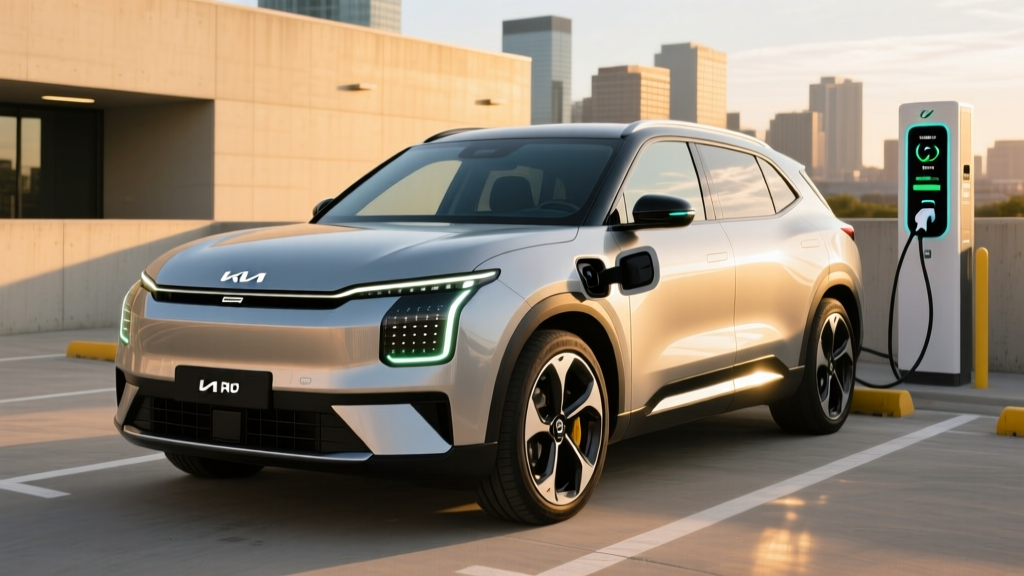
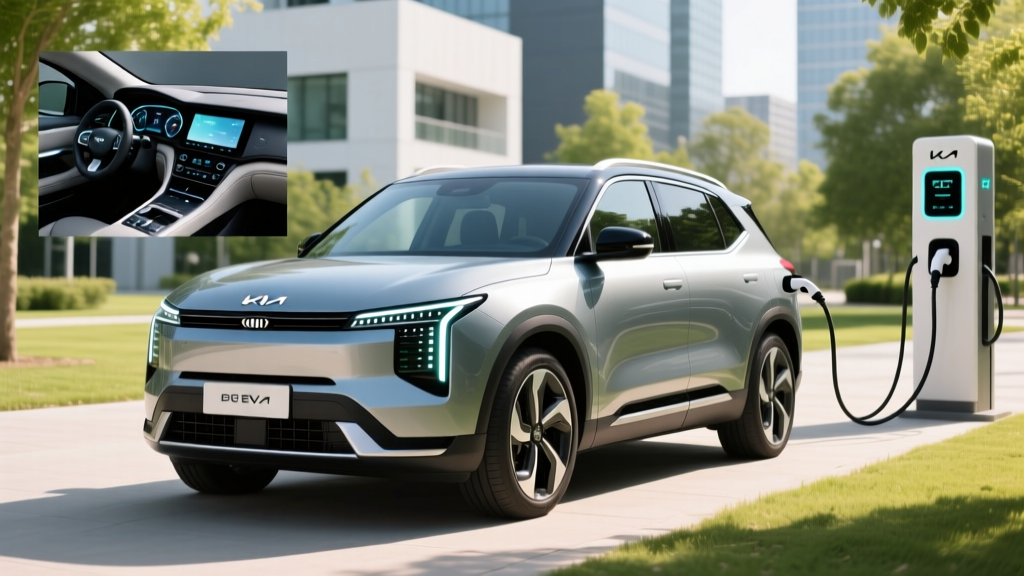
If you're searching for a kia electric 3 row SUV, the Kia EV9 is currently the only dedicated three-row battery-electric vehicle Kia sells in the US market. The 2026 EV9 offers an EPA-estimated range of up to 304 miles (Light Long Range RWD trim), DC fast charging at up to 236 kW (10–80% in approximately 20 minutes), and a starting MSRP of $54,900. It qualifies for the federal §30D tax credit of up to $7,500 on eligible trims when battery sourcing and buyer income requirements are met, and it can be transferred to the dealer at point of sale. For families replacing a gas-powered Telluride or Hyundai Palisade, the EV9 delivers comparable cargo space and seating for up to seven, with significantly lower per-mile fuel costs — provided you have reliable home or workplace Level 2 charging access.
EV9 Trims, Range, and Pricing at a Glance
Kia structures the 2026 EV9 across several trims with two battery sizes. The Standard Range models use a 76.1 kWh usable battery (NMC chemistry) with a single rear motor, while the Long Range trims step up to a 99.8 kWh usable pack available in RWD or dual-motor AWD. Here is the complete spec breakdown:
| Trim | Drivetrain | Battery (kWh usable) | EPA Range (mi) | HP / lb-ft | 0–60 mph | Base MSRP |
|---|---|---|---|---|---|---|
| Light Standard Range | RWD | 76.1 | 230 | 215 / 258 | 7.7s | $54,900 |
| Wind Long Range | RWD | 99.8 | 304 | 201 / 258 | 8.2s | $59,900 |
| Land Long Range | AWD | 99.8 | 280 | 379 / 516 | 5.0s | $63,900 |
| GT-Line Long Range | AWD | 99.8 | 270 | 379 / 516 | 4.9s | $73,900 |
Real-World Range Expectations
The EPA sticker is a laboratory estimate. Based on highway testing at 70–75 mph and mixed-climate driving, expect the following from the Wind Long Range RWD (EPA 304 mi):
- Mild weather, mixed driving: ~275–295 miles
- Highway-only at 75 mph: ~245–265 miles
- Cold weather (below 30°F): ~210–240 miles (15–25% reduction due to cabin heating and battery chemistry)
- Towing (up to 5,000 lbs rated): ~150–180 miles — plan charging stops accordingly
The EV9's heat pump (standard on Long Range trims) mitigates some cold-weather losses compared to EVs without active thermal management, but physics still applies: heating a large cabin in winter draws significant energy from the 99.8 kWh pack.
Charging Speeds: Home and Public Infrastructure
The EV9 uses an 800V electrical architecture, which enables some of the fastest DC fast charging in the three-row SUV segment. It ships with the NACS (North American Charging Standard) connector, giving it native access to Tesla Supercharger V3/V4 stalls via Kia's partnership, in addition to CCS-equipped networks through adapters on older hardware.
| Charging Level | Power (kW) | Connector | Speed (miles/hour added) | Notes |
|---|---|---|---|---|
| Level 1 (120V) | ~1.4 kW | NACS | ~3–4 mi/hr | Emergency/trickle only; adds ~40 mi overnight |
| Level 2 (240V, 48A) | ~10.9 kW | NACS / J1772 w/ adapter | ~28–32 mi/hr | Full charge in ~10 hrs (99.8 kWh pack) |
| DC Fast Charge | Peak 236 kW | NACS | N/A | 10–80% in ~20 min on 350 kW-rated station |
Charging curve reality: The EV9's peak of 236 kW occurs between roughly 10–45% state of charge. Above 80%, the rate tapers significantly to protect battery health — expect 80–100% to add another 15–20 minutes. For road trips, plan to charge from 10–80% and move on rather than waiting for a full top-off. According to Kia's official EV9 specifications, preconditioning the battery (automatic when a DC charger is set as your navigation destination) is essential for achieving peak charge rates, especially in cooler temperatures.
EV9 vs Gas 3-Row SUV: Cost and Efficiency Comparison
The most common cross-shop for the EV9 is the Kia Telluride, a body-on-frame gas V6 three-row SUV. Here is how the economics stack up over a typical ownership period, assuming 15,000 miles driven annually.
| Metric | 2026 Kia EV9 Land AWD | 2026 Kia Telluride SX AWD |
|---|---|---|
| Base MSRP | $63,900 | $48,500 |
| Federal Tax Credit (§30D) | Up to $7,500 (if eligible) | $0 |
| Effective Purchase Price | ~$56,400 | $48,500 |
| EPA Efficiency | 85 MPGe (2.4 kWh/mi) | 21 MPG combined |
| Annual Fuel/Energy Cost (15k mi) | ~$720 (at $0.13/kWh home) | ~$2,360 (at $3.30/gal) |
| Annual Maintenance | ~$300 | ~$650 |
| 5-Year Fuel + Maintenance | ~$5,100 | ~$15,050 |
| Estimated Insurance (annual avg) | ~$2,400 | ~$1,800 |
The bottom line: Over five years, the EV9 Land AWD saves roughly $9,950 in fuel and maintenance compared to the Telluride, while costing approximately $7,900 more upfront (after the tax credit) and $3,000 more in insurance. Net five-year advantage for the EV9: approximately $2,050 in savings, which widens further if you have access to cheaper electricity (solar, time-of-use rates) or if gas prices rise. For buyers who keep vehicles 8–10 years, the EV9's operating cost advantage compounds significantly.
Per fueleconomy.gov, the EV9 Land AWD achieves 85 MPGe combined, translating to an electricity cost of approximately $0.048 per mile at the national average residential rate, compared to $0.157 per mile for the Telluride at current fuel prices.
Federal Tax Credit: What You Actually Qualify For
The §30D Clean Vehicle Credit can reduce your effective purchase price by up to $7,500, but eligibility is not automatic. Under current IRS rules, you must meet all of the following:
§30D Tax Credit Requirements (2026)
- Income caps: Modified AGI must not exceed $300,000 (joint), $225,000 (head of household), or $150,000 (single)
- MSRP cap: SUVs/vans must have an MSRP at or below $80,000 — all EV9 trims qualify
- Battery sourcing: A percentage of critical minerals and battery components must be sourced from the US or free-trade-agreement countries; the split is $3,750 for minerals + $3,750 for components
- Point-of-sale transfer: You can transfer the credit to the dealer at purchase, reducing your out-of-pocket cost immediately rather than waiting for tax filing
- Assembly: Vehicle must undergo final assembly in North America (EV9 is assembled in West Point, Georgia)
Critical caveat: Battery sourcing requirements tighten annually. Consult a tax professional and verify current eligibility on the IRS Clean Vehicle Credit page before finalizing your purchase. Do not assume you will receive the full $7,500 — partial credits of $3,750 are possible if only one sourcing requirement is met.
5-Year Total Cost of Ownership Breakdown
| Cost Category | EV9 Wind RWD ($59,900) | EV9 Land AWD ($63,900) | Telluride SX AWD ($48,500) |
|---|---|---|---|
| Purchase (after credit) | $52,400 | $56,400 | $48,500 |
| Fuel/Energy (5 yrs) | $3,600 | $3,600 | $11,800 |
| Maintenance (5 yrs) | $1,500 | $1,500 | $3,250 |
| Insurance (5 yrs) | $11,000 | $12,000 | $9,000 |
| Home Charger Install | $1,200 | $1,200 | $0 |
| Estimated Depreciation | $22,000 | $24,000 | $18,500 |
| 5-Year Total | $91,700 | $98,700 | $91,050 |
The EV9 Wind RWD achieves near cost-parity with the Telluride over five years when the federal tax credit applies, despite the higher sticker price. The Land AWD carries a modest premium driven largely by higher insurance costs and greater depreciation on the higher MSRP. Buyers who keep the vehicle beyond five years will see the EV9 pull ahead as fuel savings accumulate and maintenance remains low — EVs eliminate oil changes, spark plugs, transmission fluid, and experience far less brake wear thanks to regenerative braking.
Real-World Ownership Considerations
Before committing to a three-row electric SUV, evaluate these practical factors honestly:
Home Charging Access
The EV9's ownership experience is fundamentally different with vs. without home Level 2 charging. A 240V/48A home charger (such as the Kia-approved wall unit or a ChargePoint Home Flex) adds roughly 30 miles of range per hour of charging, meaning an overnight session from 60–100% takes about 8–10 hours. Installation costs range from $800–$2,500 depending on your electrical panel's capacity — homes with 200A service typically need no panel upgrade, while older 100A panels may require a $1,500–$3,000 upgrade. If you live in an apartment or condo without charging access, relying solely on public DC fast charging will cost 2–3× more per mile and add significant weekly time overhead.
Climate Impact
If you live in a region with sustained sub-freezing winters (Upper Midwest, Northeast, Mountain West), budget for 15–25% range reduction during cold months. The EV9's standard heat pump on Long Range trims helps, but a 304-mile EPA rating may realistically deliver 210–240 miles in January in Minnesota. Garage parking mitigates this somewhat by keeping the battery warmer between drives.
Driving Patterns
The EV9 excels as a daily driver with a 30–50 mile round-trip commute, where home charging covers all needs and you rarely visit a gas station. It handles road trips competently thanks to 236 kW fast charging — a 20-minute stop every 200 miles adds an acceptable amount of time. However, if you regularly tow a trailer or frequently drive 400+ miles in a single day through charging-sparse regions, a PHEV or gas vehicle may still offer more flexibility.
Common Misconceptions About the EV9
| Myth | Fact |
|---|---|
| "The third row is useless in an EV." | The EV9's dedicated EV platform (E-GMP) provides a flat floor, and the third row accommodates adults up to about 5'8" for short trips. Cargo behind the third row is 20.2 cu ft — comparable to the Telluride's 21 cu ft. |
| "The battery will need replacing in 5 years." | Kia warrants the EV9 battery for 10 years / 100,000 miles against degradation below 70% capacity. Industry data from similar NMC packs shows typical 10-year degradation of 10–15% under normal use. |
| "Charging takes too long for family road trips." | At 236 kW peak, a 10–80% charge takes ~20 minutes — roughly the time needed for a rest stop with kids. Plan around 200-mile segments and charging aligns with natural breaks. |
| "I'll save $7,500 no matter what." | The §30D credit depends on your income, battery sourcing compliance, and tax liability. Some buyers receive $3,750 or $0. Always verify before purchasing. |
| "It can't tow anything." | The EV9 AWD is rated for up to 5,000 lbs towing — sufficient for a small boat or utility trailer. Range will drop to roughly 150–180 miles while towing at highway speeds. |
Decision Framework: Is the Kia EV9 Right for Your Family?
Choose the Kia EV9 if:
- You have access to Level 2 home or workplace charging
- Your daily driving is under 150 miles and you road-trip fewer than 10 times per year
- You want three-row seating with zero tailpipe emissions and lower per-mile operating costs
- You qualify for the federal tax credit (income below caps, can verify sourcing)
- You plan to keep the vehicle 5+ years to maximize fuel savings
- You value Kia's 10-year/100,000-mile powertrain warranty and 10-year battery warranty
Consider a gas or hybrid alternative if:
- You live in an apartment or condo with no charging option and your area has limited public infrastructure
- You regularly tow more than 3,000 lbs over long distances
- You frequently drive 400+ miles in a single day through rural areas with sparse charging
- Your household income exceeds §30D caps, eliminating the tax credit advantage
- You need maximum cargo volume — the Telluride offers slightly more behind the second row (46 vs 43.5 cu ft)
Trim recommendation:
For most families, the Wind Long Range RWD at $59,900 offers the best value: 304 miles of EPA range, the fastest DC charging, and the lowest effective cost after the tax credit. Add the Land AWD ($63,900) only if you need all-wheel traction for snow or want the 5.0-second 0–60 time. The GT-Line is a luxury play that pushes toward $74,000 and sacrifices 34 miles of range for styling and features.
Frequently Asked Questions
Does the Kia EV9 qualify for the full $7,500 federal tax credit?
The EV9 is assembled in Georgia and its MSRP falls under the $80,000 SUV cap, so it meets two key requirements. However, the full $7,500 depends on battery critical-mineral and component sourcing percentages that change annually, plus your personal income eligibility. Verify current status on the IRS Clean Vehicle Credit page and with your tax advisor before purchasing. The credit can be transferred to the dealer at point of sale to reduce your purchase price immediately.
How does the EV9's interior space compare to the Kia Telluride?
The EV9 provides 20.2 cu ft behind the third row, 43.5 cu ft behind the second row, and 81.7 cu ft with both rear rows folded. The Telluride offers 21 / 46 / 87 cu ft respectively. The EV9 gives up a small amount of cargo volume but compensates with a front trunk (frunk) on RWD trims, adding roughly 1.8 cu ft of enclosed front storage. Passenger space in the first two rows is nearly identical; the third row is slightly tighter in the EV9 due to floor height from the battery pack.
What is the EV9's battery warranty, and what does degradation look like?
Kia covers the EV9's high-voltage battery for 10 years or 100,000 miles, guaranteeing it will retain at least 70% of original capacity during that period. The 99.8 kWh Long Range pack uses NMC chemistry, which typically sees 5–8% degradation in the first two years, then slows to approximately 1–2% per year thereafter. Real-world data from Hyundai/Kia E-GMP vehicles suggests most owners will see 85–90% state of health at 100,000 miles under normal charging habits (avoiding frequent 100% charges and deep discharges).
Can I use Tesla Superchargers with the Kia EV9?
Yes. The 2026 EV9 comes equipped with the NACS connector natively, giving it direct access to Tesla Supercharger V3 (150 kW) and V4 (up to 250+ kW) stations without an adapter. This significantly expands the usable fast-charging network for road trips, particularly in rural corridors where Tesla's network has broader coverage than Electrify America or EVgo.
What does it cost to install a Level 2 charger at home for the EV9?
A typical Level 2 home charger installation (48A/240V hardwired unit on a 60A circuit) costs between $1,200 and $2,500, including the charger unit ($500–$750), electrician labor ($500–$1,500), and permits ($50–$200). If your home has a 200A electrical panel with available capacity, costs stay at the lower end. Homes needing a panel upgrade to support the additional load should budget an additional $1,500–$3,000. Always get a licensed electrician's assessment before purchasing equipment.
Is the EV9's driver-assist system self-driving?
No. The EV9's Highway Driving Assist 2 (HDA2) is a SAE Level 2 driver-assistance system. It provides adaptive cruise control, lane centering, and lane-change assistance on divided highways, but the driver must remain fully engaged with hands on or near the wheel and eyes on the road at all times. It is not autonomous and does not replace attentive driving.