The Quick Answer: Does the Kia EV9 Qualify for the Tax Credit?
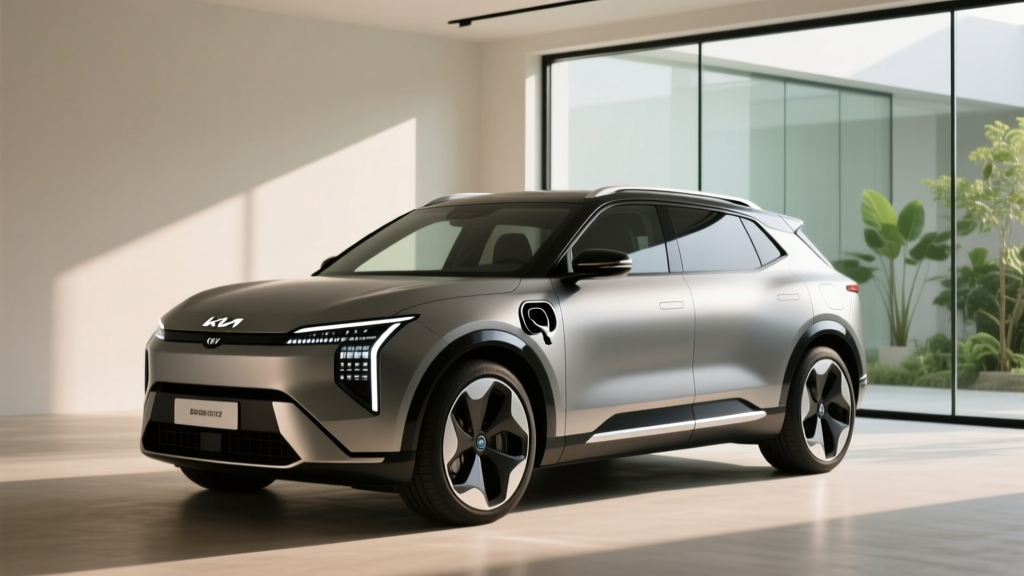
For 2026, the Kia EV9's eligibility for the federal EV tax credit under IRS §30D depends on three moving targets: where the battery and critical minerals are sourced, your household income, and the specific trim's MSRP. The EV9 — Kia's flagship three-row electric SUV — starts around $54,900 and tops out near $73,000 for the GT-Line AWD, putting some trims above the IRS MSRP cap for SUVs ($80,000) but making battery-sourcing compliance the primary hurdle.
As of early 2026, Kia has been working to shift EV9 battery-cell sourcing to meet the increasingly strict critical-mineral and battery-component requirements that phase in annually under the Inflation Reduction Act. Whether your specific EV9 delivery qualifies for the full $7,500, a partial $3,750, or no credit at all can change mid-year as supply chains evolve. Always verify with your dealer at the point of sale and cross-check against the latest IRS clean vehicle credit guidance before signing.
IRS §30D Eligibility Checklist for the Kia EV9 (2026)
- MSRP cap: $80,000 for SUVs (all EV9 trims currently comply)
- Buyer income cap: AGI ≤ $150,000 single / $225,000 head of household / $300,000 joint
- Battery components: Must be manufactured or assembled in North America (threshold increases annually)
- Critical minerals: Must be sourced from the U.S. or a free-trade-agreement partner (threshold increases annually)
- Final assembly: Must occur in North America (EV9 assembled in West Point, Georgia — ✓)
- Point-of-sale transfer: Eligible buyers can apply the credit as a down-payment reduction at the dealership rather than waiting to claim it on their tax return
If the EV9 you configure meets both the battery-component and critical-mineral thresholds, you qualify for the full $7,500. Meeting only one threshold yields $3,750. Meeting neither means no federal credit — though state incentives may partially compensate.
Kia EV9 2026 Specs at a Glance
Before running ownership costs, here's what you're buying. The EV9 rides on Hyundai Motor Group's E-GMP platform with an 800V architecture capable of ultra-fast DC charging.
| Spec | Light RWD | Wind/Land AWD | GT-Line AWD |
|---|---|---|---|
| Base MSRP | $54,900 | $63,900 | $73,400 |
| Battery (usable) | 76.1 kWh (LFP) | 99.8 kWh (NMC) | 99.8 kWh (NMC) |
| EPA Range | 230 mi | 304 mi | 280 mi |
| Real-World Range (highway/cold caveat) | ~185–200 mi | ~250–270 mi | ~230–250 mi |
| Peak DC Charge Rate | 150 kW | 236 kW | 236 kW |
| 10–80% DC Fast Charge | ~32 min | ~24 min | ~24 min |
| Level 2 Charge (11 kW onboard) | ~7.5 hr | ~10 hr | ~10 hr |
| Horsepower | 215 hp | 379 hp | 379 hp (boost: 430 hp) |
| 0–60 mph | 8.2 sec | 5.0 sec | 4.5 sec |
| MPGe (combined) | 91 MPGe | 85 MPGe | 83 MPGe |
| Battery/Powertrain Warranty | 10 years / 100,000 miles | ||
5-Year Total Cost of Ownership Breakdown
Sticker price is just the entry fee. Here's a realistic 5-year / 75,000-mile ownership projection for the EV9 Wind AWD ($63,900 MSRP) compared against a comparably priced gas three-row SUV (e.g., Kia Telluride SX Prestige at ~$52,000).
| Cost Category | Kia EV9 Wind AWD | Gas 3-Row SUV Baseline |
|---|---|---|
| Purchase Price (MSRP) | $63,900 | $52,000 |
| Federal Tax Credit (§30D) | −$7,500 (if eligible) | $0 |
| Effective Purchase | $56,400 | $52,000 |
| Fuel / Charging (75k mi) | $4,275 | $10,125 |
| Maintenance (5 yr) | $1,500 | $3,750 |
| Insurance (5 yr avg) | $14,500 | $11,250 |
| Depreciation (est. 5 yr) | $22,500 | $19,500 |
| Total 5-Year Cost | $99,175 | $96,625 |
| Cost Per Mile | $1.32 | $1.29 |
The EV9 narrows the gap with a gas SUV primarily through fuel and maintenance savings, but higher insurance and steeper early-model depreciation keep it from achieving outright cost parity over five years — unless you secure the full $7,500 credit, have access to low-cost home charging, and drive above-average annual miles (which amplifies per-mile savings).
Charging vs. Gas: The Per-Mile Math
The EV9 Wind AWD's EPA efficiency is 85 MPGe, which translates to roughly 35 kWh per 100 miles (or 2.86 mi/kWh). Let's compare against a gas three-row SUV averaging 22 MPG combined.
| Scenario | EV9 (at $/kWh) | Gas SUV (at 22 MPG) |
|---|---|---|
| Home charging (avg $0.14/kWh) / Gas ($3.50/gal) | $0.049/mi | $0.159/mi |
| Utility EV rate ($0.09/kWh off-peak) / Gas ($3.50/gal) | $0.032/mi | $0.159/mi |
| Public DC fast charging ($0.48/kWh avg) / Gas ($3.50/gal) | $0.168/mi | $0.159/mi |
| Annual cost (15,000 mi, 80% home / 20% DC) | $1,098 | $2,385 |
Key insight: The EV9 saves roughly $1,200–$1,300 per year on fuel if you charge predominantly at home. If you rely exclusively on public DC fast chargers at current national averages, the cost advantage evaporates — and can even flip negative. Home Level 2 charging is where EV economics work.
Maintenance Savings: Where EVs Quietly Win
The EV9's electric powertrain eliminates the routine costs that accumulate invisibly with internal combustion:
| Maintenance Item | EV9 (5 yr / 75k mi) | Gas SUV (5 yr / 75k mi) |
|---|---|---|
| Oil changes | $0 | $600–$900 |
| Transmission fluid | $0 | $150–$300 |
| Spark plugs | $0 | $200–$400 |
| Brake pads (regen braking extends life) | $0–$200 | $600–$1,200 |
| Engine air filter | $0 | $100–$200 |
| Coolant flush | $0–$100 | $200–$400 |
| Tire rotation / replacement | $800–$1,200 (heavier EV = faster wear) | $600–$1,000 |
| Cabin air filter | $100–$200 | $100–$200 |
| Total Estimated | $1,000–$1,700 | $2,550–$4,600 |
Net maintenance savings: roughly $1,500–$2,500 over 5 years. The biggest caveat is tires — the EV9's 4,800+ lb curb weight and instant torque eat through tires faster than a gas equivalent. Budget for a tire set at ~40,000 miles rather than the 55,000–60,000 you might get on a lighter vehicle.
Insurance: The Cost Nobody Talks About
EV insurance premiums are typically 15–25% higher than comparable gas vehicles, and the EV9 is no exception. The reasons are structural:
- Higher repair costs: Battery pack proximity to structural components means even moderate collision damage can trigger expensive high-voltage system inspections or replacements
- Specialized labor: Fewer body shops are certified for high-voltage EV repairs, driving up labor rates
- Higher replacement value: The EV9's MSRP is above the gas alternatives insurers compare it against
- Parts availability: EV-specific body panels and sensor arrays (LiDAR-equipped trims) carry premium pricing
Expect annual premiums in the $2,600–$3,200 range depending on your driving record, location, and coverage level — compared to $2,000–$2,500 for a Telluride. Get quotes from at least three insurers before purchase; some (like Progressive and Tesla Insurance competitors) now offer EV-specific rate programs.
Depreciation: EV Resale Value in 2026
EV depreciation has been volatile. Early-model EVs from 2022–2023 saw steep drops (some losing 40–50% in two years) driven by aggressive price cuts from Tesla, rapid battery-tech improvement cycles, and lease-bank flooding. The EV9, as a newer nameplate, has held somewhat better due to limited supply and strong demand in the three-row EV segment where competition remains thin.
Projected 5-year depreciation for the EV9: 40–50% of purchase price, compared to 35–42% for a well-equipped gas three-row SUV. That translates to roughly $3,000–$5,000 more in depreciation cost over the ownership period. However, if you buy with the $7,500 federal credit applied at point of sale, your effective basis is lower, and your net depreciation loss shrinks.
Factors working in the EV9's favor for resale: Kia's 10-year/100,000-mile battery warranty (transferable to second owners adds value), the scarcity of three-row electric SUVs in the used market, and growing consumer comfort with EV adoption by 2030.
Decision Framework: Is the EV9 the Smart Financial Move?
Buy the Kia EV9 if:
- You qualify for the full $7,500 federal credit (check income + battery sourcing)
- You have reliable home Level 2 charging access (garage or driveway)
- You drive 12,000+ miles per year (amplifies fuel savings)
- You need three rows and want to avoid gasoline
- You plan to own for 7+ years (depreciation curve flattens, warranty covers battery)
Consider the gas alternative if:
- You rely on street parking with no charging access
- Your AGI exceeds the §30D income caps
- You drive under 8,000 miles/year (fuel savings won't offset premium)
- You trade vehicles every 3 years (depreciation will hurt more)
Frequently Asked Questions
Does the Kia EV9 qualify for the $7,500 federal tax credit in 2026?
It depends on battery-sourcing compliance at the time of delivery. The EV9 is assembled in Georgia (meeting the North American final-assembly requirement), and all trims fall under the $80,000 SUV MSRP cap. However, the critical-mineral and battery-component sourcing thresholds tighten each year under §30D. Some delivery windows qualify for the full $7,500, some for $3,750, and some for nothing. Your dealer should provide a fueleconomy.gov eligibility confirmation at point of sale.
Can I transfer the tax credit to the dealer as a down payment?
Yes. Under the point-of-sale transfer provision, if you qualify for the §30D credit, you can elect to transfer it to the dealership, which reduces your purchase price by up to $7,500 at signing. You do not need to wait until tax filing. The dealer must be registered with the IRS Energy Credits Online portal.
What income limits apply to the EV9 tax credit?
For 2026, your modified adjusted gross income (MAGI) must not exceed $300,000 (married filing jointly), $225,000 (head of household), or $150,000 (single). The IRS uses the lower of your current-year or prior-year MAGI.
How much does home Level 2 charging installation cost?
A typical 48-amp Level 2 home charger installation runs $800–$2,500 including equipment, electrician labor, and permits — assuming your electrical panel has sufficient capacity. A 200-amp panel upgrade (if needed) adds $1,500–$3,500. The EV9's 11 kW onboard charger means a 48-amp circuit delivers roughly 32 miles of range per hour of charging.
How does the EV9 battery hold up over time?
Kia warranties the battery for 10 years / 100,000 miles against degradation below 70% of original capacity. The NMC packs in AWD trims typically show 8–12% degradation over 5 years and 75,000 miles based on industry averages for liquid-cooled E-GMP batteries. The LFP pack in the Light RWD trim generally exhibits slower degradation (5–8% over the same period) and tolerates regular 100% charging better than NMC.
Is the EV9 cheaper to own than a gas SUV over 5 years?
It's close. With the full $7,500 credit, home charging, and 15,000 annual miles, the EV9 can achieve near-parity or slight savings over a gas three-row SUV on a total-cost basis. Without the credit or with heavy reliance on public fast charging, the gas SUV remains cheaper over 5 years. The EV9's economics improve the longer you own it and the more miles you drive.