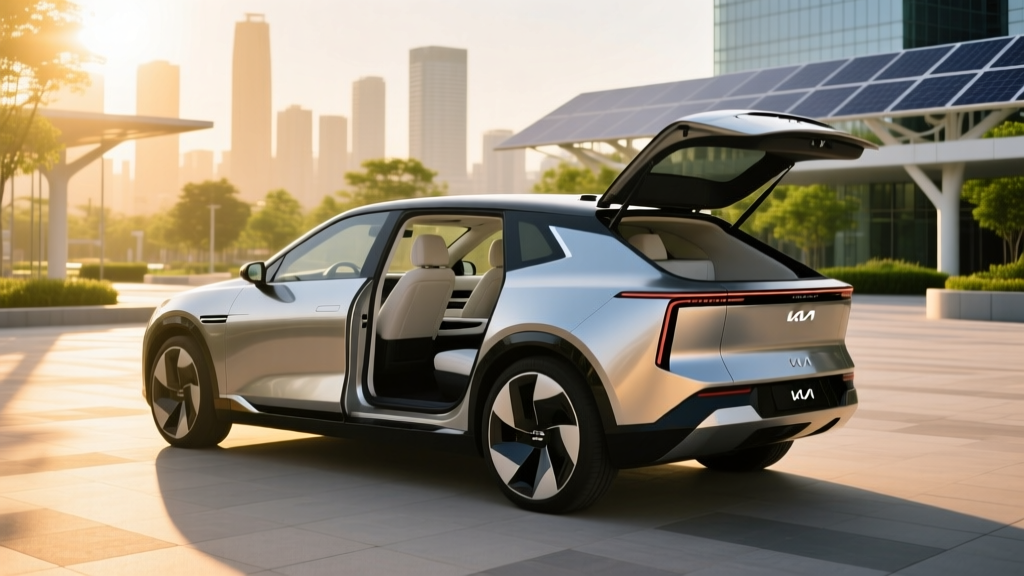
If you have been tracking the three-row electric SUV market, the Kia EV9 likely sits at the top of your shortlist. Since its US launch, the EV9 has carved out a distinct position: a genuinely spacious, 800-volt-capable family hauler priced thousands below its luxury-platform sibling, the Hyundai Ioniq 9, and far below European rivals like the BMW iX. For buyers considering a Kia EV9 reservation in 2026, the calculus involves more than sticker price — it requires understanding real-world range, charging-curve behavior, trim-level trade-offs, and the shifting federal tax credit landscape.
This profile breaks down every number that matters before you put down a deposit, drawing on EPA data, Kia's published specifications, and real-world ownership patterns observed since the EV9's debut.
2026 Kia EV9: Core Specifications at a Glance
| Specification | Light (RWD) | Wind/Land (AWD) | GT-Line (AWD) |
|---|---|---|---|
| EPA Range | 304 mi | 270–280 mi | 270 mi |
| Battery (usable) | 76.1 kWh (L) / 99.8 kWh (Wind+) | 99.8 kWh | 99.8 kWh |
| Chemistry | NMC (Long Range) | NMC | NMC |
| Horsepower | 215 hp | 379 hp | 379 hp |
| 0–60 mph | 8.2 sec | 5.0 sec | 5.0 sec |
| Drivetrain | RWD single motor | AWD dual motor | AWD dual motor |
| Max DC Charge Rate | 236 kW (peak) | 236 kW (peak) | 236 kW (peak) |
| 10–80% DC Time | ~24 min | ~24 min | ~24 min |
| Level 2 Rate | 10.9 kW | 10.9 kW | 10.9 kW |
| MPGe (combined) | 83 MPGe | 79–82 MPGe | 79 MPGe |
| Base MSRP | $54,900 | $63,900 | $73,900 |
Sources: EPA fueleconomy.gov, Kia USA. Specs reflect 2025/2026 model-year data; confirm with your dealer for the latest trim configurations.
Real-World Range: What the EPA Sticker Doesn't Tell You
EPA Estimate: Up to 304 miles (Light Long Range RWD, 99.8 kWh pack)
Real-World Highway (70–75 mph): Expect ~245–265 miles in moderate temperatures
Cold Weather (below 30°F): Range can drop 20–30%, yielding ~185–215 miles on AWD trims
City / Mixed Commuting: Closely matches EPA at ~280–300 miles (regen-heavy driving favors stop-and-go)
The EV9's boxy, upright profile — a major selling point for interior volume — creates aerodynamic drag that punishes highway efficiency. The AWD dual-motor trims sacrifice roughly 30 miles of EPA-rated range compared to the RWD Light Long Range, and real-world testing by multiple owners confirms that sustained 75-mph interstate driving in the AWD models yields closer to 250 miles before you will want to locate a charger.
Cold weather compounds this. The EV9 does include a heat pump on most trims (standard on Wind and above), which mitigates cabin-heating energy draw, but battery chemistry itself slows in freezing temperatures. If your daily routine includes a 100-mile round-trip highway commute in a northern climate, the AWD trims will require mid-week charging — plan accordingly.
Charging Performance: 800-Volt Architecture in Practice
The EV9 uses an 800-volt electrical architecture, the same platform underpinning the Hyundai Ioniq 5/6 and Genesis GV60/GV70 Electrified. This enables peak DC fast-charge rates that outperform most competitors in this price bracket.
| Charging Level | Power / Rate | Speed (Approx.) | Use Case |
|---|---|---|---|
| Level 1 (120V household) | ~1.4 kW | ~4 mi/hr | Emergency / trickle top-up |
| Level 2 (240V home, 48A) | 10.9 kW | ~32 mi/hr | Overnight full recharge (~9–10 hrs for 99.8 kWh pack) |
| DC Fast Charge (peak) | 236 kW | 10–80% in ~24 min | Road-trip stops; requires 350 kW-capable station |
| DC Fast Charge (50 kW station) | 50 kW | ~15 mi/min / 10–80% in ~90 min | Older CCS stations; functional but slow |
Charging-curve reality check: The 236 kW figure is a peak, not a sustained rate. On a 350 kW-capable Electrify America or Tesla Supercharger (via NACS adapter, now standard on 2025+ EV9 models), the EV9 ramps quickly to ~200–236 kW between 10–40% SoC, then begins tapering. From 60–80%, expect rates closer to 100–130 kW. The 24-minute 10–80% claim assumes optimal battery preconditioning and a high-power station. In practice, on a hot summer day or at a station delivering less than its rated output, add 5–8 minutes.
For home charging, the 10.9 kW onboard charger means a full 0–100% charge on a 48-amp Level 2 circuit takes roughly 9.5 hours for the 99.8 kWh pack. Most owners charge between 20–80% overnight, which takes about 5.5 hours — well within a standard overnight window. Ensure your electrician installs a NEMA 14-50 outlet on a 60-amp breaker or hardwires a Wall Connector-style unit; the EV9 ships with a basic Level 1 cord, and Kia offers an optional Level 2 home charger.
Performance and Drivetrain: Quick Enough, Composed in Corners
The AWD dual-motor EV9 delivers 379 horsepower and 516 lb-ft of torque (with the optional Boost Package on GT-Line), achieving a 5.0-second 0–60 mph time. For a 5,000+ pound three-row SUV, that is genuinely quick — it merges onto highways and passes with confidence. The RWD Light trim, at 215 hp and 8.2 seconds, feels adequate around town but noticeably relaxed on highway on-ramps.
Ride quality leans firm but controlled. The multi-link rear suspension manages the EV9's weight well, and body roll is restrained for the segment. Steering is precise if slightly numb. Where the EV9 earns praise is its turning radius — surprisingly tight for its 196.9-inch overall length — and its 5,000-pound towing capacity on AWD trims, which outpaces the Tesla Model X and Rivian R1S in some configurations.
Interior Space, Cargo, and Family Practicality
This is where the EV9 justifies its existence. The box-on-wheels proportions translate to class-leading interior volume:
- Cargo behind 3rd row: 20.2 cu ft (enough for a double stroller plus groceries)
- Cargo behind 2nd row (3rd row folded): 43.5 cu ft
- Max cargo (all rear seats folded): 81.7 cu ft
- 2nd-row legroom: 42.8 inches (available captain's chairs with relaxation mode on GT-Line)
- 3rd-row legroom: 32.0 inches (usable for adults on shorter trips; tighter than a minivan)
- Front trunk (frunk): 1.8 cu ft (small — fits a charging cable bag, not a suitcase)
The available "Premium 6-seat" layout replaces the second-row bench with two individual captain's chairs featuring powered leg rests and recline — a feature Kia calls "Relaxation Mode," usable while parked and charging. The third row is best reserved for children or occasional adult use; headroom is generous, but knee space is tight for anyone over 5'8".
Pricing, Trims, and Federal Tax Credit Eligibility
| Trim | Base MSRP | Est. After §30D Credit* | Key Features |
|---|---|---|---|
| Light (RWD, 76.1 kWh) | $54,900 | ~$47,400 | 236 mi range, basic ADAS, 12.3" cluster |
| Light Long Range (RWD, 99.8 kWh) | $59,400 | ~$51,900 | 304 mi range, heat pump, V2L |
| Wind (AWD) | $63,900 | ~$56,400 | 280 mi, heated/ventilated front seats, Highway Driving Assist 2 |
| Land (AWD) | $69,900 | ~$62,400 | 280 mi, premium audio, 2nd-row captain's chairs available |
| GT-Line (AWD) | $73,900 | ~$66,400 | 270 mi, sport styling, Boost Package, Relaxation seats |
*Tax credit estimates assume full $7,500 eligibility under IRS §30D. Actual eligibility depends on buyer income caps ($150K single / $300K joint), MSRP caps ($80K for SUVs/vans), and battery critical-mineral/component sourcing requirements that change annually. The point-of-sale transfer option allows dealers to apply the credit as a down-payment reduction at purchase. Confirm eligibility with your tax professional before reserving.
Reservation process: Kia's EV9 reservation system operates through participating dealerships. A typical deposit ranges from $500 to $1,000, applied toward your purchase. Wait times have improved significantly since the initial 2024 launch backlog; most trims are now available within 4–8 weeks, though high-demand configurations (Wind AWD in popular colors) may take longer. Contact your local Kia EV-certified dealer for current allocation status.
Tech, Driver Assistance, and Notable Drawbacks
Standout features:
- Dual 12.3-inch panoramic displays with wireless Apple CarPlay and Android Auto
- Highway Driving Assist 2 (HDA2) — a competent SAE Level 2 system with lane-centering, adaptive cruise, and lane-change assist
- Vehicle-to-Load (V2L): powers devices up to 3.6 kW via interior and exterior outlets — useful for camping or emergency backup
- Digital Key 2 (NFC + UWB phone-as-key)
- Over-the-air (OTA) software updates for powertrain and infotainment
- Available Remote Smart Parking Assist (summon-style tight-space maneuvering)
Notable drawbacks:
- Infotainment learning curve: Kia's dual-screen layout buries some climate and drive-mode controls in submenus; physical shortcut buttons help but the system is not as intuitive as Tesla's or Rivian's.
- No front trunk (meaningful): The 1.8 cu ft frunk is essentially a cable-storage cubby. Competitors like the Rivian R1S and Ford Expedition (ICE) offer far more under-hood utility.
- Third-row access: The second-row tilt-and-slide mechanism works, but the opening is narrower than a minivan's pass-through.
- Insurance costs: EV9 premiums run 15–25% higher than comparable ICE three-row SUVs, per industry averages. Get a quote before reserving.
- Towing range impact: Max towing (5,000 lbs) cuts range roughly in half — expect ~130–140 miles on AWD trims when pulling a loaded trailer.
Warranty and Long-Term Battery Outlook
Kia backs the EV9 with one of the strongest warranties in the segment:
- Basic vehicle: 5 years / 60,000 miles
- Powertrain: 10 years / 100,000 miles
- Battery: 10 years / 100,000 miles (covers capacity loss below 70% of original)
The NMC (nickel manganese cobalt) chemistry in the EV9's battery pack is well-established. Industry-wide degradation data for similar Hyundai/Kia E-GMP platform packs (Ioniq 5, EV6) shows roughly 5–8% capacity loss after 100,000 miles of mixed use. Kia's 70% retention threshold is conservative — most packs will remain well above that mark for the warranty period. To maximize longevity, avoid habitual DC fast-charging to 100% and use the built-in charge-limit setting (80% daily target) for routine home charging.
Who Should Place a Kia EV9 Reservation?
- Need genuine 3-row seating and usable cargo space behind all rows
- Want 800V fast-charging capability without paying luxury-brand pricing
- Primarily charge at home and take road trips 3–5 times per year
- Value the 10-year/100,000-mile battery warranty as a long-term hedge
- Can accommodate a 20-foot vehicle in your garage or driveway
- Need 300+ miles of real-world highway range (consider the Tesla Model X or Lucid Gravity)
- Want a large frunk for gear storage (Rivian R1S offers a massive front trunk)
- Rely exclusively on public charging in a region with sparse DC infrastructure
- Prefer a single-screen minimalist interface (Tesla, Rivian)
Kia EV9 vs. Key Competitors: Quick Comparison
| Attribute | Kia EV9 (Wind AWD) | Tesla Model X (LR) | Rivian R1S (Dual) | Hyundai Ioniq 9 (AWD) |
|---|---|---|---|---|
| EPA Range | 280 mi | 335 mi | 321 mi | ~300 mi |
| Base MSRP | $63,900 | $79,990 | $75,900 | $68,500 |
| Max DC Charge | 236 kW | 250 kW | 220 kW | 236 kW |
| 3rd-Row Usable? | Yes (kids/short trips) | Tight | Yes | Yes |
| Towing | 5,000 lbs | 5,000 lbs | 7,700 lbs | 5,000 lbs |
| Federal Credit | Up to $7,500* | Up to $7,500* | Up to $7,500* | Up to $7,500* |
| Battery Warranty | 10 yr / 100K mi | 8 yr / 150K mi | 8 yr / 120K mi | 10 yr / 100K mi |
*All credit estimates subject to IRS §30D sourcing, income, and MSRP rules. Verify at irs.gov.
The EV9's strongest argument is value: it undercuts the Model X and R1S by $10,000–$16,000 while matching or exceeding their interior practicality. The trade-off is range — both the Model X and R1S offer meaningfully more miles per charge, which matters if road trips are frequent. The Ioniq 9, sharing the EV9's E-GMP platform, is its closest rival and offers slightly more range at a modest price premium.
Frequently Asked Questions
What is the real-world range of the Kia EV9?
The RWD Light Long Range achieves an EPA-estimated 304 miles, but real-world highway driving at 70–75 mph typically yields 250–270 miles. AWD trims (270–280 EPA) deliver roughly 230–250 miles in mixed highway use. Cold weather (below 30°F) can reduce range by 20–30% on any trim.
How fast does the Kia EV9 charge at home and on the road?
On a Level 2 home charger (240V, 48A), the EV9 charges at 10.9 kW, adding roughly 32 miles per hour — a full overnight recharge takes about 9.5 hours. On a 350 kW-capable DC fast charger, it peaks at 236 kW and charges from 10–80% in approximately 24 minutes, though real-world conditions often add 5–8 minutes due to charge-curve tapering and station output variability.
Does the Kia EV9 qualify for the $7,500 federal EV tax credit?
The EV9's MSRP falls below the $80,000 SUV cap set by IRS §30D. However, full eligibility depends on your adjusted gross income (must not exceed $150K single / $225K head of household / $300K joint filer) and the vehicle's battery critical-mineral and component sourcing, which the IRS updates annually. The credit can be transferred to the dealer at point of sale as a purchase-price reduction. Always verify current-year rules at irs.gov and consult a tax professional.
Is the Kia EV9 worth buying over the Tesla Model X or Rivian R1S?
If your priorities are interior space, value pricing, and strong warranty coverage, the EV9 is arguably the best choice in the segment. If maximum range (335+ miles) or a mature Supercharger network experience is paramount, the Model X has an edge. If you need serious off-road capability or 7,700-pound towing, the R1S wins. For most families who charge at home and road-trip a few times a year, the EV9 offers the best balance of price, space, and charging speed.
How long is the wait for a Kia EV9 after placing a reservation?
As of early 2026, most EV9 trims are available within 4–8 weeks of reservation at participating Kia dealers. High-demand configurations (Wind AWD in popular exterior colors) may take 8–12 weeks. Dealer allocation varies by region, so contacting multiple certified EV dealers in your area can shorten wait times.
What is the biggest drawback of the Kia EV9?
The EV9's most common owner complaints center on three issues: the relatively small frunk (1.8 cu ft), highway range that falls noticeably short of the EPA estimate on AWD trims, and an infotainment system that requires more menu-diving than competitors. None are deal-breakers for most families, but they are worth evaluating during a test drive.