Is the Kia EV9 Reliable Enough for Your Family?
When you're spending $55,000–$75,000 on a three-row electric SUV, reliability isn't just a nice-to-have — it's the difference between a stress-free ownership experience and a lemon-law nightmare. The Kia EV9 entered the US market as the first mainstream three-row electric SUV with genuine adult-sized third-row seating and 800-volt fast-charging architecture. But how does it hold up when the warranty period ends and real-world miles accumulate?
This review breaks down the EV9's reliability profile using EPA efficiency data, battery chemistry analysis, warranty coverage, and ownership cost projections — everything you need to know before signing the paperwork.
Kia EV9 Specs at a Glance
| Specification | EV9 Light (RWD) | EV9 Wind/Land (RWD) | EV9 GT-Line (AWD) |
|---|---|---|---|
| EPA Range | 230 miles | 304 miles | 270 miles |
| Usable Battery Capacity | 76.1 kWh | 99.8 kWh (NMC) | 99.8 kWh (NMC) |
| Drivetrain | Rear-Wheel Drive | Rear-Wheel Drive | Dual-Motor AWD |
| Horsepower | 215 hp | 201 hp | 379 hp |
| 0-60 mph | 7.7 sec | 8.2 sec | 5.0 sec |
| Max DC Fast Charge | ~170 kW | 236 kW (peak) | 236 kW (peak) |
| 10-80% DC Fast Charge | ~24 min | ~24 min | ~24 min |
| Level 2 Home Charging | 10.9 kW (~31 mi/hr) | 10.9 kW (~31 mi/hr) | 10.9 kW (~31 mi/hr) |
| EPA Efficiency | 3.3 kWh/mile (120 MPGe) | 2.8 kWh/mile (89 MPGe) | 3.0 kWh/mile (85 MPGe) |
| Base MSRP (2026) | $54,900 | $59,900 | $73,900 |
Real-World Range vs. EPA Estimates
Real-World Expectation: 240–270 miles highway; 280–300 miles city
Cold Weather (below 32°F): Expect 20–30% range loss (210–240 miles highway)
Towing (3,500 lb max): Range drops to ~150–180 miles
The EV9's EPA range figures are achievable in moderate temperatures with mixed driving, but highway speeds above 70 mph and cold weather significantly impact the 99.8 kWh battery pack. In EPA testing, the Wind RWD achieves 89 MPGe combined, which translates to roughly 2.8 kWh per mile — reasonable for a 5,000-pound SUV but not class-leading.
Cold-weather range loss is a physics reality for all lithium-ion batteries. The EV9's heat pump (standard on Wind and above) helps mitigate cabin heating drain, but battery chemistry itself becomes less efficient below freezing. If you live in Minnesota or Maine and plan winter road trips, budget for 210–240 miles of usable range on the AWD model.
Battery Chemistry and Long-Term Reliability
The EV9 uses a nickel-manganese-cobalt (NMC) lithium-ion battery, not the lithium iron phosphate (LFP) chemistry found in some Tesla and BYD models. Here's what that means for reliability:
| Factor | NMC (EV9) | LFP (Tesla Model Y Standard) |
|---|---|---|
| Energy Density | Higher (more range per kg) | Lower (heavier pack for same range) |
| Cycle Life | ~1,000–1,500 full cycles to 80% SoH | ~2,500–3,000 full cycles to 80% SoH |
| Cold-Weather Performance | Better low-temp efficiency | More range loss in cold |
| Thermal Runaway Risk | Higher (but still extremely low) | Lower |
| Cost | More expensive (cobalt/nickel) | Cheaper (iron/phosphate) |
For the average EV9 owner driving 12,000 miles per year, the NMC battery should comfortably last 150,000–200,000 miles before degrading to 80% state of health (SoH). That's 12–16 years of typical use. Kia backs this with a strong warranty (detailed below), but if you plan to keep the vehicle 200,000+ miles, NMC degradation is a real consideration.
Battery Degradation Reality Check
Based on data from Kia's corporate sibling Hyundai (which shares the E-GMP platform with the Ioniq 5), owners report roughly 5–8% capacity loss after 50,000 miles. The degradation curve is steepest in the first 20,000 miles, then flattens. If you charge to 100% daily and regularly use DC fast charging, expect closer to 10% loss at 50,000 miles. For maximum longevity, keep daily charges between 20–80% and use Level 2 home charging as your primary method.
Charging Speed and Infrastructure
| Charging Level | Power (kW) | Miles Added Per Hour | Use Case |
|---|---|---|---|
| Level 1 (120V outlet) | 1.4 kW | ~4 mi/hr | Emergency/trickle only |
| Level 2 (240V home) | 10.9 kW | ~31 mi/hr | Daily home charging |
| DC Fast (50 kW) | 50 kW | ~140 mi/hr | Older public chargers |
| DC Fast (150 kW) | 150 kW | ~420 mi/hr | Electrify America, EVgo |
| DC Fast (350 kW) | 236 kW (peak) | ~660 mi/hr | Ultra-fast stations |
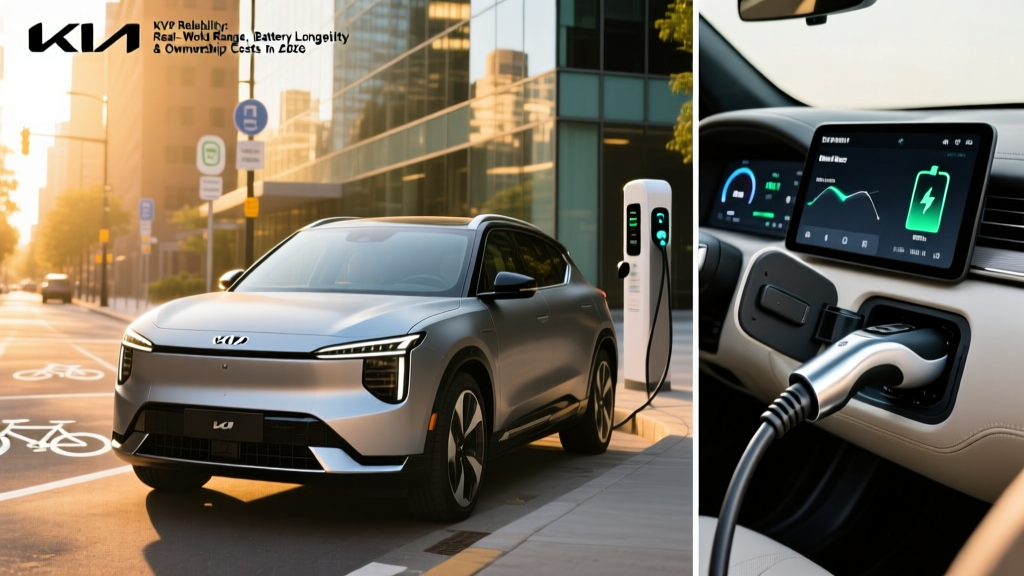
The EV9's 800-volt architecture is its reliability ace for road trips. On a 350 kW-capable charger, the 99.8 kWh pack can accept up to 236 kW peak, achieving 10–80% in roughly 24 minutes. However, real-world charging curves taper significantly above 80% — a 10–90% charge takes closer to 35–40 minutes.
For home charging, you'll need a 48-amp Level 2 circuit (hardwired or NEMA 14-50) to achieve the full 10.9 kW rate. Budget $800–$2,500 for professional installation depending on your electrical panel's capacity and distance from the charger location. If your home has a 200-amp panel with spare capacity, installation is straightforward. Older homes with 100-amp service may require a panel upgrade ($2,000–$4,000) before adding a Level 2 charger.
Federal Tax Credit and Pricing
| Trim | MSRP | Federal Credit (§30D) | Net Price (if eligible) |
|---|---|---|---|
| Light RWD | $54,900 | $7,500 (if sourced/eligible) | $47,400 |
| Wind RWD | $59,900 | $7,500 (if sourced/eligible) | $52,400 |
| Land AWD | $69,900 | $7,500 (if sourced/eligible) | $62,400 |
| GT-Line AWD | $73,900 | $7,500 (if sourced/eligible) | $66,400 |
The EV9's federal tax credit eligibility under IRS §30D is complex and subject to change. As of 2026, the full $7,500 credit requires:
- MSRP Cap: SUVs must be under $80,000 (all EV9 trims qualify)
- Buyer Income Cap: AGI ≤ $150,000 single / $300,000 married filing jointly
- Battery Sourcing: Critical minerals and battery components must meet North American sourcing thresholds (phased in through 2026)
- Point-of-Sale Transfer: You can apply the credit at purchase if the dealer participates
Kia has been working to localize battery production in Georgia (via Hyundai's Metaplant), which improves §30D eligibility. However, battery-sourcing rules tighten annually. Always verify current eligibility on fueleconomy.gov before purchasing, and consult a tax professional if your situation is complex.
Warranty Coverage and Reliability Track Record
Kia's warranty is one of the strongest in the industry, which matters for long-term reliability confidence:
- Basic Vehicle: 5 years / 60,000 miles
- Powertrain: 10 years / 100,000 miles
- EV Battery: 10 years / 100,000 miles (covers capacity loss below 70% SoH)
- Roadside Assistance: 5 years / 60,000 miles
The 10-year battery warranty is critical. If your EV9's pack degrades below 70% capacity within 10 years or 100,000 miles, Kia will repair or replace it at no cost. Given typical NMC degradation curves, hitting that threshold would require either a manufacturing defect or extreme abuse (daily 100% charges + frequent DC fast charging in hot climates).
Early Reliability Data
The EV9 launched in the US for the 2024 model year, so long-term reliability data is still limited. However, the E-GMP platform (shared with Hyundai Ioniq 5/6 and Kia EV6) has been on the road since 2021 with generally positive results. Common issues reported by E-GMP owners include:
- 12V auxiliary battery drain (software-related, addressed via OTA updates)
- Infotainment screen freezes (also software-related)
- Charging port latch failures (rare, covered under warranty)
No widespread battery or motor failures have been reported, which is encouraging for EV9 reliability.
Interior Space and Practicality
The EV9's three-row layout is genuinely usable for adults, which sets it apart from competitors like the Tesla Model X (cramped third row) and Volkswagen ID.4 (no third row):
- Third-Row Legroom: 32.0 inches (adults under 6' can sit comfortably for 1–2 hours)
- Cargo Volume (behind 3rd row): 20.2 cu ft
- Cargo Volume (3rd row folded): 43.5 cu ft
- Cargo Volume (all rows folded): 81.7 cu ft
- Towing Capacity: 2,000 lb (RWD) / 3,500 lb (AWD with tow package)
The second row offers captain's chairs (Wind and above) or a bench (Light), with 39.0 inches of legroom. The available "Premium Relaxation" seats in the GT-Line include power leg rests and massage — a segment-first feature.
Pros and Cons
Pros
- Genuine three-row seating with adult-sized third row
- 800V fast-charging (24 min 10-80%)
- Class-leading 10-year/100,000-mile battery warranty
- Competitive pricing vs. luxury three-row EVs
- Strong towing capacity (3,500 lb AWD)
- Vehicle-to-load (V2L) capability for camping/power outages
Cons
- Real-world highway range falls short of EPA (especially cold weather)
- NMC battery has lower cycle life than LFP alternatives
- Infotainment learning curve (dual 12.3" screens + touch climate controls)
- No frunk (front trunk) — space used for HVAC components
- Federal tax credit eligibility uncertain due to sourcing rules
- Higher insurance premiums vs. gas SUVs (EV-specific coverage)
Who Should Buy the Kia EV9?
Choose the EV9 if: You need a three-row EV for family duty, value fast charging for road trips, and plan to keep the vehicle 8–10 years (leveraging the long warranty). It's ideal for suburban families with home charging access who take 2–4 road trips per year.
Consider alternatives if: You rarely use the third row (the two-row Kia EV6 or Hyundai Ioniq 5 offers better range and lower cost), you live in a charging desert with no home charging option, or you need maximum range for 400+ mile road trips without stopping.
How It Compares to Competitors
The EV9's closest rivals are the Tesla Model X (more expensive, less practical third row), Rivian R1S (off-road capable but $78,000+ starting), and the upcoming Volkswagen ID. Buzz (minivan, not SUV). In the $55,000–$75,000 three-row EV segment, the EV9 currently has no direct competitor matching its combination of space, charging speed, and price.
For buyers who don't need three rows, the Hyundai Ioniq 5 (303 miles EPA, $41,800 base) or Tesla Model Y (330 miles EPA, $44,990 base) offer better efficiency and lower cost. But if adult-sized third-row seating is non-negotiable, the EV9 is the only mainstream option until the 2027 model year.
Frequently Asked Questions
What is the real-world range of the Kia EV9?
Expect 240–270 miles on the highway and 280–300 miles in city driving for the Wind RWD model (304 miles EPA). Cold weather below 32°F reduces range by 20–30%. The GT-Line AWD delivers roughly 220–250 miles highway real-world.
How fast does the EV9 charge at home and on the road?
At home on a 240V Level 2 charger (10.9 kW), you'll add ~31 miles per hour, fully charging the 99.8 kWh pack in about 9 hours. On DC fast chargers, the 800V system peaks at 236 kW, achieving 10–80% in ~24 minutes on 350 kW-capable stations.
Does the Kia EV9 qualify for the $7,500 federal tax credit?
Eligibility depends on battery sourcing, buyer income, and MSRP caps. As of 2026, the EV9 meets the MSRP cap (under $80,000 for SUVs), but battery-sourcing rules are complex. Check fueleconomy.gov for current eligibility and consult a tax professional.
Is the EV9 worth buying vs. the Tesla Model X or Rivian R1S?
The EV9 offers the best value in the three-row EV segment. The Model X starts at $79,990 with a cramped third row. The R1S starts at $78,000 and excels off-road but costs $20,000+ more. For most families, the EV9's combination of space, charging speed, and price is unbeatable.
What are the biggest reliability concerns?
Early data shows no major battery or motor issues. Software glitches (infotainment freezes, 12V battery drain) have been the most common complaints, mostly addressed via OTA updates. The 10-year/100,000-mile battery warranty provides strong long-term protection.
How long will the EV9 battery last?
Based on NMC chemistry and E-GMP platform data, expect 150,000–200,000 miles before the battery degrades to 80% capacity (12–16 years at 12,000 miles/year). Kia's 10-year warranty covers capacity loss below 70%.