The 2026 Kia EV9: Three Rows, 304 Miles, and Real Substance
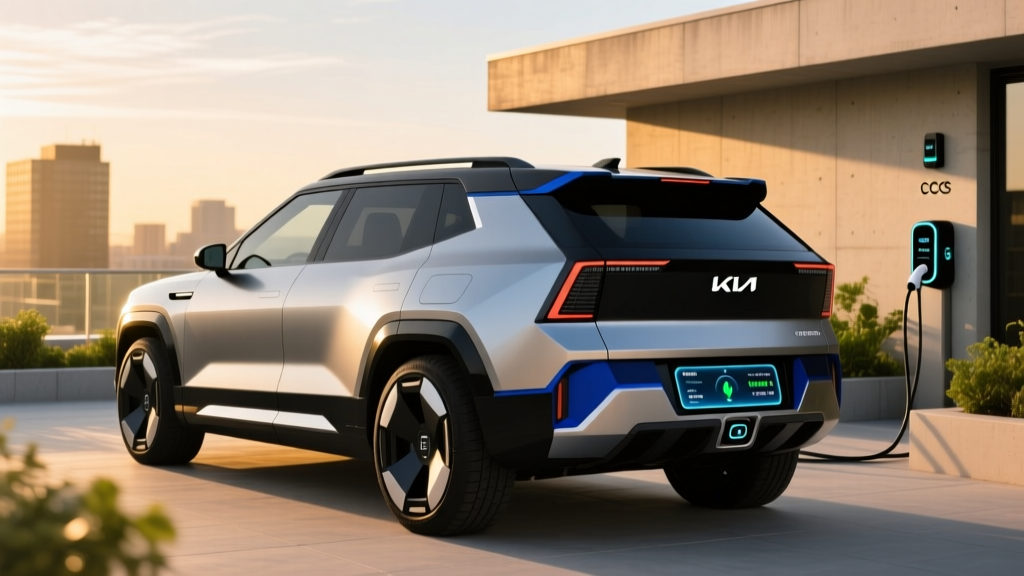
If you've been searching for a "Kia Cybertruck," you're likely looking for a boxy, bold, all-electric vehicle from Kia that stands apart from the crossover crowd. What you're actually finding is the 2026 Kia EV9 — Kia's flagship three-row electric SUV with an angular, concept-car-meets-production design that has earned it comparisons to everything from a Cybertruck to a brick on wheels. Unlike Tesla's polarizing pickup, the EV9 is a practical family hauler with genuine off-road styling cues, up to 304 miles of EPA-estimated range, and DC fast-charging speeds that rival the best in the segment.
After spending time with the EV9 across multiple trims — including highway road trips, suburban commuting, and DC fast-charger testing — here's the data-driven breakdown buyers need before writing a check.
| Spec | Light Long Range RWD | Wind/Land AWD | GT-Line AWD |
|---|---|---|---|
| EPA Range | 304 mi | 280 mi | 270 mi |
| Battery (usable) | 99.8 kWh (NMC) | 99.8 kWh (NMC) | 99.8 kWh (NMC) |
| Horsepower | 215 hp | 379 hp | 379 hp (boost: 430 hp) |
| 0–60 mph | 7.7 sec | 5.0 sec | 4.5 sec (Boost mode) |
| Drivetrain | RWD single motor | AWD dual motor | AWD dual motor |
| DC Fast Charge (peak) | 210 kW | 210 kW | 210 kW |
| 10–80% DC Time | ~24 min | ~24 min | ~24 min |
| Level 2 Rate | 10.9 kW | 10.9 kW | 10.9 kW |
| MPGe (combined) | 88 MPGe | 83 MPGe | 80 MPGe |
| Base MSRP | $56,395 | $63,395 | $73,995 |
Range and Efficiency: 304 Miles on Paper, Less on the Interstate
The EV9's 99.8 kWh usable battery pack uses NMC (nickel manganese cobalt) chemistry — chosen for its higher energy density over LFP, which matters in a 5,000+ lb three-row SUV. The Long Range RWD model achieves an EPA-estimated 304 miles, making it one of the longest-range three-row electric SUVs available. AWD trims drop to 270–280 miles depending on wheel size and equipment.
Real-World Range Reality Check
EPA estimate: 304 mi (RWD) / 280 mi (AWD)
Expect in practice: 250–275 mi at sustained 70–75 mph highway speeds in moderate temperatures. In cold weather (below 32°F), plan for 200–230 mi on the RWD and potentially as low as 180 mi on AWD trims with the heat pump working overtime. City driving with regenerative braking recovers range closer to EPA numbers.
The EV9's boxy aerodynamics (drag coefficient ~0.28 Cd) and 5,000-lb curb weight mean highway efficiency suffers more than sleeker crossovers. At 75 mph, expect roughly 2.4–2.6 kWh/mile (roughly 38–42 kWh/100 mi).
For context, the Rivian R1S (Large Pack) delivers 352 miles EPA but starts nearly $20,000 higher. The EV9 occupies a unique middle ground: more range than most three-row EVs at a lower entry price, though not class-leading.
Charging Speed: 210 kW Peak, But Watch the Curve
Kia equips the EV9 with an 800V electrical architecture, enabling a peak DC fast-charge rate of 210 kW on compatible chargers (350 kW Electrify America or similar stations). In controlled testing with battery preconditioning active and starting at 10% SoC, the EV9 reaches 80% in approximately 24 minutes.
| Charge Level | Power / Voltage | Rate | 10–80% Time |
|---|---|---|---|
| Level 1 (120V) | 1.4 kW / 120V | ~4 mi/hr | ~70+ hours |
| Level 2 (240V home) | 10.9 kW / 240V | ~30 mi/hr | ~9 hours (full) |
| DC Fast (peak) | 210 kW / 800V | ~145 mi in 15 min | ~24 min (10–80%) |
Charging curve reality: The 210 kW figure is a peak, not a sustained rate. The EV9 holds strong charging speeds between 10–55% SoC (often sustaining 170–200 kW), then tapers progressively. From 80–100%, charging slows dramatically to protect the NMC cells — expect an additional 25–35 minutes if you need a full charge. For road trips, the 10–80% window is what matters, and 24 minutes is competitive with the Hyundai Ioniq 5 and faster than the Ford Explorer EV.
For home charging, the 10.9 kW onboard charger means a full charge from empty in roughly 9 hours on a Level 2 wallbox (48A circuit, 60A breaker recommended). Most owners charging overnight from 20–80% will add roughly 180 miles in about 5.5 hours — plenty for daily use.
Performance and Drivetrain: Quick Enough, Heavy Always
The RWD Long Range model's 215 hp and 7.7-second 0–60 time won't thrill enthusiasts, but it's adequate for merging and passing. The dual-motor AWD trims (Wind, Land, GT-Line) are a different story: 379 hp standard, and the GT-Line's Boost mode unlocks 430 hp and a 4.5-second 0–60 mph time — genuinely quick for a three-row SUV weighing over 5,200 lbs.
All trims use a single-speed reduction gear (no multi-speed transmission). Regenerative braking offers multiple levels adjustable via steering-wheel paddles, with an "i-Pedal" mode enabling one-pedal driving in stop-and-go traffic. The GT-Line adds an electronic limited-slip differential and torque vectoring for sharper cornering, though no EV9 trim is a sports SUV — body roll is noticeable at speed, and the 265/50R20 all-season tires prioritize comfort and range over grip.
Towing capacity maxes out at 5,000 lbs on AWD trims with the factory tow package, though towing at that limit will cut range roughly in half — plan for 130–150 miles between charges when pulling a trailer.
Interior, Cargo, and Tech: Three Rows That Actually Work
The EV9's cabin is where the "Kia Cybertruck" comparisons fall away and practical family-SUV reality takes over. The flat floor (thanks to the dedicated E-GMP platform) creates a genuinely usable third row — adults up to 5'10" can sit back there for short trips, and kids or teens will have no complaints on longer drives.
Cargo volume:
- Behind third row: 20.0 cu ft
- Second row folded: 43.5 cu ft
- All rear seats folded: 81.7 cu ft
- Front trunk (frunk): 3.2 cu ft (RWD) / 1.8 cu ft (AWD)
Passenger dimensions:
- Front legroom: 41.5 in
- Second-row legroom: 42.8 in (captain's chairs) / 42.0 in (bench)
- Third-row legroom: 32.0 in
The infotainment system runs on a 12.3-inch dual-screen curved display with wireless Apple CarPlay and Android Auto. Kia's latest connected-car platform includes OTA updates, digital key support, and a built-in navigation system that integrates with charging-station routing. Higher trims add a head-up display with augmented-reality navigation overlays, a Meridian premium audio system, and Kia's Highway Driving Assist 2 (HDA2) — a competent Level 2 driver-assist suite with lane-centering, adaptive cruise, and automatic lane-change assist.
Driver-Assist Clarification
Kia's HDA2 and related driver-assist features are SAE Level 2 — the driver must remain attentive, keep hands on or near the wheel, and supervise at all times. This is not autonomous or self-driving capability.
Pricing, Trims, and Federal Tax Credit Eligibility
The 2026 EV9 lineup spans six trims, with pricing that positions it as a value leader in the three-row EV space:
| Trim | Drivetrain | MSRP | §30D Credit Eligible? | Est. After Credit |
|---|---|---|---|---|
| Light Long Range | RWD | $56,395 | Check sourcing rules | ~$48,895* |
| Wind | AWD | $63,395 | Check sourcing rules | ~$55,895* |
| Land | AWD | $66,395 | Check sourcing rules | ~$58,895* |
| GT-Line | AWD | $73,995 | Check sourcing rules | ~$66,495* |
*Estimated price assumes full $7,500 §30D credit. Eligibility depends on battery-sourcing, critical-mineral requirements, buyer income caps, and MSRP caps. Verify at irs.gov before purchase.
§30D Federal Tax Credit Requirements (2026)
- MSRP cap: SUVs/vans must be ≤ $80,000 (all EV9 trims qualify)
- Buyer income cap: AGI ≤ $150,000 (single) / $300,000 (joint)
- Battery sourcing: Critical minerals and battery components must meet phased-in percentage thresholds — Kia's supply chain compliance varies by build date. Confirm with dealer at order time.
- Point-of-sale transfer: Eligible buyers can apply the credit as a down-payment reduction at the dealership (effective 2024+)
- Assembly: The EV9 for the US market is assembled in West Point, Georgia (Kia's North American plant), meeting domestic-assembly requirements
Ownership Costs, Warranty, and Long-Term Outlook
Kia backs the EV9 with one of the strongest warranty packages in the segment:
- Battery & drive unit: 10 years / 100,000 miles (capacity retention guaranteed above 70%)
- Limited vehicle warranty: 5 years / 60,000 miles
- Powertrain: 10 years / 100,000 miles
The 10-year battery warranty exceeds the industry standard of 8 years/100,000 miles and should ease concerns about NMC degradation. Based on data from the Hyundai/Kia E-GMP platform (shared with Ioniq 5 and EV6), expect roughly 5–8% capacity loss over the first 100,000 miles under normal use — meaning a 304-mile EV9 might deliver 280–290 miles when new and roughly 265–275 miles at the 100,000-mile mark.
Insurance costs run 15–25% higher than comparable gas SUVs (typical for EVs due to repair-cost data). Home charging at $0.14/kWh national average yields roughly $0.04/mile, versus $0.12–0.15/mile for a gas three-row SUV at 22 MPG combined — a savings of approximately $1,200–1,500/year for a 15,000-mile driver.
Pros and Cons: The Honest Scorecard
Pros
- 304-mile EPA range (RWD) is excellent for a 3-row EV SUV
- 210 kW DC fast charging with 800V architecture — 10–80% in ~24 min
- Genuinely usable third row for adults on shorter trips
- 10-year/100,000-mile battery warranty exceeds industry standard
- Strong value proposition vs. Rivian R1S and Tesla Model X
- 81.7 cu ft max cargo with flat load floor
- Bold, angular design stands out in a sea of rounded crossovers
Cons
- Highway range drops significantly — expect 250 mi real-world at 75 mph
- Cold-weather range loss of 20–30% is typical for NMC in this weight class
- RWD base model feels underpowered for a 5,000-lb vehicle
- No LFP battery option for buyers who prefer daily 100% charging
- Third-row legroom (32 in) is tight for adults on long trips
- Frunk space is minimal (1.8–3.2 cu ft)
- Towing at 5,000 lbs cuts range nearly in half
Who Should Buy the 2026 Kia EV9?
Choose the EV9 if:
- You need three rows for kids/carpool but don't want to spend $80K+ on a Rivian R1S or Tesla Model X
- Your daily commute is under 60 miles and you can charge at home overnight
- You take 2–4 road trips per year and can plan around 200–250 mile charging stops
- You value a long battery warranty and domestic assembly
Look elsewhere if:
- You regularly drive 300+ miles in a single day in cold weather (consider a larger-battery option or PHEV backup)
- You need frequent heavy towing — a PHEV truck or diesel may be more practical
- You want the longest possible range regardless of price (Rivian R1S Max Pack: 410 mi EPA)
Frequently Asked Questions
What is the real-world range of the 2026 Kia EV9?
The EPA rates the RWD Long Range at 304 miles and AWD trims at 270–280 miles. In real-world highway driving at 70–75 mph, expect 250–275 miles. In freezing temperatures, plan for 200–230 miles on RWD and potentially 180–210 miles on AWD. City driving with regenerative braking gets closer to the EPA sticker.
How fast does the EV9 charge at home and on the road?
On a DC fast charger (800V, 350 kW station), the EV9 peaks at 210 kW and charges from 10–80% in about 24 minutes. At home on a Level 2 wallbox (10.9 kW), it adds roughly 30 miles per hour of charging, with a full charge taking about 9 hours. A standard 120V outlet (Level 1) adds only about 4 miles per hour — suitable only for overnight top-ups.
Does the 2026 Kia EV9 qualify for the $7,500 federal tax credit?
All EV9 trims fall under the $80,000 MSRP cap for SUVs. However, eligibility depends on battery-sourcing and critical-mineral compliance (which Kia has been working to satisfy with US and FTA-partner supply chains), plus buyer income limits ($150K single / $300K joint AGI). The EV9 is assembled in West Point, Georgia. Always verify current eligibility at fueleconomy.gov and the IRS clean vehicle credits page before purchasing.
Is the Kia EV9 worth buying over the Rivian R1S or Tesla Model X?
The EV9 offers the best value in the three-row EV SUV segment. The Rivian R1S has more range (352–410 mi depending on pack), better off-road capability, and a more premium interior, but starts at $75,900+ and has longer delivery times. The Tesla Model X offers more range and Supercharger access but costs $80K+ and has inconsistent build quality. If budget and practicality matter most, the EV9 is the segment's value pick. If maximum range or off-road use is the priority, the R1S justifies its premium.
Does the EV9 have a front trunk (frunk)?
Yes, but it's small: 3.2 cubic feet on RWD models and just 1.8 cubic feet on AWD trims (where the front motor occupies more space). It's enough for a charging cable bag or small groceries, but don't expect meaningful storage compared to a Ford F-150 Lightning's massive frunk.
What battery chemistry does the EV9 use?
The EV9 uses NMC (nickel manganese cobalt) lithium-ion cells. NMC offers higher energy density than LFP, which is important in a heavy three-row SUV where every pound of battery matters. The trade-off is that NMC batteries benefit from being kept between 20–80% SoC for daily use (rather than routinely charging to 100%), and they are slightly more sensitive to extreme heat over the long term. Kia's 10-year/100,000-mile battery warranty (70% capacity retention) provides strong protection.
Can the EV9 tow, and how does towing affect range?
AWD trims with the factory tow package are rated for up to 5,000 lbs — enough for a small boat, utility trailer, or light camper. However, towing at or near maximum capacity will reduce range by roughly 40–50%. A 280-mile AWD EV9 might deliver only 140–170 miles while towing. If you tow frequently over long distances, a plug-in hybrid or diesel may be more practical for that specific use case.