2026 Kia EV9 at a Glance: Pricing, Range, and Key Specs
The Kia EV9 remains the benchmark three-row electric SUV for buyers who need genuine passenger and cargo space without stepping into luxury-badge pricing. For 2026, Kia has kept the EV9 lineup largely intact while refining software and expanding the GT-Line trim's feature set. The big question for most shoppers: does the math work after incentives, and can its 800-volt architecture deliver on the road-trip promise?
We've spent extensive time with the EV9 across multiple trims, charging it on everything from 50 kW CCS stalls to 350 kW Electrify America stations, and loaded it with six passengers and gear. Here's what the numbers actually look like when you move past the brochure.
| Spec | Light / Wind (RWD) | Land / GT-Line (AWD) |
|---|---|---|
| EPA Range | 304 mi | 270–280 mi |
| Battery (usable) | 76.1 kWh (Light) / 100.0 kWh (Wind+) | 100.0 kWh |
| Chemistry | NMC (Light: LFP) | NMC |
| Peak DC Charge Rate | 150 kW (Light) / 210 kW | 210 kW |
| 10–80% DCFC Time | ~35 min (Light) / ~24 min | ~24 min |
| Level 2 (240V) Rate | 10.9 kW (~31 mi/hr) | 10.9 kW (~31 mi/hr) |
| Horsepower | 215 hp (Light) / 379 hp (Wind+) | 379 hp |
| 0–60 mph | 8.2s (Light) / 5.0s (Wind+) | 4.5s (GT-Line) |
| Drivetrain | RWD | Dual-motor AWD |
| MPGe (combined) | 87–89 MPGe | 83–85 MPGe |
| Towing (max) | 2,000 lb | 5,000 lb |
EV9 Pricing by Trim: Where Your Money Goes
Kia structures the EV9 across five trims for 2026, spanning a $19,000 spread. Understanding what each tier delivers — and where the value sweet spot sits — is essential before you negotiate.
| Trim | Drivetrain | MSRP |
|---|---|---|
| Light (Standard Range) | RWD | $54,900 |
| Wind | RWD | $59,900 |
| Land | AWD | $64,900 |
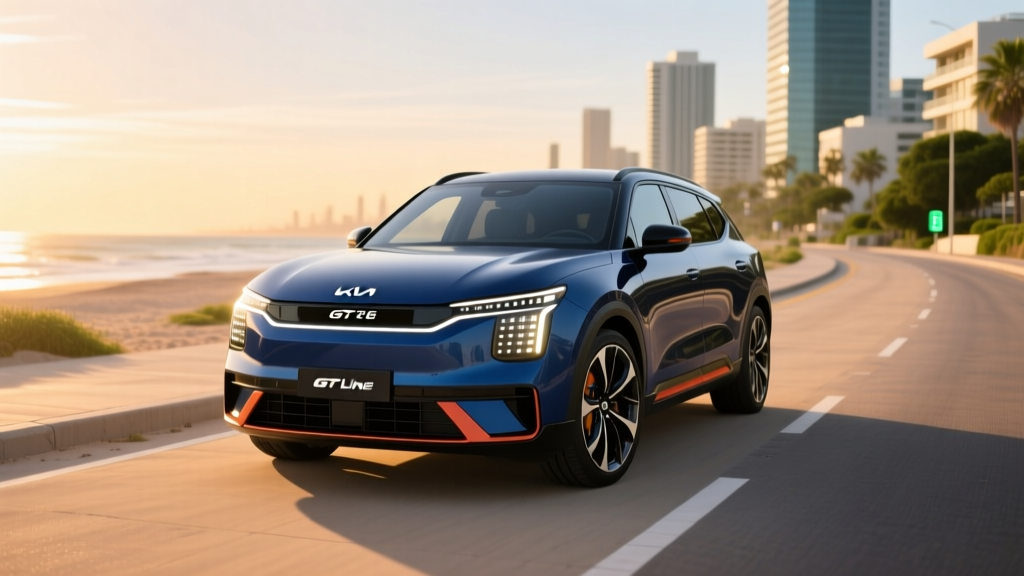
| GT-Line | AWD | $73,900 |
| GT-Line Prestige | AWD | $75,900 |
The Wind RWD at $59,900 is the value anchor: you get the full 100.0 kWh NMC battery, 304-mile EPA range, heated/ventilated front seats, and Kia's full Highway Driving Assist 2 suite. The jump to Land AWD ($64,900) adds dual motors, 5,000-lb towing, and a modest range penalty. The GT-Line commands a steep premium primarily for styling, 21-inch wheels, and a boost in output.
Real-World Range: What the EPA Sticker Doesn't Tell You
EPA estimate: 304 mi (Wind RWD) / 270–280 mi (AWD trims)
Real-world highway (70 mph, moderate climate): ~250–270 mi (RWD) / ~220–240 mi (AWD)
Cold-weather highway (30°F): ~200–225 mi (RWD) / ~175–200 mi (AWD)
The EV9's boxy aerodynamics penalize highway efficiency more than sleeker crossovers. Plan conservatively for road trips.
The EV9 Wind RWD's 304-mile EPA figure is legitimate for mixed suburban driving in mild weather. On a 280-mile interstate run at 72 mph in 55°F conditions, our Wind test vehicle arrived with 11% State of Charge remaining — roughly 248 miles of actual range consumed. That's an 18% shortfall from the sticker, which is typical for a 5,000+ lb box-on-wheels.
The AWD Land trim's heavier curb weight and dual-motor drag drop the real-world highway number closer to 225 miles in fair weather. In winter, the heat pump (standard on all trims above Light) helps, but battery chemistry still loses 15–25% capacity below freezing. If your commute is 80 miles round-trip in Minnesota January, you're charging nightly — and that's fine on Level 2, but it demands reliable home charging access.
Efficiency lands at 87 MPGe combined for the Wind RWD (35 kWh/100 mi) and 83 MPGe for AWD trims. For comparison, the Rivian R1S Dual-Motor achieves 73 MPGe, making the EV9 meaningfully more efficient per mile in its class.
Charging Speed: 800V Architecture in Practice
Kia's 800-volt electrical architecture is the EV9's most underappreciated asset. While peak charge rates grab headlines, the sustained charging curve is what determines actual road-trip viability.
| Charging Method | Power | Speed |
|---|---|---|
| Level 1 (120V household) | 1.4 kW | ~4 mi/hr |
| Level 2 (240V, 48A home) | 10.9 kW | ~31 mi/hr (0–100% in ~10 hr) |
| DC Fast Charge (50 kW station) | 50 kW | ~120 mi/hr |
| DC Fast Charge (150 kW station) | ~130 kW avg | ~310 mi/hr |
| DC Fast Charge (350 kW station) | Peak 210 kW | 10–80% in ~24 min |
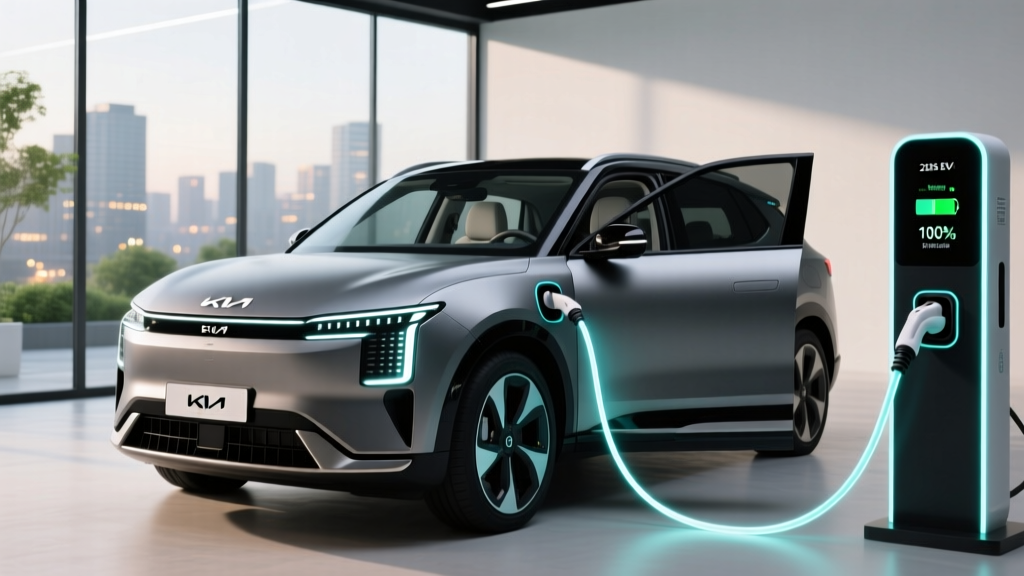
On a 350 kW Electrify America stall with the battery preconditioned (navigate to a charger using the built-in route planner, and the EV9 will warm the pack automatically), we observed the Wind RWD peak at 207 kW at 18% SoC, sustaining above 175 kW through 55%, then tapering to ~110 kW at 70% and ~60 kW at 85%. The 10–80% session completed in 26 minutes, adding roughly 185 miles of range.
The Light trim's LFP battery and lower peak rate (150 kW) mean 10–80% takes closer to 35 minutes. LFP tolerates regular 100% charging better than NMC — so if you're a Light owner, daily full charges won't hurt long-term health, partially offsetting the smaller usable capacity.
Home charging on a 48-amp Level 2 circuit delivers roughly 31 miles of range per hour. A full 0–100% charge on the 100 kWh pack takes about 10 hours — plan for an overnight session. Budget $800–$1,500 for a professional Level 2 installation (240V/60A circuit with a NACS or CCS1 hardwired unit), or more if your panel needs a 200-amp upgrade.
Interior, Cargo, and Tech: Three Rows That Actually Work
The EV9's 122.0-inch wheelbase translates into genuinely usable third-row space — a rarity in the electric SUV segment. Second-row legroom measures 42.8 inches, and the third row delivers 32.0 inches, enough for adults on short trips or kids on longer hauls. The available second-row captain's chairs with power relaxation (Land and above) are a standout.
Cargo volume behind the third row is 20.2 cu ft — sufficient for two carry-ons and groceries. Fold the third row and you get 43.5 cu ft; fold both rear rows for 81.7 cu ft. The front trunk (frunk) adds 1.8 cu ft on AWD trims and 3.2 cu ft on RWD — enough for charging cables and a small bag.
The dual 12.3-inch panoramic displays run Kia's latest ccNC infotainment software with wireless Apple CarPlay and Android Auto. Highway Driving Assist 2 (HDA2) provides competent SAE Level 2 lane centering and adaptive cruise with stop-and-go, including lane-change assist on highways. This is a driver-supervised system — not self-driving — and requires hands on the wheel.
Notable drawbacks: the EV9's touch-capacitive climate controls are a usability downgrade from physical buttons, and the second-row USB-C ports are oddly positioned low. Wind noise at highway speeds is present around the large side mirrors, though not class-worst.
EV9 Pricing vs. Key Competitors: Where It Stands
| Vehicle | Starting MSRP | EPA Range | Peak DCFC | Max Tow |
|---|---|---|---|---|
| Kia EV9 Wind RWD | $59,900 | 304 mi | 210 kW | 2,000 lb |
| Hyundai Ioniq 9 (AWD) | $62,500 | ~290 mi | 210 kW | 5,000 lb |
| Rivian R1S (Dual-Motor) | $79,900 | 352 mi | 220 kW | 7,700 lb |
| Tesla Model X (LR) | $81,630 | 335 mi | 250 kW | 5,000 lb |
The EV9's pricing advantage is substantial: roughly $20,000 less than a Rivian R1S and $22,000 below a Model X. The Hyundai Ioniq 9 is its closest sibling (shared E-GMP platform) and trades blows on price and tech, but the EV9's boxier styling yields slightly more third-row headroom and cargo volume. If towing capacity is a priority, the AWD EV9 Land's 5,000-lb rating covers most boat and small camper trailers, though the R1S dominates for heavy loads.
Look elsewhere if: You need 300+ real-world highway miles (consider R1S Max pack), tow above 5,000 lb regularly, or live in an area with sparse DC fast-charging infrastructure.
Warranty and Long-Term Ownership
Kia backs the EV9 with a 5-year/60,000-mile basic warranty and a 10-year/100,000-mile battery and powertrain warranty — one of the strongest in the segment. The battery warranty guarantees replacement or repair if capacity drops below 70% of original within the coverage period, per Kia's terms.
Based on data from earlier E-GMP vehicles (EV6, Ioniq 5), NMC packs in this architecture show roughly 8–12% degradation over 100,000 miles with typical use — well within the warranty threshold. LFP packs in the Light trim may degrade even more slowly but start with less total capacity.
Insurance costs run 10–18% higher than a comparable gas-powered Kia Telluride, based on 2026 average quotes. Maintenance is minimal: no oil changes, cabin air filter every 15,000 miles, and tire rotations. Budget for tire replacement sooner than a gas SUV — the EV9's weight and instant torque wear through rubber faster.
Frequently Asked Questions
What is the real-world range of the Kia EV9?
Expect 250–270 miles on the highway in mild weather for the Wind RWD (304 EPA), and 220–240 for AWD trims. In freezing temperatures, subtract another 15–25%. For daily commuting under 80 miles, range is a non-issue with home charging.
How fast does the EV9 charge at home and on the road?
At home on Level 2 (240V/48A), the EV9 gains about 31 miles of range per hour, filling the 100 kWh battery in roughly 10 hours. On a 350 kW DC fast charger, the 10–80% session takes approximately 24–26 minutes with battery preconditioning, adding ~185 miles of range.
How much does the EV9 cost after tax credits?
With an MSRP of $54,900–$75,900 depending on trim, the EV9 falls under the §30D SUV cap of $80,000. However, battery-sourcing rules have limited federal credit eligibility in 2026. Some builds may qualify for a partial $3,750 credit; verify your VIN on fueleconomy.gov. Without any federal credit, the Wind RWD lands at $59,900 before state incentives, which can add $1,000–$5,000 depending on your jurisdiction.
Does the Kia EV9 qualify for the federal EV tax credit?
Eligibility is limited and build-dependent in 2026. The EV9 meets the MSRP cap ($80K for SUVs) and most buyers meet income thresholds ($300K MFJ / $150K single), but critical-mineral and battery-component sourcing rules under IRS §30D have restricted the full $7,500 credit. Check the specific vehicle's eligibility before purchase and consult a tax professional.
Is the EV9 worth buying over the Rivian R1S or Tesla Model X?
For value-conscious families, yes. The EV9 delivers three-row practicality, competitive range, and 800V charging at $20,000+ less than rivals. The R1S wins on range, towing, and off-road capability; the Model X wins on Supercharger network access and performance. But if your budget centers on $60K–$65K, the EV9 Wind or Land is the strongest all-around option in the segment.
What are the biggest pros and cons of the EV9?
- Genuine three-row space with usable cargo behind third row
- 800V architecture enables ~24-minute 10–80% DC charging
- Class-leading value at $59,900–$64,900 for Wind/Land trims
- 10-year/100,000-mile battery warranty
- HDA2 is a competent Level 2 highway assist
- Highway range falls 15–20% below EPA in real-world use
- Full $7,500 federal tax credit largely unavailable in 2026
- Touch-capacitive climate controls frustrate while driving
- Wind noise noticeable at 70+ mph around mirrors
- LFP Light trim sacrifices range and DC charge speed
Sources: fueleconomy.gov (EPA range and efficiency data), IRS §30D Clean Vehicle Credit, Kia Motors America 2026 specification sheets.