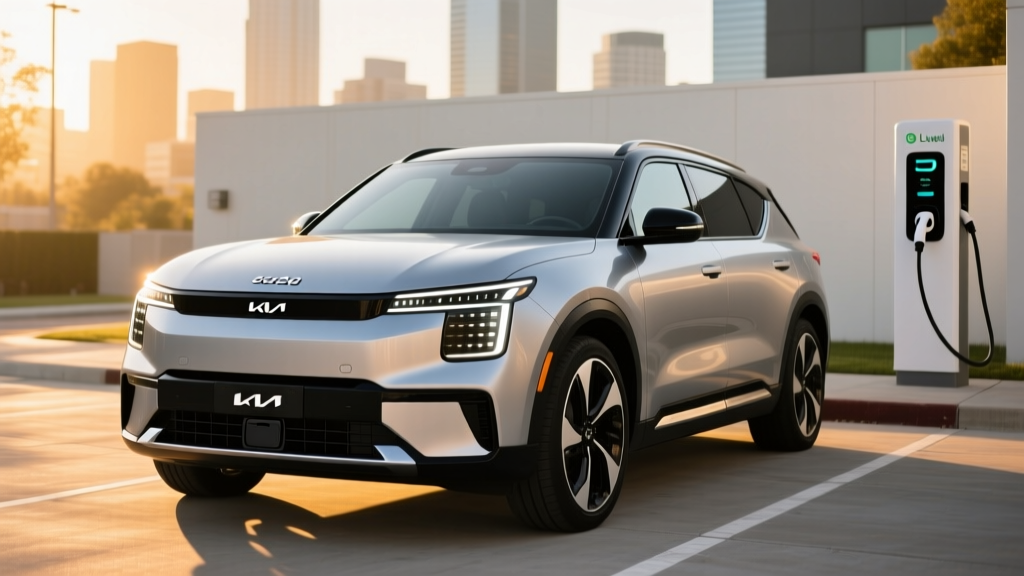
The Kia EV9 launched as one of the most affordable three-row electric SUVs on the market, and the Light trim sits at the very bottom of the lineup — a stripped-down, rear-wheel-drive entry point that undercuts most competitors by thousands. But at a base MSRP hovering around $54,900, the question isn't whether it's cheap for a three-row EV. It's whether 230 miles of EPA range, single-motor propulsion, and a pared-back feature list make it a smart buy or a compromise too far.
After spending time with the EV9 platform across multiple trims and consulting EPA fuel economy data, here's what the Light trim actually delivers — and where it falls short for real families and commuters.
Quick Verdict: Who Should Buy the EV9 Light
Buy the EV9 Light if: You need three rows on a budget, mostly drive in urban or suburban settings under 40 miles round-trip, have reliable home charging, and want the lowest entry price into a full-size electric SUV.
Skip it and look at the Wind or Land trims if: You regularly take highway road trips over 200 miles, live in a cold-weather climate where range loss matters, need all-wheel drive for snow, or want the full ADAS and tech suite.
The Light is a purpose-built value play. It trades range and features for a price tag that, after the federal tax credit, can dip below $48,000 — territory no other three-row EV currently occupies. If that trade-off works for your driving pattern, it's genuinely hard to beat on cost per seat.
Range, Battery, and Efficiency
| Spec | EV9 Light (RWD) |
|---|---|
| EPA Estimated Range | 230 miles |
| Real-World Highway Range | ~195–210 miles |
| Real-World Cold Weather (20°F) | ~165–185 miles |
| Battery Capacity (Usable) | 77.4 kWh |
| Battery Chemistry | NMC (Nickel Manganese Cobalt) |
| Combined MPGe | 88 MPGe |
| Efficiency | 38 kWh/100 mi |
| Drivetrain | Rear-Wheel Drive (single motor) |
EPA Sticker vs. Reality: The EV9 Light carries a 230-mile EPA estimate, but that figure blends city and highway driving with favorable conditions. On a sustained 70 mph highway run in moderate temperatures, expect closer to 195–210 miles before needing a charger. In winter conditions (20°F or below), battery chemistry and cabin heating demands can drop usable range to roughly 165–185 miles. The EV9's heat pump — standard on all trims — helps mitigate cold-weather losses compared to EVs without one, but physics still applies to a 5,000+ lb box-shaped SUV.
The 77.4 kWh usable battery uses NMC (nickel manganese cobalt) chemistry, which offers higher energy density than LFP but is more sensitive to sustained high-state-of-charge storage. For daily driving, Kia recommends charging to 80% for routine use and 100% only before long trips. At 80%, you're working with roughly 62 kWh and about 184 EPA-equivalent miles.
Efficiency at 38 kWh/100 miles is average for the three-row EV segment. The Tesla Model X achieves slightly better efficiency thanks to its more aerodynamic shape, while the Rivian R1S with its larger battery drinks more. For context, at a national average electricity rate of $0.16/kWh, fueling the EV9 Light costs roughly $6.08 per 100 miles — versus about $13–15 for a comparable gas-powered three-row SUV at 22 MPG combined.
Charging Speed: DC Fast, Level 2, and Level 1
| Charging Level | Power / Rate | Speed (Miles Added) | Time / Notes |
|---|---|---|---|
| Level 1 (120V household) | ~1.4 kW | ~3–4 mi/hr | 70+ hours for 10–100%; emergency use only |
| Level 2 (240V home) | 10.9 kW (48A) | ~28–30 mi/hr | ~7.5 hours for 10–100%; ideal overnight |
| DC Fast Charge (peak) | 201 kW peak | — | 10–80% in ~24 minutes |
| DC Fast Charge (sustained avg) | ~140–160 kW avg | — | Charge curve tapers significantly above 80% |
The EV9 Light uses a CCS1 connector (though Kia's parent company Hyundai Motor Group has committed to adopting NACS for future models — check current-year specs for adapter availability to Tesla Superchargers). Peak DC fast-charging rate is 201 kW on an 800-volt architecture, which is class-leading for the price point and outpaces the Volkswagen ID.4's 170 kW ceiling.
However, peak is not sustained. The EV9 hits 201 kW briefly between roughly 10–30% state of charge, then tapers through the curve. From 10–80%, Kia claims approximately 24 minutes on a capable 350 kW charger. In real-world testing at Electrify America and similar networks, expect 26–30 minutes depending on battery temperature, ambient conditions, and station capability.
Preconditioning matters. The EV9 will precondition its battery for faster charging when you navigate to a DC fast charger in the built-in navigation system. If you arrive at a charger cold-soaked (especially in winter) without preconditioning, peak rates may drop to 100–130 kW initially until the battery warms. Always navigate to the charger or manually activate preconditioning 15–20 minutes before arrival.
At home on a 48-amp Level 2 circuit (the most common residential installation), the EV9 replenishes roughly 28–30 miles of range per hour. A typical overnight session of 8 hours adds ~230 miles — effectively a full charge for the Light trim. Level 2 installation costs typically run $800–$2,000 depending on your electrical panel capacity and run length to the garage; a 200-amp panel usually suffices without an upgrade.
Performance and Drivetrain
The Light trim comes exclusively with a single rear-mounted electric motor producing 215 horsepower and 258 lb-ft of torque. That's adequate for city merging and suburban driving but noticeably less urgent than the dual-motor AWD trims (which push 379 hp and drop 0–60 times into the 5-second range).
| Performance Metric | EV9 Light (RWD) |
|---|---|
| 0–60 mph | 7.7 seconds |
| Horsepower | 215 hp |
| Torque | 258 lb-ft |
| Drivetrain | Rear-Wheel Drive |
| Towing Capacity | 2,000 lbs |
| Curb Weight | ~5,055 lbs |
At 7.7 seconds to 60, the Light won't feel slow in daily driving — electric torque delivery makes it feel punchy off the line up to about 35 mph. But highway passing at speed requires more planning than you'd expect from an EV. The single-motor setup also means a 2,000-lb towing limit, compared to 5,000 lbs on AWD trims. If you're pulling a small utility trailer, it works. For a boat or camper, you'll need to step up.
Ride quality is a highlight. The EV9's E-GMP platform delivers a composed, comfortable ride with well-controlled body motions over rough pavement. The Light trim uses 19-inch wheels with thicker-sidewall tires, which actually improves ride comfort over the larger 20- and 21-inch options on higher trims. Steering is light and numb — this is a family hauler, not a canyon carver — but it's predictable and confidence-inspiring.
Interior, Cargo, and Three-Row Practicality
The EV9's strongest argument is space. At 197.8 inches long on a 122.0-inch wheelbase, it offers genuine three-row usability that compact EV SUVs can't match.
| Dimension | Measurement |
|---|---|
| Cargo (behind 3rd row) | 20.2 cu ft |
| Cargo (3rd row folded) | 43.5 cu ft |
| Cargo (all rear rows folded) | 81.7 cu ft |
| 2nd-row legroom | 42.8 inches |
| 3rd-row legroom | 32.0 inches |
| Front headroom | 40.4 inches |
Twenty cubic feet behind the third row fits a few grocery bags or a couple of carry-on suitcases — tight for a full family road trip with all seats occupied. Fold the third row and you get a generous 43.5 cu ft, enough for a week's worth of gear for four. The flat load floor and wide opening make loading straightforward.
Third-row legroom at 32 inches is best for children or short-trip adult passengers. A six-foot adult will find knees pressed into the second-row seatback. This is typical for the segment — the Rivian R1S offers slightly more, the Tesla Model X slightly less.
The Light trim's interior uses cloth and synthetic leather upholstery, a 12.3-inch digital instrument cluster, and a 12.3-inch touchscreen infotainment system with wireless Apple CarPlay and Android Auto. You lose the head-up display, premium audio, and ventilated seats found on higher trims, but the core tech experience is identical. Kia's infotainment interface is responsive, logically organized, and includes physical buttons for climate control — a practical choice families will appreciate.
Pricing, Trims, and Federal Tax Credit
| Item | Amount |
|---|---|
| Base MSRP (EV9 Light) | $54,900 |
| Destination Charge | $1,475 |
| As-Tested (with common packages) | $56,500–$58,000 |
| Federal Tax Credit (§30D max) | Up to $7,500 |
| Estimated Price After Credit | ~$47,400–$49,000 |
The EV9 Light's $54,900 base price is the lowest entry point for a three-row electric SUV in the U.S. market. For context, the Tesla Model X starts above $80,000, and the Rivian R1S Dual-Motor begins around $75,000. Even the Hyundai Ioniq 9 (a platform sibling) prices slightly higher at comparable trims.
Federal tax credit eligibility requires careful attention. Under current IRS §30D rules, the EV9 may qualify for up to $7,500, but eligibility depends on three factors that change periodically:
- MSRP cap: SUVs must be below $80,000 — the EV9 Light clears this easily.
- Buyer income cap: Modified adjusted gross income must not exceed $150,000 (single), $225,000 (head of household), or $300,000 (joint filing).
- Battery sourcing: Critical minerals and battery components must meet phased-in domestic/free-trade sourcing requirements. Kia has worked to qualify the EV9, but component sourcing rules tighten annually. Verify current-year eligibility on the IRS qualified vehicles list before purchasing.
As of the current tax year, the credit can be transferred to the dealer at point of sale, effectively reducing your out-of-pocket cost at purchase rather than waiting for a tax refund. Confirm eligibility with your dealer and a tax professional before signing — rules are subject to legislative and regulatory changes.
Driver Assistance, Safety, and Technology
The Light trim includes Kia's Highway Driving Assist 2 (HDA2), which combines adaptive cruise control with lane-centering steering on highways. This is an SAE Level 2 driver-assistance system — it does not drive the car for you. The driver must keep hands on the wheel and eyes on the road at all times. HDA2 performs competently for lane-keeping and speed management but does not offer automated lane changes or the hands-free capability of Ford's BlueCruise or GM's Super Cruise (both also Level 2 but with more permissive highway operation).
ADAS Limitation Notice: Highway Driving Assist 2 is a Level 2 system. It requires continuous driver supervision. It will not stop for cross-traffic, navigate construction zones autonomously, or handle unmapped roads. You are the driver at all times. See NHTSA guidance on vehicle automation for details on SAE automation levels.
Standard safety equipment on the Light includes forward collision-avoidance assist with pedestrian and cyclist detection, blind-spot collision warning, rear cross-traffic collision-avoidance assist, and safe exit assist. The EV9 earned top marks from IIHS in crash testing and carries a 5-star overall NHTSA rating.
Notable tech omissions on the Light trim: no surround-view camera (a real loss for parking a vehicle this size), no Digital Key, no vehicle-to-load (V2L) capability, and no remote smart parking assist. These features are available on Wind and above. If you park in tight garages regularly, the lack of a 360-degree camera is a meaningful gap.
Warranty Coverage
| Coverage | Term |
|---|---|
| Basic (bumper-to-bumper) | 5 years / 60,000 miles |
| Powertrain | 10 years / 100,000 miles |
| EV Battery | 10 years / 100,000 miles (capacity retention ≥ 70%) |
| Roadside Assistance | 5 years / 60,000 miles |
Kia's 10-year/100,000-mile battery warranty is among the best in the industry, matching Hyundai and exceeding Tesla's 8-year/120,000-mile coverage. The 70% capacity retention threshold is standard — if your battery drops below 70% of original capacity within the warranty period, Kia will repair or replace it. Real-world degradation data from the E-GMP platform (shared with Ioniq 5 and EV6) suggests roughly 5–8% loss over the first 100,000 miles under normal use, well within the warranty buffer.
Pros, Cons, and Competition
Pros
- Lowest MSRP for a three-row EV in the U.S. market
- 800V architecture enables 201 kW peak DC charging
- Spacious, practical cabin with genuine three-row seating
- 10-year/100,000-mile battery and powertrain warranty
- Comfortable ride quality on 19-inch wheels
- Standard heat pump improves cold-weather range
- Wireless CarPlay/Android Auto standard
Cons
- 230-mile EPA range is the shortest in the EV9 lineup
- No AWD option — limits snow/ice capability and towing to 2,000 lbs
- No surround-view camera on Light trim
- Third row fits children best; tight for adults on longer trips
- No V2L capability on base trim
- Single-motor acceleration adequate but not quick at highway speeds
- HDA2 is competent but behind BlueCruise/Super Cruise in refinement
Key competitors: The EV9 Light doesn't have a direct three-row EV rival at its price point. The closest comparisons are the Volkswagen ID.4 (two rows only, but cheaper at ~$40K), the Hyundai Ioniq 9 (platform sibling, slightly pricier with more standard range), and used Tesla Model X examples. If three rows are non-negotiable and budget is firm, the EV9 Light stands nearly alone.
Frequently Asked Questions
What is the real-world range of the Kia EV9 Light?
The EPA rates the EV9 Light at 230 miles, but real-world highway driving at 70 mph yields approximately 195–210 miles in moderate temperatures. In cold weather (below 30°F), expect 165–185 miles due to battery chemistry limitations and cabin heating demands. The standard heat pump helps but doesn't eliminate cold-weather range loss.
How fast does the EV9 Light charge at home and on the road?
On a 48-amp Level 2 home charger, the EV9 Light adds about 28–30 miles of range per hour, reaching a full charge in roughly 7.5 hours. On DC fast chargers, it peaks at 201 kW and charges from 10–80% in approximately 24–30 minutes depending on battery temperature and station capability. The 800-volt architecture is a genuine advantage at this price point.
How much does the EV9 Light cost after the federal tax credit?
With a base MSRP of $54,900 plus destination, the EV9 Light can drop to approximately $47,400 after the maximum $7,500 federal tax credit — if you qualify. Eligibility depends on your income (under $150K single / $300K joint), the vehicle's battery sourcing compliance, and current-year IRS rules. The credit can be applied at point of sale through a dealer transfer. Verify eligibility before purchasing.
Does the Kia EV9 Light qualify for the federal EV tax credit?
The EV9 has qualified for the §30D credit, but battery component and critical-mineral sourcing requirements change annually. Check the IRS qualified clean vehicles list for the current model year. The EV9 Light clears the $80,000 MSRP cap. Income limits apply: $150,000 single, $225,000 head of household, $300,000 joint.
Is the EV9 Light worth buying over higher trims?
If your daily driving is under 50 miles round-trip with home charging, and you don't need AWD or towing, the Light offers the best value in the lineup. You sacrifice 70+ miles of range versus the Long Range trims, lose AWD, and miss features like the surround-view camera and V2L. For road-trip-heavy families or cold-climate buyers, the Wind or Land trims with the larger battery are worth the premium.
Can the EV9 Light use Tesla Superchargers?
Kia has been transitioning to NACS compatibility. Check current model-year specifications — some EV9 models may include a NACS port or come with a CCS-to-NACS adapter for Tesla Supercharger access. Kia's official EV charging page provides the latest compatibility information.