Quick Verdict: The Most Affordable Three-Row EV
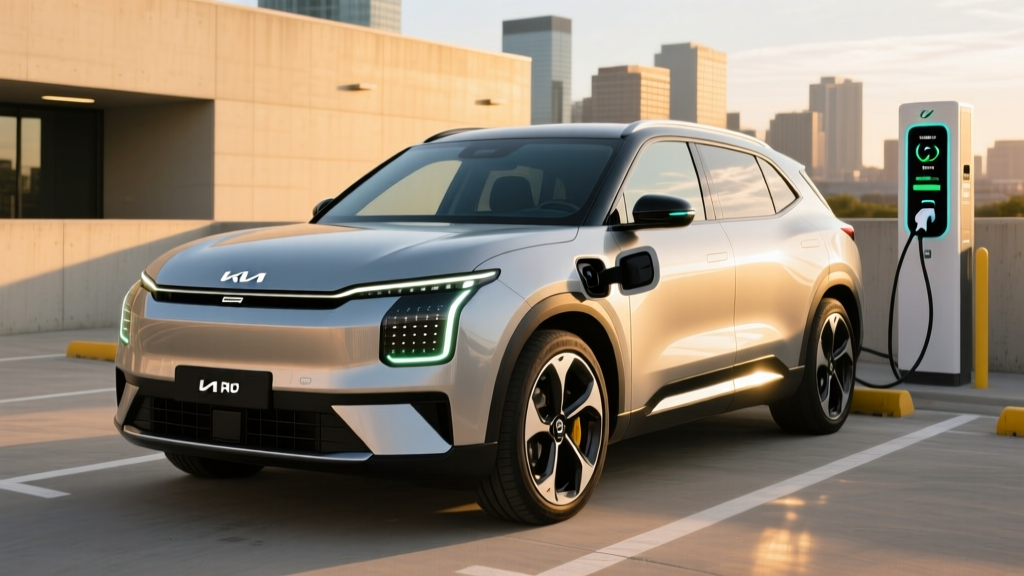
The 2026 Kia EV9 Light RWD occupies a rare position in the electric-vehicle market: it is the least expensive way to put three rows of seats, a dedicated EV platform, and DC fast-charging capability into a single garage. Starting at $54,900 before incentives, the Light RWD trim strips away the dual-motor AWD system and the larger 100.0 kWh battery pack found on higher trims, trading range and power for a lower entry price. For buyers who need occasional third-row seating but mostly commute within a 60-mile daily radius, the math works. For road-trip-heavy families or those in extreme cold climates, the 230-mile EPA range and single-motor output will feel limiting.
This review covers everything from real-world range expectations to charging-curve behavior, federal tax credit eligibility under current IRS §30D rules, and how the EV9 Light RWD stacks up against the few three-row electric SUVs competing in this price band.
Range, Efficiency, and the Real-World Reality Check
The 2026 Kia EV9 Light RWD carries a 76.1 kWh usable battery (81.7 kWh gross) using NMC (nickel manganese cobalt) lithium-ion chemistry. The EPA rates this configuration at 230 miles of combined range. Efficiency lands at 85 MPGe combined, which translates to roughly 39 kWh per 100 miles — reasonable for a 5,000-pound three-row SUV but not class-leading.
EPA Combined: 230 miles
Highway driving (70-75 mph): Expect ~185–200 miles. The EV9's boxy aerodynamics (Cd ~0.28) penalize highway efficiency more than sleeker crossovers.
Cold weather (below 32°F): Expect ~160–180 miles. NMC chemistry loses 20–30% capacity in freezing temps without consistent preconditioning.
City / moderate climate: 220–235 miles is achievable with regenerative braking doing heavy lifting.
Bottom line: Plan trips around a 180-mile practical radius unless conditions are ideal.
The Light RWD trim does not include a heat pump — that feature is reserved for the Wind trim and above. Without a heat pump, cabin heating in winter draws directly from the traction battery, which is the primary reason cold-weather range drops hit this trim harder than higher-spec EV9 models. If you live in the upper Midwest or Northeast, this is a meaningful ownership consideration.
Charging Speed: DC Fast, Level 2, and the Curve
Charging is where the EV9 Light RWD delivers solid — though not spectacular — performance. The 800-volt E-GMP architecture enables peak DC fast-charging rates up to 202 kW at compatible chargers (350 kW stations from Electrify America or Tesla Superchargers with NACS adapter). In practice, the charge curve peaks around 195–202 kW between 10–40% state of charge, then tapers progressively.
| Charging Level | Power / Rate | Speed | Notes |
|---|---|---|---|
| Level 1 (120V) | ~1.4 kW | ~3–4 mi/hr | Emergency/top-up only; full charge in ~55+ hours |
| Level 2 (240V, 48A) | 11.5 kW (onboard charger) | ~29 mi/hr | Full charge in ~7 hours; ideal overnight home charging |
| DC Fast Charge (peak) | 202 kW peak | 10–80% in ~24 min | Requires 350 kW-capable station; tapers above 55% SoC |
| DC Fast Charge (50 kW station) | ~50 kW sustained | 10–80% in ~65 min | Common older-station speed; plan accordingly |
The 10–80% DC fast-charge time of approximately 24 minutes is competitive with the segment. However, the smaller 76.1 kWh battery means you're adding fewer total miles per charging stop compared to the EV9's 100.0 kWh pack (which adds roughly 80 more miles in the same session). At a 350 kW charger, expect to add about 120–130 miles of range in a 20-minute stop — enough for highway driving between most interstate charging corridors, but tight for rural stretches in the Mountain West or Plains states.
Home charging on a 48-amp Level 2 circuit (the recommended setup for the EV9's 11.5 kW onboard charger) replenishes the full battery overnight in roughly 7 hours. If your electrical panel supports a 60-amp dedicated circuit, installation typically runs $800–$2,000 depending on panel proximity and local permitting, according to data from Kia's official EV9 page and industry electrician surveys.
Performance and Drivetrain
The Light RWD pairs its 76.1 kWh pack with a single rear-mounted permanent-magnet synchronous motor producing 201 horsepower and 258 lb-ft of torque. The 0–60 mph time clocks in at approximately 7.8 seconds — adequate for merging and passing but noticeably more relaxed than the 379-hp AWD variants that hit 60 in the low 5-second range.
| Spec | Value |
|---|---|
| Battery (usable / gross) | 76.1 kWh / 81.7 kWh, NMC |
| EPA Range | 230 miles |
| MPGe (city / hwy / combined) | 91 / 78 / 85 MPGe |
| Efficiency | 39 kWh/100 mi |
| Motor | Single rear (RWD) |
| Horsepower / Torque | 201 hp / 258 lb-ft |
| 0–60 mph | ~7.8 seconds |
| Max DC Fast Charge | 202 kW |
| 10–80% DC Time | ~24 minutes |
| Level 2 Onboard Charger | 11.5 kW |
| Towing Capacity | 2,000 lbs (with tow hitch accessory) |
| Base MSRP | $54,900 |
| Battery/Powertrain Warranty | 10 yr / 100,000 mi |
Ride quality benefits from the E-GMP platform's low center of gravity and multi-link rear suspension. The Light RWD rides on 19-inch wheels with all-season tires, and the tuning prioritizes comfort over sportiness — appropriate for a family hauler. Steering is light and predictable, and the turning radius is surprisingly manageable for a vehicle measuring 197.4 inches long.
Towing capacity for the RWD model is rated at 2,000 pounds with the dealer-installed tow hitch — enough for a small utility trailer or a pair of dirt bikes, but not a boat or camper. Buyers who need serious towing should look at the AWD trims, which are rated up to 5,000 pounds.
Interior Space, Cargo, and Passenger Comfort
Three-row EV SUVs remain a short list, and the EV9's interior packaging is one of its strongest selling points. The flat floor (a benefit of the dedicated EV platform) creates genuine usable space across all three rows.
- Headroom (front / second / third): 40.9 / 39.0 / 37.3 inches
- Legroom (front / second / third): 41.4 / 42.8 / 29.9 inches
- Cargo behind third row: 20.2 cu ft
- Cargo behind second row (third row folded): 43.5 cu ft
- Cargo behind first row (both rear rows folded): 81.7 cu ft
- Front trunk (frunk): 1.8 cu ft (RWD models — small but useful for charging cables)
The second row in the Light trim is a 60/40 split bench (three passengers), giving the EV9 a 7-passenger capacity. The second-row slide-and-recline function provides flexibility for either cargo or legroom, though the 29.9 inches of third-row legroom is best suited for children or adults on short trips. For comparison, the Rivian R1S offers slightly more third-row space, but at a significantly higher price point.
The Light trim includes synthetic leather (SofTex-style) seating surfaces, heated front seats, and a heated steering wheel. Ventilated front seats and second-row heated seats require stepping up to the Wind trim or above. Kia's dual 12.3-inch panoramic display handles infotainment and instrument cluster duties, with wireless Apple CarPlay and Android Auto standard across all trims.
Pricing, Trims, and Federal Tax Credit Eligibility
The 2026 Kia EV9 Light RWD starts at $54,900 (including destination charge). This positions it as the entry point into the EV9 lineup, which spans up to the $73,900 GT-Line AWD with the larger battery.
| Trim | Drivetrain | Battery | EPA Range | MSRP |
|---|---|---|---|---|
| Light | RWD | 76.1 kWh | 230 mi | $54,900 |
| Light Long Range | RWD | 100.0 kWh | 304 mi | $59,400 |
| Wind | AWD | 76.1 kWh | 230 mi | $61,400 |
| Land | AWD | 100.0 kWh | 280 mi | $66,900 |
| GT-Line | AWD | 100.0 kWh | 270 mi | $73,900 |
Does the EV9 Light RWD Qualify for the Federal EV Tax Credit?
The Kia EV9 is assembled in West Point, Georgia, which satisfies the North American final assembly requirement under IRS §30D rules. However, the full $7,500 credit depends on meeting both the critical minerals and battery component sourcing thresholds, which shift annually and are subject to change.
- MSRP cap: SUVs/vans must be ≤ $80,000 — the EV9 Light RWD at $54,900 qualifies ✓
- Buyer income cap: AGI ≤ $300,000 (joint) / $225,000 (head of household) / $150,000 (single) ✓ (buyer-dependent)
- North American assembly: West Point, GA ✓
- Battery sourcing (critical minerals + components): Varies by production batch — confirm via dealer VIN lookup at fueleconomy.gov
- Point-of-sale transfer: Available — credit can reduce purchase price at the dealership rather than waiting for tax filing
If the full credit applies, the effective price of the EV9 Light RWD drops to approximately $47,400 — placing it in direct competition with two-row EVs like the Hyundai Ioniq 5 and Ford Mustang Mach-E on price, while offering a third row those vehicles cannot match.
Tech, Safety, and Driver-Assist Features
The EV9 Light RWD comes well-equipped with Kia's latest ADAS suite, branded as Highway Driving Assist 2 (HDA2). This is a SAE Level 2 system — it provides adaptive cruise control with stop-and-go, lane-centering steering, and lane-change assist, but requires the driver to maintain hands-on-wheel engagement at all times. It is not autonomous driving.
HDA2 can manage speed, following distance, and lane position on divided highways. The driver must remain alert, keep hands on the wheel, and be prepared to take over instantly. This is comparable to Toyota Safety Sense 3.0 or Honda Sensing — not comparable to Waymo's Level 4 driverless service.
Standard safety and tech features on the Light trim include:
- Forward collision-avoidance assist with pedestrian and cyclist detection
- Blind-spot collision-avoidance assist
- Rear cross-traffic collision-avoidance assist
- Safe exit assist (prevents doors from opening into traffic)
- Surround-view monitor (360° camera)
- Dual 12.3-inch panoramic curved display
- Wireless Apple CarPlay and Android Auto
- 6 USB-C ports across all three rows
- Over-the-air (OTA) software update capability
- Digital Key 2 (use your smartphone as the key fob)
Notable omissions on the Light trim compared to higher trims: no head-up display, no remote smart parking assist, no Highway Driving Assist with lane-change-on-command (that requires HDA2 with the navigation-based curve slowdown feature found on Wind and above), and no vehicle-to-load (V2L) power outlet. The V2L feature — which lets you power appliances or tools from the EV9's battery — is available starting on the Wind trim and is a genuine differentiator for camping or emergency backup use.
Ownership Costs, Warranty, and Depreciation
Kia backs the EV9 with one of the strongest warranty packages in the segment:
- Basic warranty: 5 years / 60,000 miles
- Powertrain warranty: 10 years / 100,000 miles
- Battery warranty: 10 years / 100,000 miles (covers capacity loss below 70% of original)
- Roadside assistance: 5 years / 60,000 miles
The 70% capacity retention threshold is industry-standard (matching Hyundai, Tesla, and Ford), though some competitors like Rivian use an identical floor. Based on IIHS testing, the EV9 earned a Top Safety Pick+ rating for the prior model year, which we expect to carry forward given no structural changes for 2026.
For total cost of ownership, the EV9 Light RWD benefits from low per-mile energy costs. At the national average electricity rate of $0.17/kWh, charging costs approximately $0.066 per mile — roughly one-third the per-mile fuel cost of a comparable gasoline three-row SUV like the Kia Telluride (estimated at ~$0.18/mi at $3.50/gallon and 21 MPG combined). Over five years and 75,000 miles, that translates to approximately $8,500 in fuel savings, partially offsetting the EV9's higher purchase price.
Insurance premiums for the EV9 tend to run 10–20% higher than the gas Telluride, based on industry averages for electric SUVs in this price range. Budget an additional $200–$400 annually depending on your state and driving record.
Pros, Cons, and Who Should Buy the EV9 Light RWD
✓ Pros
- Most affordable three-row EV on the market
- Genuine 7-passenger seating with flat EV floor
- 800V architecture enables competitive DC fast-charging
- 10-year / 100,000-mile battery warranty
- Strong standard safety and ADAS suite
- Eligible for up to $7,500 federal tax credit (VIN-dependent)
- Point-of-sale credit transfer reduces out-of-pocket cost
✗ Cons
- 230-mile EPA range is tight for road trips
- No heat pump (reduces cold-weather range further)
- 201 hp feels modest for a 5,000-lb vehicle
- 2,000-lb towing capacity (RWD) limits utility
- No V2L capability on the Light trim
- Third-row legroom best for children only
- 202 kW peak charge rate trails the 250+ kW leaders
- Families with young children who need a third row for car seats or short school-run trips but don't regularly fill all seven seats with adults.
- Home-charging-capable buyers with a garage or driveway where a Level 2 charger can be installed — this is essential given the 230-mile range.
- Budget-conscious EV shoppers who want to maximize the federal tax credit and minimize upfront cost in the three-row segment.
- Warm-climate residents where cold-weather range loss is less of a factor.
- Frequent road-trippers who need 300+ miles of range — consider the EV9 Light Long Range or Land AWD instead.
- Cold-climate buyers without a heat pump — step up to the Wind trim at minimum.
- Buyers who need to tow more than 2,000 lbs — the AWD trims are required.
Competitor Comparison
The three-row electric SUV segment is still small. Here's how the EV9 Light RWD stacks up on key metrics:
| Vehicle | Starting MSRP | EPA Range | DC Fast Charge | 0–60 mph |
|---|---|---|---|---|
| Kia EV9 Light RWD | $54,900 | 230 mi | 202 kW | 7.8 sec |
| Rivian R1S (Dual-Motor Standard) | $75,900 | 270 mi | ~200 kW | 5.5 sec |
| Tesla Model X (Base AWD) | $79,990 | 311 mi | 250 kW | 3.8 sec |
| Volkswagen ID. Buzz (Pro S) | $59,995 | 234 mi | 175 kW | 7.9 sec |
The EV9 Light RWD undercuts every competitor on price by a significant margin. The trade-off is range and power — the Tesla Model X offers 80 more miles of range and dramatically more acceleration, but at nearly $25,000 more. The Rivian R1S is more capable off-road and has a more premium interior, but again at a steep premium. The VW ID. Buzz is the closest rival in spirit (retro-styled, family-oriented, similar range), but it lacks the EV9's charging speed and third-row versatility.
Frequently Asked Questions
What is the real-world range of the Kia EV9 Light RWD?
The EPA rates the EV9 Light RWD at 230 miles combined. In real-world highway driving at 70–75 mph, expect 185–200 miles. In freezing temperatures without a heat pump, that can drop to 160–180 miles. City driving in moderate weather can stretch it to 220–235 miles thanks to regenerative braking.
How fast does the EV9 Light RWD charge?
On a 350 kW-capable DC fast charger, the EV9 Light RWD peaks at 202 kW and charges from 10–80% in approximately 24 minutes. On a home Level 2 charger (240V, 48A), the 11.5 kW onboard charger adds about 29 miles per hour, fully replenishing the battery in roughly 7 hours.
How much does the EV9 Light RWD cost after tax credits?
The base MSRP is $54,900. If your specific VIN qualifies for the full $7,500 federal tax credit under IRS §30D (and you meet income requirements), the effective price drops to approximately $47,400. State and local incentives may reduce the cost further — check AFDC's state incentive database for your area.
Is the Kia EV9 Light RWD worth buying vs. competitors?
If your priority is an affordable three-row electric SUV and you can charge at home, the EV9 Light RWD is the best value in the segment. If you need more range for road trips, more power, or higher towing capacity, you'll need to spend significantly more on the Rivian R1S, Tesla Model X, or a higher EV9 trim.
Does the EV9 Light RWD have a heat pump?
No. The heat pump is standard starting on the Wind trim. This is the single biggest functional difference between the Light and Wind trims beyond AWD, and it meaningfully impacts cold-weather range and cabin heating efficiency.
Can I use Tesla Superchargers with the EV9?
Kia has been transitioning to the NACS (North American Charging Standard) connector. Depending on your vehicle's build date, the EV9 may come with a native NACS port or include a CCS-to-NACS adapter. Confirm with your dealer which connector your specific vehicle ships with, as this affects access to Tesla's Supercharger network.
What is the battery warranty on the EV9?
Kia covers the EV9's battery for 10 years or 100,000 miles, whichever comes first. The warranty guarantees the battery will retain at least 70% of its original capacity during that period. If degradation exceeds that threshold, Kia will repair or replace the battery at no cost.