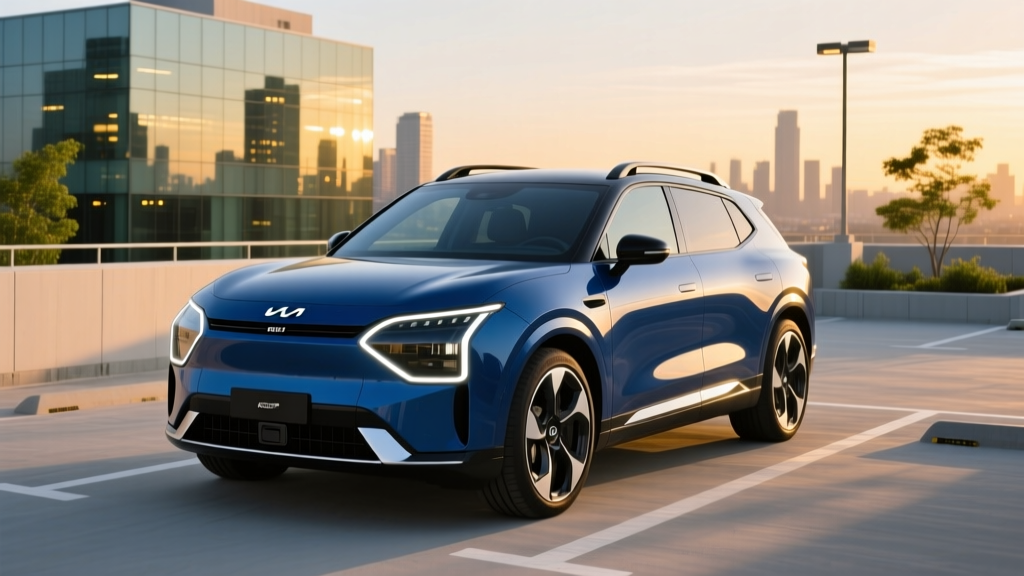
Quick Verdict: Is the Kia EV9 Right for Your Garage?
The 2026 Kia EV9 remains the benchmark for three-row electric SUVs, balancing genuine passenger space with respectable range and class-leading charging speeds. For families who need three rows but want to avoid the six-figure price tags of the Rivian R1S or Tesla Model X, the EV9 is the most practical battery-electric option on the market. Leasing has become an increasingly popular route to access this vehicle, particularly because it can unlock federal tax credit benefits that many buyers no longer qualify for under current IRS rules.
| Spec | Light (RWD) | Wind/Land (AWD) | GT-Line (AWD) |
|---|---|---|---|
| EPA Range | 304 mi | 280 mi | 270 mi |
| Battery (usable) | 76.1 kWh (NMC) | 99.8 kWh (NMC) | 99.8 kWh (NMC) |
| Horsepower | 215 hp | 379 hp | 379 hp (440 lb-ft) |
| 0–60 mph | 7.8 sec | 5.0 sec | 4.5 sec |
| Max DC Charge | ~170 kW | ~210 kW | ~236 kW |
| 10–80% DCFC | ~26 min | ~24 min | ~22 min |
| Level 2 Rate | 10.9 kW | 10.9 kW | 10.9 kW |
| MPGe (combined) | 88 MPGe | 83 MPGe | 80 MPGe |
| Towing Capacity | 2,000 lb | 5,000 lb | 5,000 lb |
| Base MSRP | $54,900 | $63,900 | $73,900 |
Real-World Range: What the EPA Sticker Doesn't Tell You
The EPA estimates for the 2026 EV9 are competitive, but real-world driving tells a more nuanced story. The Light RWD trim achieves an EPA-rated 304 miles, while the more popular AWD trims with the larger 99.8 kWh battery settle around 270–280 miles.
Range Reality Check
EPA Estimate: 270–304 miles (trim dependent)
Real-World Highway (70 mph): Expect ~230–255 miles on AWD trims. The EV9's boxy aerodynamics penalize efficiency at sustained speeds.
Cold-Weather Impact: In sub-freezing conditions (20–32°F), plan for a 20–30% range reduction, dropping effective range to ~190–220 miles on AWD models. The EV9's heat pump (standard on most trims) helps mitigate this, but physics still wins in deep cold.
City/Stop-and-Go: Regenerative braking recovers energy effectively; expect to meet or slightly exceed EPA estimates in urban driving.
According to fueleconomy.gov, the EV9 AWD achieves 83 MPGe combined (35 kWh/100mi). For context, that's roughly 3.5 miles per kWh — respectable for a 5,000+ lb vehicle, but not class-leading. If your daily commute is under 80 miles round-trip and you charge at home, the real-world range is a non-issue. Road trippers should plan stops every 200–220 miles to stay comfortable.
Charging Speed: Where the EV9 Excels
Charging performance is arguably the EV9's strongest technical advantage over competitors like the Volkswagen ID.4 (which lacks a third row anyway) or the older Tesla Model X (which uses a different architecture). The EV9's 800-volt electrical architecture enables DC fast-charging speeds that rival much smaller vehicles.
| Charging Method | Power / Rate | Time / Miles Added |
|---|---|---|
| Level 1 (120V household) | ~1.4 kW | ~3–4 miles per hour |
| Level 2 (240V home/public) | 10.9 kW (48A) | ~28–32 miles per hour; full charge in ~9 hrs (99.8 kWh) |
| DC Fast Charge (peak) | Up to 236 kW (GT-Line) | 10–80% in ~22 min; adds ~150 mi in 15 min under ideal conditions |
Charge curve reality: The EV9 peaks at its max kW only between ~10–40% state of charge. From 40–60%, it sustains roughly 150–180 kW on AWD trims, then tapers significantly above 80%. This is normal for NMC chemistry, but it means charging from 80–100% on a road trip is painfully slow — avoid it unless necessary.
For home charging, a Level 2 wallbox (like the ChargePoint Home Flex or Emporia Vue) is essentially mandatory. A full overnight charge from 10–90% takes about 8 hours on the large battery. Installation costs for a 240V/48A circuit typically run $800–$2,500 depending on your electrical panel's proximity to the garage and whether a panel upgrade (to 200A service) is needed.
Leasing vs. Buying: The Tax Credit Advantage
This is where EV9 leasing becomes strategically interesting. Under current IRS §30D rules, the federal EV tax credit of up to $7,500 is subject to strict requirements:
Federal EV Tax Credit Requirements (§30D)
- MSRP Cap: SUVs must be under $80,000 (EV9 Light/Wind qualify; GT-Line may exceed cap depending on options)
- Income Cap: Modified AGI ≤ $300,000 (joint) / $225,000 (head of household) / $150,000 (single)
- Battery Sourcing: Critical minerals and battery components must meet escalating domestic-content thresholds — Kia's South Korean battery sourcing has been a compliance challenge
- Point-of-Sale Transfer: Eligible buyers can transfer the credit to the dealer at purchase, reducing the sale price directly
Here's the catch: as of 2025–2026, many Kia EV9 trims have not consistently qualified for the full $7,500 purchase credit due to battery-sourcing rules. However, the commercial clean vehicle credit (§45W) operates differently for leased vehicles. When you lease, the leasing company (Kia Finance) technically "owns" the vehicle and can claim the credit, often passing some or all of it to you as a lease cash incentive.
| Trim | MSRP | Lease Cash (est.) | Est. Monthly Payment | Due at Signing |
|---|---|---|---|---|
| Light RWD | $54,900 | $7,500 | $450–$550 | $3,000–$4,500 |
| Wind AWD | $63,900 | $7,500 | $575–$700 | $3,500–$5,000 |
| GT-Line AWD | $73,900 | $5,000–$7,500 | $700–$850 | $4,000–$5,500 |
Key caveat: Lease cash amounts vary monthly and by region. Always confirm current incentives with your dealer and check Kia's official offers page. The figures above are estimates based on late-2025/early-2026 promotional patterns.
Interior, Tech, and Daily Livability
The EV9's cabin is where it justifies its premium positioning. With genuine three-row seating (not the cramped "occasional use" third rows of many midsize SUVs), the EV9 offers:
- Third-row legroom: 32.0 inches (adults can sit comfortably for short trips)
- Cargo behind third row: 20.2 cu ft (enough for groceries or a stroller)
- Cargo behind second row: 43.5 cu ft
- Max cargo (second row folded): 81.7 cu ft
- Front trunk (frunk): 1.8 cu ft (small — fits a charging cable bag, not much else)
The dual 12.3-inch displays (instrument cluster + infotainment) run Kia's latest UI, which is responsive and logically structured. Wireless Apple CarPlay and Android Auto are standard. The available head-up display with augmented-reality navigation is a standout feature on GT-Line trims.
Driver assistance: Kia's Highway Driving Assist 2 (HDA2) is a solid Level 2 system — it handles lane centering, adaptive cruise, and lane-change assists competently. It is not self-driving; you must keep hands on the wheel and eyes on the road. It's comparable to Hyundai's SmartSense and slightly behind Ford's BlueCruise in hands-free highway zones.
Notable drawbacks: The EV9's ride quality is firm over broken pavement (a trade-off for its composed handling). The regenerative braking paddle controls take a week to build muscle memory. And the frunk is disappointingly small for a vehicle this size.
Pros, Cons, and Who Should Lease the EV9
Pros
- Fastest-charging three-row EV (10–80% in ~22 min)
- Genuine adult-friendly third row
- 800V architecture future-proofs for charging infrastructure
- Strong lease incentives via §45W commercial credit
- 5,000-lb towing (AWD trims)
- 10-year/100,000-mile powertrain warranty
Cons
- Real-world highway range drops to ~230–250 mi (AWD)
- Purchase tax credit eligibility inconsistent due to sourcing rules
- Firm ride on rough roads
- Small frunk
- GT-Line approaches $80K MSRP cap
Who This EV Suits Best
Ideal for: Families with 2–3 children who need three rows daily, suburban commuters with home charging, road-trippers willing to plan 200-mile charging stops, and buyers who want to leverage lease cash to bypass purchase-credit sourcing restrictions.
Not ideal for: Apartment dwellers without charging access, solo commuters (you're hauling empty seats), or buyers in extreme-cold climates where range loss compounds with the EV9's already-moderate efficiency.
EV9 vs. Competitors: Is It Worth the Lease?
The EV9's direct competitors are limited. The Rivian R1S starts at ~$79,900 and offers more range and off-road capability, but it's significantly more expensive. The Tesla Model X is aging and starts above $80,000 (exceeding the tax credit MSRP cap entirely). The upcoming Volvo EX90 is a strong contender but has faced production delays and pricing uncertainty.
For the $55K–$70K range, the EV9 is essentially the only game in town for a new, warranty-backed three-row electric SUV. If you don't need three rows, the Hyundai Ioniq 5 or Kia EV6 offer better efficiency and similar charging speeds at lower prices.
Warranty and Long-Term Ownership
Kia backs the EV9 with:
- Basic warranty: 5 years / 60,000 miles
- Powertrain/battery warranty: 10 years / 100,000 miles (covers battery capacity below 70% state of health)
- Roadside assistance: 5 years / 60,000 miles
The 10-year powertrain warranty is a significant advantage over Tesla (8 years/120K mi) and matches Hyundai's coverage. For leasers on 36-month terms, you'll be well within warranty for the entire lease period, eliminating long-term battery-degradation risk.
Frequently Asked Questions
What is the real-world range of the Kia EV9?
The EPA rates the EV9 at 270–304 miles depending on trim. Real-world highway driving at 70 mph yields ~230–255 miles on AWD trims. In cold weather (below freezing), expect a 20–30% reduction, dropping effective range to ~190–220 miles.
How fast does the EV9 charge at home and on the road?
On a Level 2 home charger (10.9 kW), the EV9 adds ~30 miles per hour and fully charges overnight in ~9 hours. On DC fast chargers, the GT-Line peaks at 236 kW, achieving 10–80% in ~22 minutes under ideal conditions.
Does the Kia EV9 qualify for the $7,500 federal tax credit?
It depends. For purchases, the EV9's battery sourcing has made §30D eligibility inconsistent — check the DOE's alternative fuels site for current eligibility. For leases, the commercial credit (§45W) often allows Kia to pass through up to $7,500 as lease cash, regardless of buyer income or battery sourcing.
Is leasing the EV9 better than buying in 2026?
For many buyers, yes. Leasing bypasses the purchase credit's income caps, MSRP caps, and battery-sourcing rules. If you can access the full $7,500 lease cash, your effective monthly payment drops significantly. Leasing also eliminates long-term depreciation risk and battery-replacement concerns.
Can the EV9 tow a trailer?
AWD trims (Wind, Land, GT-Line) are rated for 5,000 lbs — sufficient for a small boat, motorcycle trailer, or light camper. The RWD Light trim is limited to 2,000 lbs. Towing reduces range by 30–50%, so plan accordingly.
How does the EV9 compare to the Hyundai Ioniq 9?
The Ioniq 9 (Hyundai's EV9 sibling) shares the same platform and battery options but features different styling, slightly different suspension tuning, and Hyundai's infotainment UI. Range and charging specs are nearly identical. Choose based on styling preference and which brand's lease deals are stronger in your region.