The EV9 Lease Opportunity in 2026
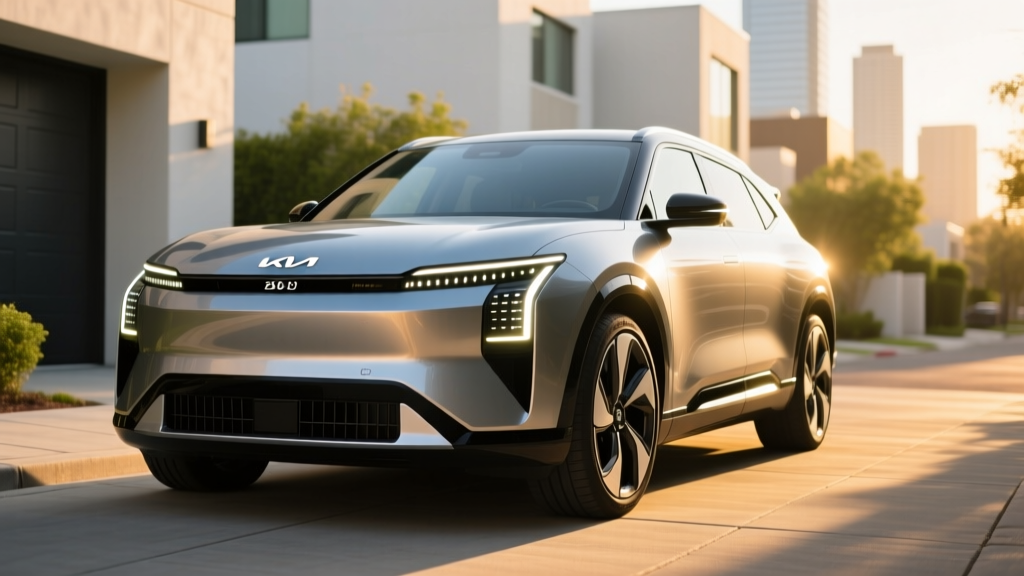
The three-row electric SUV segment remains small, and the Kia EV9 continues to dominate it. With an EPA-estimated range up to 304 miles (Light Long Range RWD), a 100.0 kWh usable NMC battery, and seating for up to seven, the EV9 targets families who need space without stepping into luxury-SUV pricing. But before you chase the lowest monthly payment on EV9 lease deals, the real question is what this SUV actually costs to own once the ink dries.
This analysis uses 2026 model-year pricing, current IRS §30D federal tax credit rules, and real-world operating data to build a five-year cost picture. We'll also flag where leasing can unlock credits that a purchase might not, and where EV ownership quietly costs more than the brochure suggests.
EPA sticker: 304 mi (Light Long Range RWD) / 280 mi (GT-Line AWD). Real-world highway at 70 mph with climate on: expect ~240–265 mi. Cold weather (below 30°F) can knock 15–25% off, dropping effective range to ~210–230 mi for AWD trims. Plan road trips around 200-mile legs for comfort.
2026 Kia EV9 Quick Spec Sheet
| Spec | Light RWD | Wind/Land AWD | GT-Line AWD |
|---|---|---|---|
| EPA Range | 304 mi | 280 mi | 280 mi |
| Battery (usable) | 100.0 kWh NMC | 100.0 kWh NMC | 100.0 kWh NMC |
| Motor Output | 215 hp / 258 lb-ft | 379 hp / 516 lb-ft | 379 hp / 516 lb-ft |
| 0–60 mph | 8.2 sec | 5.0 sec | 4.7 sec (boost) |
| Peak DC Fast Charge | 236 kW (10–80% ~24 min) | 236 kW (10–80% ~24 min) | 236 kW (10–80% ~24 min) |
| Level 2 Rate | 10.9 kW | 10.9 kW | 10.9 kW |
| MPGe (combined) | 88 MPGe | 85 MPGe | 83 MPGe |
| Towing (max) | 2,000 lb | 4,500 lb | 4,500 lb |
| Base MSRP (2026) | $54,900 | $59,900 | $73,900 |
| Powertrain Warranty | 10 yr / 100,000 mi (battery & drive unit) | ||
Source: fueleconomy.gov and Kia America press materials.
Federal Tax Credit: The Lease Loophole vs Purchase Rules
The EV9's eligibility for the IRS §30D clean vehicle credit is the single biggest variable in whether a purchase or lease makes more financial sense. Here's where it gets nuanced.
Buying the EV9: Under current §30D rules, a new EV must satisfy three hurdles — buyer income caps, MSRP caps, and battery critical-mineral/component sourcing — to qualify for up to $7,500. The MSRP cap for SUVs and vans is $80,000, which the EV9 clears on most trims. Income caps are $150,000 single / $225,000 head of household / $300,000 joint MAGI. Battery sourcing requirements have tightened annually; as of 2026, 80% of critical minerals and 100% of battery components must be sourced from the U.S. or FTA partners to unlock the full credit. Kia has historically structured EV9 battery supply to meet these thresholds on most trims, but always confirm the specific VIN's eligibility at fueleconomy.gov before signing.
Leasing the EV9: Here's the loophole. Under §45W (commercial clean vehicle credit), the leasing company — not you — claims the $7,500 credit as the vehicle's legal owner. Most captive finance arms (including Kia's) then pass that savings into the lease as a capitalized-cost reduction, which lowers your monthly payment. This works regardless of your personal income or the battery-sourcing rules that bind §30D. If you earn over the §30D cap, leasing may be the only path to that $7,500 benefit.
- Buyer MAGI ≤ $300k joint / $150k single / $225k HOH
- Vehicle MSRP ≤ $80,000 (SUV/van classification — EV9 qualifies)
- Battery critical minerals: ≥80% from U.S. or FTA partners
- Battery components: 100% manufactured/assembled in North America
- Vehicle assembled in North America (EV9 built in West Point, GA ✓)
- Point-of-sale transfer available at participating dealers
Rules subject to change. Verify at IRS.gov §30D and consult a tax professional.
Five-Year Total Cost of Ownership
Let's model a 2026 EV9 Wind AWD ($59,900 MSRP) owned for five years, driven 12,000 miles annually, with home Level 2 charging. We'll compare against a similarly sized gas SUV averaging 22 MPG combined.
| Category | Kia EV9 Wind AWD | Gas 3-Row SUV (22 MPG) |
|---|---|---|
| Purchase / Net Price (after credit) | $52,400 (w/ $7,500 §30D) | $48,000 |
| Fuel / Electricity (5 yr, 60k mi) | $4,320 (60,000 mi ÷ 2.8 mi/kWh × $0.20/kWh blended) | $9,545 (60,000 mi ÷ 22 MPG × $3.50/gal) |
| Maintenance (5 yr) | $1,800 | $4,200 |
| Insurance (5 yr avg) | $12,500 | $9,500 |
| Depreciation (est. 5 yr) | $26,200 (~50%) | $21,600 (~45%) |
| Total 5-Year Cost | $97,220 | $92,845 |
| Cost per mile | $1.62 | $1.55 |
The EV9's operating costs (fuel + maintenance) are roughly $7,600 lower over five years. But higher insurance and steeper depreciation claw back most of that advantage, putting total cost within ~$4,400 of a comparable gas SUV. If you qualify for the full $7,500 credit, the gap narrows further. Lease economics can shift this math dramatically — a $7,500 cap-cost reduction on a 36-month lease at typical money factors can drop monthly payments by $150–$200 versus an equivalent non-subsidized lease.
Charging vs Gas: The Per-Mile Math
| Scenario | Cost per kWh / gal | Efficiency | $/mile |
|---|---|---|---|
| EV9 Home L2 (national avg electricity) | $0.17/kWh | 2.8 mi/kWh | $0.061 |
| EV9 Public DC Fast (avg network pricing) | $0.40/kWh | 2.8 mi/kWh | $0.143 |
| EV9 Blended (80% home / 20% DC) | $0.22/kWh eff. | 2.8 mi/kWh | $0.079 |
| Gas SUV (22 MPG, $3.50/gal) | $3.50/gal | 22 mi/gal | $0.159 |
Home charging is where the EV9 shines — at roughly $0.06–$0.08/mile, it costs less than half what the gas SUV spends per mile. But if you rely heavily on DC fast charging (road trips, apartment dwellers without home access), the advantage shrinks. At $0.40/kWh on Electrify America or EVgo, you're paying $0.14/mile — nearly matching gasoline. This is why home Level 2 installation isn't optional for most EV owners; it's the economic foundation.
The EV9's 236 kW peak DC charge rate means a 10–80% session takes roughly 24 minutes at a capable 350 kW station, adding about 180 miles of range. But remember the charge curve: peak rate only holds between roughly 10–55% SoC, then tapers. Don't plan road-trip stops expecting sustained 236 kW to 80%.
Maintenance Savings: Where EVs Quietly Win
| Service Item | EV9 (5 yr / 60k mi) | Gas SUV (5 yr / 60k mi) |
|---|---|---|
| Oil changes | $0 | $600 (8 changes @ $75) |
| Transmission fluid | $0 (no multi-speed trans) | $250 |
| Brake pads | $200 (regen extends life 2–3×) | $800 |
| Air filters (engine) | $0 | $200 |
| Coolant / spark plugs | $0 | $350 |
| Cabin filter + wipers + tires | $1,400 | $1,400 |
| Tire rotation / misc | $200 | $600 |
| Total | ~$1,800 | ~$4,200 |
The EV9 saves roughly $2,400 in maintenance over five years. Regenerative braking is the biggest contributor — one-pedal driving dramatically reduces friction brake wear, and many EV owners report original brake pads beyond 80,000 miles. The trade-off: EVs are heavier (the EV9 weighs ~5,700 lb), which accelerates tire wear. Budget for a tire replacement around 35,000–45,000 miles if you drive aggressively.
Insurance Reality: The Uncomfortable Line Item
EV insurance premiums run 15–30% higher than equivalent gas vehicles, and the EV9 is no exception. For our 35-year-old married driver profile with clean record, national average EV9 premiums land around $2,500/year versus $1,900/year for a comparably priced gas SUV — roughly $3,000 more over five years.
Why? Three factors:
- Repair costs: EV battery packs and high-voltage components are expensive to replace after collisions. Insurers price this risk.
- Total-loss thresholds: Even moderate battery damage can trigger a total-loss declaration, raising claim severity.
- Specialized labor: Fewer certified high-voltage repair shops mean higher labor rates and longer rental-car claims.
Shop quotes from at least three carriers before committing. Some insurers (notably Geico, Progressive, and Tesla's own program where available) have begun narrowing the EV premium gap as claims data matures.
Depreciation and Resale: The Trend Is Improving
Early EVs depreciated brutally — 50–60% in three years was common. The EV9 benefits from two tailwinds: the three-row electric SUV segment remains supply-constrained, and Kia's 10-year/100,000-mile battery warranty transfers to second owners (with some limitations), which supports resale confidence.
Current projections for a well-equipped EV9 Land AWD place five-year depreciation at roughly 45–55% — still steeper than a Toyota Highlander Hybrid (~35–40%) but meaningfully better than early-generation EVs. Key variables:
- Battery health data: As more EV9s accumulate mileage and publish State of Health readings, buyer confidence will either solidify or erode.
- Charging infrastructure: Expanding NACS/Tesla Supercharger access for non-Tesla EVs supports long-term demand.
- Lease returns: A wave of 2024–2025 EV9 lease returns hitting the used market in 2027–2028 could pressure resale values for newer models.
If depreciation keeps you up at night, leasing transfers that risk to the lessor. Your monthly payment reflects their residual estimate, and you walk away at term end regardless of actual market value.
Federal credits are just the start. Depending on your ZIP code, additional savings may include:
- State rebates: California CVRP (up to $7,000 for income-qualified buyers), Colorado ($5,000 state credit), Massachusetts MOR-EV ($3,500), and others — amounts and eligibility vary by jurisdiction and funding availability.
- Utility rebates: Many utilities offer $500–$1,500 for home Level 2 charger purchase/installation, plus time-of-use rate plans that cut charging costs 30–50%.
- HOV lane access: Several states grant EVs carpool-lane privileges regardless of occupancy — a non-monetary but high-value perk in metro areas.
Check your state energy office and utility provider for current programs. These change frequently and often have limited funding pools.
Structuring the Best EV9 Lease Deal
If you've decided leasing is the right move, here's what to optimize:
- Confirm the $7,500 pass-through. Ask the dealer explicitly whether Kia Motors Finance is applying the §45W commercial credit as a cap-cost reduction. Some dealers absorb it into margin; insist on seeing it itemized on the lease worksheet.
- Target 36-month terms. EV tech moves fast, and the EV9's warranty coverage is strongest in the early years. A 36-month lease keeps you under the bumper-to-bumper warranty (5 yr/60k mi) and lets you reassess as solid-state battery vehicles approach market.
- Negotiate the selling price, not the payment. Dealers can manipulate money factor, term, and residual to obscure the actual deal. Get the gross capitalized cost in writing before discussing monthly figures.
- Stack incentives. Combine the federal lease credit with any state rebate (some states allow stacking, others don't) and utility charger rebates for maximum savings.
- Watch the mileage cap. Standard leases often include 10,000 miles/year. At $0.20–$0.25/mile overage charges, driving 15,000 miles annually can add $5,000+ at lease end. Pre-purchase extra miles upfront at a lower rate if needed.
Frequently Asked Questions
How much does it really cost to own a Kia EV9 over 5 years?
Approximately $97,000 total for a Wind AWD trim including purchase price (net of $7,500 credit), electricity, maintenance, insurance, and depreciation. That's within ~$4,400 of a comparably priced gas three-row SUV, with the EV9 winning on operating costs but losing on insurance and depreciation.
Do I qualify for the federal tax credit on the EV9?
For a purchase, you must meet MAGI income caps ($300k joint / $150k single), the vehicle must be under $80,000 MSRP (most EV9 trims qualify), and the battery must meet critical-mineral and component sourcing rules. For a lease, the lessor claims a parallel §45W credit regardless of your income — and typically passes savings into your monthly payment.
How much do I save on fuel and maintenance versus a gas SUV?
Roughly $5,200 on fuel and $2,400 on maintenance over five years / 60,000 miles, totaling ~$7,600 in operating savings. Fuel savings are highest if you charge at home on a time-of-use rate plan and lowest if you rely on public DC fast charging.
Are EVs more expensive to insure?
Yes — typically 15–30% more. For the EV9, expect ~$2,500/year versus ~$1,900 for a gas equivalent. Higher repair costs, battery-related total-loss risk, and specialized labor drive the premium. Always compare quotes before purchasing.
How well does the Kia EV9 hold its value?
Projected five-year depreciation is 45–55%, which is better than early EVs but steeper than top gas hybrids. Kia's transferable 10-year battery warranty and the limited three-row EV SUV competition support residuals. Leasing eliminates depreciation risk entirely.
Is the EV9's 236 kW charging actually fast in practice?
At a 350 kW-capable station, 10–80% takes about 24 minutes — competitive with the best in class. But peak rate only holds to ~55% SoC, then tapers. Expect an average of ~150 kW across the full 10–80% session. Precondition the battery (the EV9 does this automatically when you navigate to a charger) for best results.
Can I tow with the EV9 without destroying range?
The AWD EV9 is rated for 4,500 lb. Towing a 3,500 lb camper at highway speeds will cut range roughly in half — plan for 130–150 miles between charges. This is the reality of electric towing; it's viable for short hauls but not cross-country trips without significant planning.