The EV9 Lease Loophole: Why Buyers Are Choosing Lease Over Purchase
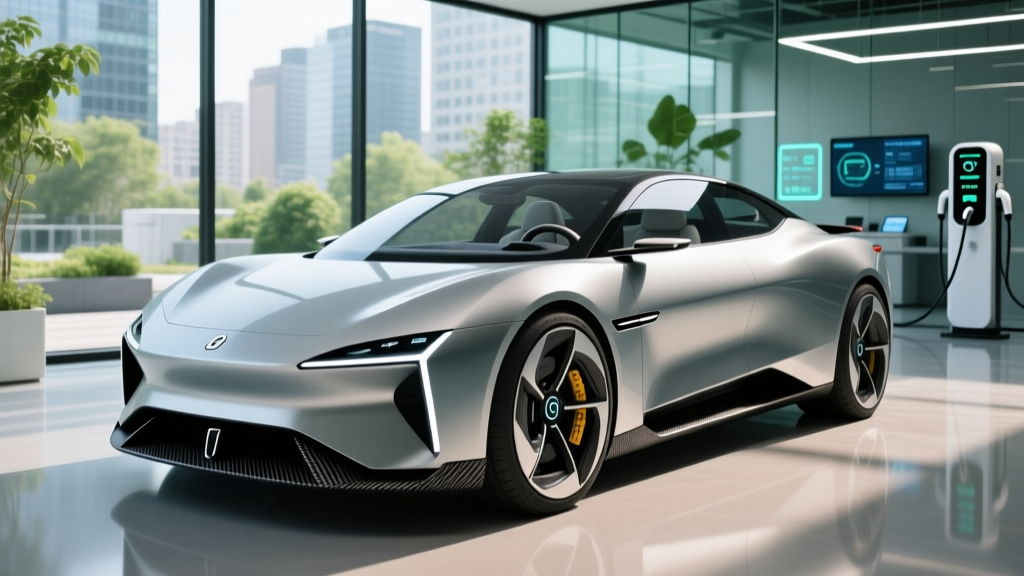
The 2026 Kia EV9 is a three-row electric SUV with up to 304 miles of EPA-estimated range, a 100.0 kWh battery pack (NMC chemistry), and DC fast charging that peaks at 236 kW — delivering a 10–80% charge in roughly 24 minutes on a capable station. With a starting MSRP around $54,900 for the Light RWD trim and climbing past $73,000 for the GT-Line AWD, the EV9 is a serious investment. But here's where the math gets interesting: an EV9 lease deal can unlock a $7,500 incentive that many buyers cannot access through a traditional purchase.
Under current IRS rules, the §30D federal tax credit for purchased EVs is hemmed in by income caps, MSRP ceilings, and battery-sourcing requirements that disqualify a growing number of models. However, leased EVs fall under a different section of the tax code — §45W (commercial clean vehicle credit) — which the leasing company claims and typically passes on to the lessee as a capitalized cost reduction. This "lease loophole" has no MSRP cap, no buyer income limit, and no battery-sourcing requirement, making it a powerful tool for EV9 shoppers who would otherwise miss out.
Below, we run the full ownership-cost analysis: what a 5-year EV9 lease or purchase actually costs when you factor in charging, insurance, maintenance, depreciation, and incentives — with real numbers, not marketing gloss.
2026 Kia EV9: Key Specs at a Glance
| Specification | Light RWD | Wind AWD | GT-Line AWD |
|---|---|---|---|
| MSRP (2026 est.) | $54,900 | $63,900 | $73,900 |
| Battery (usable) | 76.1 kWh (NMC) | 100.0 kWh (NMC) | 100.0 kWh (NMC) |
| EPA Range | 230 mi | 280 mi | 304 mi |
| Real-World Range (highway/cold) | ~185–200 mi | ~230–250 mi | ~250–270 mi |
| Peak DC Fast Charge | 180 kW | 236 kW | 236 kW |
| 10–80% DC Fast Charge | ~30 min | ~24 min | ~24 min |
| Level 2 (240V) Charge Rate | 10.9 kW | 10.9 kW | 10.9 kW |
| Horsepower | 215 hp | 379 hp | 379 hp |
| 0–60 mph | 7.7 sec | 5.0 sec | 4.5 sec |
| MPGe (combined) | 87 MPGe | 85 MPGe | 83 MPGe |
| Battery/Powertrain Warranty | 10 yr / 100,000 mi | 10 yr / 100,000 mi | 10 yr / 100,000 mi |
5-Year Total Cost of Ownership: EV9 vs. Gas SUV Baseline
To evaluate whether an EV9 lease deal makes financial sense, we compared a 5-year / 75,000-mile ownership horizon against a comparable three-row gas SUV (the Kia Telluride, a common cross-shop). All figures are estimates based on national averages and 2026 pricing.
| Cost Category | Kia EV9 Wind AWD (Lease w/ $7,500 cap reduction) | Kia Telluride SX (Gas Baseline) |
|---|---|---|
| Purchase / Net Lease Cost (5 yr) | $33,600 ($560/mo × 36 mo + $13,920 residual buyout or second lease; $7,500 cap reduction applied) | $46,200 (purchase, financed at 6.5%) |
| Fuel / Charging (75,000 mi) | $4,500 (home L2 at $0.14/kWh avg) | $9,375 ($3.75/gal, 20 MPG combined) |
| Insurance (5 yr) | $12,000 ($200/mo avg) | $9,000 ($150/mo avg) |
| Maintenance (5 yr) | $1,500 | $4,500 |
| Depreciation / Equity Loss | ~$18,000 (if purchased; mitigated in lease structure) | ~$20,000 |
| Estimated 5-Year Total | ~$51,600 | ~$69,075 |
The EV9 lease with the $7,500 capitalized cost reduction yields a roughly $17,500 savings over five years compared to the gas Telluride — but this hinges on qualifying for the lease incentive and keeping insurance costs in check. Let's unpack each line item.
Charging vs. Gas: The Per-Mile Math
The EV9 Wind AWD consumes roughly 35 kWh per 100 miles (85 MPGe). Here's how that translates to real dollars:
| Scenario | Cost per Mile | Cost per 1,000 Miles |
|---|---|---|
| Home Level 2 ($0.14/kWh) | $0.049 | $49 |
| Home Level 2 ($0.22/kWh — high-rate state) | $0.077 | $77 |
| Public DC Fast ($0.48/kWh avg) | $0.168 | $168 |
| Gas SUV (20 MPG, $3.75/gal) | $0.188 | $188 |
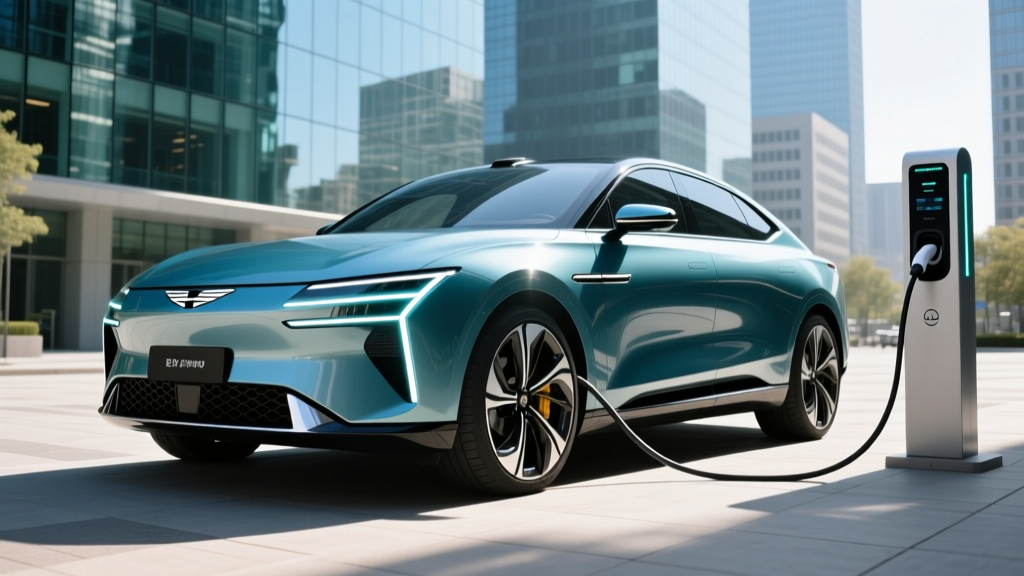
At the national average residential electricity rate of ~$0.14/kWh (EIA data), home charging the EV9 costs roughly $0.05 per mile — nearly a quarter of what a comparable gas SUV spends. Even in high-cost electricity states like California (~$0.28/kWh), home charging still undercuts gasoline. The caveat: public DC fast charging at networks like Electrify America or EVgo can cost $0.40–$0.60/kWh, narrowing the advantage significantly. EV9 owners who rely primarily on public charging will save less on fuel.
According to fueleconomy.gov, the EV9 Wind AWD achieves 85 MPGe combined. For context, 1 gallon of gasoline contains approximately 33.7 kWh of energy, making MPGe a useful cross-format comparison tool — though kWh/100mi is the more precise EV metric.
Federal Tax Credit: §30D vs. the Lease Loophole
Understanding the difference between purchasing and leasing is essential for EV9 shoppers in 2026.
If You Purchase (IRS §30D):
The §30D Clean Vehicle Credit offers up to $7,500 for eligible new EVs — but the EV9 faces significant headwinds under current rules:
- MSRP Cap: SUVs must be priced at or below $80,000 — the EV9 clears this on most trims.
- Buyer Income Limits: AGI must not exceed $150,000 (single), $225,000 (head of household), or $300,000 (joint).
- Battery Sourcing: Critical minerals and battery components must meet escalating North American/free-trade-partner thresholds. As of 2026, the sourcing requirements are stringent, and the EV9's South Korean-built battery may not qualify for the full $7,500 — or any credit — depending on the model year and trim. Check the latest IRS guidance at irs.gov before committing.
- Point-of-Sale Transfer: Eligible buyers can transfer the credit to the dealer at purchase, reducing the sale price directly rather than waiting for a tax refund.
- Assembly Requirement: Final assembly must occur in North America. The 2026 EV9 for the US market is assembled at Kia's West Point, Georgia plant, satisfying this requirement.
If You Lease (§45W Commercial Credit):
Leased vehicles are classified differently under the tax code. The leasing company (the legal owner) claims the §45W commercial clean vehicle credit — which has no MSRP cap, no buyer income limit, and no battery-sourcing restrictions. Most major leasing companies pass this $7,500 benefit to the lessee as a capitalized cost reduction, effectively lowering your monthly payment or down payment.
Maintenance Savings: Fewer Parts, Fewer Bills
EVs eliminate the maintenance categories that drive gas-car service costs. The EV9 has no engine oil, no transmission fluid, no spark plugs, no timing belt, and no exhaust system. Regenerative braking dramatically reduces brake pad and rotor wear — many EV owners report original brake pads lasting 80,000+ miles.
| Maintenance Item | Gas SUV (5 yr / 75k mi) | Kia EV9 (5 yr / 75k mi) |
|---|---|---|
| Oil Changes (6–8 over 5 yr) | $480–$720 | $0 |
| Transmission Fluid | $200–$350 | $0 (single-speed reducer) |
| Brake Pads/Rotors | $600–$1,200 | $0–$200 (regen extends life) |
| Spark Plugs | $200–$400 | $0 |
| Coolant Flush | $150–$250 | $150–$250 (battery thermal system) |
| Cabin Air Filter | $100–$200 | $100–$200 |
| Tire Rotation/Replacement | $1,200–$1,800 | $1,400–$2,200 (EVs wear tires faster due to weight/torque) |
| Total Estimated | $2,930–$4,920 | $1,650–$2,850 |
Net maintenance savings over five years: approximately $1,500–$2,500. The EV9's heavier curb weight (~5,000+ lbs) and instant torque do accelerate tire wear, so budget for premium tire replacement in years 4–5.
Insurance Reality: Budget 15–30% More
EV insurance premiums are typically higher than equivalent gas vehicles. The reasons are structural, not arbitrary:
- Higher repair costs: EV battery packs and power electronics are expensive to replace after collision damage. Even minor structural damage near the battery can trigger a total-loss declaration.
- Specialized labor: High-voltage system repairs require certified technicians, and fewer shops have this capability.
- Higher vehicle MSRP: Insurance premiums correlate with replacement cost. A $63,900 EV9 Wind AWD costs more to insure than a $42,000 Telluride.
- Parts availability: EV-specific body panels and battery modules can have longer lead times, increasing rental-car costs during repairs.
For the EV9, expect annual premiums in the $2,000–$2,800 range depending on your state, driving record, and coverage level — roughly 20–35% above a comparable gas SUV. Some insurers (Geico, Progressive, State Farm) now offer EV-specific policies with bundled home-charger coverage. Shop at least three quotes before signing.
Depreciation and Resale Value Trends
EV depreciation has been volatile. In 2023–2024, a wave of Tesla price cuts and aggressive new-EV incentives cascaded through the used market, pulling EV resale values down faster than gas vehicles. According to iSeeCars data, three-year EV depreciation averaged 45–50% in 2024, compared to ~35% for gas vehicles.
However, the market has been stabilizing through 2025–2026 as:
- Price wars have moderated
- Used-EV demand has grown with expanding charging infrastructure
- The NACS (Tesla charging standard) adoption across brands has reduced connector fragmentation anxiety
For the EV9 specifically, its position as one of the few three-row electric SUVs gives it a supply-demand advantage — there are very few direct competitors (Rivian R1S, Tesla Model X) in the same price-and-size segment. This scarcity should support stronger-than-average EV resale value, though it's too early for long-term data on the 2024+ EV9 specifically.
If you lease: Depreciation is the leasing company's problem, not yours. The residual value is locked in at lease signing. If the EV9 depreciates more than expected, you walk away (or buy at the favorable residual). If it holds value well, you can purchase at the residual and capture the equity.
Decision Framework: Lease, Buy, or Skip?
Choose an EV9 Lease Deal If:
- Your AGI exceeds the §30D income caps but you want the $7,500 lease incentive
- You want to avoid battery-depreciation risk and lock in a known monthly cost
- You drive under 15,000 miles/year (most lease mileage caps)
- You upgrade vehicles every 3–4 years anyway
- You have reliable home Level 2 charging access
Choose to Purchase If:
- You qualify for the full §30D credit on a purchase (verify battery sourcing on irs.gov)
- You drive 15,000+ miles/year and want no mileage penalties
- You plan to keep the EV9 for 7+ years to amortize the higher upfront cost
- You want full ownership equity and the ability to sell anytime
Consider a Gas/Hybrid Alternative If:
- You lack home charging access and your area has sparse public DC infrastructure
- You regularly tow heavy loads (the EV9's 5,000-lb tow rating drops range by ~40%)
- Your budget cannot absorb higher insurance premiums
Frequently Asked Questions
How much does it really cost to own a Kia EV9 over 5 years?
Our analysis puts the 5-year total cost of ownership for an EV9 Wind AWD (leased with the $7,500 cap reduction) at approximately $51,600, including lease payments, home charging, insurance, and maintenance. This compares to roughly $69,000 for a similarly equipped gas Telluride over the same period. Actual costs vary by electricity rate, insurance market, and driving habits.
Do I qualify for the $7,500 federal tax credit on an EV9 purchase?
It depends on three factors: your adjusted gross income (must be under $150K single / $300K joint), the vehicle's MSRP (must be under $80K for SUVs), and whether the battery's critical minerals and components meet North American sourcing thresholds. The EV9's Georgia assembly satisfies the final-assembly rule, but battery sourcing eligibility changes frequently. Verify on IRS.gov before purchasing. If you lease instead, the $7,500 incentive typically applies regardless of income or sourcing rules.
How much do I save on fuel and maintenance with the EV9?
At the national average electricity rate of $0.14/kWh, the EV9 costs about $0.05/mile to charge at home versus $0.19/mile for a 20 MPG gas SUV — saving roughly $4,800 over 75,000 miles. Maintenance savings add another $1,500–$2,500 over five years by eliminating oil changes, spark plugs, and reducing brake wear. Combined fuel and maintenance savings: approximately $6,300–$7,300 over 5 years.
Are EVs more expensive to insure than gas vehicles?
Yes, typically 15–35% more. The EV9's higher MSRP, expensive battery replacement costs, and specialized repair requirements drive premiums up. Expect $2,000–$2,800 annually depending on your profile. Get quotes from at least three insurers — some now offer EV-specific policies with competitive rates.
How well does the Kia EV9 hold its value?
Three-row EV SUVs are a niche with limited competition, which should support EV9 resale values better than smaller EVs. However, the broader EV market has seen steeper depreciation than gas vehicles in recent years (45–50% over three years vs. ~35% for gas). Leasing transfers this risk to the leasing company. If purchasing, plan to keep the vehicle 5+ years to ride out depreciation curves.
What's the best EV9 trim to lease for value?
The Wind AWD ($63,900 MSRP) offers the best balance: 280-mile EPA range, 236 kW DC fast charging, AWD capability, and premium features without the GT-Line's $10,000 premium. The Light RWD saves $9,000 upfront but sacrifices range (230 mi), fast-charge speed (180 kW peak), and AWD — significant trade-offs for a family hauler.