Quick Verdict: Is a Kia EV9 Lease the Smart Move in 2026?
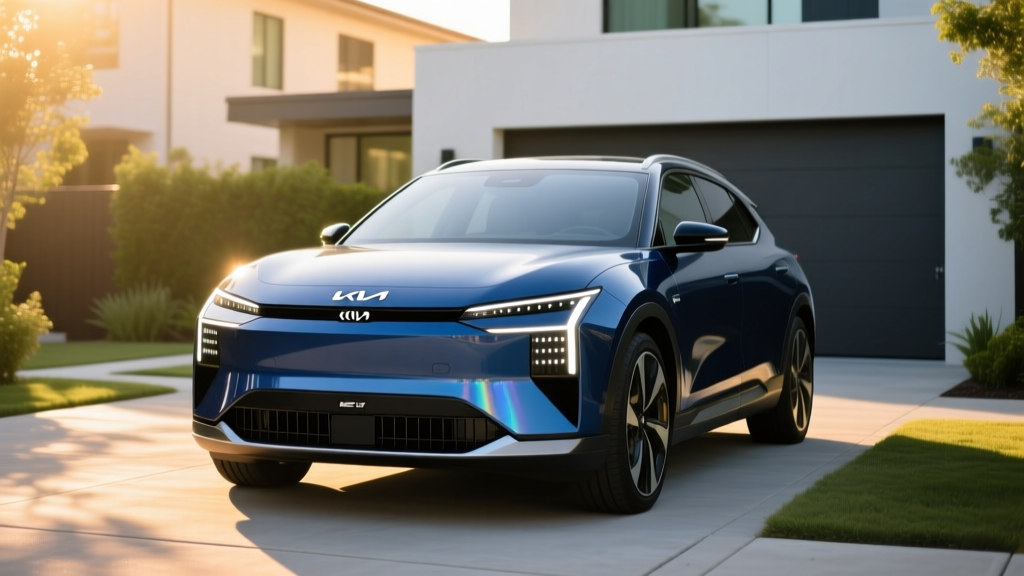
The three-row Kia EV9 remains one of the few mainstream electric SUVs offering genuine seating for seven, a usable 304-mile EPA range (Light RWD), and DC fast charging up to 210 kW. But with a starting MSRP around $54,900 and top trims climbing past $73,000, many buyers are turning to a Kia EV9 lease as a way to cap monthly payments while sidestepping depreciation risk. In 2026, a lease can also unlock a $7,500 federal incentive — even for buyers who wouldn't qualify to purchase outright — thanks to the commercial-vehicle leasing loophole that still applies under current IRS guidance.
This guide breaks down the real 5-year ownership math: lease payments, charging costs, insurance premiums, maintenance savings, and the tax-credit landscape that can make or break the deal. All figures reflect 2026 model-year pricing and current IRS §30D rules.
| Spec | Light RWD | Wind/Land AWD | GT-Line AWD |
|---|---|---|---|
| EPA Range | 304 mi | 282 mi | 270 mi |
| Battery (usable) | 76.1 kWh (Light) / 99.8 kWh (others) | 99.8 kWh NMC | 99.8 kWh NMC |
| Peak DC Charge Rate | 170 kW | 210 kW | 210 kW |
| 10–80% DCFC Time | ~24 min | ~24 min | ~24 min |
| Horsepower | 215 hp | 379 hp | 379 hp |
| 0–60 mph | 7.7 sec | 4.9 sec | 4.9 sec |
| Base MSRP | $54,900 | $59,900 | $73,900 |
| Battery/Powertrain Warranty | 10 yr / 100,000 mi | ||
How Much Does a Kia EV9 Lease Actually Cost Per Month?
Lease pricing fluctuates based on money factor, residual value, dealer markup, and regional incentives. As of early 2026, typical Kia EV9 lease structures look like this:
- Wind AWD (36-month, 10,000 mi/yr): ~$550–$700/month with $3,500–$4,500 due at signing (before incentives)
- Land AWD (36-month, 10,000 mi/yr): ~$650–$800/month with similar drive-off
- Light RWD (36-month): ~$450–$550/month, though availability is limited in many markets
The critical advantage of leasing: the $7,500 federal EV tax credit can often be applied as a capitalized cost reduction (cap cost reduction) at signing, effectively lowering your monthly payment by roughly $150–$200/month over a 36-month term. This works because leased EVs are technically purchased by the leasing company (Kia Finance), which qualifies for the commercial clean vehicle credit under IRC §45W and passes the savings to the lessee. This pathway bypasses the personal income and MSRP caps that apply to purchased vehicles — though Kia's participation and dealer application of this credit varies, so confirm in writing before signing.
Federal Tax Credit: Do You Qualify Under §30D?
If you're purchasing rather than leasing, the federal EV tax credit under IRS §30D has strict eligibility requirements for 2026. The Kia EV9's credit status depends heavily on battery-component and critical-mineral sourcing, which Kia has been adjusting throughout 2025–2026 as its Georgia plant ramps up domestic cell production.
2026 §30D New Clean Vehicle Credit — Requirements Checklist
- Credit amount: Up to $7,500 ($3,750 for battery components + $3,750 for critical minerals)
- Buyer income caps (MAGI): $150,000 single / $225,000 head of household / $300,000 joint
- MSRP caps: $80,000 for SUVs/pickups/vans (EV9 qualifies — all trims are under $80K)
- Battery component sourcing: Must be manufactured or assembled in North America (percentage threshold increases annually)
- Critical minerals: Must be sourced from the US or a free-trade-agreement country (percentage threshold increases annually)
- Point-of-sale transfer: Eligible buyers can transfer the credit to the dealer for an immediate price reduction at purchase
- Filing requirement: Must file IRS Form 8936 with your tax return
As of the 2026 model year, the EV9's credit eligibility has improved with more North American battery assembly, but the exact $3,750/$7,500 split depends on the build date and supply-chain specifics. Always verify the current credit amount for your specific VIN on the fueleconomy.gov tax credit lookup before committing to a purchase. If you lease, the commercial-vehicle credit pathway (IRC §45W) may make the full $7,500 available regardless of your personal income — but this is at the leasing company's discretion and must be confirmed in the lease agreement.
5-Year Total Cost of Ownership: EV9 vs. Gas SUV
To understand the true financial picture of a Kia EV9 lease (or purchase), we compared 5-year costs against a similarly sized gas-powered three-row SUV — the Kia Telluride, a natural cross-shop. The numbers below assume 12,000 miles/year, home Level 2 charging at $0.14/kWh (national average), and gas at $3.50/gallon.
| Cost Category | Kia EV9 Land AWD (Lease + Renewal) | Kia Telluride SX (Purchase) |
|---|---|---|
| Vehicle Payments (60 months) | $43,200 (two 36-mo leases prorated; ~$700/mo avg with cap-cost credit applied) | $39,600 ($52K purchase, 6.5% APR, $800/mo) |
| Fuel / Electricity | $3,780 (60,000 mi ÷ 2.8 mi/kWh × $0.14/kWh) | $10,500 (60,000 mi ÷ 20 MPG × $3.50/gal) |
| Insurance | $14,400 (~$240/mo) | $11,400 (~$190/mo) |
| Maintenance | $1,500 (cabin filter, tire rotation, wiper fluid) | $4,200 (oil changes, brakes, transmission fluid, filters) |
| Depreciation (if purchased) | N/A (lease — residual risk on Kia Finance) | ~$22,000 (est. 42% over 5 yr) |
| Tax Credit Applied | −$7,500 (cap cost reduction) | $0 (Telluride ineligible) |
| Total 5-Year Out-of-Pocket | ~$55,380 | ~$65,700 (incl. depreciation) |
The EV9 lease comes out roughly $10,000 ahead over five years when the federal credit is applied and fuel/maintenance savings are factored in. However, this advantage depends on three variables: (1) the $7,500 credit being passed through in the lease, (2) access to affordable home charging, and (3) insurance costs staying within the range above. If you rely on public DC fast charging at $0.40–$0.50/kWh, your fuel cost jumps to ~$10,800–$13,500, narrowing the gap substantially.
Charging vs. Gas: The Per-Mile Math
Cost Per Mile — Kia EV9 vs. Telluride
Kia EV9 (AWD): ~2.8 mi/kWh (EPA combined). At $0.14/kWh home charging = $0.05/mile. At $0.48/kWh public DCFC = $0.17/mile.
Kia Telluride (AWD): ~20 MPG combined. At $3.50/gallon = $0.175/mile.
Annual savings (12,000 mi, home charging): $2,100 – $630 = ~$1,470/year on fuel alone.
The EV9's efficiency is roughly 89 MPGe combined (AWD trims). The key takeaway: home charging is where the economics work. If your utility offers off-peak rates below $0.10/kWh, your cost drops to $0.036/mile — a 4.8× advantage over gas. If you live in an apartment without charging access and depend on Electrify America or EVgo at $0.48–$0.55/kWh, the EV9 costs nearly the same per mile as the Telluride, and your savings come mainly from reduced maintenance.
Maintenance Savings: Where the EV9 Really Pays Off
| Service Item | Kia EV9 | Gas SUV (Telluride) |
|---|---|---|
| Oil Changes | $0 (none required) | $600 (10 changes × $60) |
| Brake Pads/Rotors | $0–$200 (regen braking minimizes wear; pads often last 100K+ mi) | $800–$1,200 (2 sets front/rear) |
| Transmission Fluid | $0 (single-speed reducer; sealed) | $200–$400 |
| Engine Air Filter | $0 (no engine) | $150 |
| Cabin Air Filter | $150 (3 replacements) | $150 |
| Tire Rotation | $300 (6 rotations × $50; EV tires wear ~15% faster due to weight/torque) | $250 |
| Coolant/Spark Plugs | $0 (no plugs; coolant at 100K mi) | $400 |
| Washer Fluid & Wipers | $150 | $150 |
| Total (5 yr) | ~$600–$1,500 | ~$2,700–$4,200 |
The EV9's regenerative braking system handles most deceleration, meaning friction brakes see minimal use. Many EV owners report original brake pads at 80,000+ miles. The one maintenance area where EVs cost more is tires: the EV9's 4,900–5,600 lb curb weight and instant torque accelerate tire wear. Budget for a tire replacement around 35,000–45,000 miles (~$1,200–$1,600 for a set of EV-rated all-seasons).
Insurance Cost Reality: Why EVs Cost More to Insure
EV insurance premiums are typically 15–25% higher than comparable gas vehicles. For the EV9, expect annual premiums of $2,400–$3,200 depending on your state, driving record, and coverage level. Why the premium?
- Higher repair costs: EV-specific parts (battery modules, power electronics, heat pump) are expensive, and fewer body shops are certified for high-voltage repairs
- Total-loss thresholds: Even minor battery enclosure damage can trigger a total-loss declaration, increasing insurer payout risk
- Vehicle MSRP: The EV9's $55K–$74K price range puts it in a higher insurance bracket than a base Telluride at ~$38K
- Specialized labor: High-voltage system diagnostics require certified technicians, raising claim costs
To offset this, shop quotes from EV-friendly insurers (Geico, Progressive, and State Farm all offer EV-specific policies). Some states offer insurance discounts for vehicles with advanced ADAS — the EV9's standard Highway Driving Assist 2 and forward collision-avoidance systems may qualify you for a 5–10% discount.
Depreciation and Resale Value: The Lease Advantage
EV depreciation has been volatile. In 2023–2024, aggressive Tesla price cuts and rapid market expansion caused used EV values to drop 25–35% in some segments. The three-row EV SUV segment has held up better due to limited competition (the EV9, Rivian R1S, and Tesla Model X are essentially the only options), but long-term projections remain uncertain.
Current estimates for the EV9:
- 3-year residual value: ~55–60% of MSRP (lease residuals are typically set at 55–58%)
- 5-year residual value: ~42–48% of MSRP
- Key risk factors: Battery health concerns in the used market, potential price wars, rapidly improving next-gen models making current EVs feel dated
This is precisely why a Kia EV9 lease appeals to many buyers: you transfer the depreciation risk to Kia Finance. If used EV values collapse, you simply return the vehicle at lease-end. If they hold steady, you can exercise the purchase option at the predetermined residual price. The 10-year/100,000-mile battery warranty (transferable to the second owner) also provides some residual-value support.
State, Local, and Utility Incentives
State and utility incentives vary dramatically and change frequently. Below are examples as of early 2026, but you must verify current availability with your state energy office and local utility:
- Colorado: Up to $5,000 state tax credit for EVs (income-dependent)
- California: CVRP rebate up to $7,000 for income-qualified buyers; additional $1,500–$2,000 through utility clean-fuel rebates
- New York: Drive Clean Rebate up to $2,000 (point-of-sale)
- Massachusetts: MOR-EV rebate up to $3,500
- Utility rebates: Many utilities (PG&E, ConEdison, Xcel Energy) offer $300–$1,000 for home Level 2 charger installation or off-peak charging credits
When stacking the $7,500 federal credit with a $5,000 state credit and a $500 utility rebate, the effective price reduction on a purchased EV9 can reach $13,000 — bringing a $59,900 Wind AWD down to an effective $46,900. For leases, state credits may or may not be stackable depending on how the state structures the incentive (some require the lessee to claim, others flow through the lessor).
Kia EV9 Lease FAQ
Can I get the $7,500 federal tax credit on a Kia EV9 lease?
Potentially, yes — but through a different mechanism. When you lease, the leasing company (Kia Finance) technically owns the vehicle and may qualify for the commercial clean vehicle credit under IRC §45W. Many automakers pass this $7,500 as a cap-cost reduction, lowering your monthly payment. This pathway bypasses the personal income and MSRP caps that apply to purchases. However, it is not guaranteed — confirm with the dealer that the $7,500 is written into the lease agreement as a cap-cost reduction before signing.
What's the real-world range of the Kia EV9 on a road trip?
For the AWD Wind/Land trims (99.8 kWh battery, 282-mile EPA rating), expect 240–260 miles of highway range in mild weather at 70–75 mph. In winter conditions (below freezing), that drops to 190–220 miles. The Light RWD trim with its smaller 76.1 kWh battery delivers roughly 200–230 miles highway in practice. For road-trip planning, use 220 miles as your safe inter-charge interval on the AWD trims.
How fast does the EV9 charge on a DC fast charger?
The AWD trims with the 99.8 kWh battery support up to 210 kW peak charging on a 350 kW CCS or NACS charger. In real-world conditions, the EV9 charges from 10–80% in approximately 24 minutes. However, the charge curve tapers significantly above 80% — going from 80–100% can add another 20+ minutes. Always precondition the battery (via the navigation-routed preconditioning feature) before arriving at a DC fast charger to hit peak charge speeds.
Is the Kia EV9 cheaper to insure than other electric SUVs?
Insurance varies by driver and state, but the EV9 is generally in line with or slightly cheaper to insure than the Rivian R1S and Tesla Model X (both higher MSRP), and slightly more expensive than the Hyundai Ioniq 5 or Tesla Model Y (lower MSRP). Expect $200–$270/month for full coverage, depending on your profile. Bundling home/auto and shopping multiple quotes can save $300–$600/year.
Should I lease or buy the Kia EV9 in 2026?
Lease if: you want lower monthly payments, want to avoid depreciation risk on a rapidly evolving EV segment, plan to upgrade in 3 years, or don't qualify for the purchase credit due to income limits but can access the lease credit pass-through. Buy if: you plan to keep the vehicle 7+ years, drive fewer than 12,000 miles/year, qualify for the full $7,500 purchase credit plus state incentives, and have access to affordable home charging. The purchase math favors long-term ownership; the lease math favors flexibility and risk mitigation.
What happens if the EV9 battery degrades during my lease?
Over a typical 36-month lease, battery degradation is minimal — expect 3–5% capacity loss under normal use. Kia's 10-year/100,000-mile battery warranty covers defects and capacity loss below 70% of original capacity. Since most leases end well within the warranty window, battery degradation is not a practical concern for lessees. If you purchase at lease-end, the remaining 7+ years of battery warranty transfers to you.