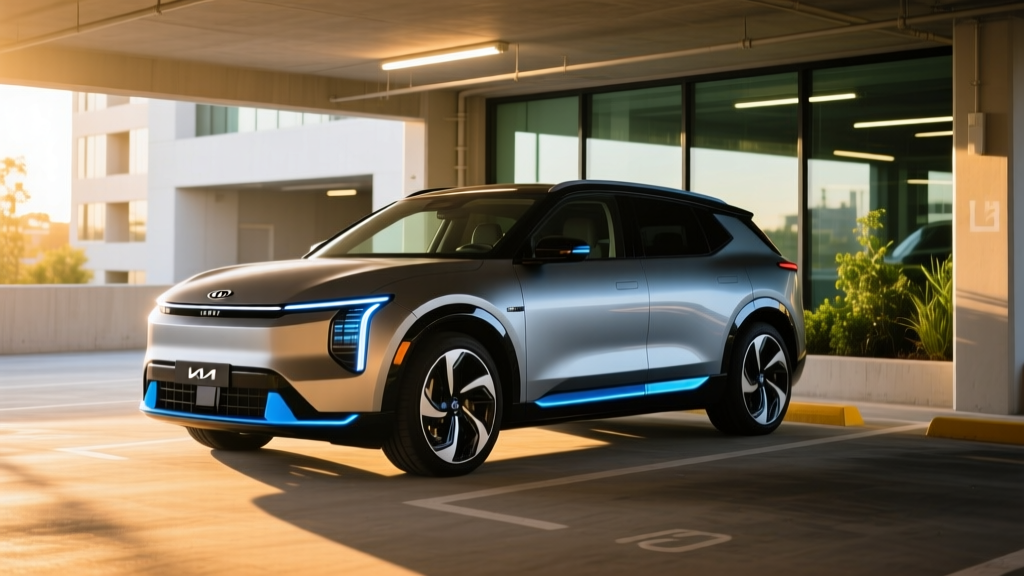
The Kia EV9 in 2026: A Three-Row EV That Still Makes Financial Sense
The 2026 Kia EV9 remains one of the few mainstream three-row electric SUVs on the market, competing directly with the Rivian R1S and edging into territory once held by the Tesla Model X. But with a starting MSRP pushing past $54,000, buyers need to look beyond the sticker price. Between shifting federal incentive rules, state-level rebates, and the real-world economics of charging a 100+ kWh battery, the question isn't just whether the EV9 is a great family hauler — it's whether the numbers actually pencil out over five years of ownership.
This guide breaks down every available incentive, runs the total cost of ownership against a comparable gas SUV, and tells you exactly where the EV9 saves you money and where it costs more. No cherry-picking, no marketing spin.
2026 Kia EV9 Pricing, Specs, and Baseline Numbers
Before we calculate savings, you need the starting figures. Here's the 2026 EV9 lineup at a glance:
| Trim | Drivetrain | Battery (kWh usable) | EPA Range | Peak DC Charge | 0–60 mph | MSRP |
|---|---|---|---|---|---|---|
| Light RWD | RWD | 76.1 kWh (NMC) | 230 mi | 170 kW | 7.3 sec | $54,900 |
| Wind RWD | RWD | 100.0 kWh (NMC) | 304 mi | 210 kW | 6.5 sec | $60,600 |
| Land AWD | AWD | 100.0 kWh (NMC) | 280 mi | 210 kW | 4.5 sec | $65,400 |
| GT-Line AWD | AWD | 100.0 kWh (NMC) | 270 mi | 210 kW | 4.3 sec | $73,900 |
Real-world range note: EPA figures assume mixed driving. Expect roughly 10–15% less range on sustained highway trips at 75+ mph, and 20–30% reduction in sub-freezing temperatures. The 100 kWh AWD models realistically deliver 220–250 highway miles in moderate weather, and as low as 180–200 miles in winter cold.
Federal Tax Credit: §30D Eligibility for the 2026 EV9
The federal EV tax credit under IRS §30D can reduce your effective purchase price by up to $7,500, but eligibility depends on a stack of requirements that changed substantially under the Inflation Reduction Act. Here's the checklist for the 2026 tax year:
- MSRP cap: The vehicle's base MSRP must be $80,000 or less for SUVs/vans/pickups. All 2026 EV9 trims fall under this cap. ✅
- Buyer income limits: Modified adjusted gross income (MAGI) must not exceed $300,000 (married filing jointly), $225,000 (head of household), or $150,000 (single). Based on current or prior tax year. ⚠️
- Battery component sourcing: A percentage of battery components must be manufactured or assembled in North America. The threshold increases annually — for 2026, this requirement is strict. Kia has moved EV9 production to West Point, Georgia, which helps domestic assembly, but battery cell sourcing must still meet critical-mineral and component thresholds. ⚠️
- Critical minerals requirement: A specified percentage of critical minerals in the battery must be sourced from the US or a free-trade-agreement partner country. This threshold also tightens yearly. ⚠️
- Point-of-sale transfer: As of 2024, eligible buyers can transfer the credit to the dealer at purchase, reducing the sale price upfront rather than waiting to claim it on their tax return. The dealer must be IRS-registered.
- One credit per VIN: The credit applies once per vehicle VIN, and you cannot have claimed another clean vehicle credit for the same vehicle.
The honest answer on EV9 credit eligibility: Because battery sourcing rules tighten every year, the credit amount available on a specific EV9 trim can change mid-year. Kia's Georgia-built EV9 qualifies for the domestic assembly requirement, but whether you receive the full $7,500, a partial $3,750, or nothing depends on the specific battery batch and current critical-mineral compliance. Always verify the exact credit amount with your dealer and cross-reference against the IRS clean vehicle credit page before signing.
State, Local, and Utility Incentives: Where You Live Matters
Federal credits are only part of the picture. Depending on your state and utility provider, you may stack additional savings:
- California: CVRP rebate up to $2,000–$7,000 depending on income; additional $1,500–$4,500 for low-income buyers scrapping older vehicles.
- Colorado: State tax credit of up to $5,000 for EVs with MSRP under $80,000.
- New York: Drive Clean Rebate up to $2,000 at point of sale.
- Massachusetts: MOR-EV rebate of up to $3,500.
- Utility rebates: Many electric utilities (e.g., PG&E, Xcel Energy, Dominion) offer $300–$1,500 rebates for EV purchase or Level 2 home charger installation. Check with your local provider.
These programs change frequently, have funding caps, and may have income or vehicle-price restrictions. Check your state energy office and utility website for current amounts.
Charging vs. Gas: The Per-Mile Cost Math
The most common ownership question: how much does it actually cost to fuel an EV9 versus a gas three-row SUV? Let's run the numbers against a comparable 2026 Kia Telluride (22 MPG combined EPA).
| Scenario | Kia EV9 AWD (100 kWh) | Kia Telluride AWD (22 MPG) |
|---|---|---|
| Energy source | Electricity | Unleaded regular |
| Efficiency | ~2.0 kWh/mile (EPA ~83 MPGe) | 22 MPG combined |
| Home charging (Level 2) | $0.16/kWh avg → $0.32/mile | — |
| Public DC fast charging | $0.40/kWh avg → $0.80/mile | — |
| Gasoline ($3.60/gal) | — | $0.164/mile |
| Annual fuel cost (12,000 mi) | $3,840 (home) / $9,600 (all DCFC) | $1,964 |
The takeaway: If you charge at home on a residential rate (~$0.16/kWh national average), the EV9 costs roughly $0.32/mile — about double the Telluride at current gas prices. However, many EV owners have access to off-peak/TOU rates as low as $0.08–$0.12/kWh, which drops the EV9 to $0.16–$0.24/mile and makes it competitive with or cheaper than gas. If you rely entirely on public DC fast charging at $0.35–$0.50/kWh, the EV9 will cost significantly more to fuel than a gas SUV.
Bottom line: Home charging access is the single biggest factor in whether an EV9 saves you money on fuel. Without it, the economics flip.
Maintenance Savings: Where the EV9 Pulls Ahead
Electric vehicles have far fewer moving parts than internal combustion vehicles, and the maintenance savings are real — but not infinite. Here's a five-year comparison:
| Maintenance Item | Kia EV9 (5-year est.) | Gas SUV (5-year est.) |
|---|---|---|
| Oil changes | $0 | $600–$900 |
| Brake pads | $0–$200 (regen extends life significantly) | $400–$800 |
| Transmission fluid | $0 | $150–$300 |
| Coolant | $100–$200 | $150–$300 |
| Tire rotation/replacement | $1,200–$2,000 (EVs are heavier; tires wear faster) | $1,000–$1,600 |
| Cabin air filter | $100–$200 | $100–$200 |
| Spark plugs / belts | $0 | $300–$500 |
| Total estimated | $1,400–$2,600 | $2,700–$4,600 |
Net 5-year maintenance savings: approximately $1,300–$2,000. The biggest caveat is tires — the EV9's curb weight (roughly 5,300–5,800 lbs depending on trim) accelerates tire wear. Budget for premium all-season or EV-specific tires at replacement. The regenerative braking system, however, can extend brake pad life well beyond 80,000+ miles in typical driving.
Insurance Costs: The Expense Most Buyers Overlook
EV insurance premiums run 15–30% higher than comparable gas vehicles, and the EV9 is no exception. Based on 2026 national averages for a 40-year-old driver with a clean record:
- Kia EV9 Land AWD: $2,400–$3,200/year (varies by state, zip code, coverage level)
- Kia Telluride SX AWD: $1,800–$2,400/year
Why EVs cost more to insure:
- Higher repair costs — specialized high-voltage components, aluminum body panels, and sensor-dense bumpers
- Higher total-loss likelihood after battery damage
- Greater vehicle weight increases collision severity
- Fewer independent shops qualified for high-voltage repairs
5-year insurance premium difference: approximately $3,000–$4,000 more for the EV9. This is a real cost that erodes fuel and maintenance savings. Always get an insurance quote before purchase — premiums vary enormously by insurer, and some (like Tesla Insurance or EV-specific programs) may offer better rates.
Depreciation and Resale Value: The Wildcard
EV depreciation has been volatile. The industry saw significant residual-value drops in 2023–2024 as Tesla price cuts cascaded through the used market, and newer entrants like the EV9 haven't yet established a long track record.
Current projections for the 2026 EV9:
- Expected 5-year depreciation: 45–55% (vs. ~40–50% for a Telluride)
- Factors working against EV9: Rapid battery-tech evolution, potential future price cuts, uncertain long-term demand for large EVs
- Factors working for EV9: Limited three-row EV competition, Kia's strong warranty (10-year/100,000-mile powertrain), growing charging infrastructure
On a $65,400 Land AWD, expect a 5-year depreciation hit of roughly $29,000–$36,000. This is typically the largest single ownership cost for any vehicle, EV or gas.
Total 5-Year Cost of Ownership: EV9 vs. Gas SUV
Here's the full picture, comparing a 2026 EV9 Land AWD ($65,400 MSRP) against a 2026 Telluride SX AWD (~$48,000 MSRP). Assumptions: 12,000 miles/year, 60-month loan at 6.5%, 80% home charging at $0.14/kWh, 20% DCFC at $0.40/kWh.
| Category | Kia EV9 Land AWD | Kia Telluride SX AWD |
|---|---|---|
| Purchase price (MSRP) | $65,400 | $48,000 |
| Federal tax credit (§30D) | −$7,500 (if eligible) | $0 |
| Effective purchase price | $57,900 | $48,000 |
| Interest (60-mo loan @ 6.5%) | $10,140 | $8,400 |
| Fuel/charging (5 years) | $11,520 | $9,820 |
| Maintenance (5 years) | $2,000 | $3,600 |
| Insurance (5 years) | $14,000 | $10,500 |
| Depreciation (5 years) | $32,500 | $22,000 |
| Total 5-year cost | $128,060 | $102,320 |
When the EV9 makes financial sense:
- You qualify for the full $7,500 federal credit plus state/utility rebates ($2,000–$5,000+)
- You have access to off-peak home charging below $0.12/kWh
- You drive more than 15,000 miles/year (amplifies fuel savings)
- You plan to own the vehicle 7–10+ years (amortizes the purchase premium)
- You value the non-financial benefits: quiet operation, zero tailpipe emissions, home charging convenience, instant acceleration
Frequently Asked Questions
How much does it really cost to own a Kia EV9 over 5 years?
Based on our analysis of a 2026 EV9 Land AWD with the federal tax credit applied, expect a total 5-year cost of approximately $125,000–$130,000 including purchase, financing, charging, insurance, maintenance, and depreciation. Without the tax credit, add $7,500. This is roughly $20,000–$25,000 more than a comparably equipped gas Telluride over the same period.
Do I qualify for the $7,500 federal tax credit on the EV9?
Possibly. You must meet income limits ($150K single / $300K joint MAGI), the vehicle MSRP must be under $80K (all EV9 trims qualify), and the battery must meet 2026 critical-mineral and component sourcing thresholds. Kia's Georgia production helps, but credit amounts can vary by build date and battery batch. Verify with your dealer and the IRS §30D guidelines before committing.
How much do I save on fuel and maintenance with the EV9?
With home charging at $0.14/kWh, you'll spend about $2,300/year on electricity versus $1,964/year on gas for a Telluride — so fuel savings depend heavily on your electricity rate and whether you can charge at home. Maintenance savings are clearer: expect to save $1,300–$2,000 over five years thanks to no oil changes, minimal brake wear, and fewer fluid replacements.
Are EVs more expensive to insure?
Yes. Expect to pay 15–30% more for insurance on an EV9 compared to a gas SUV — roughly $500–$800 more per year. This is driven by higher repair costs, battery-damage risk, and specialized labor requirements. Always get a quote before purchasing.
How well does the Kia EV9 hold its value?
Current projections estimate 45–55% depreciation over five years, which is slightly worse than the Telluride (40–50%). The EV resale market is still maturing, and rapid technology changes create uncertainty. Kia's 10-year/100,000-mile battery and powertrain warranty provides some floor, but long-term residual values remain less predictable than for established gas models. Check Edmunds or Kelley Blue Book for the latest residual forecasts.
Can I charge the EV9 at home on a standard outlet?
Yes, but slowly. A standard 120V outlet (Level 1) delivers roughly 1.4 kW, adding about 3–4 miles of range per hour — adequate only for low-mileage drivers who can leave the vehicle plugged in overnight. For the 100 kWh battery, a full Level 1 charge takes 60–70+ hours. A Level 2 home charger (240V, 11.5 kW onboard charger) adds roughly 30–35 miles per hour and fills the battery in about 9–10 hours. Budget $800–$2,500 for Level 2 equipment and professional installation, depending on your electrical panel capacity.