The Kia EV9 ICCU Problem Explained
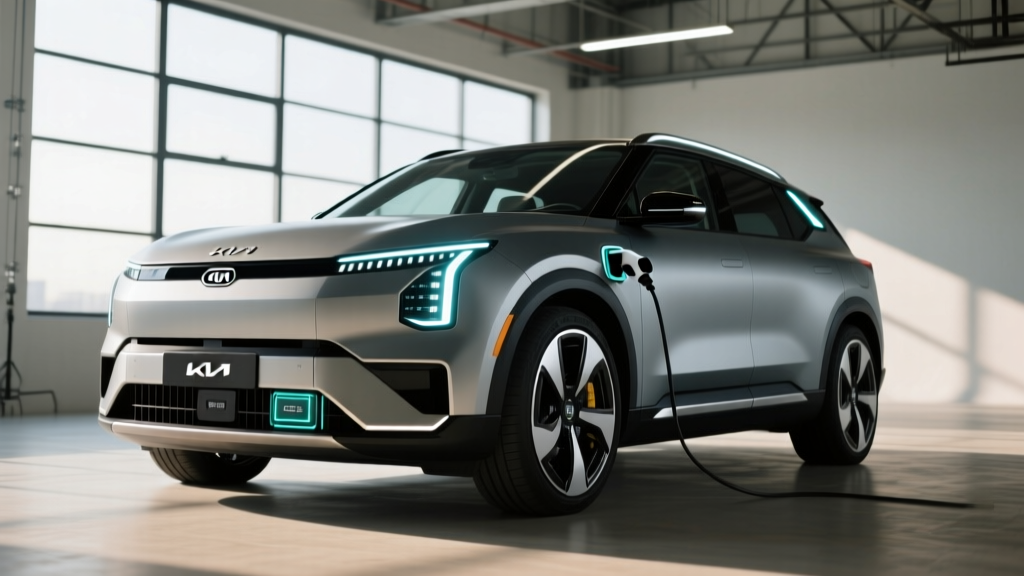
If you've been searching for "EV9 ICCU" you likely own — or are considering — Kia's flagship three-row electric SUV and have encountered warnings about the Integrated Charging Control Unit. The ICCU is the EV9's onboard power-conversion hub: it manages AC-to-DC conversion for Level 1 and Level 2 home charging, regulates high-voltage-to-12V DC-DC conversion for accessory systems, and coordinates battery preconditioning for DC fast charging. When it fails, the consequences range from sluggish home charging to a complete inability to charge the high-voltage traction battery.
NHTSA opened an investigation (PE24009) in mid-2024 after owners reported sudden ICCU failures on 2024-model-year EV9s. Symptoms included illuminated malfunction indicator lamps, loss of drive power, and in several cases, vehicles bricked at public chargers or at home. By late 2024, Kia issued a recall covering affected units, and by the 2026 model year, Kia had revised the ICCU hardware and software on new-production EV9s.
2026 Kia EV9 Core Specs at a Glance
| Spec | Light RWD | Wind/Land AWD | GT-Line AWD |
|---|---|---|---|
| EPA Range | 304 mi | 280 mi | 270 mi |
| Battery (usable) | 76.1 kWh (Light) | 99.8 kWh NMC | 99.8 kWh NMC |
| Horsepower | 215 hp | 379 hp | 379 hp |
| 0-60 mph | 7.7 sec | 5.0 sec | 4.5 sec |
| Max DC Fast Charge | 180 kW | 210 kW | 210 kW |
| 10-80% DCFC Time | ~27 min | ~24 min | ~24 min |
| Level 2 (11 kW onboard) | ~30 mi/hr | ~38 mi/hr | ~38 mi/hr |
| MPGe (combined) | 89 MPGe | 83 MPGe | 82 MPGe |
| Base MSRP | $56,395 | $64,895 | $73,995 |
Source: fueleconomy.gov and Kia America specifications. 2026 model-year figures; minor revisions may apply by trim.
Real-World Range: What the EPA Sticker Doesn't Tell You
Expect ~240-260 miles on a highway-heavy trip at 70 mph in the AWD trims. In sub-freezing winter conditions, plan for a 20-30% reduction — roughly 195-225 miles from the AWD's 99.8 kWh pack. The EV9's boxy aerodynamics (Cd ~0.28) and 5,000+ lb curb weight penalize highway efficiency more than city driving where regenerative braking recovers energy.
The 99.8 kWh NMC (nickel-manganese-cobalt) pack in the Wind, Land, and GT-Line trims is supplied by SK On. It's energy-dense and performs well in moderate climates, but NMC chemistry is more sensitive to sustained high-state-of-charge storage and extreme heat than LFP. Kia's thermal management system — which routes coolant through the battery and ICCU — is critical to longevity, making a functioning ICCU even more essential.
On a real-world 250-mile loop mixing interstate and suburban driving at 65-75 mph, the AWD EV9 typically returns 2.0-2.2 kWh/mile (roughly 45-50 MPGe equivalent), meaning you'll arrive with 10-15% state of charge remaining from a full battery. That's comfortable, but not generous — and it's why ICCU reliability matters for road-trip confidence.
Charging Speed: DC Fast, Level 2, and the ICCU's Role
| Level | Power | Miles Added/Hour | Use Case |
|---|---|---|---|
| Level 1 (120V) | ~1.4 kW | ~4-5 mi/hr | Emergency / trickle |
| Level 2 (240V, 48A) | 11 kW (onboard max) | ~35-38 mi/hr | Home overnight |
| DC Fast (CCS/NACS) | Peak 210 kW | ~145 mi in 15 min | Road trips |
The EV9's 800V architecture allows it to accept up to 210 kW at compatible CCS chargers (and NACS via Tesla Supercharger with the adapter Kia began including for 2025+ models). The charge curve is strong through 55% SoC, then tapers progressively — 80-90% adds another 8-10 minutes. This is normal for NMC packs managed conservatively to limit degradation.
Here's where the ICCU failure hits hardest: the ICCU handles all AC charging. If the ICCU's AC-to-DC converter fails, Level 1 and Level 2 charging stop entirely. DC fast charging may still function in some failure modes because it bypasses the onboard converter and feeds DC directly to the battery via the battery management system — but if the ICCU's DC-DC stage (which keeps the 12V system alive) is also compromised, the vehicle may refuse to initiate any charge session. Owners reporting "bricked" EV9s typically had multi-point ICCU failures.
For home charging, a 48-amp Level 2 station on a 60-amp circuit delivers the full 11 kW the EV9 can accept. That's roughly 9.5 hours from 10% to 100% — fine for overnight, but it means a dead ICCU leaves you with no practical home charging option until the part is replaced.
Pricing, Trims, and Federal Tax Credit Eligibility
| Trim | MSRP | §30D Credit | Effective Price |
|---|---|---|---|
| Light RWD | $56,395 | Up to $7,500* | ~$48,895 |
| Wind AWD | $64,895 | Up to $7,500* | ~$57,395 |
| Land AWD | $70,895 | Up to $7,500* | ~$63,395 |
| GT-Line AWD | $73,995 | Up to $7,500* | ~$66,495 |
*Under IRS §30D rules, eligibility requires: buyer AGI ≤ $150K single / $300K joint; MSRP ≤ $80K for SUVs (all EV9 trims qualify); battery components and critical minerals meeting phased sourcing thresholds. The credit can be transferred to the dealer at point of sale as a purchase-price reduction. Confirm eligibility with your tax professional — rules tighten annually on sourcing requirements.
As of early 2026, the EV9 qualifies for the full $7,500 credit on most trims when purchased new, because Kia/SK On's battery sourcing has met the escalating critical-minerals and component thresholds. This is a significant advantage over some competitors whose credits dropped to $3,750 or $0 as sourcing rules tightened. The point-of-sale transfer option means you don't need to wait until tax filing — the dealer reduces the purchase price by $7,500 and claims the credit themselves.
ICCU Recall: What Kia Fixed and What 2026 Buyers Should Know
The NHTSA investigation and subsequent Kia recall (SC295/SC302 campaigns) addressed ICCU failures in 2024-model-year EV9s and related E-GMP platform vehicles. The root cause was traced to moisture ingress and thermal-cycling fatigue in the ICCU's power semiconductor modules — essentially, the silicon carbide MOSFETs that handle high-current switching degraded prematurely under repeated heat-cool cycles.
Kia's remedy included:
- Inspection and, where needed, replacement of the ICCU with a revised part featuring improved potting and conformal coating against moisture
- Software updates to the battery management system to reduce thermal stress on the ICCU during preconditioning
- Extended warranty coverage on the ICCU for affected vehicles (extended to 10 years/120,000 miles for recalled units)
For 2026 model-year EV9s, Kia confirmed the revised ICCU hardware is installed at the factory. Early 2026 production vehicles have not shown the same failure pattern, though long-term data is still accumulating. If you're buying a used 2024 EV9, confirm the ICCU recall service was completed — ask for the repair order showing SC295/SC302 compliance.
Cargo, Passenger Space, and Daily Livability
The EV9's three-row layout is its primary differentiator in the EV market. With all three rows in use, cargo space is 20.2 cu ft behind the third row — enough for a few grocery bags or a compact stroller. Fold the third row and you get 43.5 cu ft; fold both rear rows for a flat 81.7 cu ft floor.
Legroom is generous: 41.4 inches in the first row, 42.8 inches in the second (with the sliding captain's chairs pushed back), and 32.0 inches in the third. The third row is genuinely usable for adults on shorter trips — a rarity in the EV segment. The available second-row captain's chairs with relaxation mode (power-reclining with leg rest) make the EV9 a compelling family hauler for long trips.
A small frunk (1.8 cu ft on AWD, 3.0 cu ft on RWD) holds charging cables and emergency gear. Towing capacity is 5,000 lbs on AWD trims with the factory tow package — competitive with the Rivian R1S and well ahead of most electric crossovers.
Tech, Driver Assistance, and Notable Drawbacks
The EV9 features a dual 12.3-inch display cluster (instrument + infotainment) running Kia's latest UVO interface with wireless Apple CarPlay and Android Auto. Available features include a head-up display with augmented-reality navigation, digital side mirrors (where legal), fingerprint authentication for driver profiles, and over-the-air software updates.
Driver assistance falls under Kia's Highway Driving Assist 2 (HDA2), which is an SAE Level 2 system — meaning it handles steering, acceleration, and braking on marked highways, but the driver must remain engaged with hands on the wheel and eyes on the road. It is not autonomous driving. HDA2 includes lane-centering, adaptive cruise with stop-and-go, lane-change assist, and navigation-based speed adjustment. It's competent and comparable to Hyundai's HDA2 and Ford's BlueCruise, though it lacks the hands-free capability of GM's Super Cruise.
Drawbacks worth noting:
- The EV9's boxy design creates noticeable wind noise above 70 mph — more than the smoother Hyundai Ioniq 9 or Tesla Model X
- The touch-capacitive climate and media controls are fiddly compared to physical knobs
- At 5,000-5,300 lbs, the EV9 is heavy even by EV standards, which shows in its 2.0+ kWh/mile highway consumption
- The Light RWD trim's 76.1 kWh pack feels undersized for a vehicle this large — 304 miles EPA is fine, but real-world highway range drops to ~240 miles
- Insurance premiums run 15-25% higher than comparable ICE SUVs due to repair costs and ICCU-related claims history
Pros and Cons
Pros
- Genuine three-row seating with adult-usable third row
- 800V architecture with 210 kW DC fast charging
- 5,000-lb towing capacity (AWD)
- Full $7,500 §30D tax credit eligibility (2026 sourcing rules)
- 10-year/100,000-mile battery & powertrain warranty
- Revised ICCU on 2025+ models addresses early failures
- Vehicle-to-load (V2L) powers devices up to 3.6 kW
Cons
- ICCU failures on 2024 models damaged early-owner confidence
- Highway efficiency lags sleeker EV SUVs (2.0+ kWh/mile)
- Light RWD's 76.1 kWh pack feels marginal for the platform
- Noticeable wind noise at highway speed
- Touch-capacitive controls lack tactile feedback
- Higher insurance costs vs. ICE competitors
- Third-row cargo space is tight at 20.2 cu ft
Who the Kia EV9 Is For — and Who Should Look Elsewhere
Buy the EV9 if: You need three rows, value fast DC charging on road trips, want a mainstream-brand dealer network for service, and plan to claim the $7,500 federal credit. The Land AWD at ~$63,395 after credit is a strong value for a 280-mile, 5,000-lb-tow electric family hauler.
Look elsewhere if: You only need two rows (the Hyundai Ioniq 5 or Kia EV6 are more efficient and cheaper), you prioritize hands-free highway driving (GM's Super Cruise on the Cadillac Escalade IQ is more advanced), or you're buying used 2024 and can't verify the ICCU recall was completed.
Key competitors: The Rivian R1S offers more off-road capability and a slightly longer range but starts higher and has no dealer network. The Hyundai Ioniq 9 (new for 2025-2026) shares the E-GMP platform with a more aerodynamic shape and better efficiency. The Tesla Model X has more range and Supercharger access but costs significantly more and has a spotty reliability record.
Frequently Asked Questions
What is the real-world range of the Kia EV9?
EPA rates the AWD EV9 at 270-280 miles depending on trim. In real-world highway driving at 70 mph, expect 240-260 miles. In winter (below 32°F), plan for 195-225 miles. The RWD Light trim's EPA 304 miles drops to roughly 250-270 highway and 200-220 in cold weather.
How fast does the EV9 charge at home and on the road?
At home on a 48-amp Level 2 charger (240V), the EV9 accepts up to 11 kW, adding ~35-38 miles per hour — a full overnight charge in about 9.5 hours. On a DC fast charger, it peaks at 210 kW (AWD trims) and charges 10-80% in roughly 24 minutes, though the curve tapers significantly above 80%.
Does the 2026 Kia EV9 qualify for the $7,500 federal tax credit?
Yes, as of early 2026, the EV9 qualifies for the full $7,500 §30D credit when purchased new, subject to buyer income limits ($150K single / $300K joint AGI). All trims fall under the $80K SUV MSRP cap. The credit can be transferred to the dealer at point of sale. Verify current sourcing-rule compliance on the IRS clean vehicle credit page, as thresholds tighten annually.
Is the ICCU problem fixed on the 2026 EV9?
Kia installed a revised ICCU with improved moisture sealing and updated thermal management software starting with 2025 production. As of early 2026, no widespread ICCU failure pattern has emerged on 2025-2026 vehicles. If buying a used 2024 EV9, insist on documentation that recall SC295/SC302 was completed.
What's the EV9's battery warranty?
Kia covers the high-voltage battery and powertrain for 10 years or 100,000 miles, whichever comes first. The warranty guarantees the battery will retain at least 70% of its original capacity during that period. The ICCU on recalled 2024 vehicles received an extended 10-year/120,000-mile warranty as part of the recall remedy.
How does the EV9 compare to the Hyundai Ioniq 9?
The Ioniq 9 shares the E-GMP platform but features a more aerodynamic body (lower drag coefficient), yielding slightly better highway efficiency and real-world range. The EV9 has a more angular, rugged design and a slightly earlier market presence. Both offer three rows, 800V charging, and similar powertrains. Choose the EV9 for its bolder styling and proven dealer familiarity; choose the Ioniq 9 for marginally better efficiency and a quieter cabin.
Can I tow with the EV9?
AWD trims with the factory tow package are rated for 5,000 lbs — sufficient for a small boat, utility trailer, or lightweight camper. The RWD Light trim is rated for 2,000 lbs. Note that towing at or near capacity will cut real-world range by 30-50%, so plan charging stops accordingly.