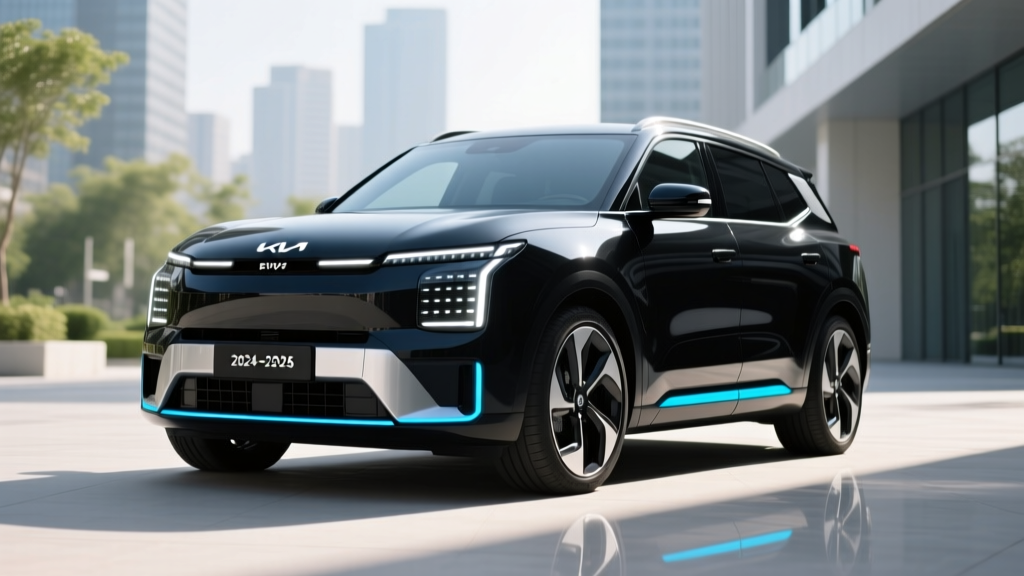
The Kia EV9 launched as one of the most compelling three-row electric SUVs on the market — a genuine family hauler with 300 miles of EPA range, 800V-class fast charging, and usable third-row space. But since late 2024, forums and owner groups have lit up with reports of a specific failure: the EV9 ICCU issue. The Integrated Charging Control Unit, which manages energy flow between the charge port, high-voltage battery, and 12V electrical system, has shown premature failures in a subset of vehicles, leaving some owners stranded or facing extended dealer visits.
This profile examines the ICCU concern head-on, then delivers the full EV9 ownership picture — range, charging, pricing, tax credits, and how it stacks up against the Hyundai Ioniq 9, Rivian R1S, and Tesla Model X in 2026.
What Is the Kia EV9 ICCU Issue?
The ICCU (Integrated Charging Control Unit) is a power-electronics module that consolidates the onboard charger, DC-DC converter, and charge-management logic into a single housing. In the EV9, it sits beneath the rear cargo area and handles three jobs: converting AC grid power to DC for battery charging (Level 1 and Level 2), stepping high-voltage DC down to 12V for accessories, and managing V2L (vehicle-to-load) output.
Reported symptoms of ICCU failure include:
- Sudden inability to accept AC Level 2 charge (DC fast charging may still work initially)
- 12V battery draining repeatedly because the DC-DC converter stops replenishing it
- Dashboard warnings: "Check Electric Vehicle System," "Check Charging System"
- In severe cases, the vehicle entering a limp mode or refusing to start/drive
- Intermittent V2L failure
Kia has acknowledged the concern through Technical Service Bulletins (TSBs) and, in many cases, has replaced the ICCU under the vehicle's 5-year/60,000-mile basic warranty or the 10-year/100,000-mile powertrain warranty. As of early 2026, a formal NHTSA recall has not been issued specifically for the EV9 ICCU, though NHTSA.gov should be monitored for updates. Owners experiencing symptoms should open a warranty claim immediately and document all occurrences with photos and dates.
EV9 Specs at a Glance
| Spec | EV9 Light (RWD) | EV9 GT-Line AWD |
|---|---|---|
| EPA Range | 304 mi | 270 mi |
| Battery (usable) | 76.1 kWh (Light) / 99.8 kWh (Wind+) | 99.8 kWh NMC |
| Peak DC Charge Rate | ~170 kW (Light) / ~236 kW (99.8 kWh) | ~236 kW |
| 10–80% DCFC Time | ~24 min (99.8 kWh pack) | ~24 min |
| Level 2 (11.5 kW) | ~33 mi/hr | ~33 mi/hr |
| Horsepower | 215 hp | 379 hp (405 w/Boost) |
| 0–60 mph | 7.7 sec | 4.5 sec (Boost) |
| Efficiency (MPGe) | 88 MPGe combined | 83 MPGe combined |
| Base MSRP (2025/2026) | $54,900 (Light) | $73,900 (GT-Line AWD) |
Source: fueleconomy.gov, Kia America spec sheets. Verify trim-level pricing with your dealer as model-year adjustments apply.
Real-World Range: What to Actually Expect
Real-World Highway (70–80 mph, moderate weather): ~240–265 miles (Light) / ~210–235 miles (GT-Line)
Cold Weather (below 32°F, highway): Expect 20–30% reduction — as low as ~185–210 miles for the AWD GT-Line
City/Mixed with Regen: Closer to EPA, sometimes exceeding it in stop-and-go traffic
The EV9 is a large, boxy SUV with the aerodynamic profile of a brick. That matters. On flat interstates at 65 mph in 70°F weather, owners routinely report 2.3–2.5 mi/kWh from the 99.8 kWh pack — translating to roughly 230–250 real miles. Push to 80 mph or climb mountain grades and that drops to 2.0 mi/kWh or below. The heat pump (standard on most trims) mitigates cold-weather cabin-heating losses, but battery chemistry itself slows in freezing temps, reducing both range and charge acceptance.
For a family road trip from Denver to Moab (~350 miles), the AWD EV9 will need one DC fast-charge stop. Plan conservatively around 200 miles of usable range between chargers in winter mountain conditions.
Charging Speed and Infrastructure
| Level | Power | Miles Added/Hour | Notes |
|---|---|---|---|
| Level 1 (120V) | ~1.4 kW | ~3–4 mi/hr | Emergency/trickle only |
| Level 2 (240V, 48A) | 11.5 kW | ~33 mi/hr | Full charge overnight (~9 hrs) |
| DC Fast Charge | Up to ~236 kW peak | ~150+ mi in 15 min | 10–80% in ~24 min; tapers hard above 80% |
The EV9's 800V-class architecture is a genuine advantage. On a 350 kW Electrify America or Tesla Supercharger (via NACS adapter on 2025+ models), the 99.8 kWh pack sustains over 175 kW from roughly 15% to 55% SoC before tapering. The 10–80% claim of ~24 minutes is achievable in warm weather with preconditioning — but expect 30+ minutes in cold weather if you haven't preconditioned via navigation routing.
ICCU relevance: A failed ICCU disables AC Level 2 charging entirely. DC fast charging may still function temporarily because the DC path can bypass certain ICCU circuits, but this is not guaranteed and should not be relied upon. If your Level 2 home charging suddenly stops working while DCFC still functions, the ICCU is the prime suspect.
Pricing, Trims, and Federal Tax Credit
| Trim | MSRP | §30D Credit Eligibility | Effective Price |
|---|---|---|---|
| Light RWD | $54,900 | Eligible (partial/full — verify sourcing) | ~$47,400–$54,900 |
| Wind AWD | $63,900 | Eligible (partial/full) | ~$56,400–$63,900 |
| Land AWD | $69,900 | Eligible (partial/full) | ~$62,400–$69,900 |
| GT-Line AWD | $73,900 | Eligible (partial/full) | ~$66,400–$73,900 |
The Kia EV9 qualifies for the IRS §30D federal tax credit, but the exact amount depends on battery-component and critical-mineral sourcing requirements that shift annually. Under current rules (irs.gov):
- MSRP cap: SUVs/vans capped at $80,000 — all EV9 trims qualify
- Income cap: $300,000 joint / $225,000 head of household / $150,000 single MAGI
- Battery sourcing: The credit splits into two halves ($3,750 each) — battery components and critical minerals. Kia's supply chain has secured increasing percentages, but confirm the exact 2026 credit amount at purchase
- Point-of-sale transfer: You can apply the credit as a down-payment reduction at the dealer rather than waiting for tax filing
Always verify with your tax professional and the dealer's EV credit documentation before signing. State incentives (California, Colorado, etc.) may stack on top.
Interior, Cargo, and Family Practicality
The EV9's core value proposition is genuine three-row usability — something the Tesla Model X achieves at twice the price and most competitors fumble.
- Cargo (behind 3rd row): 20.2 cu ft
- Cargo (3rd row folded): 43.5 cu ft
- Cargo (all rear rows folded): 81.7 cu ft
- Second-row legroom: 42.8 inches (bench) or captain's chairs available
- Third-row legroom: 32.0 inches — usable for children and adults under ~5'8" on shorter trips
- Frunk (front trunk): 1.8 cu ft (AWD) / 3.2 cu ft (RWD) — enough for charging cables
The dual 12.3-inch panoramic display runs Kia's latest connected infotainment with wireless Apple CarPlay and Android Auto. Available Highway Driving Assist 2 (HDA2) provides SAE Level 2 lane-centering and adaptive cruise — not self-driving, but competent for long highway stretches with hands-on-wheel monitoring. The EV9 also offers remote smart parking assist, digital key, and up to 5,000 lbs towing capacity (AWD with tow package).
Warranty and the ICCU Safety Net
Kia's warranty coverage is one of the strongest in the industry and directly relevant to the ICCU concern:
- Basic (bumper-to-bumper): 5 years / 60,000 miles
- Powertrain: 10 years / 100,000 miles
- Battery: 10 years / 100,000 miles (capacity retention above 70%)
- Roadside Assistance: 5 years / 60,000 miles
The ICCU, as a high-voltage power-electronics component, falls under the powertrain/EV-system warranty. Owners reporting failures in 2024–2025 models have largely received free replacements, though dealer diagnostic times and parts availability have caused wait times of 1–3 weeks in some regions. If purchasing used, insist on seeing the full service history and any TSB-applied repairs.
EV9 vs. Competitors: Is It Still Worth It?
- Best-in-class 3rd-row space for the price
- 800V fast charging (~24 min 10–80%)
- Strong warranty (10yr/100k battery)
- Available V2L for camping/emergency power
- Competitive pricing vs. Rivian R1S, Model X
- NACS charge port (2025+ models)
- ICCU reliability concern (2024–2025 models)
- Highway range drops significantly at 80+ mph
- Base Light trim has smaller battery, less range
- No frunk worth mentioning on AWD models
- Third row tight for tall adults on long trips
- Dealer network EV expertise still inconsistent
vs. Hyundai Ioniq 9: The corporate cousin shares the E-GMP platform and 99.8 kWh battery but wears different styling and a slightly lower starting price. The Ioniq 9 may share ICCU hardware — monitor TSBs there too.
vs. Rivian R1S: More capable off-road, more powerful, and no widespread ICCU-class failures — but starts ~$20K higher and lacks the Kia warranty length.
vs. Tesla Model X: More range, faster charging (Supercharger network), and Falcon Wing doors — but starts above $80K (credit-ineligible on higher trims) and has its own quality-control history.
Look elsewhere if: You need 350+ miles of range, frequently tow heavy loads over long distances, or cannot tolerate any emerging-reliability uncertainty on a new platform.
Frequently Asked Questions
What is the real-world range of the Kia EV9?
The EPA rates the EV9 at 270–304 miles depending on trim and drivetrain. Real-world highway driving in moderate weather yields approximately 230–265 miles from the 99.8 kWh pack. Cold weather (below freezing) can reduce this to 185–210 miles, especially at highway speeds with cabin heating.
How fast does the EV9 charge at home and on the road?
On a Level 2 home charger (240V, 48A, 11.5 kW), the EV9 adds roughly 33 miles per hour — a full charge takes about 9 hours. On a DC fast charger, it peaks near 236 kW and can go from 10–80% in approximately 24 minutes under ideal (warm, preconditioned) conditions. Expect 30+ minutes in cold weather.
Does the Kia EV9 qualify for the federal EV tax credit?
Yes, the EV9 is eligible for the IRS §30D clean vehicle credit. All trims fall under the $80,000 SUV MSRP cap. The exact credit amount (up to $7,500) depends on battery-component and critical-mineral sourcing requirements for the model year, and buyer income must fall under $300K joint / $150K single MAGI. Confirm the current-year amount at irs.gov and with your dealer.
Is the ICCU issue covered under warranty?
Yes. The ICCU is a high-voltage power-electronics component covered under Kia's 5-year/60,000-mile basic warranty and likely the 10-year/100,000-mile powertrain warranty. Owners experiencing charge-system warnings or Level 2 charging failure should file a warranty claim immediately. Document everything.
Is the 2026 EV9 ICCU fixed?
Kia has not issued a formal public statement confirming a hardware revision, but parts suppliers and dealer technicians have indicated that 2026 production uses updated ICCU components. Buyers of new 2026 models face lower risk, but monitoring early ownership reports through 2026 is prudent.
Should I buy a used 2024–2025 EV9 given the ICCU concern?
A used EV9 can be a strong value if: (1) the ICCU has already been replaced under TSB with documentation, (2) the remaining warranty is substantial, and (3) the price reflects a discount over new. Avoid any used EV9 with an open ICCU-related diagnostic code or unresolved warranty claim.