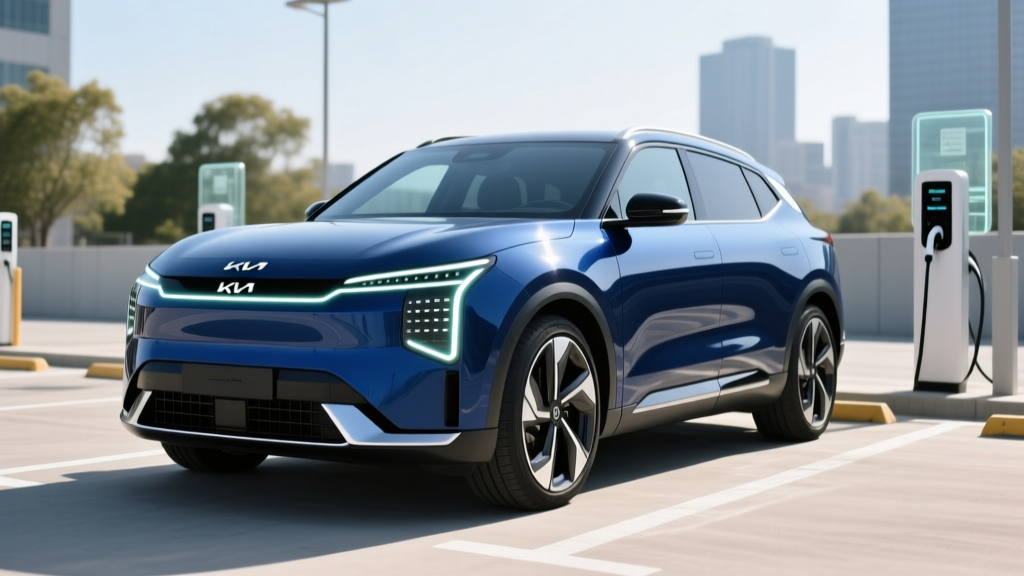
The Kia EV9 remains one of the few mainstream three-row electric SUVs available in the U.S. market for 2026, but a growing number of owners and prospective buyers are searching for specifics about the Kia EV9 ICCU — the Integrated Charging Control Unit that sits at the heart of the SUV's 800-volt electrical architecture. Understanding what the ICCU does, how it governs charging performance, and where its limitations surface in real-world driving is essential before signing a $55,000+ purchase order.
This review covers the 2026 Kia EV9 lineup through the lens of its charging hardware, pairing hard EPA data with the kind of real-world ownership context that spec sheets leave out.
What Is the Kia EV9 ICCU and Why Does It Matter?
The ICCU (Integrated Charging Control Unit) is Kia/Hyundai's next-generation power electronics module. It consolidates three previously separate components — the on-board charger (OBC), the DC-DC converter, and the battery management interface — into a single housing. In the EV9, the ICCU is the gateway that allows the SUV's 800-volt battery architecture to accept ultra-rapid DC fast charging while simultaneously managing power distribution to the 12V system, HVAC, and accessory loads.
For buyers, the practical upshot is twofold:
- Faster DC charging: The 800V architecture enabled by the ICCU allows peak charge rates up to 236 kW on compatible 350 kW chargers.
- V2L capability: The ICCU supports Vehicle-to-Load (V2L) power export up to 3.6 kW through both the interior outlet and an exterior adapter, effectively turning the EV9 into a mobile generator for camping, tailgating, or emergency backup.
The ICCU has also been the subject of software-related service campaigns on early-build EV9s. Kia issued updates to address intermittent charging-session handshake failures on certain CCS1 networks. If you're considering a 2024 or 2025 model-year EV9 on the used market, verify that ICCU firmware recalls (if applicable) have been completed at a dealer.
2026 Kia EV9 Specs at a Glance
| Spec | Light Long Range (RWD) | Wind (AWD) | GT-Line (AWD) |
|---|---|---|---|
| EPA Range | 304 mi | 280 mi | 270 mi |
| Battery (usable) | 99.8 kWh (NMC) | 99.8 kWh (NMC) | 99.8 kWh (NMC) |
| Horsepower | 215 hp | 379 hp | 379 hp (boost: 430 hp) |
| Torque | 258 lb-ft | 516 lb-ft | 516 lb-ft (boost: 605 lb-ft) |
| 0-60 mph | 8.2 sec | 5.0 sec | 4.5 sec (w/ boost) |
| Drivetrain | RWD single motor | AWD dual motor | AWD dual motor |
| Max DC Charge Rate | 236 kW | 236 kW | 236 kW |
| 10-80% DC Time | ~24 min | ~24 min | ~24 min |
| Level 2 (240V) Rate | 10.9 kW (~32 mi/hr) | 10.9 kW (~32 mi/hr) | 10.9 kW (~32 mi/hr) |
| MPGe (combined) | 88 MPGe | 85 MPGe | 83 MPGe |
| kWh/100 mi | 38 | 40 | 41 |
| Base MSRP | $56,395 | $61,395 | $73,995 |
| Federal Tax Credit (§30D) | Up to $7,500 | Up to $7,500 | Up to $7,500 |
Sources: EPA fueleconomy.gov, Kia USA.
Real-World Range: What the EPA Sticker Doesn't Tell You
EPA sticker: 280 mi (Wind) / 270 mi (GT-Line)
Real-world highway (70 mph, 65°F): ~240-255 mi
Real-world highway (30°F, winter): ~200-220 mi
City / suburban mixed: ~265-280 mi (close to EPA)
The EV9's boxy aerodynamics (Cd ~0.28) and 5,000+ lb curb weight penalize highway efficiency more than sedans like the Ioniq 6 or Model 3.
The 99.8 kWh NMC (nickel-manganese-cobalt) battery is large by any measure, but the EV9's three-row mass and flat-fronted SUV profile mean energy consumption climbs steeply above 65 mph. On a 75-mph interstate run in moderate temperatures, expect to see consumption in the 42-46 kWh/100 mi range — well above the EPA's combined rating. In cold weather, the heat pump (standard on all trims) mitigates cabin-heating draw, but battery resistance still reduces usable capacity by roughly 15-20%.
For the RWD Light Long Range, the EPA's 304-mile figure is more achievable in mixed driving, and highway range in fair weather settles around 265-275 miles. If your commute is primarily suburban at sub-55-mph speeds, you'll land near or slightly above the EPA estimate.
Charging Deep Dive: How the ICCU Performs at the Plug
The EV9's 800V architecture — managed through the ICCU — is the same platform found in the Ioniq 5, Ioniq 6, and Kia EV6. It enables some of the fastest DC charging in the mainstream market, but understanding the charge curve is critical for trip planning.
| Charging Level | Power (kW) | Approx. Miles Added per Hour | Notes |
|---|---|---|---|
| Level 1 (120V household) | 1.4 kW | ~4 mi/hr | Emergency/trickle only; ~71 hours for full charge |
| Level 2 (240V, 48A home charger) | 10.9 kW | ~32 mi/hr | Full charge in ~9.5 hours; ideal for overnight |
| DC Fast (50 kW station) | 50 kW | ~150 mi/hr | Older infrastructure; 10-80% in ~80 min |
| DC Fast (150 kW station) | ~135 kW (sustained) | ~400 mi/hr | 10-80% in ~35 min; common EA/ChargePoint rate |
| DC Ultra-Fast (350 kW station) | 236 kW (peak) | ~700 mi/hr | 10-80% in ~24 min; requires battery preconditioning |
The Charge Curve Reality
The headline 236 kW peak only holds between roughly 10-35% State of Charge. From 35-55%, the ICCU throttles to ~180 kW; from 55-80%, it tapers further to 100-120 kW to protect the NMC cells. This is standard behavior for 800V architectures, but it means the average charge rate over a 10-80% session is closer to 160-170 kW, not the 236 kW peak.
Preconditioning is essential. If you navigate to a DC fast charger using the EV9's built-in route planner, the battery thermal management system begins warming the pack 10-15 minutes before arrival. Skip preconditioning (e.g., pulling into a charger without routing through the nav), and your peak rate may be capped at 120-140 kW — especially in cold weather.
CCS1 vs. NACS: Connector Transition
The 2026 EV9 still ships with a CCS1 charge port in North America. Kia has confirmed that NACS (Tesla-style) ports will be standard on EVs beginning with the 2025 model year for new platforms, and a NACS adapter is available for existing CCS1-equipped Kias to access Tesla Superchargers. If you're buying in 2026, confirm whether your specific build date includes the adapter or if it must be purchased separately (typically ~$200-300).
Pricing, Trims, and Federal Tax Credit Eligibility
| Trim | Base MSRP | Est. §30D Credit | Effective Price (if eligible) |
|---|---|---|---|
| Light (Standard Range, RWD) | $54,900 | Up to $7,500 | ~$47,400 |
| Light Long Range (RWD) | $56,395 | Up to $7,500 | ~$48,895 |
| Wind (AWD) | $61,395 | Up to $7,500 | ~$53,895 |
| Land (AWD) | $66,395 | Up to $7,500 | ~$58,895 |
| GT-Line (AWD) | $73,995 | Up to $7,500 | ~$66,495 |
| GT-Line Prestige (AWD) | $77,395 | Up to $7,500 | ~$69,895 |
Critical §30D eligibility caveats (2026 tax year):
- MSRP cap: SUVs/vans/pickups must have an MSRP at or below $80,000. All EV9 trims qualify.
- Buyer income cap: Modified AGI must not exceed $150,000 (single), $225,000 (head of household), or $300,000 (joint filers).
- Battery sourcing: The credit is split into two halves ($3,750 for critical minerals + $3,750 for battery component assembly). The EV9's SK On battery cells have faced evolving sourcing requirements under the IRS §30D rules. Confirm current-year eligibility with your dealer and tax professional before relying on the full $7,500.
- Point-of-sale transfer: As of 2024, buyers can transfer the credit to the dealer at purchase, reducing the out-of-pocket price immediately rather than waiting for tax filing.
Interior Space, Cargo, and Family Practicality
The EV9's primary selling point is genuine three-row usability in an electric package — something only the Rivian R1S and Tesla Model X offer at similar or higher price points.
| Measurement | Value |
|---|---|
| Cargo (behind 3rd row) | 20.2 cu ft |
| Cargo (3rd row folded) | 43.5 cu ft |
| Cargo (all rear rows folded) | 81.7 cu ft |
| Front headroom | 40.9 in |
| 2nd-row legroom | 42.8 in |
| 3rd-row legroom | 32.0 in |
| Seating capacity | 6 (captain's chairs) or 7 (bench) |
The third row accommodates adults on short trips (the 32 inches of legroom is tight for anyone over 5'10"), but it's vastly more usable than the third rows in compact crossovers. With all three rows up, 20.2 cubic feet handles a week of groceries or a couple of checked bags. The available power-folding third row is worth the upgrade for families who regularly toggle between passenger and cargo duty.
Technology, Driver Assists, and Notable Drawbacks
The EV9 runs Kia's latest ccNC (connected car Navigation Cockpit) infotainment on a dual 12.3-inch panoramic display. Wireless Apple CarPlay and Android Auto are standard. Over-the-air updates cover the powertrain, ICCU firmware, and infotainment — Kia has been proactive about pushing charging-optimization patches since launch.
ADAS suite (Highway Driving Assist 2): This is a Level 2 system per SAE International definitions. It includes adaptive cruise with stop-and-go, lane-centering, automatic lane changes (with turn-signal activation), and navigation-based speed adjustment. The driver must keep hands on or near the wheel. This is not autonomous driving.
- Frunk is tiny: Only 3.2 cu ft — essentially a charging-cable storage bin, not real cargo space.
- No spare tire: Tire-inflation kit only. Problematic for road trips in areas with poor roadside-assistance coverage.
- CCS1 port (not native NACS): Requires an adapter for Tesla Supercharger access; verify adapter inclusion with your dealer.
- Towing limited to 5,000 lbs (AWD): Adequate for small campers, but below the Rivian R1S (7,700 lbs). Towing also cuts range by 35-45%.
- Ride quality on 21-inch wheels: GT-Line's larger wheels transmit more road imperfections; the Wind trim's 20s are more compliant.
Who the Kia EV9 Suits Best
- You need three rows and can charge at home (Level 2 overnight covers 250+ miles daily).
- You value DC fast-charging speed for road trips (24-minute 10-80% stops beat most rivals).
- You want V2L for camping, tailgating, or emergency backup power.
- Your budget is $50,000-$70,000 after incentives — undercutting the Model X and R1S by $20,000+.
- You regularly tow more than 5,000 lbs (consider R1S or wait for electric pickup platforms).
- You need native NACS without an adapter (some 2026 competitors ship with the Tesla port standard).
- Your daily driving is mostly highway at 80+ mph — efficiency drops sharply and range shrinks.
Warranty and Long-Term Battery Outlook
Kia backs the EV9 with one of the strongest warranty packages in the segment:
- Battery: 10 years / 100,000 miles (capacity retention threshold: 70% of original)
- Powertrain (motors, ICCU, reduction gear): 10 years / 100,000 miles
- Bumper-to-bumper: 5 years / 60,000 miles
- Roadside assistance: 5 years / 60,000 miles
The NMC chemistry in the EV9's SK On battery pack has demonstrated moderate degradation in early data — approximately 5-8% capacity loss over the first 50,000 miles based on fleet-owner reports, which is within the normal curve for NMC packs with active liquid thermal management. The 10-year warranty provides a meaningful buffer against premature failure, and Kia's ICCU-related service campaigns suggest the company is actively monitoring field performance.
Frequently Asked Questions
What is the real-world range of the Kia EV9?
The EPA rates the AWD EV9 at 270-280 miles depending on trim. In real-world highway driving at 70 mph and moderate temperatures, expect 240-255 miles. In winter conditions (30°F), plan for 200-220 miles. The RWD Light Long Range gets closer to its 304-mile EPA rating in mixed driving, typically delivering 265-290 miles.
How fast does the EV9 charge at home and on the road?
At home on a 48A Level 2 charger (240V), the EV9 adds about 32 miles per hour, fully charging in roughly 9.5 hours. On a 350 kW DC fast charger with battery preconditioning, it peaks at 236 kW and charges from 10-80% in approximately 24 minutes. On a more common 150 kW charger, plan for about 35 minutes for the same 10-80% session.
Does the 2026 Kia EV9 qualify for the $7,500 federal tax credit?
The EV9 qualifies under §30D rules for SUVs (MSRP under $80,000), but the buyer must meet income caps ($300,000 joint / $150,000 single) and the battery must satisfy critical-mineral and component-sourcing requirements, which evolve annually. The credit can be transferred to the dealer at point of sale. Confirm current eligibility with your dealer and a tax professional referencing IRS guidance.
Is the Kia EV9 worth buying vs. the Rivian R1S or Tesla Model X?
The EV9 undercuts both by $20,000-$30,000 at base pricing and offers comparable three-row space with faster DC charging than the Model X. The R1S offers superior off-road capability and higher towing (7,700 lbs) but at a premium price. The Model X has more range (348 mi EPA) and a native NACS port, but starts above $80,000 and falls outside the §30D MSRP cap. For most families prioritizing value and charging speed, the EV9 is the strongest pick.
What problems have been reported with the Kia EV9 ICCU?
Early-build (2024) EV9s experienced intermittent charging-session failures on some CCS1 networks, traced to ICCU firmware handshake protocols. Kia issued software updates through dealer service campaigns. There have been no widespread hardware-replacement recalls for the ICCU as of early 2026. Buyers of used 2024 models should confirm all ICCU-related updates have been applied.
Does the EV9 have a front trunk (frunk)?
Yes, but it's very small — just 3.2 cubic feet. It's suitable for storing charging cables and a small emergency kit, but not for meaningful cargo. This is a common limitation in vehicles built on skateboard platforms that prioritize cabin space over front storage.