What It Really Costs to Finance and Own a Kia EV9 in 2026
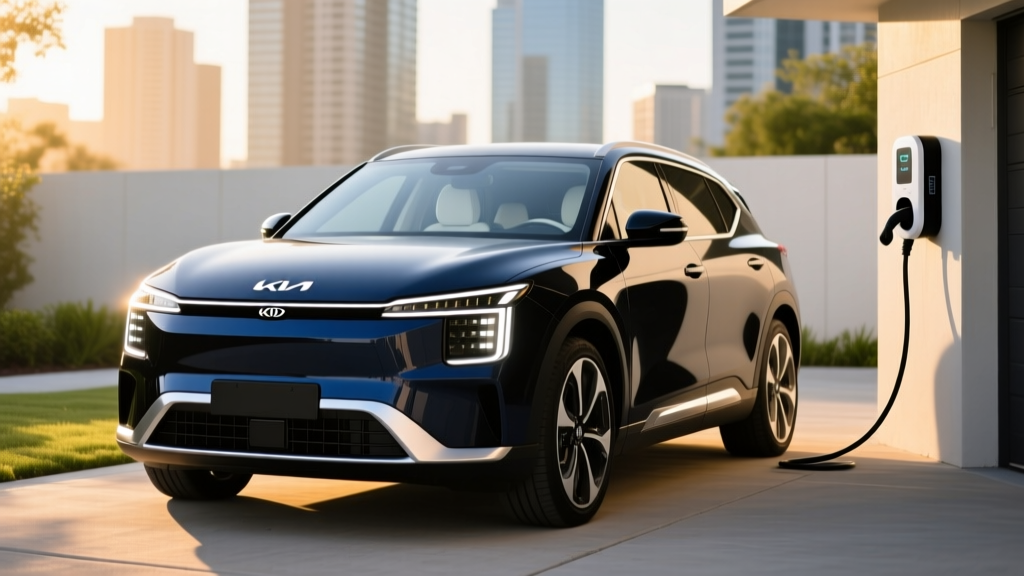
The Kia EV9 remains one of the few three-row electric SUVs on the U.S. market that doesn't carry a luxury badge or a six-figure price tag. But sticker price is only the starting line. Between federal tax credits, state rebates, electricity costs, insurance premiums, and depreciation curves, the real cost of putting an EV9 in your driveway shifts significantly from the MSRP on the window sticker.
This guide breaks down the full five-year ownership math for the 2026 Kia EV9 — purchase price, federal §30D tax credit eligibility, fuel and maintenance savings, insurance reality, and resale value — so you can decide whether financing an EV9 makes financial sense for your household.
| Spec | EV9 Light (RWD) | EV9 Wind/Land (AWD) | EV9 GT-Line (AWD) |
|---|---|---|---|
| Base MSRP | $54,900 | $59,900–$63,900 | $73,900 |
| Battery (usable) | 76.1 kWh (NMC) | 99.8 kWh (NMC) | 99.8 kWh (NMC) |
| EPA Range | 230 mi | 270–304 mi | 270 mi |
| Real-World Range (highway/cold) | ~185–200 mi | ~220–260 mi | ~220–250 mi |
| Peak DC Fast Charge | ~175 kW | ~210 kW | ~210 kW |
| 10–80% DC Charge Time | ~24 min | ~24 min | ~24 min |
| Level 2 Charge Rate | 10.9 kW | 10.9 kW | 10.9 kW |
| Horsepower | 215 hp | 379 hp | 379 hp |
| 0–60 mph | 7.7 sec | 5.0 sec | 5.0 sec |
| MPGe (combined) | 88 MPGe | 83–89 MPGe | 83 MPGe |
| Battery/Powertrain Warranty | 10 years / 100,000 miles | ||
5-Year Total Cost of Ownership: The Full EV9 Breakdown
To understand what financing a Kia EV9 actually costs, we need to model five years and 75,000 miles of ownership. The table below uses the EV9 Wind AWD (MSRP $63,900) as our reference trim — the volume seller with the larger 99.8 kWh battery and 270-mile EPA range.
| Cost Category | EV9 Wind AWD | Comparable Gas SUV (Kia Telluride SX, ~$48,000) |
|---|---|---|
| Purchase Price (MSRP) | $63,900 | $48,000 |
| Federal Tax Credit (§30D) | −$7,500 (if eligible) | $0 |
| Effective Purchase Price | $56,400 | $48,000 |
| Estimated Sales Tax (7% avg) | $4,473 | $3,360 |
| Fuel / Electricity (75k mi) | $5,625 | $10,350 |
| Maintenance (5 years) | $1,800 | $4,200 |
| Insurance (5 years) | $11,250 | $8,500 |
| Depreciation (5-year) | −$28,200 | −$19,200 |
| Net 5-Year Cost | $51,348 | $55,210 |
The EV9 comes out roughly $3,800 ahead over five years in this scenario — but only if you qualify for the full $7,500 federal credit. Without it, the EV9's net cost climbs to ~$58,848, putting it about $3,600 behind the Telluride. This is why understanding tax credit eligibility is the single most important financial variable in your EV9 purchase decision.
Federal Tax Credit: Do You Qualify for the Full $7,500?
The IRS §30D Clean Vehicle Credit offers up to $7,500 for qualifying new EVs, but it's not automatic. The EV9 must satisfy battery-sourcing and critical-mineral requirements, and you must meet income and MSRP caps. As of 2026, the Kia EV9 — assembled in West Point, Georgia — qualifies for the full $7,500 for eligible buyers, but verify your specific VIN on the IRS portal before signing paperwork.
§30D Eligibility Checklist for the 2026 Kia EV9
- MSRP Cap: The EV9 must have an MSRP at or below $80,000 (SUV/van/truck threshold). The Wind AWD at $63,900 qualifies. The GT-Line at $73,900 qualifies. Fully loaded options packages that push above $80,000 may disqualify the vehicle.
- Buyer Income Limits (Modified AGI): $300,000 for joint filers, $225,000 for head of household, $150,000 for single filers. If your AGI exceeds these in either the purchase year or the prior year, you're ineligible.
- Battery Sourcing Requirements: The credit splits into two halves — $3,750 for critical-mineral sourcing and $3,750 for battery-component assembly. Kia's Georgia-built EV9 currently meets both thresholds, but supply-chain shifts can change this mid-year. Always check fueleconomy.gov for the latest eligibility.
- Point-of-Sale Transfer: As of 2024, you can transfer the credit to the dealer at purchase, reducing your out-of-pocket cost by $7,500 at the dealership rather than waiting to claim it on your tax return. This is the recommended path — it lowers your financed amount immediately.
- One Credit Per Taxpayer Per Year: You can only claim one new-vehicle credit per year. If you bought another qualifying EV this year, the EV9 won't qualify.
Pro tip: The point-of-sale transfer effectively reduces your loan principal by $7,500. On a 60-month loan at 6.5% APR, that's a monthly payment reduction of roughly $147 and total interest savings of about $1,300 over the loan term.
Charging vs. Gas: The Per-Mile Cost Math
This is where the EV9 earns back its higher purchase price. The math depends heavily on whether you charge at home or rely on public DC fast charging.
| Scenario | Cost per Mile | 75,000-Mile Total |
|---|---|---|
| EV9 — Home Level 2 ($0.14/kWh avg) | $0.047 | $3,525 |
| EV9 — Public DC Fast Charging ($0.40/kWh avg) | $0.134 | $10,050 |
| EV9 — Blended (80% home / 20% public) | $0.064 | $4,800 |
| Gas SUV (22 MPG combined, $3.05/gal) | $0.139 | $10,425 |
The EV9's 99.8 kWh battery and roughly 2.7–3.0 miles per kWh efficiency means a full charge at home costs about $14 at the national average residential rate of $0.14/kWh. That's 270 miles of range for less than the price of a takeout lunch.
The catch: If you can't charge at home and rely entirely on public DC fast chargers at $0.35–$0.48/kWh (common on Electrify America and EVgo networks in 2026), your fuel cost nearly triples and can exceed what a gas SUV costs. Home charging access — whether a garage Level 2 or even a dedicated 120V outlet for overnight trickle charging — is the single biggest determinant of EV operating savings.
The EV9 supports NACS natively for 2026, giving you access to Tesla Supercharger stalls alongside CCS networks. This is a meaningful practical advantage for road-trip charging convenience.
Maintenance Savings: Fewer Parts, Lower Bills
EVs eliminate the maintenance items that add up quickly on internal-combustion vehicles. The EV9 has no engine oil, no transmission fluid, no spark plugs, no timing belt, and no exhaust system. Regenerative braking significantly extends brake pad life — many EV owners report original brake pads lasting 80,000+ miles.
| Maintenance Item | EV9 | Gas SUV (Telluride) |
|---|---|---|
| Oil Changes (5–7 over 75k mi) | $0 | $350–$560 |
| Transmission Fluid | $0 | $150–$250 |
| Brake Pads (front + rear) | $0–$300 (regen extends life) | $600–$1,000 |
| Air Filters (engine + cabin) | $80 (cabin only) | $200–$300 |
| Coolant Flush | $0 (sealed system) | $150–$200 |
| Tire Rotation / Replacement | $1,200 (EVs wear tires ~15% faster) | $1,000 |
| Miscellaneous (wipers, 12V battery) | $220 | $250 |
| Total Estimated | $1,800 | $4,200 |
The net maintenance savings over five years: approximately $2,400. The one area where EVs cost more is tires — the EV9's 4,800+ lb curb weight and instant torque accelerate tire wear. Budget for a tire rotation every 7,500 miles and expect to replace a set of all-season tires around 40,000–50,000 miles.
Insurance Costs: The EV Premium Is Real
Here's where the EV9 costs more than a gas equivalent, and it's a line item many buyers overlook. EV insurance premiums run 15–30% higher than comparable gas vehicles, driven by three factors:
- Higher repair costs: Battery pack damage in a collision can total a vehicle that would otherwise be repairable. Specialized high-voltage training for body shops increases labor rates.
- Higher replacement parts costs: EV-specific components (inverters, onboard chargers, battery modules) carry premium pricing.
- Vehicle value: The EV9's higher MSRP means higher comprehensive and collision coverage costs.
For the EV9 Wind AWD, expect annual premiums in the $2,000–$2,500 range depending on your state, driving record, and coverage levels. That's roughly $500–$600 more per year than a Telluride. Over five years, that's an additional $2,500–$3,000 in insurance costs that partially offsets fuel and maintenance savings.
Shop aggressively. Insurers weight EV risk differently — some carriers have become significantly more competitive on EV premiums in 2025–2026 as claims data matures. Get quotes from at least three carriers before purchase.
Depreciation and Resale Value: The Honest Picture
EV depreciation has been volatile. In 2023–2024, a wave of Tesla price cuts, aggressive new-EV incentives, and shifting consumer sentiment caused used EV values to drop faster than gas vehicles. By 2025–2026, the market has stabilized somewhat, but three-row electric SUVs remain a niche segment with limited used-market data.
Current projections for the EV9:
- Year 1: 15–20% depreciation (typical new-vehicle drop)
- Year 3: 40–50% cumulative depreciation
- Year 5: 50–60% cumulative depreciation
For the EV9 Wind AWD at $63,900, a 50% five-year depreciation translates to a residual value of roughly $32,000 and a depreciation cost of about $28,200 (after the $7,500 credit reduces your effective basis to $56,400 — depreciation is calculated on your net cost).
By comparison, the Kia Telluride — one of the strongest-resale gas SUVs — typically retains 55–60% after five years, translating to roughly $19,200 in depreciation on a $48,000 purchase. The EV9's higher starting price and the general EV resale discount work against it here.
Mitigating factors: Kia's 10-year/100,000-mile battery and powertrain warranty transfers to second owners (though it reduces to 5 years/60,000 miles for the subsequent owner on some components). This provides meaningful used-market confidence. Additionally, as charging infrastructure expands and battery longevity data accumulates, EV resale values may stabilize further.
State, Local, and Utility Incentives
Beyond the federal §30D credit, many states and utilities offer additional rebates that can shave $500–$5,000+ off your effective cost. Examples include:
- California: CVRP rebates up to $7,000 for income-eligible buyers (funding varies)
- Colorado: State tax credit up to $5,000 for EVs under $80,000 MSRP
- Utility rebates: Many utilities offer $250–$1,000 for home Level 2 charger installation, plus off-peak charging rates as low as $0.06–$0.08/kWh
- HOV lane access: Several states grant EVs carpool-lane privileges — a non-cash benefit worth real commute time
These incentives vary by jurisdiction, change frequently, and often have income or application-deadline requirements. Check your state energy office and utility provider for current programs. The AFDC state law database is a reliable aggregator.
Financing the EV9: Loan, Lease, or Point-of-Sale Credit?
How you structure the purchase affects your monthly payment and total cost.
- Point-of-sale credit transfer: Assign the $7,500 §30D credit to the dealer at signing. This reduces your financed amount immediately — a $63,900 EV9 becomes a $56,400 loan. This is almost always preferable to claiming the credit on your tax return the following April.
- 60-month loan at 6.5% APR: On the credit-adjusted $56,400, your monthly payment is approximately $1,103. Total interest over the term: ~$9,780.
- 72-month loan at 6.5%: Monthly payment drops to ~$948, but total interest rises to ~$11,860. The longer term also means you're underwater on the loan longer given EV depreciation curves.
- Leasing: Kia frequently offers lease deals on the EV9. The commercial clean vehicle credit (§45W) sometimes allows the leasing company to claim the $7,500 credit and pass it through as a lease incentive — even if you personally exceed the §30D income caps. Ask the dealer about this structure if your AGI is above the federal limits.
Decision Framework: Is the EV9 the Right Financial Move?
Choose the Kia EV9 if:
- You qualify for the full $7,500 federal credit (income under caps, MSRP under $80K)
- You can install a Level 2 charger at home (garage or driveway with 240V access)
- You drive 12,000–15,000 miles per year, maximizing fuel savings
- You need three rows but want to avoid $70K+ luxury-brand pricing
- Your state offers additional EV rebates or tax credits
Consider the Telluride or another gas/PHEV SUV if:
- Your AGI exceeds §30D income limits and no lease workaround is available
- You live in an apartment or lack reliable home charging access
- You regularly tow heavy loads (the EV9 is rated for 5,000 lbs, but range drops significantly under load)
- You plan to sell within 3 years — EV depreciation may sting more in a short ownership window
Frequently Asked Questions
How much does it really cost to own a Kia EV9 over 5 years?
With the $7,500 federal tax credit and predominantly home charging, the EV9 Wind AWD costs approximately $51,000–$53,000 over five years and 75,000 miles, factoring in purchase price, electricity, insurance, maintenance, and depreciation. Without the tax credit, expect $58,000–$60,000. Your actual number depends on local electricity rates, insurance premiums, and resale value at trade-in.
Does the 2026 Kia EV9 qualify for the $7,500 federal tax credit?
Yes — the EV9 is assembled in Georgia with battery components and critical minerals that currently satisfy §30D sourcing requirements. However, you must personally meet income caps ($300K joint, $150K single) and the vehicle's MSRP must stay under $80,000. Always verify on the fueleconomy.gov tax credit lookup for your specific VIN before purchasing.
How much do I save on fuel driving the EV9 vs. a gas SUV?
With home charging at $0.14/kWh, the EV9 costs about $0.047 per mile in electricity vs. $0.139 per mile for a 22-MPG gas SUV at $3.05/gallon. Over 75,000 miles, that's a savings of roughly $6,800. If you rely exclusively on public DC fast charging at $0.40/kWh, savings shrink to near zero.
Are EVs more expensive to insure than gas vehicles?
Yes, typically 15–30% more. For the EV9, expect $2,000–$2,500 annually vs. $1,600–$1,800 for a Telluride. Higher repair costs, specialized labor, and the vehicle's higher value drive the premium. Shop quotes from multiple insurers — EV-specific rates vary significantly between carriers.
How well does the Kia EV9 hold its value?
Current projections show 50–60% depreciation over five years, which is steeper than the Telluride's 40–45% drop. The EV9 benefits from Kia's strong warranty and growing three-row EV demand, but the broader EV resale market remains less predictable than gas vehicles. If resale value is your top priority, a PHEV like the Sorento Plug-In Hybrid may offer a middle ground.
Can I use the EV9's V2L feature to power devices or my home?
The EV9 supports Vehicle-to-Load (V2L), which lets you power external devices (camping gear, power tools, tailgate setups) through the vehicle's charging port adapter at up to 3.6 kW. Full Vehicle-to-Home (V2H) bi-directional charging — which could power your house during an outage — requires compatible home equipment and is available on select trims with additional hardware.
What happens to my EV9 tax credit if I lease instead of buy?
When you lease, the $7,500 credit technically goes to the leasing company (the vehicle's legal owner) under the commercial clean vehicle credit (§45W). Most manufacturers pass this through as a capitalized-cost reduction, effectively lowering your monthly lease payment. The advantage: lease credits have no buyer income caps or MSRP limits, making this a workaround if your AGI exceeds §30D thresholds.