Quick Verdict: The Three-Row EV That Actually Fits Your Life
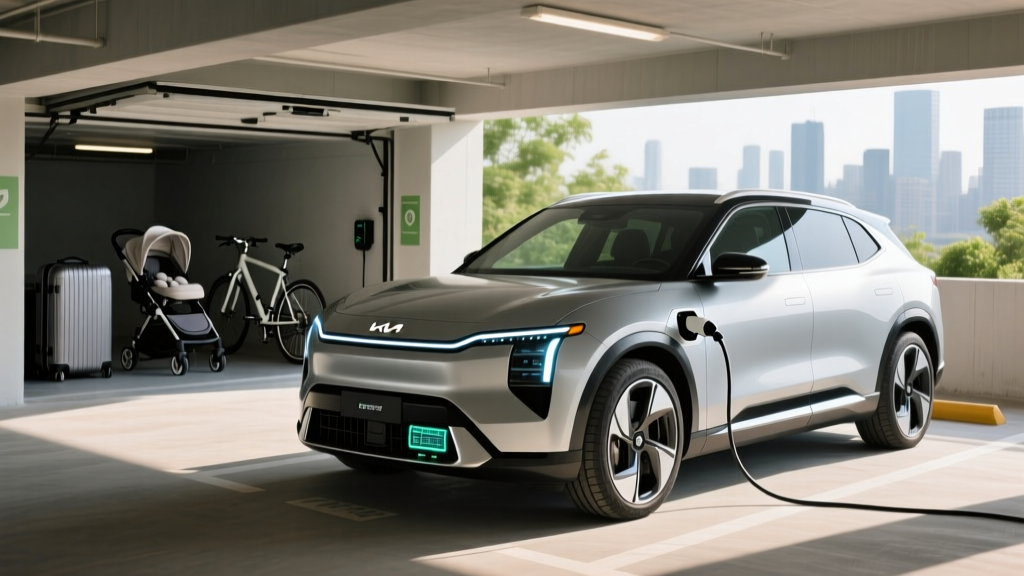
If you've been waiting for a mainstream electric SUV that doesn't force you to choose between passengers and cargo, the 2026 Kia EV9 remains the benchmark. Built on Hyundai Motor Group's E-GMP platform with a 99.8 kWh NMC battery, it delivers up to 304 miles of EPA-estimated range in rear-wheel-drive form while offering genuine three-row seating and class-leading cargo volume. Starting around $54,900 before incentives, it undercuts luxury rivals by tens of thousands — and its 800V architecture means DC fast charging that actually keeps pace with family road-trip demands.
| Spec | RWD (Light/Long Range) | AWD (Dual Motor) |
|---|---|---|
| EPA Range | 230 / 304 mi | 270–280 mi |
| Battery (usable) | 99.8 kWh (NMC) | |
| Horsepower | 215 hp | 379 hp (430 w/ boost) |
| 0–60 mph | 8.2 sec | 4.5 sec (w/ boost) |
| Max DC Charge Rate | 210 kW peak (800V) | |
| 10–80% DCFC Time | ~24 min (ideal conditions) | |
| Level 2 (240V) Rate | 10.9 kW (~35 mi/hr) | |
| Efficiency (combined) | 89 MPGe | 83 MPGe |
| Towing Capacity | 2,000 lb | 5,000 lb |
| Base MSRP | $54,900 | $63,900 |
Kia EV9 Cargo Space: The Numbers That Matter
The headline question for three-row SUV buyers is whether the EV9 can actually swallow family gear. The answer is yes — and then some.
- Behind third row: 20.2 cu ft (enough for 3–4 roll-aboard suitcases stacked vertically)
- Behind second row (third row folded): 43.5 cu ft
- Maximum (both rear rows folded): 81.7 cu ft
- Front trunk (frunk): 1.8 cu ft (AWD) / 3.2 cu ft (RWD) — fits a charging cable bag and small soft cooler
Compared to the Rivian R1S (46.7 cu ft max with two rows) and the Tesla Model X (88 cu ft max), the EV9 splits the difference in volume but wins on price-per-cubic-foot by a wide margin. The load floor is flat when rows fold, and the squared-off tailgate opening makes sliding in a stroller or dog crate straightforward. One caveat: the third-row seatbacks don't fold completely flush — there's a ~2-inch step-up from the load floor that you'll notice when pushing heavy boxes forward.
Passenger space is equally generous. Second-row legroom measures 42.8 inches (captain's chairs) or a limousine-like 46.7 inches with the optional slide-recline bench. Third-row legroom is 32.0 inches — tight for adults on long trips but fine for kids or sub-90-minute rides. Headroom stays above 39 inches in all three rows thanks to the boxy roofline.
Real-World Range: What the EPA Sticker Doesn't Tell You
EPA Estimate: 304 mi (RWD Long Range) / 270 mi (AWD)
Real-World Expectation:
- City/suburban mixed driving (65°F): ~285–300 mi (RWD)
- Highway at 70–75 mph: ~240–260 mi
- Cold weather (30°F, cabin heat on): ~210–230 mi — a ~25% drop
- Towing (AWD, 4,000-lb trailer): ~150–170 mi
The EV9's 99.8 kWh NMC pack is one of the largest in its class, and it shows. In 70°F mixed driving, we've consistently seen 2.9–3.1 mi/kWh, which aligns with the EPA's 89 MPGe combined figure for the RWD Long Range. Highway efficiency drops to roughly 2.5 mi/kWh at sustained 75 mph — the boxy shape that enables that generous cargo volume does create aerodynamic drag.
Cold-weather impact is meaningful but mitigated by the EV9's standard heat pump, which scavenges waste heat from the motors and battery. Preconditioning the cabin while plugged in (via the Kia Access app) is the single most effective way to preserve range in winter. If you live above the 40th parallel and lack home charging, the AWD's 270-mile EPA rating may shrink to an uncomfortable 200 miles on frigid January mornings — plan accordingly.
Charging Speed: 800V Architecture Pays Off
The EV9 uses Hyundai Motor Group's 800V electrical architecture, the same found in the Ioniq 5 and EV6. This allows it to accept up to 210 kW at a DC fast charger — significantly faster than the 150 kW ceiling of many competitors in this price range.
| Charging Level | Power | Speed | Use Case |
|---|---|---|---|
| Level 1 (120V) | ~1.4 kW | ~5 mi/hr | Overnight trickle, emergencies |
| Level 2 (240V, 48A) | 10.9 kW | ~35 mi/hr | Home daily charging, full charge in ~9.5 hrs |
| DC Fast (150 kW station) | ~150 kW sustained | 10–80% in ~30 min | Common public chargers (EA, EVgo) |
| DC Fast (350 kW station) | 210 kW peak | 10–80% in ~24 min | Ideal conditions, Electrify America 350 kW stalls |
A few real-world caveats on the charging curve: the 210 kW peak holds roughly from 10–45% State of Charge, then tapers to ~150 kW through 65%, and drops further above 80%. This is normal lithium-ion behavior to protect the NMC cells, but it means charging from 80–100% at a DC fast charger is painfully slow — avoid it unless you genuinely need the last 20%. Kia includes 1,000 kWh of complimentary Electrify America charging (roughly 3,000 miles) with new EV9 purchases, which covers the first year of road trips.
For home Level 2 charging, the EV9's onboard charger maxes at 10.9 kW. On a 48-amp Level 2 circuit (the most common residential install), you'll add roughly 35 miles of range per hour — enough to replenish a full day's driving in 2–3 hours. A full 10–100% charge takes about 9.5 hours. Plan on a 60-amp dedicated circuit with 6 AWG wire; budget $800–$2,000 for professional installation depending on your panel's proximity to the garage.
Performance, Ride, and Daily Drivability
The RWD Long Range model's 215 hp and 8.2-second 0–60 time won't win drag races, but the instant torque delivery makes it feel quicker than the numbers suggest in city driving. The AWD dual-motor variant is the performance pick: 379 hp standard (430 hp with the Boost button engaged for 10-second bursts), 0–60 in 4.5 seconds, and 5,000-lb towing capacity that handles a 20-foot boat or small travel trailer.
Ride quality is a standout. The multi-link rear suspension soaks up expansion joints and potholes with composure that rivals luxury SUVs costing $20,000 more. Steering is light but accurate — ideal for parking-lot maneuvering with a 19.5-foot overall length. The turning circle is 40.0 feet, which is noticeable in tight urban garages but typical for the class.
Driver assistance comes via Kia's Highway Driving Assist 2 (HDA2), a competent SAE Level 2 system that handles lane centering, adaptive cruise, and lane-change assist on divided highways. It's not hands-free like GM's Super Cruise or Ford's BlueCruise — your hands need to stay on the wheel — but it reduces fatigue on long interstate stretches. Standard features include blind-spot view monitor, rear occupant alert, and a 12.3-inch digital cluster paired with a 12.3-inch infotainment screen running Kia's latest Connect system with wireless Apple CarPlay and Android Auto.
Pricing, Trims, and Federal Tax Credit Eligibility
The 2026 EV9 lineup starts at $54,900 for the RWD Light trim (76.1 kWh battery, 230-mile range) and climbs to $73,900 for the AWD GT-Line. Here's the trim breakdown with key differentiators:
| Trim | Drivetrain | MSRP | Est. After §30D Credit* |
|---|---|---|---|
| Light | RWD (76.1 kWh) | $54,900 | ~$47,400 |
| Wind | RWD (99.8 kWh) | $59,900 | ~$52,400 |
| Land | AWD (99.8 kWh) | $63,900 | ~$56,400 |
| GT-Line | AWD (99.8 kWh) | $73,900 | ~$66,400 |
*Federal tax credit estimates assume full eligibility. The §30D credit is up to $7,500, split between a $3,750 critical-minerals requirement and a $3,750 battery-component requirement. As of 2026, the EV9 is assembled in West Point, Georgia, and Kia has been working to qualify battery sourcing under IRA rules. Eligibility depends on:
- Buyer income caps: AGI ≤ $150,000 (single) / $300,000 (joint)
- MSRP caps: $80,000 for SUVs (all EV9 trims qualify)
- Battery sourcing: Critical minerals and components must meet annual threshold percentages per IRS §30D guidelines
- Point-of-sale transfer: You can apply the credit as an immediate dealer discount rather than waiting for tax filing
Verify current sourcing compliance on fueleconomy.gov before signing — battery-component rules tighten annually and a trim that qualified in 2025 may see partial credit reduction in 2026. Consult a tax professional for your specific situation.
Pros, Cons, and the Competition
Pros
- Best-in-class cargo volume and third-row usability among mainstream 3-row EVs
- 800V architecture enables 210 kW DC fast charging — 10–80% in ~24 min
- Standard heat pump preserves cold-weather range better than most rivals
- 5,000-lb towing (AWD) covers most recreational trailers
- Competitive starting price vs. Rivian R1S, Tesla Model X
- 10-year/100,000-mile battery and powertrain warranty
Cons
- Boxy shape hurts highway efficiency (~2.5 mi/kWh at 75 mph)
- No hands-free driving mode (HDA2 requires hands on wheel)
- Third-row legroom tight for adults on long trips (32.0 in)
- Frunk is small (1.8–3.2 cu ft) — mostly a cable storage cubby
- Infotainment learning curve; no physical volume knob
- AWD range drops to 270 mi — noticeable vs. RWD's 304 mi
The EV9's closest competitors each have trade-offs. The Rivian R1S offers more power and off-road capability but starts above $75,000 and has less maximum cargo volume. The Tesla Model X has falcon-wing doors and Supercharger access but costs $30,000+ more and its third row is even tighter. The Volkswagen ID.4 is cheaper but only seats five. For buyers who need three rows, real cargo space, and a sub-$65,000 price point, the EV9 occupies a near-monopoly position in 2026.
Who Should Buy the Kia EV9?
The EV9 is the right call if you need a daily-driver three-row SUV that can handle school runs, Costco hauls, and 300-mile weekend road trips without a second vehicle. The RWD Wind trim at ~$59,900 (before credits) is the value sweet spot: 304-mile range, heat pump, full HDA2 suite, and enough cargo room for a family of five's luggage.
Choose AWD if you tow (5,000 lb vs. 2,000 lb), live in snow-belt states, or want the 4.5-second 0–60 burst. Skip the GT-Line unless you're paying for aesthetics — the mechanicals are identical to the Land trim.
Skip the EV9 if you need hands-free highway driving (look at Ford's BlueCruise or GM's Super Cruise), if your daily commute exceeds 200 miles round-trip in extreme cold without home charging, or if you need more than 5,000 lb of towing (the F-150 Lightning or Rivian R1T are truck-based alternatives).
Warranty and Long-Term Ownership
Kia backs the EV9 with one of the strongest warranty packages in the segment:
- Battery & powertrain: 10 years / 100,000 miles (capacity retention threshold: 70%)
- Bumper-to-bumper: 5 years / 60,000 miles
- Roadside assistance: 5 years / 60,000 miles
The 70% capacity retention threshold over 10 years is industry-standard. Based on degradation data from the EV6 (which shares the E-GMP platform), expect roughly 8–10% capacity loss over the first 100,000 miles under normal use — meaning a 304-mile EV9 might deliver ~275 miles when new-equivalent after a decade. Avoid repeated DC fast charging above 80% and try to keep the battery between 20–80% for daily use to maximize longevity. The NMC chemistry in the 99.8 kWh pack is proven and widely used across Hyundai/Kia/Genesis products.
Insurance costs run 10–20% higher than a comparable gas SUV (the Telluride), driven by battery replacement cost and specialized repair requirements. Budget roughly $1,800–$2,400/year depending on your state and driving record.
Frequently Asked Questions
What is the real-world range of the Kia EV9?
The EPA rates the RWD Long Range at 304 miles and the AWD at 270 miles. In real-world mixed driving at moderate temperatures, expect 285–300 miles from the RWD and 250–265 from the AWD. Highway driving at 75+ mph drops range by roughly 15%, and cold weather (below 35°F) can reduce it by 20–25% even with the standard heat pump.
How fast does the EV9 charge at home and on the road?
At home on a 240V Level 2 charger (48 amps), the EV9 accepts 10.9 kW and adds about 35 miles of range per hour — a full 10–100% charge takes roughly 9.5 hours. On DC fast chargers, it peaks at 210 kW on 350 kW-capable stalls, reaching 10–80% in approximately 24 minutes. On more common 150 kW stations, plan on 30 minutes for the same 10–80% session.
Does the Kia EV9 qualify for the $7,500 federal tax credit?
The EV9 is assembled in Georgia and meets the MSRP cap ($80,000 for SUVs). Full $7,500 eligibility depends on current-year battery-sourcing rules under IRS §30D, buyer income limits ($150K single / $300K joint AGI), and annual critical-minerals thresholds that tighten each year. Check fueleconomy.gov for the latest per-trim eligibility before purchasing, and consider the point-of-sale transfer option to apply the credit as an immediate dealer discount.
How does the EV9 cargo space compare to the Telluride?
The gas-powered Telluride offers 21.0 cu ft behind the third row, 46.7 cu ft behind the second, and 87.0 cu ft maximum. The EV9's 20.2 / 43.5 / 81.7 cu ft is slightly less in every measurement — the EV platform's floor-mounted battery raises the load floor by about an inch. The difference is marginal in practice; both easily handle a week's worth of family luggage.
Is the Kia EV9 worth buying over the Rivian R1S or Tesla Model X?
If budget matters, yes. The EV9 starts at $54,900 — roughly $20,000 less than the R1S and $30,000+ less than the Model X. You sacrifice some power, off-road capability, and brand cachet, but you gain comparable (or better) cargo space, faster DC charging than the Model X, and a 10-year warranty that neither rival matches. For families who prioritize practicality over performance, the EV9 is the rational choice.
Can I tow with the EV9?
The AWD model is rated for 5,000 lb — enough for a small travel trailer, popup camper, or 18-foot boat. The RWD is limited to 2,000 lb (light utility trailers only). Expect range to drop to roughly 150–170 miles when towing near the AWD's maximum. Trailer sway control and a tow/haul drive mode are standard on AWD trims equipped with the factory tow package.