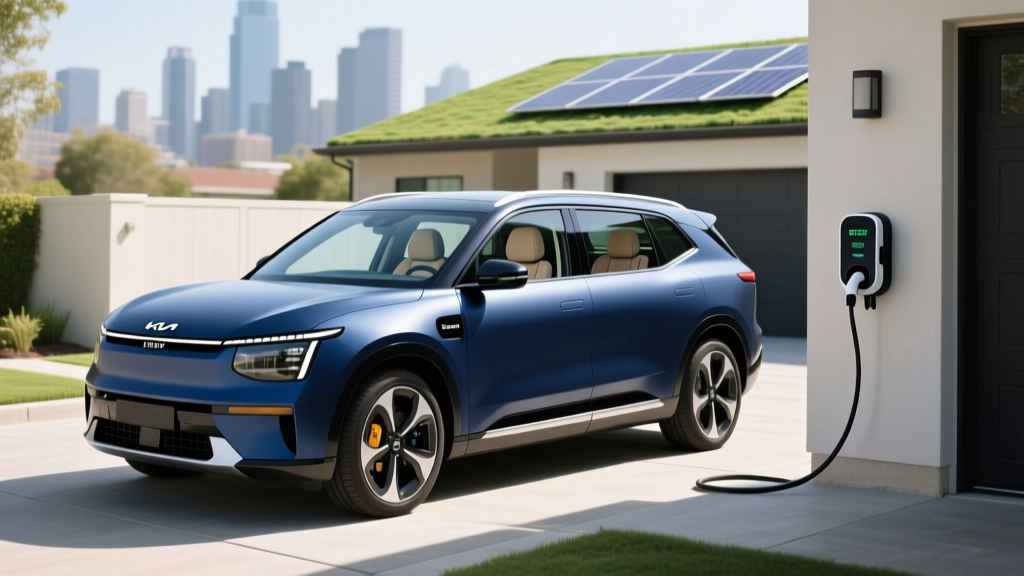
Three-row electric SUVs remain a short list in 2026, and the Kia EV9 continues to dominate it for families who need genuine adult-sized third-row space without stepping up to a luxury price tag. The 6-seat configuration—standard on mid and upper trims—swaps the second-row bench for two captain's chairs, creating a center aisle to the third row and a more premium cabin feel. This review puts the 2026 Kia EV9 6-seat layout under the microscope: real-world range, charging speeds, ownership economics, and whether it still earns its spot against growing competition from the Rivian R1S, Tesla Model X, and Hyundai Ioniq 9.
2026 Kia EV9 6-Seat: Quick Verdict
The EV9 remains the best-value three-row electric SUV for families who prioritize interior versatility, DC fast-charging speed, and mainstream dealer support. The 6-seat layout is the sweet spot: you gain second-row comfort and third-row accessibility without sacrificing much cargo room. Range is adequate for road trips if you plan around 200-mile legs, and the 800-volt architecture keeps charging stops short. The main trade-offs are highway efficiency (it's a brick on wheels) and a ride quality that can feel firm over broken pavement.
| Spec | Light Long Range (RWD) | Wind/Land AWD | GT-Line AWD |
|---|---|---|---|
| EPA Range | 304 mi | 280 mi | 270 mi |
| Battery (usable) | 100.0 kWh (NMC) | 100.0 kWh (NMC) | 100.0 kWh (NMC) |
| Horsepower | 215 hp | 379 hp | 379 hp |
| 0–60 mph | 7.7 sec | 5.0 sec | 5.0 sec |
| Max DC Charge Rate | 210 kW | 210 kW | 210 kW |
| 10–80% DC Time | ~24 min | ~24 min | ~24 min |
| Level 2 Rate | 10.9 kW | 10.9 kW | 10.9 kW |
| MPGe (combined) | 83 MPGe | 76 MPGe | 74 MPGe |
| Base MSRP (6-seat) | $59,900 | $64,900 | $73,900 |
| Battery Warranty | 10 yr / 100,000 mi | ||
Real-World Range and Efficiency
The EPA posts 304 miles for the RWD Light Long Range, 280 miles for AWD Wind/Land, and 270 miles for the GT-Line AWD, per fueleconomy.gov. Those are respectable numbers for a 5,000-pound box, but real-world results diverge noticeably depending on conditions.
- City / moderate climate: 260–275 mi (regen-friendly stop-and-go helps)
- Highway (70–75 mph, 65°F): 225–245 mi — aerodynamic drag dominates
- Cold weather (20–30°F, highway): 175–200 mi — expect 25–35% loss vs EPA
- Towing (3,500-lb trailer): 140–170 mi — plan very short legs
The EV9's heat pump (standard on AWD trims) mitigates some cold-weather loss, but the flat-front, upright design creates a large frontal area that punishes efficiency at speed. Plan road trips around 180–200-mile segments to keep a safety buffer.
Efficiency lands at 76 MPGe combined for the AWD Wind trim (44 kWh/100 mi), which is average for the class. The RWD model's 83 MPGe is noticeably better if you don't need all-wheel drive.
Charging Speed: 800-Volt Architecture Pays Off
Kia's E-GMP platform runs on an 800-volt electrical architecture, which is the EV9's biggest charging advantage over rivals still on 400-volt systems. The peak DC fast-charge rate is 210 kW, and the charge curve is well-managed: the battery sustains close to peak rate from 10% through roughly 55% SoC before tapering.
| Charging Level | Power | Speed / Time | Connector |
|---|---|---|---|
| Level 1 (120V household) | ~1.4 kW | ~4 mi/hr | NACS (native) |
| Level 2 (240V home) | 10.9 kW | ~32 mi/hr; full charge ~9.5 hr | NACS (native) |
| DC Fast Charge | Peak 210 kW | 10–80% in ~24 min | NACS (native) |
For the 2026 model year, the EV9 ships with the NACS (Tesla-style) charge port natively, meaning direct access to Tesla Supercharger stalls without an adapter—a significant road-trip advantage given the Supercharger network's reliability. At a 350 kW Electrify America or Ionity stall, the EV9 will peak at its 210 kW ceiling and add roughly 150 miles of range in 15 minutes under ideal conditions.
Charge curve reality check: Above 80% SoC, the rate drops sharply to protect the battery—typical of NMC chemistry. A 10–90% charge takes closer to 38–42 minutes. For road trips, stick to 10–80% top-ups and skip the last 10% unless you're parked overnight.
Home charging on a 48-amp Level 2 circuit delivers about 32 miles of range per hour, easily replenishing a daily commute overnight. A full 0–100% charge takes roughly 9.5 hours, which is manageable for most schedules. Budget $800–$2,200 for a professional Level 2 home installation depending on your panel capacity and run length—consult a licensed electrician for a site-specific quote.
Performance and Drivetrain
The 6-seat EV9 is available in three powertrain configurations:
- Light Long Range (RWD): Single rear motor, 215 hp, 258 lb-ft of torque. 0–60 mph in 7.7 seconds. Adequate for commuting but feels leisurely when merging with a full load.
- Wind / Land (AWD): Dual-motor, 379 hp, 516 lb-ft. 0–60 in 5.0 seconds. This is the volume choice—confident acceleration even at highway speeds with six passengers.
- GT-Line (AWD): Same dual-motor hardware as Wind/Land but with sport-tuned suspension, larger 21-inch wheels, and a boost function. 0–60 in 5.0 seconds, but with sharper throttle mapping.
Ride quality is a mixed bag. The EV9's 5,000+ lb curb weight and firm damping control body motion well on smooth roads, but expansion joints and potholes transmit more impact than you'd expect in a family hauler. The GT-Line's 21-inch wheels make this worse. If ride comfort is a priority, stick with the Wind trim's 20-inch wheels and taller sidewall.
Regenerative braking offers four levels adjustable via steering-wheel paddles, including a strong Level 3 that enables one-pedal driving in most city conditions. The i-Pedal mode brings the EV9 to a complete stop without touching the brake pedal.
Interior Space, Cargo, and the 6-Seat Advantage
The 6-seat layout is the EV9's most practical configuration for families. Here's how the dimensions break down:
- Second-row legroom: 42.8 inches (captain's chairs with fore/aft slide)
- Third-row legroom: 32.0 inches — usable for adults on short trips, comfortable for kids
- Cargo behind 3rd row: 20.2 cu ft (enough for 3–4 carry-on bags or a week of groceries)
- Cargo behind 2nd row (3rd row folded): 43.5 cu ft
- Cargo behind 1st row (all rear seats folded): 81.7 cu ft
- Front trunk (frunk): 1.8 cu ft (RWD) / 0.7 cu ft (AWD) — enough for a charge cable bag
The center aisle between the second-row captain's chairs is the 6-seat layout's killer feature. Kids or adults can walk through to the third row without folding and tumbling the second row—a daily convenience that the 7-seat bench layout can't match. The captain's chairs also feature individual armrests, more lateral support, and available ventilation on upper trims.
Trade-off: you lose one seating position versus the 7-seat configuration, and the flat-folding capability of a split bench. If you regularly need to haul seven, the EV9 isn't the right vehicle—look at the Rivian R1S (which offers a 7-seat option) or a large PHEV like the Toyota Grand Highlander Hybrid.
Pricing, Trims, and Federal Tax Credit Eligibility
The 6-seat layout is available on Light Long Range (late availability), Wind, Land, and GT-Line trims. Pricing for the 2026 model year:
| Trim | Base MSRP | As-Tested (typical) | Est. §30D Credit | Effective Price |
|---|---|---|---|---|
| Light Long Range RWD | $59,900 | $61,500 | Up to $7,500* | ~$54,000 |
| Wind AWD | $64,900 | $67,400 | Up to $7,500* | ~$59,900 |
| Land AWD | $69,900 | $72,000 | Up to $7,500* | ~$64,500 |
| GT-Line AWD | $73,900 | $76,500 | Up to $7,500* | ~$69,000 |
*Federal §30D tax credit eligibility depends on buyer income caps, battery critical-mineral and component sourcing requirements, and MSRP limits (SUV cap: $80,000). The EV9 qualifies as an SUV and clears the MSRP cap on all trims. Credit can be applied as a point-of-sale rebate through a registered dealer. Verify current-year eligibility at IRS.gov and with your tax professional.
The Wind AWD at roughly $60,000 effective (after credit) is the value sweet spot: you get dual-motor performance, a heat pump, Highway Driving Assist 2, and the full 6-seat interior. The Land trim adds premium Nappa leather, a head-up display, and a digital key, but the jump to $65,000+ effective starts encroaching on luxury territory.
Tech, Safety, and Driver Assistance
The EV9 comes well-equipped with technology that matters for daily driving:
- Infotainment: Dual 12.3-inch panoramic displays (instrument cluster + touchscreen), wireless Apple CarPlay and Android Auto, built-in navigation with EV route planning and preconditioning for DC charging.
- Driver assistance: Highway Driving Assist 2 (HDA2) — an SAE Level 2 system offering adaptive cruise, lane centering, and lane-change assist on mapped highways. The driver must keep hands on the wheel and eyes on the road at all times.
- Safety: The EV9 earned a 5-star overall rating from NHTSA and a Top Safety Pick+ designation from IIHS with Good ratings across all crash-test categories.
- Unique features: Vehicle-to-load (V2L) capability via an interior outlet and available external adapter—power a laptop, campsite, or emergency appliance at up to 3.6 kW. Digital key (phone-as-key), remote smart parking assist, and over-the-air updates.
Pros, Cons, and Who Should Buy the 6-Seat EV9
- Genuine 3-row space with adult-usable third row
- 800V architecture delivers fast, consistent DC charging
- Native NACS port = direct Supercharger access
- 10-year / 100,000-mile battery warranty
- V2L capability for camping and emergencies
- Strong safety ratings (NHTSA 5-star, IIHS TSP+)
- Qualifies for up to $7,500 federal credit (subject to sourcing rules)
- Highway efficiency drops sharply above 70 mph
- Firm ride quality, especially on GT-Line 21-inch wheels
- Cold-weather range loss of 25–35% on highway
- Frunk is nearly useless on AWD models
- Third-row seat bottoms sit low (knees-up posture for adults)
- No front trunk storage to speak of; charge cable eats cargo space
Who the 6-seat EV9 is for: Families with 2–4 children who need occasional third-row use, value fast DC charging for road trips, and want mainstream dealer support. It's ideal for suburban commuters with home Level 2 charging who take 2–4 road trips per year. The 6-seat layout suits families who prioritize second-row comfort and third-row walk-through access over maximum seating capacity.
Who should look elsewhere: Buyers who regularly need 7 seats (consider the Rivian R1S or a PHEV minivan), those in extreme cold climates without reliable home charging, or anyone who prioritizes a plush ride over sporty handling.
Kia EV9 6-Seat vs. Key Competitors
| Attribute | Kia EV9 AWD Wind | Rivian R1S Dual-Motor | Tesla Model X LR |
|---|---|---|---|
| EPA Range | 280 mi | 352 mi | 335 mi |
| Max DC Charge | 210 kW | 220 kW | 250 kW |
| 10–80% Time | ~24 min | ~25 min | ~22 min |
| 6-Seat Option | Yes | Yes | Yes |
| Base MSRP (6-seat) | $64,900 | $79,900 | $84,990 |
| Federal Credit | Up to $7,500 | Up to $7,500 | $0 (over MSRP cap) |
| 3rd-Row Usability | Good | Good | Tight |
| Towing Capacity | 3,500 lb | 7,700 lb | 5,000 lb |
The EV9's advantage is value: it undercuts the R1S by $15,000+ and the Model X by $20,000+ while delivering comparable interior space and faster-enough charging. The Rivian wins on range and towing; the Tesla wins on Supercharger ecosystem (though the EV9 now accesses it natively). For most families, the EV9 Wind AWD at ~$60K effective is the pragmatic choice.
Frequently Asked Questions
What is the real-world range of the 2026 Kia EV9 6-seat?
Expect 260–275 miles in city driving, 225–245 miles on the highway in mild weather, and 175–200 miles in cold-weather highway conditions (20–30°F). The EPA rates the AWD Wind at 280 miles, but real-world highway driving consistently falls 10–15% short of that sticker figure.
How fast does the Kia EV9 charge at home and on the road?
On a Level 2 home charger (10.9 kW), the EV9 adds about 32 miles of range per hour and fully charges in roughly 9.5 hours. On a DC fast charger, it peaks at 210 kW and charges from 10–80% in approximately 24 minutes. Above 80%, the charge rate tapers significantly to protect the NMC battery.
How much does the 2026 Kia EV9 6-seat cost after tax credits?
The Wind AWD—the most popular 6-seat trim—starts at $64,900 MSRP. With the full $7,500 federal §30D credit (if you meet income and sourcing requirements), the effective price drops to roughly $59,900. The credit can be applied at the point of sale as a dealer discount. Verify eligibility with your tax professional and the IRS.
Does the Kia EV9 qualify for the $7,500 federal EV tax credit?
The EV9 qualifies as an SUV under the §30D MSRP cap of $80,000, and all trims clear that threshold. However, the actual credit amount depends on battery critical-mineral sourcing and component manufacturing requirements, which shift annually. Buyer income must not exceed $300,000 (married filing jointly), $225,000 (head of household), or $150,000 (single). Always confirm current-year rules at IRS.gov.
Is the Kia EV9 6-seat worth buying over the Rivian R1S or Tesla Model X?
If budget is a primary concern, yes. The EV9 delivers 90% of the utility of the R1S and Model X at 60–70% of the price, with comparable 6-seat layouts and strong DC charging. Choose the Rivian if you need serious towing capacity (7,700 lb) or maximum range. Choose the Model X if falcon-wing doors and Tesla's software ecosystem are non-negotiable. For most families, the EV9 is the rational value pick.
What is the Kia EV9's battery warranty?
Kia covers the EV9's high-voltage battery for 10 years or 100,000 miles (whichever comes first), with a capacity-retention threshold of 70%. The basic vehicle warranty is 5 years / 60,000 miles, and the powertrain warranty is 10 years / 100,000 miles. This is among the best battery coverage in the segment.
Can the Kia EV9 tow, and how does it affect range?
The AWD EV9 is rated to tow up to 3,500 pounds when properly equipped. Towing at or near that limit cuts range roughly in half—expect 140–170 miles on a full charge. This is adequate for a light utility trailer or small boat but not for heavy campers. The Rivian R1S is far better suited for serious towing needs.
Sources: EPA fuel economy data via fueleconomy.gov; Kia Motors America official specifications; IRS §30D Clean Vehicle Credit guidelines via irs.gov; NHTSA and IIHS safety ratings. Prices and tax credit rules reflect 2026 model year information and are subject to change.