The Bottom Line on the Kia EV8
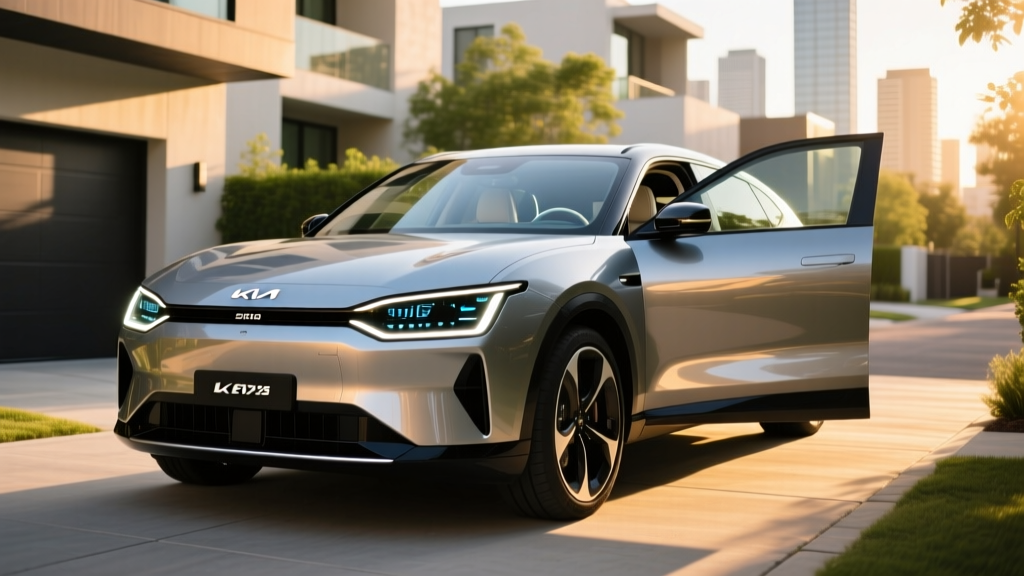
The Kia EV8 is an announced three-row electric SUV positioned between the EV6 and the EV9, expected to reach U.S. dealerships as a 2026 or 2027 model year vehicle. Based on Hyundai Motor Group's E-GMP platform, preliminary estimates point to an EPA range of roughly 300–330 miles (RWD, long-range battery), a starting MSRP near $55,000, and DC fast-charging capability around 200–250 kW peak with a 10–80% charge in approximately 20–25 minutes. Final EPA-certified specs, pricing, and IRS §30D tax credit eligibility remain unconfirmed until Kia publishes official figures closer to launch. If you need a three-row electric SUV today, the Kia EV9 is available now; the EV8 is a wait-and-see proposition for buyers who want a slightly smaller, potentially more affordable alternative.
What Is the Kia EV8 and Where Does It Fit?
Kia has confirmed the EV8 as part of its expanding electric lineup, slotting it below the full-size EV9 but above the crossover-style EV6. Think of it as a midsize electric SUV with optional third-row seating — a direct competitor to vehicles like the Hyundai Ioniq 9 (its platform sibling), the Volkswagen ID. Buzz in passenger-wagon form, and potentially the Tesla Model X at a lower price point.
The EV8 rides on the same E-GMP (Electric-Global Modular Platform) that underpins the EV6, EV9, Ioniq 5, and Ioniq 6. That architecture delivers 800V electrical capability, which translates to faster DC charging on compatible stations compared to 400V rivals. Expect the EV8 to share battery pack options and powertrain configurations with the EV9, though tuned for a lighter, shorter wheelbase.
Estimated Specs: Range, Battery, Charging, and Performance
Because Kia has not released final U.S. specifications, the table below reflects preliminary estimates derived from the EV9's known figures, E-GMP platform capabilities, and Kia's public statements. Treat these as directional, not definitive.
| Specification | Estimated Value |
|---|---|
| Battery Capacity (usable) | ~76–100 kWh (NMC chemistry) |
| EPA Range (RWD Long Range) | ~300–330 mi |
| EPA Range (AWD) | ~270–300 mi |
| Peak DC Fast Charge Rate | ~200–250 kW (800V architecture) |
| 10–80% DC Fast Charge Time | ~20–25 minutes (preconditioned) |
| Level 2 AC Charge Rate | 10.9 kW (est., onboard charger) |
| Level 2 10–100% Time | ~8–10 hours |
| Horsepower (RWD) | ~215–252 hp |
| Horsepower (AWD) | ~379 hp (dual motor) |
| 0–60 mph (AWD) | ~5.0–6.5 sec (est.) |
| Seating | 6- or 7-passenger (3 rows) |
| Towing Capacity | ~3,500–5,000 lbs (est.) |
| Battery/Powertrain Warranty | 10 yr / 100,000 mi (Kia standard) |
Real-World Range Reality Check
EPA estimates are measured under controlled lab conditions. In real-world driving, expect:
- Highway cruising at 70–80 mph: ~15–20% reduction from EPA (roughly 250–280 mi from a 320-mi EPA rating)
- Cold weather (below 32°F): ~20–30% reduction without a heat pump; ~10–15% with one. The E-GMP platform includes a heat pump on most trims.
- Mixed city/suburban driving in moderate temps: Typically matches or slightly exceeds EPA figures thanks to regenerative braking.
Plan road trips around ~220–250 usable miles between charges to keep a safety buffer and avoid charging past 80% (where the charge curve tapers significantly).
How the Kia EV8 Compares to Gas SUVs and the EV9
Three-row SUV buyers typically cross-shop the Kia Telluride (gas), Hyundai Palisade (gas), Toyota Grand Highlander Hybrid, and now electric options like the EV9 and Rivian R1S. Here's how the EV8 stacks up on key ownership metrics:
| Metric | Kia EV8 (Est.) | Kia Telluride (Gas, 2025) | Kia EV9 (2025, Light RWD) |
|---|---|---|---|
| Base MSRP | ~$55,000 | $37,555 | $54,900 |
| EPA Range / Fuel Economy | ~310 mi / ~85 MPGe | ~22 MPG combined | 230 mi / 79 MPGe |
| Annual Fuel/Energy Cost (15K mi) | ~$600–$900 | ~$2,200–$2,600 | ~$700–$1,000 |
| Estimated §30D Tax Credit | TBD (sourcing dependent) | $0 | Up to $7,500 (eligibility varies) |
| 5-Year Fuel/Energy Cost | ~$3,000–$4,500 | ~$11,000–$13,000 | ~$3,500–$5,000 |
| Maintenance (5 yr est.) | ~$1,500–$2,000 | ~$3,000–$4,000 | ~$1,500–$2,000 |
The fuel and maintenance savings are substantial — potentially $8,000–$12,000 over five years compared to a gas Telluride — but they must offset the EV8's higher purchase price. The math works best if you qualify for the federal tax credit, drive 12,000+ miles per year, and charge primarily at home on off-peak electricity rates.
Real Costs of Owning a Kia EV8
5-Year Total Cost of Ownership Estimate
| Cost Category | Kia EV8 (Est.) | Kia Telluride (Gas) |
|---|---|---|
| Purchase Price (base) | $55,000 | $37,555 |
| Federal Tax Credit (§30D) | –$0 to $7,500* | $0 |
| Net Purchase | $47,500–$55,000 | $37,555 |
| Fuel/Energy (5 yr, 15K mi/yr) | $3,000–$4,500 | $11,000–$13,000 |
| Maintenance (5 yr) | $1,500–$2,000 | $3,000–$4,000 |
| Insurance (5 yr est.) | $9,000–$12,000 | $7,000–$9,500 |
| Depreciation (5 yr est.) | $22,000–$28,000 | $14,000–$18,000 |
| Total 5-Year Cost | $83,000–$101,500 | $72,555–$82,055 |
*§30D credit eligibility depends on MSRP caps ($80,000 for SUVs), buyer income limits ($300K joint / $150K single), battery component and critical mineral sourcing requirements, and point-of-sale transfer rules. Check current rules at IRS.gov.
Key cost insights:
- Insurance runs 15–25% higher on EVs vs. comparable gas SUVs, driven by higher repair costs and parts pricing. Get quotes before committing.
- Home Level 2 charger installation adds $800–$2,500 upfront (equipment + licensed electrician + permit), but pays for itself within 1–2 years vs. public DC fast-charging costs.
- Depreciation on EVs has been steeper than gas vehicles in recent years, though three-row family EVs hold value better than sedans. Kia's strong warranty helps resale.
- State and local incentives (rebates, HOV lane access, reduced registration fees) can shift the math — check AFDC's incentive database for your area.
Charging at Home and on the Road: What EV8 Buyers Need
The E-GMP platform's 800V architecture is a genuine advantage. At a 350 kW-capable Electrify America or Ionity station, the EV8 should sustain peak charge rates longer than 400V competitors, meaning faster real-world charging sessions — not just a high peak number that tapers immediately.
| Charging Level | Power (kW) | Est. Miles Added per Hour | Best For |
|---|---|---|---|
| Level 1 (120V outlet) | ~1.4 kW | ~3–5 mi/hr | Overnight top-up, emergencies |
| Level 2 (240V home) | ~10.9 kW | ~28–35 mi/hr | Daily home charging |
| DC Fast (CCS/NACS) | ~200–250 kW peak | ~150+ mi in 15 min | Road trips |
Home charging access is the single biggest ownership variable. If you have a garage or driveway where a Level 2 (240V) charger can be installed, daily EV ownership is effortless — plug in at night, wake up with a full battery. If you rely on street parking or apartment living without charging infrastructure, the EV8 becomes significantly less convenient, and you'll depend on public DC fast chargers at $0.30–$0.50/kWh (roughly double the cost of home charging).
The EV8 is expected to ship with a CCS1 connector in the U.S. market, though Kia has indicated future models will adopt the NACS (Tesla-style) connector. If the EV8 launches with CCS, a NACS adapter will enable Tesla Supercharger access — critical for road-trip charging reliability in many regions.
Federal Tax Credit: Will the EV8 Qualify?
Under the current IRS §30D Clean Vehicle Credit, the EV8's eligibility is uncertain and will depend on several factors at the time of purchase:
§30D Credit Requirements to Watch
- MSRP cap: SUVs must have a base MSRP ≤ $80,000 — the EV8 should clear this easily at an estimated ~$55K starting price.
- Buyer income cap: Adjusted gross income ≤ $300,000 (joint) / $225,000 (head of household) / $150,000 (single).
- Battery component sourcing: Increasingly strict thresholds for North American assembly of battery components (phasing up annually through 2029).
- Critical mineral sourcing: Percentage of critical minerals from U.S. or FTA-partner countries must meet escalating thresholds.
- Foreign Entity of Concern (FEOC) exclusion: Battery components or critical minerals from China, Russia, North Korea, or Iran can disqualify the vehicle.
- Point-of-sale transfer: Buyers can transfer the credit to the dealer at purchase, reducing the out-of-pocket price immediately (instead of waiting for a tax refund).
The Kia EV9 has seen its credit eligibility shift between $0, $3,750, and $7,500 depending on the model year and sourcing changes. Expect similar variability for the EV8. Always verify current eligibility at fueleconomy.gov before purchasing.
Common Misconceptions About the Kia EV8
| Myth | Fact |
|---|---|
| "The EV8 will definitely get the $7,500 tax credit" | Credit eligibility depends on battery sourcing rules that change annually. No guarantee until Kia confirms and IRS lists the vehicle. |
| "300-mile range means I can drive 300 miles on a road trip" | Highway speeds, cold weather, and elevation reduce range 15–30%. Plan for ~220–260 real highway miles between stops. |
| "It charges at 250 kW, so a full charge takes 20 minutes" | Peak rate applies only to a portion of the charge (typically 10–55% SoC). The charge curve tapers above 80%, and a 10–80% session takes ~20–25 min; 10–100% takes much longer. |
| "EVs need no maintenance" | Tires wear faster due to weight and instant torque. Cabin filters, brake fluid, wipers, and coolant still need service. But total maintenance is ~40–50% less than gas vehicles. |
| "The battery will need replacing in 5 years" | E-GMP batteries are warrantied for 10 years / 100,000 miles. Industry data shows NMC packs retain ~85–90% capacity at 100K miles under normal use. |
Decision Framework: Should You Wait for the EV8?
Choose Your Path
Wait for the Kia EV8 if:
- You want a three-row electric SUV but find the EV9 too large or too expensive.
- Your purchase timeline extends into late 2026 or 2027.
- You currently drive a midsize SUV (Telluride, Highlander, Pilot) and want a similarly sized electric replacement.
- You have home Level 2 charging access and drive 12,000+ miles per year (maximizing fuel savings).
Buy the Kia EV9 now if:
- You need a three-row EV immediately — the EV9 is in dealerships today with known specs and pricing.
- You want maximum cargo room and towing capacity (up to 5,000 lbs confirmed).
- Current §30D credit eligibility for the EV9 works in your favor this tax year.
Consider a hybrid (e.g., Toyota Grand Highlander Hybrid) if:
- You lack reliable home charging access.
- You frequently tow heavy loads or drive in extreme cold where EV range loss is significant.
- Your budget tops out around $45,000–$50,000 and you can't wait for the EV8's pricing to be confirmed.
Look at the Hyundai Ioniq 9 instead if:
- You want an E-GMP-based three-row EV available sooner — the Ioniq 9 is expected to reach U.S. markets ahead of or alongside the EV8.
- Hyundai's dealer network or design language better suits your preference.
What First-Time EV Buyers Should Know Before Committing
If the EV8 would be your first electric vehicle, prepare for these ownership realities:
- Budget for a Level 2 home charger. A quality 40–48 amp unit (ChargePoint Home Flex, Emporia Vue, or Wallbox Pulsar Plus) costs $500–$750; professional installation with a 240V circuit adds $500–$1,800 depending on your electrical panel's capacity. If your panel is maxed out, a 200-amp upgrade can cost $1,500–$3,000.
- Learn preconditioning. The E-GMP platform can warm the battery before a DC fast-charging stop, which significantly improves charge speed in cold weather. Navigate to a charger using the built-in nav to trigger this automatically.
- Download charging network apps before your first road trip. Electrify America, EVgo, ChargePoint, and Tesla (with adapter) each require accounts and payment setup. Reliability varies — plan backup chargers along your route.
- Tire costs are real. Three-row EVs are heavy (expect 5,000–5,500 lbs for the EV8) and produce instant torque. Budget $1,200–$1,800 for a set of premium all-season or EV-specific tires every 30,000–40,000 miles.
- Insurance requires comparison shopping. EV insurance premiums can vary by $500–$1,500/year between insurers for the same vehicle. Get at least three quotes.
Frequently Asked Questions
When will the Kia EV8 be available in the U.S.?
Kia has confirmed the EV8 as part of its EV roadmap, but an exact U.S. on-sale date has not been announced. Industry estimates place it in late 2026 or as a 2027 model year vehicle. Kia typically reveals U.S. specs 3–6 months before deliveries begin.
Will the Kia EV8 be cheaper than the EV9?
Yes, that is the expected positioning. The 2025 EV9 starts at $54,900, and the EV8 should undercut it by several thousand dollars on base trims, with an estimated starting MSRP around $55,000 or slightly below. Fully loaded EV8 trims could reach the mid-$60,000s.
Does the Kia EV8 support vehicle-to-load (V2L)?
The E-GMP platform supports V2L, and the EV9 offers it. The EV8 is expected to include V2L capability, allowing you to power devices, tools, or camping equipment from the vehicle's battery at up to 3.6 kW — enough to run a laptop, small refrigerator, or power tools.
How does the EV8's range compare in winter conditions?
Expect a 15–25% range reduction in sustained sub-freezing temperatures, even with the heat pump. A 310-mile EPA rating could drop to roughly 230–260 miles in cold highway driving. Preconditioning the battery and cabin while plugged in at home recovers some of that loss.
Is the Kia EV8 eligible for the $7,500 federal tax credit?
Not confirmed. Eligibility under §30D depends on battery sourcing, MSRP, and buyer income at the time of purchase. The MSRP cap ($80,000 for SUVs) should not be an issue, but battery component and critical mineral sourcing rules are the deciding factors. Verify at IRS.gov closer to launch.
Should I lease or buy the Kia EV8?
Leasing can be a smart hedge on an all-new model — you avoid long-term depreciation risk and, under current IRS rules, leased EVs may qualify for a $7,500 commercial clean vehicle credit (§45W) that the lessor can pass on as a lease incentive, regardless of the buyer's income or the vehicle's battery sourcing. Ask the dealer how the lease credit is structured before signing.