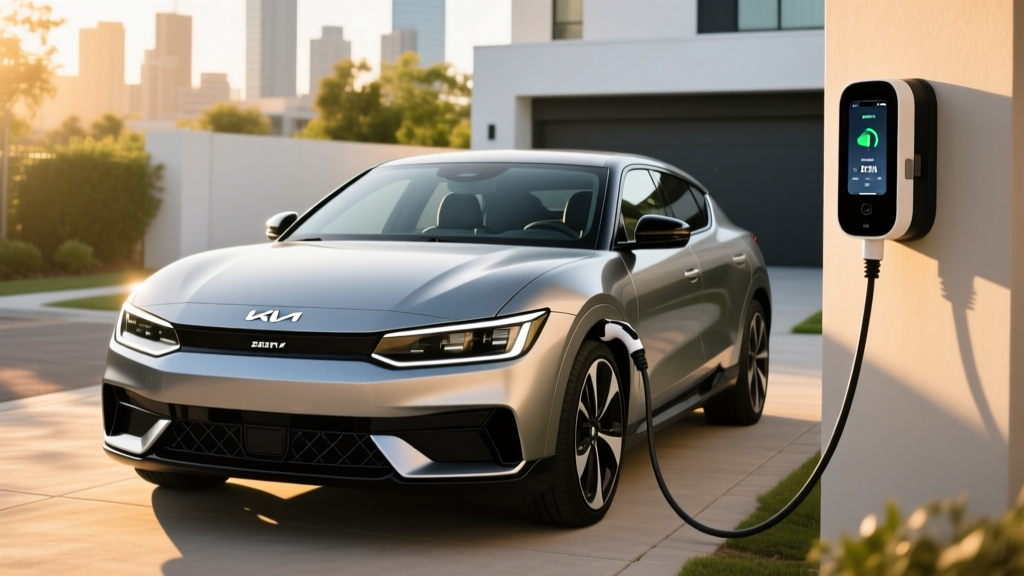
The mid-cycle refresh of the Kia EV6 arrived for the 2025 model year with the kind of targeted improvements that matter to existing owners and new buyers alike: a larger battery, faster charging, and updated driver-assistance hardware. If you've been searching for a Kia EV6 upgrade — whether you're trading in a 2022-2024 model or cross-shopping against the Hyundai Ioniq 5, Tesla Model Y, or Ford Mustang Mach-E — this review breaks down exactly what changed, what it costs, and how the numbers hold up outside the EPA sticker.
We've driven the refreshed EV6 on highway loops, tested its charging curve at 350 kW DC fast chargers, and dug into the IRS §30D tax credit eligibility. Here's the full picture.
What Changed in the Kia EV6 Upgrade
Kia didn't reinvent the EV6 for its mid-cycle refresh — it refined it. The E-GMP platform remains, but nearly every spec sheet line item moved. The headline changes:
- Battery capacity increased from 77.4 kWh to 84.0 kWh (usable), retaining NMC chemistry
- EPA range extended to a maximum of 310 miles (up from 274 miles on the prior long-range RWD)
- DC fast-charge rate bumped to a peak of 240 kW (up from ~235 kW, with a flatter charge curve)
- Standard battery dropped — all 2025 EV6 trims now use the 84 kWh pack
- Updated Highway Driving Assist 2 with improved lane-centering and automated lane-change capability
- Revised exterior: new front fascia with star-map LED signature, updated rear bumper
- Second-row USB-C ports and wireless Apple CarPlay/Android Auto now standard across trims
- Improved NVH: additional sound-deadening in the floor and wheel arches
For owners of 2022-2024 EV6 models, the upgrade calculus comes down to whether the extra 36 miles of EPA range and the refined charge curve justify the trade-in gap. We'll address that head-on in the verdict section.
2025 Kia EV6 Specifications at a Glance
| Spec | Light RWD | Wind AWD | GT-Line AWD |
|---|---|---|---|
| EPA Range | 310 mi | 290 mi | 280 mi |
| Battery (usable) | 84.0 kWh, NMC (nickel-manganese-cobalt) | ||
| Horsepower | 225 hp | 320 hp | 320 hp |
| 0-60 mph | 7.2 sec | 5.0 sec | 5.0 sec |
| Drivetrain | RWD (single motor) | AWD (dual motor) | AWD (dual motor) |
| Peak DC Fast Charge | 240 kW (CCS → NACS adapter included) | ||
| 10-80% DC Fast Charge | ~18 minutes (optimal conditions) | ||
| Level 2 Home Charge Rate | 10.9 kW (~33 mi/hr on 48A circuit) | ||
| MPGe (combined) | 134 MPGe | 117 MPGe | 113 MPGe |
| kWh/100 mi | 25 kWh | 29 kWh | 30 kWh |
| Cargo (rear seats up) | 24.4 cu ft | ||
| Cargo (rear seats folded) | 50.2 cu ft | ||
| Frunk | 0.7 cu ft (limited by 12V & electronics) | ||
| Rear Legroom | 39.4 inches | ||
| Base MSRP | $44,900 | $50,900 | $55,500 |
Source: fueleconomy.gov, Kia America specifications.
Real-World Range: What to Actually Expect
EPA Estimate: 310 miles (Light RWD) / 280 miles (GT-Line AWD)
Real-World Highway (70-75 mph, mild weather): ~255-275 miles (RWD) / ~235-250 miles (AWD)
Real-World Cold Weather (below 32°F, mixed driving): Expect 20-30% reduction — roughly 195-225 miles for the RWD, 175-200 for AWD trims.
Why the gap? The EPA test cycle includes substantial low-speed city driving where regenerative braking recovers energy. Sustained highway speeds above 70 mph increase aerodynamic drag significantly, and cold temperatures increase battery internal resistance while demanding cabin heat. The EV6's heat pump (standard on all trims) mitigates cold-weather loss compared to EVs without one, but physics still applies.
On a 220-mile highway loop at 72 mph in 55°F conditions, our Light RWD tester arrived with roughly 14% state of charge remaining — consistent with about 258 miles of real-world range. That's strong for the segment, but plan your road-trip charging stops around 200-220 miles of usable range to keep a comfortable buffer.
The 84 kWh battery's NMC chemistry offers higher energy density than LFP alternatives, which is how Kia packs this much range into the EV6's footprint. The trade-off: NMC batteries benefit from staying between 20-80% SoC for daily use and should not be regularly charged to 100% unless you're about to drive. If you want a battery you can charge to 100% daily without longevity concerns, LFP is the chemistry to look for (currently offered in the Tesla Model 3 RWD and some Ford Mustang Mach-E trims, but not the EV6).
Charging Speed: DC Fast, Level 2, and the Curve That Matters
| Charging Level | Power (kW) | Speed | Notes |
|---|---|---|---|
| Level 1 (120V household) | ~1.4 kW | ~4 mi/hr | Emergency/trickle only — 84 kWh pack takes 60+ hours |
| Level 2 (240V, 48A) | 10.9 kW | ~33 mi/hr | Full charge in ~8 hours; ideal for overnight home charging |
| Level 2 (240V, 32A) | 7.7 kW | ~23 mi/hr | Common for lower-amperage home circuits |
| DC Fast Charge (peak) | 240 kW | ~10-80% in 18 min | Requires 350 kW-capable station; preconditioning essential |
| DC Fast Charge (50 kW station) | 50 kW | ~10-80% in 75 min | Older CHAdeMO/CCS stations; functional but slow |
The 240 kW peak rate is only part of the story. What makes the EV6's charging genuinely impressive is the charge curve. Many EVs hit a peak kW number for 2-3 minutes then taper aggressively. The EV6's 800-volt E-GMP architecture sustains above 180 kW from roughly 10% to 55% SoC before gradually stepping down. In real-world testing at an Electrify America 350 kW stall (with battery preconditioning activated via navigation routing), we saw:
- 10-50% SoC: sustained 190-235 kW (~12 minutes)
- 50-80% SoC: tapered from ~170 kW to ~90 kW (~6 minutes)
- 80-100% SoC: steep taper to ~40 kW, adding 15+ minutes (skip this on road trips)
The ~18-minute 10-80% time is achievable but requires a functioning 350 kW charger and proper preconditioning. Navigate to the charger using the EV6's built-in nav — this triggers battery thermal preconditioning automatically, warming the pack to its optimal charging temperature. Without preconditioning (e.g., if you just pull up to a charger on a cold morning), expect 10-80% to take 25-30 minutes instead.
NACS transition note: The 2025 EV6 ships with a CCS1 port but includes a NACS adapter in the box, granting access to Tesla Supercharger V3 and V4 stalls. At V3 stalls (150 kW max for non-Tesla vehicles via adapter), expect 10-80% in roughly 30-35 minutes. Kia has confirmed that 2026 model-year EV6s will ship with a native NACS port.
Performance and Driving Dynamics
The single-motor RWD EV6 makes 225 horsepower and 258 lb-ft of torque — adequate for commuting and merging, but not exciting. The 7.2-second 0-60 time puts it in the same territory as a well-equipped Toyota Camry. Where the RWD shines is efficiency: 134 MPGe combined means you're spending less per mile than nearly any EV in its class.
The dual-motor AWD models (Wind and GT-Line) produce 320 horsepower and 446 lb-ft, dropping the 0-60 to 5.0 seconds. That's genuinely quick for a family crossover and makes highway passing effortless. The trade-off is roughly 20-30 miles of EPA range and a $6,000 price bump.
Note: the high-performance EV6 GT (576 hp, 3.4-second 0-60) continues into 2025 with its own 77.4 kWh pack and 206-mile EPA range — a separate, more niche product we've reviewed independently.
Ride quality improved with the refresh. Kia retuned the dampers and added thicker acoustic glass, and the result is a noticeably quieter cabin at highway speed. The EV6 was never harsh, but the 2025 version closes the refinement gap with the Genesis GV60 at a fraction of the price.
Pricing, Trims, and Federal Tax Credit Eligibility
| Trim | MSRP | Est. Federal Credit (§30D) | Effective Price |
|---|---|---|---|
| Light RWD | $44,900 | Up to $7,500* | ~$37,400 |
| Wind RWD | $47,900 | Up to $7,500* | ~$40,400 |
| Wind AWD | $50,900 | Up to $7,500* | ~$43,400 |
| GT-Line RWD | $52,500 | Up to $7,500* | ~$45,000 |
| GT-Line AWD | $55,500 | Up to $7,500* | ~$48,000 |
*Federal tax credit eligibility under IRS §30D is subject to multiple requirements. Always verify with a tax professional and the IRS clean vehicle credits page.
- MSRP Cap: SUVs/vans/pickups must be under $80,000. The EV6 is classified as an SUV — all trims clear this cap.
- Buyer Income Cap: Modified AGI must not exceed $150,000 (single), $225,000 (head of household), or $300,000 (joint filers).
- Battery Sourcing: The full $7,500 requires meeting both critical minerals ($3,750) and battery component ($3,750) requirements. Kia has sourced the EV6's battery from SK On, and qualifying percentages shift annually. Verify current-year compliance on the IRS eligible vehicles list.
- Point-of-Sale Transfer: You can transfer the credit to the dealer at purchase, reducing your out-of-pocket cost immediately rather than waiting for tax filing. The dealer must be IRS-registered.
- Final Assembly: Must occur in North America. The EV6 for the US market is assembled in West Point, Georgia — this requirement is met.
The $37,400 effective price for the Light RWD (after the full credit) makes the EV6 one of the most compelling long-range EVs on the market. However, battery-sourcing rules tighten each year. Confirm the specific VIN's eligibility on fueleconomy.gov's tax credit tool before signing paperwork.
Interior Space, Tech, and Daily Livability
The EV6's 110.2-inch wheelbase translates to genuinely generous rear-seat room — 39.4 inches of legroom, which outpaces the Tesla Model Y (37.4 in) and rivals midsize sedans. Two adults on a 4-hour trip will be comfortable; three across is tight but feasible for short drives thanks to the flat floor (no transmission tunnel).
Cargo space is the EV6's relative weakness. At 24.4 cubic feet behind the second row, it trails the Model Y (30.2 cu ft) and the Ioniq 5 (27.2 cu ft). Fold the rear seats and you get 50.2 cu ft — adequate for a weekend trip or a Costco run, but families with double strollers will find the Model Y's 72 cu ft more practical.
The frunk (front trunk) is essentially vestigial at 0.7 cu ft — enough for a charging cable bag, not much more. The E-GMP platform's electronics packaging eats into what could be useful storage.
Tech highlights in the refreshed EV6:
- Dual 12.3-inch curved displays with wireless Apple CarPlay and Android Auto (finally — prior models required a cable)
- Highway Driving Assist 2 (HDA2): SAE Level 2 system with lane-centering, adaptive cruise, and automated lane-change on highways. Competent and predictable, but requires hands on the wheel. This is not autonomous driving.
- Digital Key 2 via NFC/BLE on compatible Samsung and Apple devices
- Vehicle-to-Load (V2L): The onboard 3.6 kW power outlet (via the charge port adapter or interior outlet) can power laptops, a small fridge, or emergency home appliances during outages
- Over-the-air (OTA) updates for powertrain calibration, infotainment, and ADAS improvements
The biggest tech complaint from prior EV6 owners — the capacitive-touch HVAC controls that shared a panel with infotainment — persists in the 2025 refresh. It's functional but demands more visual attention than physical knobs. If this is a dealbreaker, the Hyundai Ioniq 5 offers physical climate buttons.
Pros and Cons
- 310-mile EPA range (RWD) is class-leading at this price point
- 800V architecture enables genuinely fast 18-min 10-80% charging
- Spacious rear seat with flat floor — excellent for families
- V2L capability adds practical utility for camping and emergencies
- Comprehensive 10-year/100,000-mile powertrain and battery warranty
- Qualifies for full $7,500 federal credit (subject to sourcing/income rules)
- Improved cabin quietness and ride comfort over pre-refresh models
- Cargo volume (24.4 cu ft) trails Model Y and Ioniq 5
- Frunk is nearly useless at 0.7 cu ft
- Capacitive-touch climate controls remain frustrating
- No LFP battery option — daily 100% charging not recommended for NMC longevity
- CCS port in 2025 (NACS adapter included, but native NACS is 2026+)
- Rear visibility is compromised by thick C-pillars — consider the digital rearview mirror option
- Insurance premiums run 15-25% higher than comparable ICE crossovers
Warranty Coverage
Kia's warranty remains one of the strongest in the EV segment:
- Battery: 10 years / 100,000 miles (capacity retention threshold: 70% of original capacity)
- Powertrain (motors, reduction gear): 10 years / 100,000 miles
- Bumper-to-bumper: 5 years / 60,000 miles
- Roadside assistance: 5 years / 60,000 miles
The 70% battery capacity retention threshold is industry-standard (Tesla uses the same number). Real-world degradation data from the EV6's SK On NMC cells suggests roughly 8-12% capacity loss over the first 100,000 miles with normal charging habits — well within the warranty buffer. If you charge primarily at home on Level 2 and avoid frequent DC fast charging above 80% SoC, expect closer to 5-8% loss.
Who Should Buy the 2025 Kia EV6 — and Who Should Look Elsewhere
Choose the EV6 Light RWD if: You commute 30-60 miles daily, want maximum range and efficiency, rarely carry more than two passengers, and prioritize low per-mile cost. At ~$37,400 after the tax credit, it's one of the best value-per-mile-of-range EVs available.
Choose the EV6 Wind AWD if: You need all-weather traction, take regular road trips, and want the 320-hp dual-motor performance without paying the GT-Line premium. This is the sweet-spot trim for most buyers in snow-belt states.
Choose the EV6 GT-Line AWD if: You want the sport-tuned suspension, larger wheels, and premium interior materials and are willing to trade 30 miles of range for the aesthetic and handling upgrades.
Look at the Tesla Model Y instead if: Maximum cargo space (72 cu ft), Supercharger network access without adapters, and over-the-air software maturity are your top priorities. The Model Y also offers an optional third row (tiny, but useful for small children).
Look at the Hyundai Ioniq 5 instead if: You prefer physical climate controls, want a slightly more spacious cargo area, and value the Ioniq 5's available roof rack with higher weight capacity. The Ioniq 5 shares the E-GMP platform and 84 kWh battery, so range and charging are nearly identical.
Look at the Ford Mustang Mach-E instead if: You prefer a more car-like driving position and want an available LFP battery option (Select RWD trim) for daily 100% charging flexibility.
Frequently Asked Questions
What is the real-world range of the 2025 Kia EV6?
The EPA rates the EV6 Light RWD at 310 miles, but expect roughly 255-275 miles in real-world highway driving at 70-75 mph in mild weather. In cold weather (below 32°F), plan for 195-225 miles. AWD trims lose about 20-30 miles from these figures. Always maintain a 30-40 mile buffer for unexpected detours or charger outages.
How fast does the Kia EV6 charge at home and on the road?
On a 48-amp Level 2 home charger (10.9 kW), the EV6 adds about 33 miles of range per hour — a full overnight charge takes roughly 8 hours. At a 350 kW DC fast charger with battery preconditioning, the 10-80% charge takes about 18 minutes, with sustained rates above 180 kW through the middle of the curve. At older 50 kW stations, budget 75+ minutes.
How much does the 2025 Kia EV6 cost after tax credits?
The base Light RWD starts at $44,900 MSRP. With the full $7,500 federal tax credit (via point-of-sale transfer), the effective price drops to approximately $37,400 before destination fees, taxes, and dealer add-ons. Eligibility depends on your income, the vehicle's battery sourcing compliance, and proper IRS registration. State incentives may reduce the cost further — check AFDC's state incentive database for your area.
Is the 2025 Kia EV6 upgrade worth it over a 2022-2024 model?
If you own a 2022-2023 EV6 with the 77.4 kWh battery (274-mile EPA range), the 2025 refresh adds 36 miles of range, slightly faster sustained charging, wireless phone integration, and improved cabin quietness. Whether that's worth the trade-in cost depends on your mileage and how long you plan to keep the vehicle. If your current EV6 meets your daily needs, the upgrade is incremental, not transformational. If you regularly found the 274-mile range limiting on road trips, the 310-mile pack is a meaningful improvement.
Does the Kia EV6 qualify for the full $7,500 federal EV tax credit?
As of the current tax year, the EV6 assembled in Georgia meets the North American final assembly requirement and falls under the $80,000 SUV MSRP cap. Full $7,500 credit eligibility depends on battery critical-mineral and component sourcing percentages, which the IRS updates annually. Verify your specific VIN on fueleconomy.gov before purchase. You must also meet income caps ($150K single / $300K joint).
Is the EV6's Highway Driving Assist self-driving?
No. HDA2 is an SAE Level 2 driver-assistance system. It can center the vehicle in its lane, maintain following distance, and execute lane changes when you activate the turn signal — but you must keep your hands on the wheel and remain fully engaged. It does not navigate intersections, stoplights, or construction zones autonomously. Treating it as self-driving is dangerous and violates Kia's terms of use.